The eight flame-spewing Sherman tanks that clanked onto Iwo Jima’s dark volcanic sand on February 20, 1945, were outwardly identical to the dozens of other tanks around them. But inside, they carried a weapon that would account for roughly one-third of all Japanese casualties on the island. Their crews fought in a nightmare, often returning to find that the enemy they incinerated had already chosen suicide over capture.
Japan had turned Iwo Jima into an underground fortress. For a year, 21,000 soldiers carved 11 miles of tunnels, 5,000 caves, and 1,500 reinforced concrete positions across the island’s eight square miles. American intelligence believed only 4,000 defenders remained.
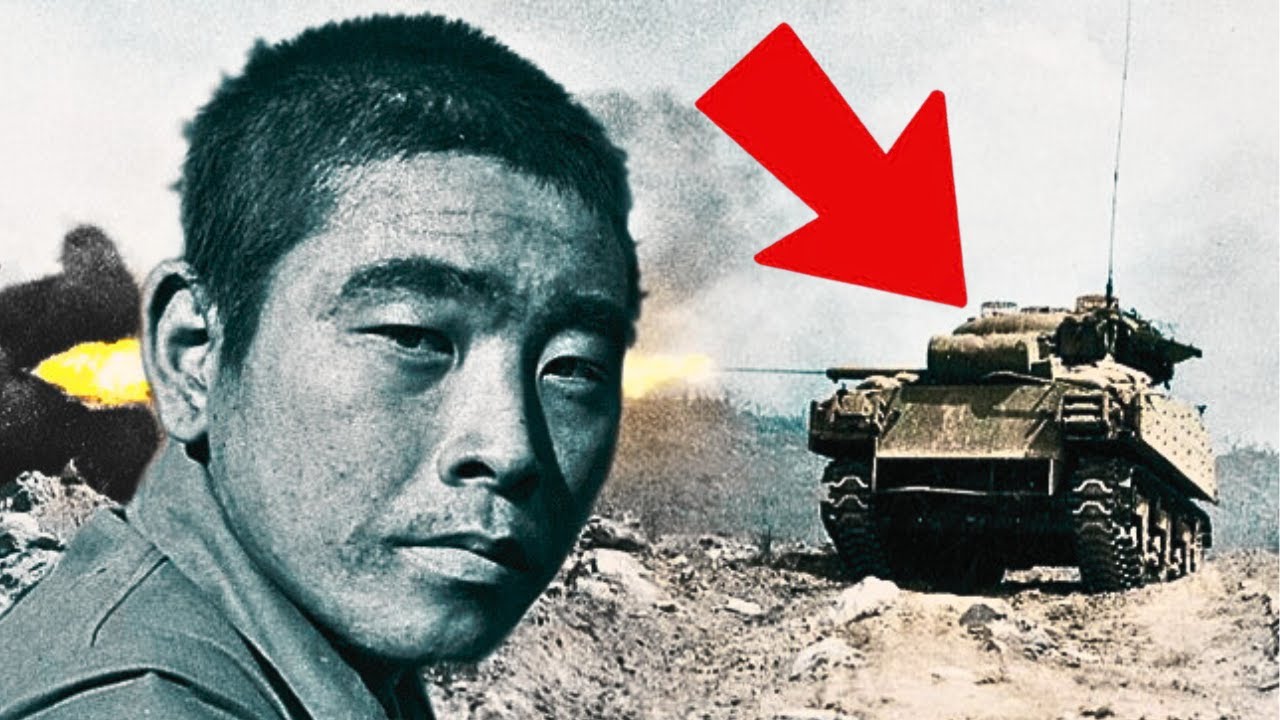 The Navy bombarded the island for 74 days. Yet when Marines hit the beach on February 19, nearly all fortifications were intact. By nightfall, 2,400 Americans lay dead or wounded for just 700 yards of ground.
The answer to this deadly stalemate had been developing in secret. Handheld flamethrowers were already in use, but operators carrying 70 pounds of fuel had to get within grenade range to work. On Iwo Jima, 94 percent of those handheld operators died.
The weapon was terrifying but fatally 𝓮𝔁𝓹𝓸𝓼𝓮𝓭.
Engineers rushed a solution: mount the flamethrower on a Sherman tank. The M4A3 Sherman was gutted and rebuilt with a flame projector replacing the main gun. It held 300 gallons of fuel, could shoot fire 150 yards for about 80 seconds, and from the outside looked exactly like a standard Sherman.
Japanese defenders would not know which tank was the death dealer until it was too late.
Eight of these flame tanks landed on the first day, but commanders held them in reserve for 24 hours. They were too precious to lose early. On the second morning, they entered the fight.
Tank 431 rolled toward a pillbox near Motoyama airfield, took a hit from a 47mm anti-tank gun that bounced off its frontal armor, then sprayed a 15-second burst that engulfed the position. Marines surged forward.
Within hours, all eight were in action. The effect on Japanese defenders was immediate and horrifying. The sticky napalm mixture burned at 1,500 degrees Fahrenheit.
 It seeped through every crack and ventilation slot. It consumed oxygen inside the tunnels. Japanese soldiers began abandoning positions in panic—something rarely seen in the Pacific war.
Marines followed 50 yards behind the flame tanks, clearing survivors. Standard Shermans provided covering fire. The flame tanks got close enough that crewmen could see faces through their periscopes as the burning gel hit.
They heard screams. They also heard muffled grenades and rifle shots from inside sealed caves—Japanese soldiers taking their own lives and those of comrades rather than face the flames.
General Tadamichi Kuribayashi, the Japanese commander, reported to Tokyo that these “special flame tanks” did more damage than all American artillery and naval bombardment combined. He admitted he had no effective counter. His soldiers tried desperate measures.
They ran at the tanks with explosives strapped to their bodies. On March 11, a Japanese soldier reached the engine compartment of Tank 438, detonated, and killed three crewmen. That tank was destroyed.
Of the original eight, only two were knocked out; the rest suffered mechanical failures from continuous combat and were cannibalized to keep others running.
The flame tanks went through refueling cycles that took up to two hours, and the fuel mixture had to be used within 72 hours of preparation. Engineers worked around the clock. Crews were beyond exhaustion.
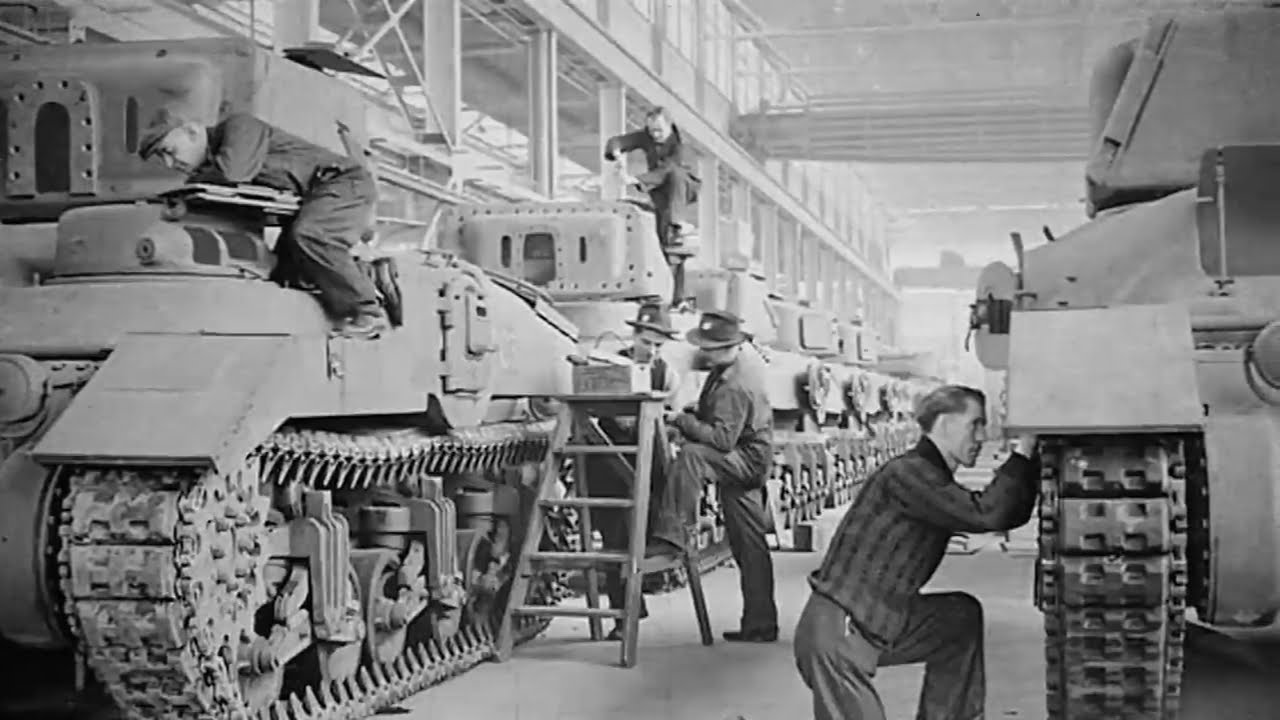 Yet they kept moving forward, day after day, through a landscape of black sand, shattered coral, and burning Japanese positions.
By March 21, organized Japanese resistance was collapsing. Ten flame tanks were now operational—six survivors from the original eight plus four rushed from Hawaii. They launched the largest flamethrower assault of the Pacific War.
In a single day, they fired 8,000 gallons of fuel mixture. American losses that day were 92 killed and 257 wounded—far less than a conventional assault would have produced. The last organized Japanese defense was broken.
Estimates suggest the flame tanks lowered Marine casualty rates by about 40 percent. Over the entire battle, flamethrowers on Iwo Jima consumed 360,000 gallons of fuel mixture. Of 21,000 Japanese defenders, fewer than 200 surrendered.
The rest remain on the island, buried in the tunnels they dug, many of them incinerated by the fire that came from these eight machines.
The survivors of those flame tank crews returned to Hawaii, where their vehicles were examined and improved. The design evolved into the M67 Zippo used in Vietnam. The same tactic—mounting fire on armored hulls—was prepared for the planned invasion of Japan’s home islands.
Seventy flame tanks were ready. The atomic bombs made that invasion unnecessary.
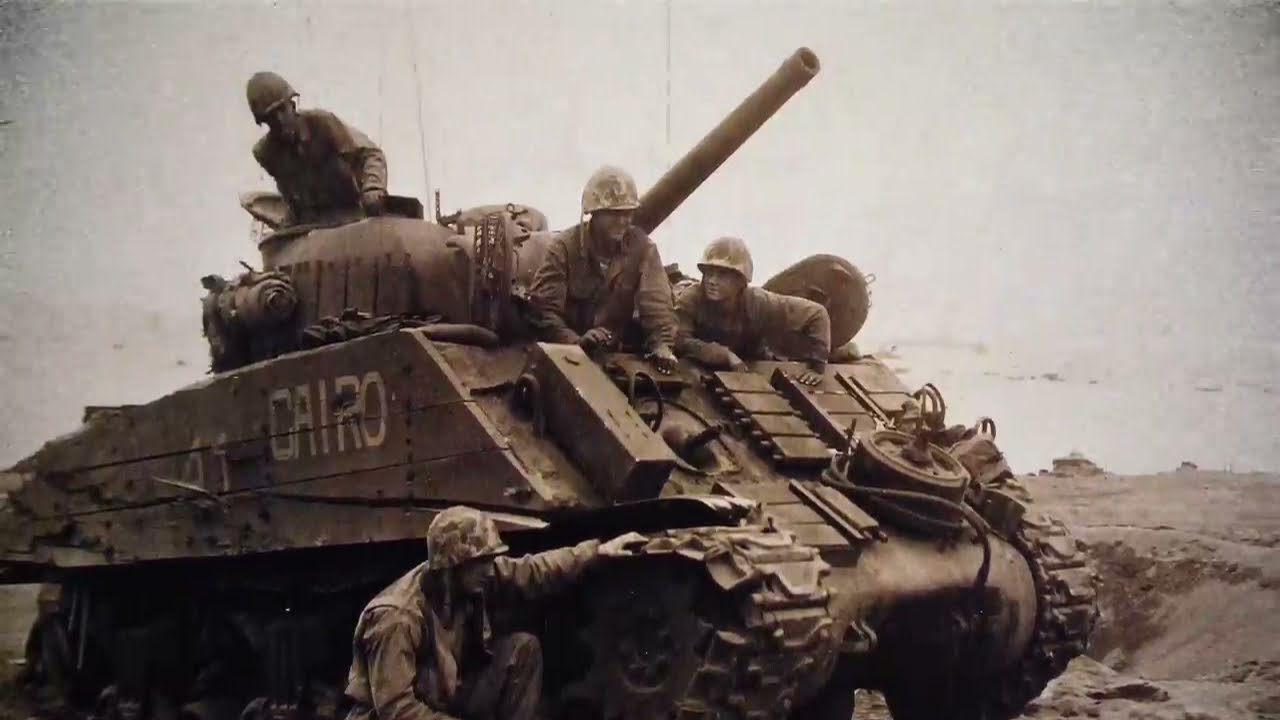 But on Iwo Jima, these eight tanks proved that fire, when delivered with sufficient armor and secrecy, could break a fortress that artillery and bombs could not. Their crews paid a terrible price for using that weapon. They saw what no one should see.
And they helped win a battle that otherwise might have cost America even more of its young men.
The flames did not discriminate. They burned Japanese soldiers in their holes and, in some cases, trapped them alive underground. The psychological shock was immense.
When a flame tank approached, Japanese defenders sometimes jumped off cliffs to avoid being burned. The weapon was inhuman, they said. But in the calculus of war, it was also effective.
Today, the eight flame tanks are a footnote in the enormous story of Iwo Jima. But among historians and veterans, they are remembered as the instruments that turned the tide. The Japanese general himself credited them.
The Marines who followed them swore by them. The horror they inflicted was matched only by the horror they ended.