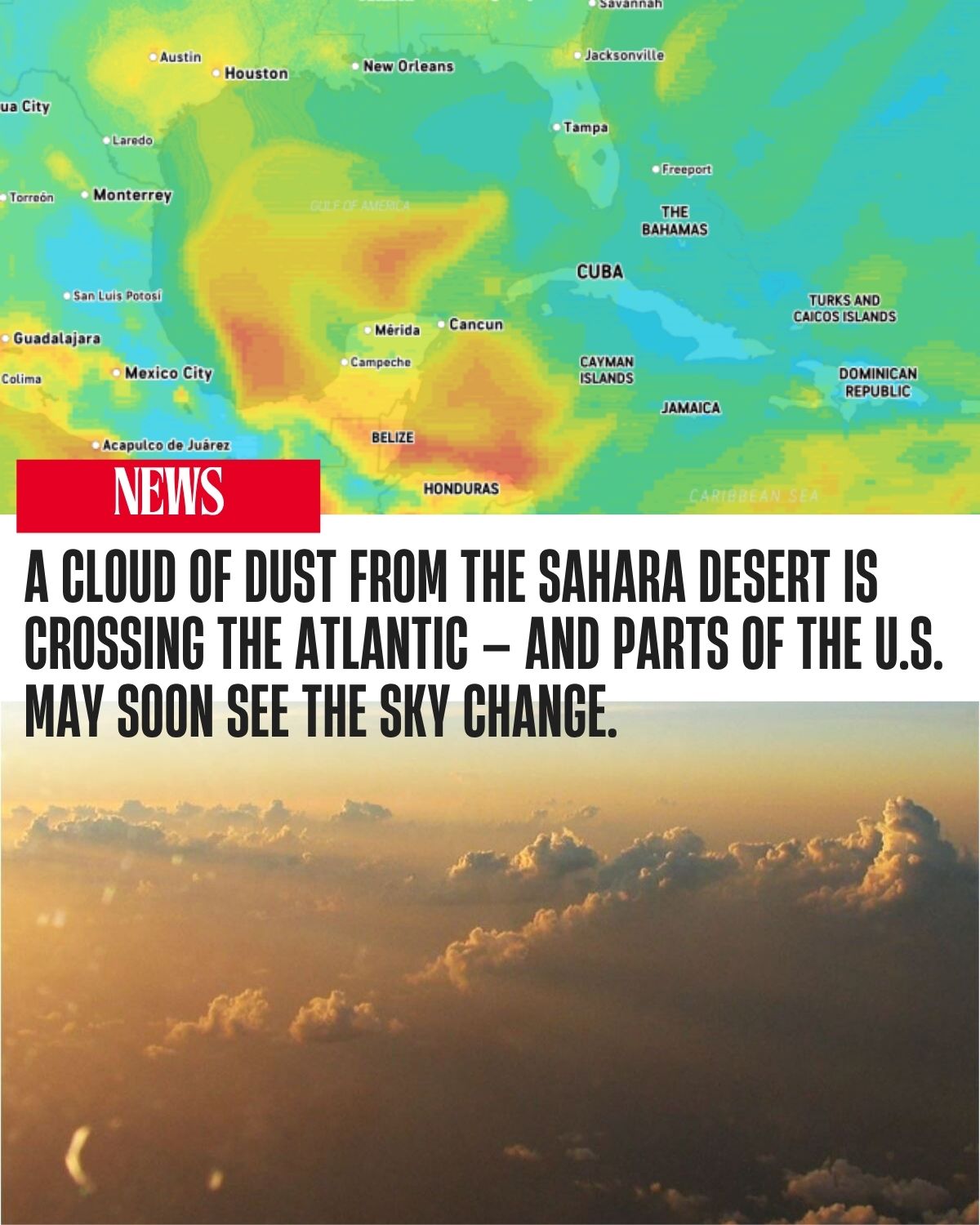
Two large clouds of Saharan dust are moving westward from Africa across the Atlantic, with some of the dust expected to reach parts of the United States in the coming days.

Saharan dust season is underway across the Atlantic basin, a time of year when strong winds lift massive amounts of dust from Africa’s Sahara Desert and carry it thousands of miles west. These dust plumes can travel across the Caribbean, the Gulf region and, at times, into the southern United States.
AccuWeather meteorologists say the latest dust outbreak is already affecting parts of the Caribbean, Mexico’s Yucatán Peninsula and the southern Gulf region.
Where the Saharan Dust Is Now
Satellite images from Sunday showed a primary dust plume stretching across the western Caribbean Sea, over Mexico’s Yucatán Peninsula and into the southern Gulf of America.
The highest dust concentrations were reported from the Caribbean to the Yucatán Peninsula. Unhealthy air quality was observed in Belize and across parts of the Yucatán Peninsula, where dust levels were especially high.
Visible satellite imagery also showed dust spreading across the Caribbean on Friday morning, creating a hazy appearance over the region.
When Will the Dust Reach the United States?
AccuWeather forecasters say most of the dust is expected to remain high in the atmosphere as it reaches the United States. That is good news for air quality and public health, because dust that stays aloft is less likely to cause major breathing problems at ground level.
Still, the airborne dust may create hazy skies and could produce more colorful sunrises and sunsets.
AccuWeather Senior Meteorologist Dan Pydynowski said some dust from the first plume could drift over South Florida during the weekend and reach South Texas early in the week.
While the dust may be noticeable in the sky, the most concentrated plume is expected to remain farther south, affecting areas from the Caribbean to Mexico’s Yucatán Peninsula.
Why Saharan Dust Creates Hazy Skies
Saharan dust is made up of tiny particles of sand, minerals and dry air carried by winds from North Africa. Once lifted into the atmosphere, the dust can travel long distances across the Atlantic Ocean.
When the dust reaches the Caribbean or the southern United States, it can make the sky appear milky, hazy or washed out. The particles can also scatter sunlight in ways that make sunrises and sunsets appear brighter, deeper and more colorful.
However, if dust concentrations reach the surface, people with asthma, allergies or other respiratory conditions may experience irritation.
How Saharan Dust Affects Tropical Storms
Saharan dust can also play an important role in Atlantic hurricane season.
Large dust plumes can limit tropical storm development because the air inside them is much drier than the typical tropical atmosphere. According to AccuWeather meteorologists, dusty air can contain about 50% less moisture than the surrounding tropical environment.
That dry air can make it harder for thunderstorms to grow and organize into tropical systems.
Dust layers can also contain strong winds, which may increase vertical wind shear. Wind shear can disrupt developing tropical storms by tilting or tearing apart their circulation.
Because of those factors, significant Saharan dust outbreaks often reduce the chances of tropical development in parts of the Atlantic.
Forecasters Still Watching for Tropical Development
Even with the dust in place, AccuWeather meteorologists are continuing to monitor the Atlantic for possible tropical development this week near the coast of the United States.
While Saharan dust can suppress storm formation, it does not eliminate the risk entirely. Conditions can change quickly, especially near warm waters close to the U.S. coastline.
For now, the main effects from the dust are expected to be hazy skies, reduced visibility in some areas, colorful sunrises and sunsets, and potential air quality concerns in places where dust concentrations are highest.
As the dust plumes continue moving west, residents in South Florida, South Texas and parts of the Caribbean should monitor local air quality updates and weather forecasts.
News compilation from: accuweather