Sydney Loofe had been smiling all day. The twenty-four-year-old from Lincoln, Nebraska had matched with a young woman named Audrey on a dating app, and their first date had gone so well that they’d already made plans for a second one the very next night. Sydney posted a selfie at 6:54 p. m.
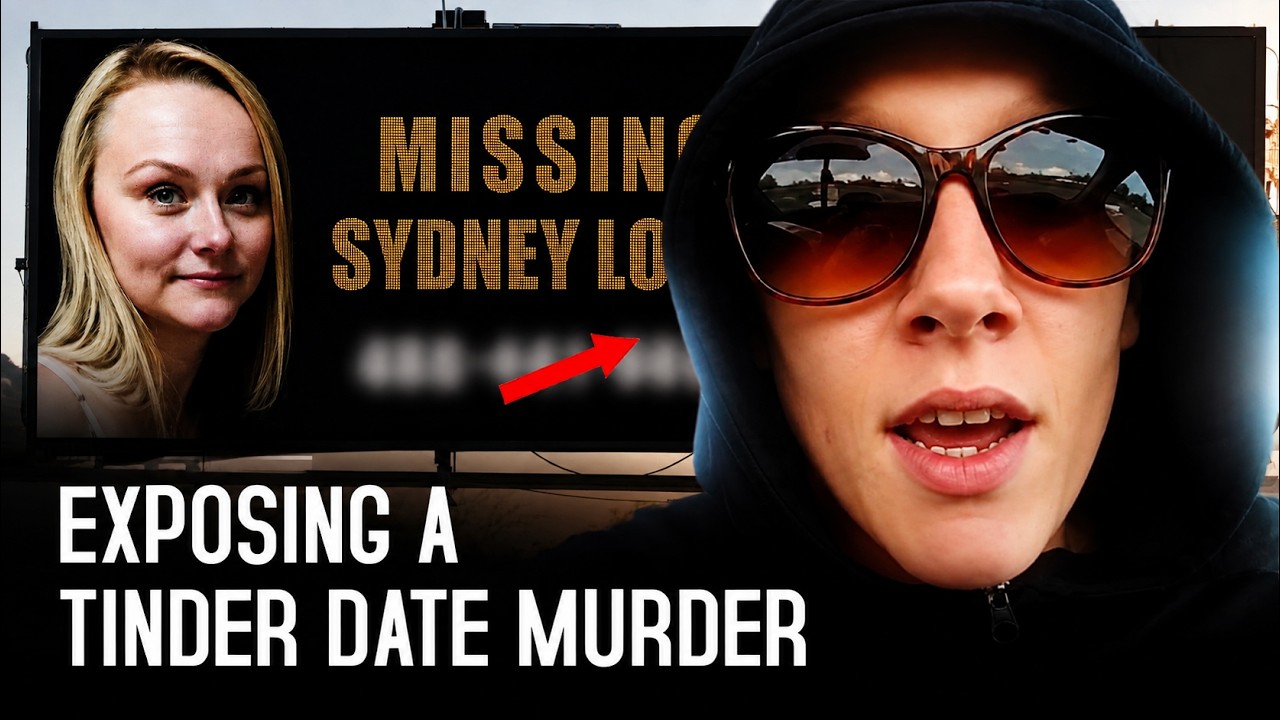
, gave herself one last look in the mirror, and left her apartment to meet the woman who had quickly caught her attention. It was the last time anyone would see her alive. When Sydney didn’t show up for her shift at the hardware store the next day, her coworkers knew something was terribly wrong. She had never missed a day of work in her life.
Her parents, who kept daily contact because of her ongoing struggles with depression, grew frantic when their calls went unanswered. Two days after her last contact, they drove from their small town of Neely to her apartment in Lincoln. Her car was still there. Her cat had no food or water.
Sydney loved that cat more than anything, and leaving it alone like that was so out of character that her parents called the police immediately. Investigators knew the first forty-eight hours of a missing person case were critical. They spoke to Sydney’s friends and coworkers, but no one had seen anything unusual. Then they pulled the security footage from outside Sydney’s job.
It showed her leaving work, unharmed and full of life. Whatever happened to her occurred after she stepped out that door. Sydney’s friends weren’t about to sit back and wait. One of them, who knew that Sydney had gone on a date with a woman named Audrey, created a fake profile on the same dating app and matched with her.
Through careful conversation, she got a phone number and turned every detail over to law enforcement. When police called the number, the woman calling herself Audrey picked up. She told them her name was Audrey, and yes, she had gone on two dates with Sydney. On the second date, she said, they’d driven around, smoked some weed, and just enjoyed each other’s company.
She claimed she had dropped Sydney off at a friend’s house and never heard from her again. It was a clean, simple story, and for a moment, it sounded believable. But the phone number checked out to a name that wasn’t Audrey at all. It belonged to a woman named Bailey Boswell, and a background check revealed she had an outstanding warrant for drug possession and a connection to a man named Aubrey Trail, a convicted fraudster with a long rap sheet across the Midwest.
A forensic digital specialist subpoenaed Sydney’s phone records and tracked the last ping from her cell phone. It placed her somewhere she had no connection to at all: the small town of Wilber, Nebraska, population under two thousand. Bailey and Aubrey lived there, in a basement apartment, and they had been laying low while running a criminal racket of stealing and reselling antiques. They moved from state to state, assuming different identities, known for being standoffish in a town where everyone waved at everyone.
But they weren’t there to make friends. Police went to the apartment. No one answered. The landlord, who lived upstairs, told them something that made their stomachs drop.
On the night Sydney went missing, the smell of bleach coming from the basement had been so strong that it was overpowering. Investigators immediately obtained a search warrant. Inside, they found cleaning supplies, bleach, streaks on the walls where everything had been scrubbed, along with sex toys and Viagra. There was not a single trace of Sydney.
The apartment had been thoroughly cleaned, and Aubrey and Bailey were gone. The hunt was on. Bailey was arrested in Branson, Missouri, two weeks after Sydney’s disappearance. Aubrey Trail turned up not long after.
Both were held on technicalities: Bailey for her outstanding drug warrant, and Aubrey for writing a fraudulent check to an auction house for a collection of gold coins worth nearly thirty thousand dollars. Months earlier, he and Bailey had played the part of ordinary bidders at a country auction, losing a few rounds to seem harmless before winning big with a check that bounced. That bad check, made under the name of a thief trying to be someone else, was what allowed investigators to keep them in custody long enough to build the case. Once in custody, their stories didn’t change.
Bailey maintained she had dropped Sydney off at a friend’s house and had nothing to do with her disappearance. Aubrey made public video pleas claiming they were being framed, insisting they had tried to cooperate. But the digital evidence told a different story. Bailey’s cell phone data, which she had used both to lure Sydney and to travel afterward, tracked their movements to a stretch of highway west of Wilber, near the rural town of Edgar.
They had followed the same route, stopped at a point, and turned back around without continuing on. It was the kind of pattern that suggested a body had been disposed of. On December 4th, 2017, searchers discovered thirteen garbage bags along that highway. Inside, they found Sydney’s dismembered remains.
She was identified by the tattoo on her right arm. The medical examiner ruled her death a homicide by strangulation, and the abrasions on her body suggested she had been alive for a significant portion of the time she was being tortured. Investigators also found drop cloths and track suits in the couple’s possession, items used to cover up the blood. A little more digging revealed just how far the premeditation went.
Surveillance footage showed Aubrey Trail at Sydney’s place of work, walking past her, turning around, and staring at her. This was after Bailey and Sydney had been on their first date, meaning Aubrey had already known who she was and wanted to get a good look at her. Another piece of footage showed Aubrey and Bailey in a hardware store purchasing hacksaws, drop cloths, and tin snips — items no one buys for antiques. The theory investigators formed was dark.
The couple had a habit of recruiting vulnerable young women into their inner circle, a makeshift family where they engaged in sexual encounters and criminal activity. When Sydney discovered what they wanted and refused to join, she said she would go to the police. That decision sealed her fate. When Aubrey Trail’s trial began in June 2019, he attempted to plead guilty to the improper disposal of a body while maintaining that Sydney’s death had been an accident.
Halfway through the proceedings, he grabbed a razor blade he had smuggled into the courtroom, screamed that Bailey was innocent, and slit his own throat. The wounds were superficial. The trial continued without him. The jury heard how Bailey had lured Sydney using romance as bait, how the two had conspired to kill her and cut her body into pieces inside that basement apartment, and how they had disposed of her remains in garbage bags along a Nebraska highway.
The verdict was guilty on all counts. Bailey Boswell’s trial followed in September 2020. Her defense argued she was manipulated, that Aubrey Trail held control over her. But the prosecution pointed out that she was in the apartment when Sydney died, when she was dismembered, and when her body was carried out.
She could have stopped it at any time. She never did. The jury found her guilty of first-degree murder, conspiracy to commit murder, and improper disposal of human remains. In June 2021, Aubrey Trail was sentenced to death, becoming the twelfth inmate on Nebraska’s death row.
Bailey Boswell received life in prison. For the small town of Wilber, the case left a permanent scar. Residents drive past the places where it all happened every day, unable to forget that something so horrific could unfold so close to home, right beneath the landlord’s floorboards, while the streetlights came on and life in a quiet Midwestern town continued as if nothing had happened. But because of a check that bounced and a coin collection bought with stolen confidence, their run of bad luck finally caught up with them.
They are both behind bars now, their dark appetites locked away where they can no longer reach another young woman looking for love.