On December 19, 2014, at 11:14 p. m. , Sarah’s neighbors called 911 after seeing smoke drift from her apartment. They had opened her door to check on her, calling her name, but got no response.
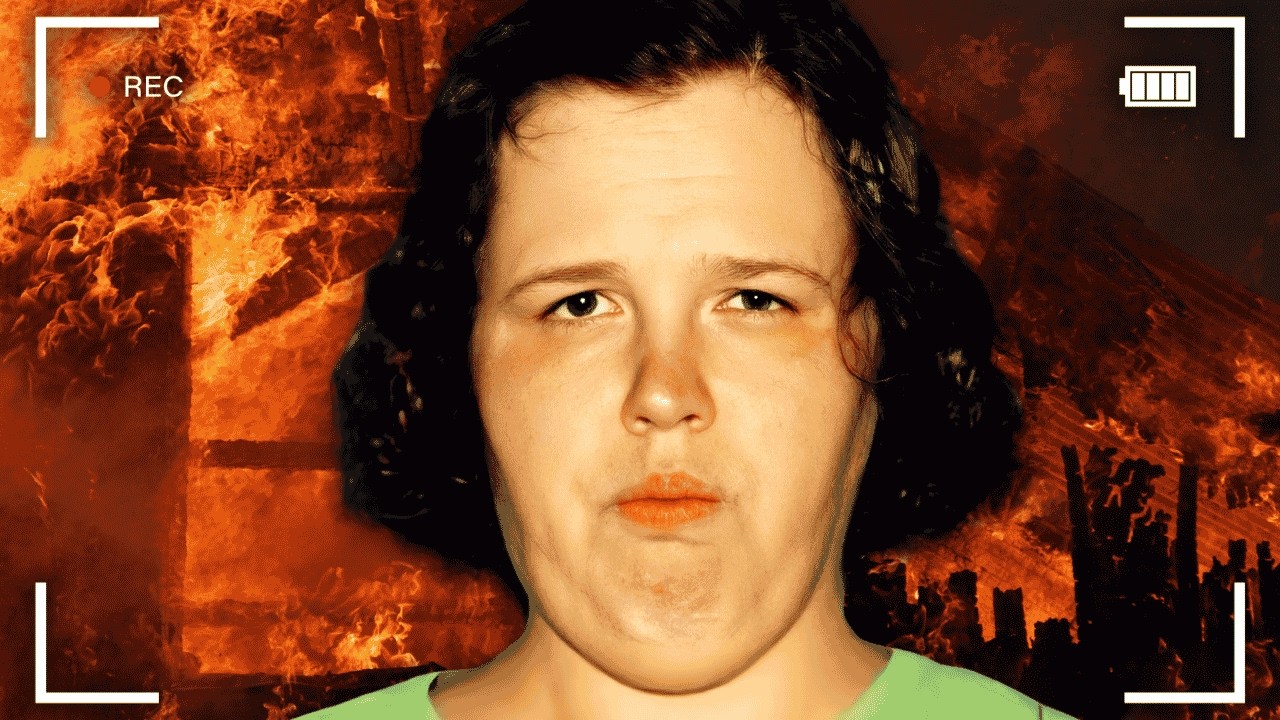
The fire had almost burned itself out in the living room, and the sudden oxygen from the open door reignited the flames—forcing firefighters from two departments to arrive on the scene. When they finally put the fire out, they found Sarah’s body exactly where she always sat to watch her movies. She was only 34 years old. The coroner’s findings were worse than anyone could have imagined.
Sarah didn’t have the typical signs of someone who died in a fire. She wasn’t killed by flames or smoke inhalation. The autopsy confirmed she was dead before the fire even started—intentionally assaulted in her own home, stabbed, then placed in her favorite chair as her killer used accelerant to cover their tracks. The side door was unlocked.
There were no signs of forced entry. Investigators believed Sarah knew her killer and let them in. To anyone who knew Sarah, that kindness was the most terrifying part. Sarah had an ear for perfect pitch and a memory that held everything—music, movie moments, weather records, trivia.
She could hear a song once and play it back by memory on the keyboard her church gave her. She was gentle, sweet, and “wouldn’t know how to be unkind,” as her family said. Living independently in Warsaw, Indiana, she walked everywhere: to the library, to the fairgrounds, to her Zumba classes, to church. If you knew her routines, you could predict her every move—something her killer likely used to their advantage.
Her parents, Howard and Betty Gibbs, had moved her to Atwood when she was three to get her the services she needed after an autism diagnosis. In the early 1980s, resources for disabled children were scarce, but Sarah flourished under community support. She graduated from Warsaw High School, became a client of Cardinal Services, and even went through the local haunted house every October, pushing herself to be brave. She wanted a normal life more than anything.
In the weeks after her murder, no suspects surfaced. Sarah’s phone records showed she’d only spoken to friends and family. Her housing assistance worker had visited her that evening and, at Sarah’s request, locked the side door behind her at 7 p. m.
But Sarah often left that door slightly ajar when her parents visited—she was evasive when they asked why. Betty created the Facebook group “Justice for Sarah Gibbs. ” Within 24 hours, friends and neighbors raised enough money to install a memorial plaque at the YMCA she frequented. At her one-year memorial rally on the Kosciusko County Fairgrounds, the women in her Zumba class performed for her, dancing in her memory.
Howard addressed the crowd through tears. “I’m sure most of you have stories about her, and most of those are probably amusing. She was a special kind of person. It really touches my heart that Sarah touched so many lives, and her life was touched by them in turn.
I’m sure that Sarah is up looking down and smiling at me and all the people that love her so much. ”
But the stories dried up quickly. Police received fewer than five tips in the first year, then nothing. Detective Ryan Moore told local news, “It was a cowardly act committed to a defenseless woman.
It’s got to be eating away at somebody’s conscience. We know what happened. We just don’t know exactly how it transpired. ”
Sarah’s parents suspected the truth was more complicated than police could prove.
“I think she had somebody that got to know her,” Howard later said. “We suspect it may have been through Bible studies. She made a comment the Thanksgiving before her death about an obscure Bible quote. She said she learned it from somebody she was friendly with.
”
Howard believed Sarah was seeing someone secretly. She’d always wanted a relationship, an ordinary partnership like anyone else’s, but her autism left her unable to read people the way most do. “If they were smooth enough, it would just go right over Sarah’s head,” he said. “Part of having a normal life included having a relationship.
But she couldn’t read people. ”
A friend of Sarah’s, who wished to remain anonymous, told investigators about a strange voicemail. Sarah started leaving a message with her usual greeting: “Hi, friend’s name. This is Sarah J.
Gibbs. ” Then an unfamiliar voice spoke in the background, and the voicemail ended abruptly. It sounded like someone was telling Sarah to hang up. The friend turned it over to police, but no leads came from it.
The police have never officially named a suspect. But the podcast Cold Case Chronicles explored the case in 2021, raising questions about a man named James Theodore King. He lived less than three miles from Sarah’s apartment, ran an outreach ministry for people struggling with addiction, and was frequently seen doing street evangelism in Warsaw. Today, he is a registered offender.
Seven years before Sarah’s murder, James was charged with assaulting two 32-year-old twins. The women were intellectually disabled and lived with their mother. In February 2016, they went missing from their home; their mother woke at 3:27 a. m.
to find their rooms empty. They were found at James’ apartment, visibly intoxicated, with blood alcohol concentrations over the legal limit. James had none in his system. The first twin told police that James brought her to a back room, put her on the floor, and attempted to remove her pants.
He stood in the bathroom while she used the toilet. The second twin said he assaulted her and took photos with his phone. James initially claimed he’d given them root beer, not alcohol. He pleaded guilty to one count of sexual battery, receiving two years in the Department of Corrections and six months of probation.
He was ordered to have no contact with anyone with a disability. During sentencing, his wife called him “a devoted man to our holy father” and “a good role model” who “only wanted to help people”—before adding, “We all fall into temptation. ”
Sarah’s family believes her killer was panicking when they stabbed her—someone who took advantage of her trust and then erased the evidence. “She had to have known the person for at least a short amount of time,” Howard told a reporter in 2025.
“The door did not close well. We reported that. You had to make sure you closed it good, and she knew how to close it and latch it. I think maybe she was leaving it so that it wasn’t latched real good for whoever it was that she was seeing at the time.
”
Sarah walked the same streets every day, and she was seen talking to strangers. She visited the Dollar General, Our Father’s House, and the old Marsh Supermarket lot. She went to the library and the park, and she’d spend October walking through the haunted house at the fairgrounds where they let her go through for free. Anyone who spent time around her would have known she lived alone.
“She was not the type to have conversation,” Howard said. “So anybody she was seen talking with for any length of time could be a person of interest. ”
Sarah, the young woman with the zebra striped wallet always tucked in her pocket, left this world without answers—but not without impact.
A $10,000 reward still awaits anyone with information that leads to solving her murder.