The man who abducted and murdered six-year-old Casey Williamson in 2002 was executed by lethal injection Wednesday evening at Potosi Correctional Center, bringing a final, somber end to a case that haunted a Missouri town for two decades.

Johnny Johnson, 45, was pronounced dead at 6:33 p. m. after a single dose of pentobarbital.
His last words, written in a handwritten note, were simple: “God bless. Sorry to the people and family I hurt.” There was no mention of the paranoid delusions or satanic conspiracy theories his lawyers had argued made him unfit for execution.
The execution proceeded despite a last-minute flurry of appeals that reached the U. S. Supreme Court, all of which were rejected.
Governor Mike Parson declined to grant clemency, saying the state would move forward with the sentence imposed by a jury in 2005.
Johnson’s crime began on a warm July night in 2002 in Valley Park, Missouri. He had been a trusted guest at the Williamson family home, sleeping on the couch after a neighborhood barbecue. At around 7 a.
m. , the girl’s father woke to find her missing. Her shoes were still by the door, her blanket untouched.
Johnson was gone too.
Witnesses reported seeing a man carrying a small girl toward an abandoned glass factory. Johnson was quickly apprehended and confessed. He led investigators to the body of little Casey, hidden in a pit beneath shattered glass and concrete.
 The autopsy revealed she died from blunt force injuries to her head. There were also signs of sexual assault.
Johnson had a history of schizophrenia and had been released from a state psychiatric hospital just six months earlier. He had stopped taking his medication. At trial, his defense argued diminished capacity due to severe mental illness, but the jury rejected that defense and convicted him of first-degree murder.
The case drew national attention not only for the brutality of the crime but for the long legal battle over Johnson’s mental state. In the weeks before his execution, his lawyers argued that he believed the devil was orchestrating his death and that the government was playing God. Courts found him competent to be executed.
Johnson’s final meal was a bacon cheeseburger, curly fries, and a strawberry milkshake. He was moved to the death watch facility at the Eastern Reception Diagnostic and Correctional Center on the eve of his execution. Guards observed him around the clock as he remained calm.
The execution was the fourth in Missouri in 2023 and the 16th in the United States that year. Witnesses inside the chamber included a prison chaplain and a handful of journalists. No family members of the victim were present at Johnson’s request.
The pain of the crime did not end with Johnson’s death. Casey’s mother, Angie Williamson, has spoken publicly about the devastating ripple effect on her family. Her older daughter, who was 12 when Casey died, struggled with addiction and died of an overdose in 2015.
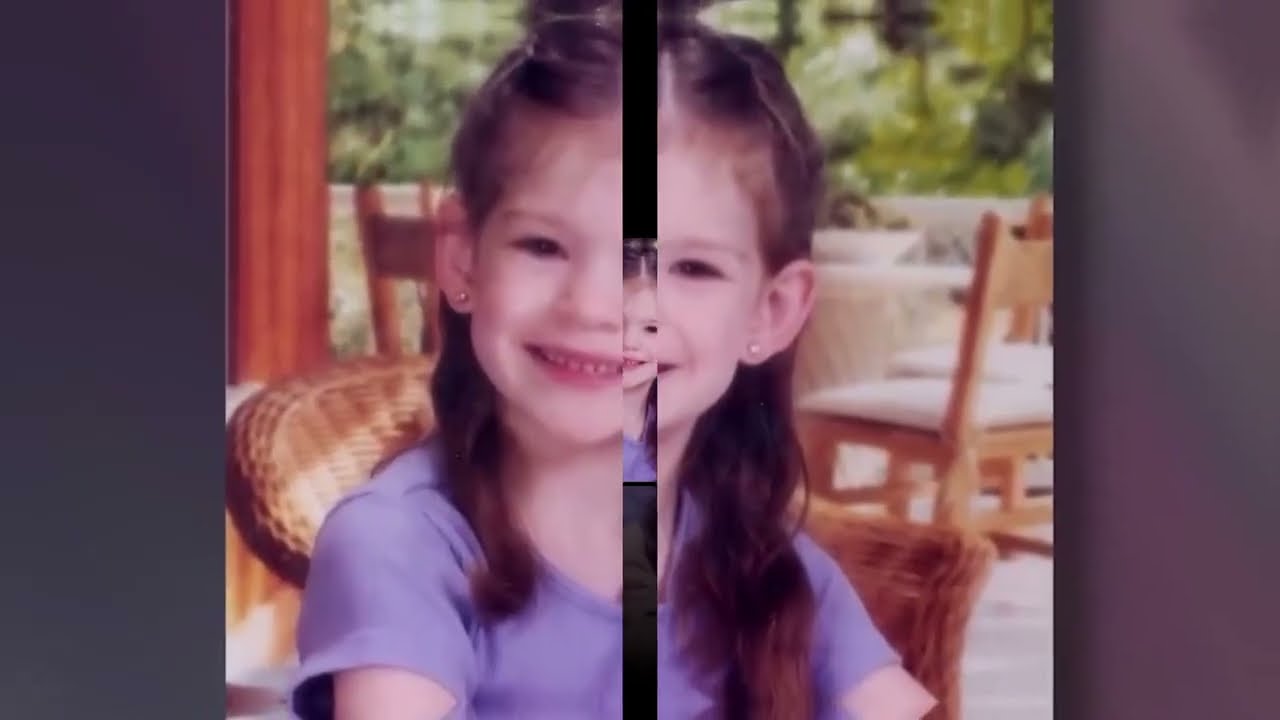 Casey’s father and grandfather both turned to alcohol and eventually drank themselves to death.
“It was more than either one of them could process,” the mother said in a recent interview, recalling how the sight of Casey’s little body had broken them.
The abandoned glass factory where the murder occurred was finally demolished in August 2012, as if to bury the last physical trace of the horror. In Casey’s memory, her loved ones founded a community safety fair, a scholarship, and distributed child ID kits to protect other children.
In 2022, the case was revisited in an Amazon Prime documentary titled “The Worst Crime.” One juror, still haunted decades later, called Casey’s killing the most horrific crime they had ever encountered.
Johnson’s execution was carried out without major incident. At 6:33 p. m.
, the warden declared his death quiet and irrevocable. The state of Missouri closed the chapter on a case that had tested the boundaries of justice, mental illness, and mercy.
 For the Williamson family, there is no closure, only the slow, painful work of rebuilding from what one man destroyed. They have said they support the execution but stress that Johnson’s family does not deserve the shame of his actions.
The debate over whether Johnson truly understood what he was doing that day remains unresolved. His lawyers insisted his severe mental illness made him ineligible for the death penalty. The courts disagreed.
The state’s highest court, the federal appeals courts, and the U. S. Supreme Court all upheld the sentence.
In the final hours, Johnson showed no signs of the delusions his lawyers had described. He ate his meal, spoke briefly with a chaplain, and then walked to the execution chamber. His last words were a simple apology.
The execution of Johnny Johnson was a stark reminder of the lasting wounds left by violent crime, and the difficult questions that linger long after the final injection.