The abandoned Domino’s delivery car sat on a secluded Salem road, engine running, driver’s door wide open, three pizza boxes scattered in the dirt. The 18-year-old driver, Sherry Eyerly, was gone. It was July 4, 1982, and what began as an extra shift for a recent high school graduate turned into a nightmare that would haunt Oregon for more than two decades.

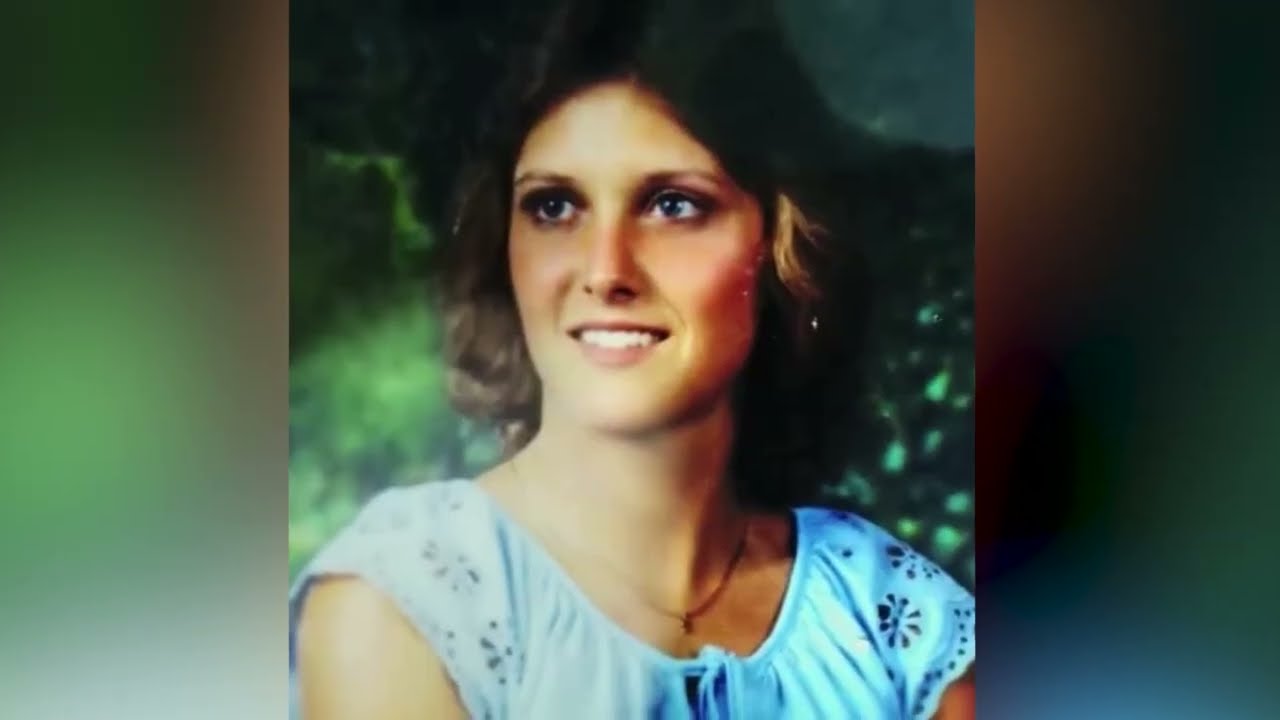
Sherry Eyerly was born on December 6, 1963, in Salem, Oregon, an only child raised in a tight-knit extended family. Friends remembered her as kind and upbeat, always willing to lend support. After graduating high school, she chose to work rather than attend college, wanting to earn her own money and avoid relying on her parents.
She rented an apartment with a cousin and took a delivery job at Domino’s. The work made her family uneasy: a petite 5-foot-2, 100-pound young woman driving alone at night in an era when most customers paid cash, making drivers easy robbery targets. But Sherry was determined.
On Independence Day 1982, her manager called her in for an evening shift to help with a surge of orders. She agreed, eager to save more money. Around 9:30 p.
m. , she left with three pizzas.
About 30 minutes later, a local priest driving on a quiet, isolated road on Salem’s outskirts spotted a Domino’s car pulled over. The driver’s door was wide open, the engine still running, pizza boxes on the ground. Another man, who knew Sherry’s family, stopped after watching fireworks with his children.
No driver was in sight. They called police.
Officers arrived to a scene that screamed abduction. The car’s headlights were on, the parking brake set, suggesting the driver expected to step out only for seconds. Tire marks crossed a pizza box; a boot print marked another.
A Domino’s cap lay near the car; yards away, a name tag reading “Sherry” was found. Drag marks across the dirt indicated someone had been pulled along the ground.
 Police quickly determined the delivery order had been placed by a man who sounded in his 30s or 40s. He ordered three large pizzas with extra toppings and asked for a specific female driver, who was off that night. He gave a 𝒻𝒶𝓀𝑒 name, a 𝒻𝒶𝓀𝑒 address—on an undeveloped stretch of road—and a phone number linked to a nearby motel.
Investigators believed the attacker had waited, pulled up beside Sherry, claimed to be the customer, then attacked and dragged her into another vehicle. No blood was found, but the evidence pointed to a violent struggle.
Despite an extensive search—hundreds of volunteers combed woods and rivers—no sign of Sherry emerged. The day after her disappearance, Domino’s received a ransom call from a man claiming to have her, but he never called back, and the call could not be traced.
Days later, a tip led police to Darrell Wilson, a man who owned a bright green pickup truck matching witness descriptions of a vehicle seen near the scene. By the time officers spoke to him, the truck had been repainted brown with fresh paint. Wilson insisted the timing was coincidental.
He initially denied knowing Sherry, then later said he saw her at a party.
Wilson’s fiancée worked with Sherry’s mother, and Wilson’s 9-year-old sister-in-law had vanished three weeks after Sherry—a separate disappearance. Wilson refused a polygraph and had an alibi: camping with friends at a lake outside Salem. But his friends could not account for his whereabouts between 6:30 p.
 m. and 3:30 a. m.
, the window of Sherry’s abduction.
Searches of Wilson’s home and truck yielded no evidence. Hours after another round of questioning, Wilson was found dead by suicide, leaving no note. Police remained convinced of his guilt, but without physical proof, the case went cold.
In 2005, Salem’s cold case unit reopened the file. Detectives decided to re-examine other suspects, including William Scott Smith, who had murdered two women in 1984—Rebecca Darlene and Katherine Redmond. Smith had originally been ruled out for Sherry’s case because he claimed to have been working as a truck driver miles away that night.
But the cold case team discovered a police record showing Smith had been stopped by a patrol officer in Silverton, just a short drive from Salem, on the very night Sherry disappeared. That traffic stop placed him close enough to commit the crime.
In 2006, detectives visited Smith in prison. He denied involvement at first, but after they offered him a transfer to a more comfortable prison, he confessed. Smith said he acted with an accomplice named Roger.
 They had originally targeted another Domino’s driver but, when she was off, decided to take Sherry instead.
Roger called in the order. They waited on the isolated road. When Sherry stopped and got out, Roger grabbed her and forced her into their car.
Smith admitted to strangling her and dumping her body into the same river where his later victims were found. He provided details—the name of the intended driver, the extra toppings on the pizzas—that only the killer would know.
Roger had died of cancer years earlier. Smith received a third life sentence. In 2012, a retired detective noticed Smith’s recorded interviews mentioned details about another unsolved case: Terri Monroe, a 21-year-old who disappeared in 1981.
Smith confessed to that murder as well, receiving a fourth life sentence.
Sherry’s case is now considered solved, but her remains have never been found, despite draining a section of the river. And the mystery of Darrell Wilson lingers: cleared of Sherry’s murder, but his suicide came just weeks after the disappearance of his 9-year-old sister-in-law, Danielle Good. That case remains unsolved.
For the Eyerly family, the truth arrived too late, but it arrived. After 24 years, the nightmare had a name, a face, and a confession. But the cost of that truth—one overlooked detail, a traffic record buried in a file—is a reminder of how easily justice can slip away when a single assumption goes unchallenged.