The state of South Carolina carried out an execution Thursday evening that it had not performed in nearly 15 years, using a method never before employed in the state’s modern history.
Brad Sigmon, 67, was pronounced dead at 6:08 p.m. at Broad River Correctional Institution in Columbia, becoming the first inmate in the United States to die by firing squad since 2010.
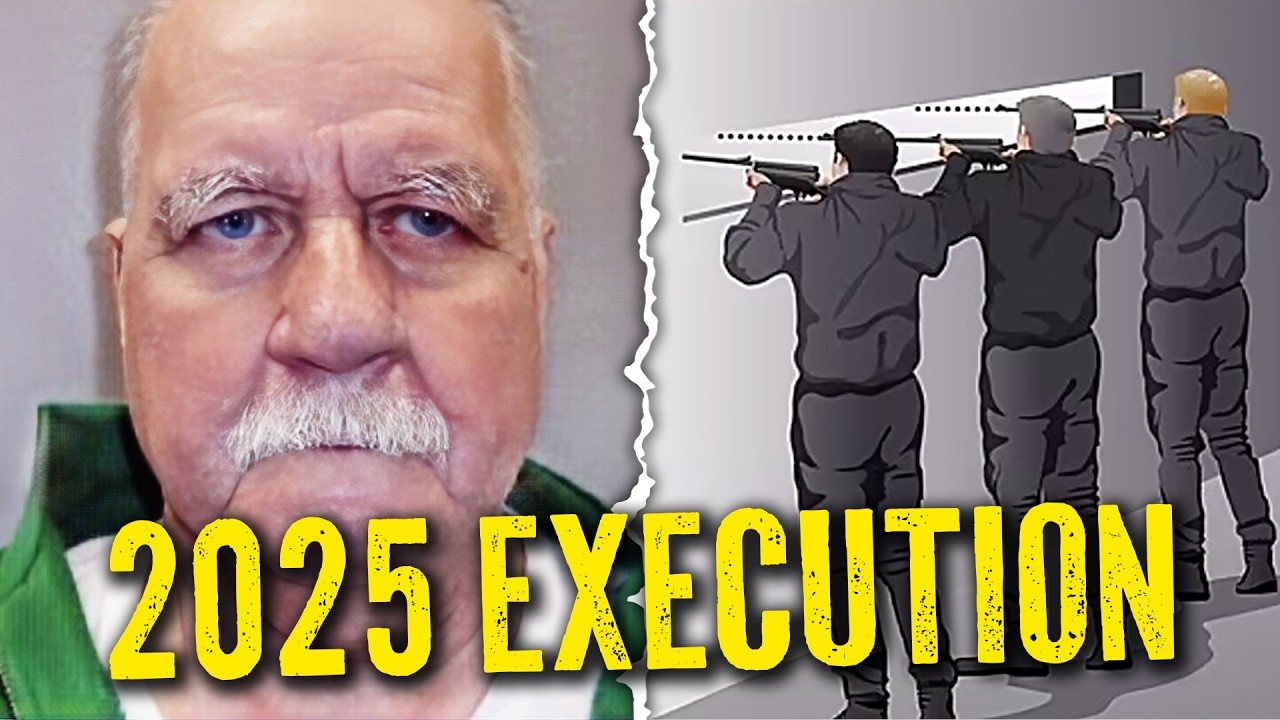 Three volunteer executioners, all department employees hidden from view, fired their rifles in unison from 15 feet away. A bullseye had been placed over Sigmon’s heart. The hood came down over his head.
The curtain slid open. There was no countdown, no hesitation.
Sigmon’s body reacted briefly to the impact of the shots. Moments later, a doctor stepped forward to perform a quick 90-second examination. The execution was over.
The execution marked the culmination of a 24-hour period that drew national attention not merely for the rarity of the method but for the deliberate manner in which Sigmon chose it. South Carolina had given him three options: lethal injection, the electric chair, or the firing squad.
He chose the firing squad, not because it was easy, but because he feared the others would be worse. Reports claimed that the last three men executed by lethal injection in South Carolina suffered slow and painful deaths. One of them was particularly distressing, as the man struggled to breathe for several minutes, his body convulsing in visible agony.
The electric chair, in Sigmon’s mind, was no better. He feared being, as his attorney put it, burned and cooked alive.
But there was another layer to his decision. Sigmon wanted to know exactly what would be injected into his veins. The state refused to share the details.
Left in the dark, he could only imagine the worst: a slow, torturous process that would claim his life in unbearable agony.
His lawyers argued that he had been forced into an impossible choice without the necessary information, filing a last-minute appeal to the US Supreme Court in a desperate attempt to halt the execution.
Sigmon’s path to the execution chamber began more than two decades ago, with a crime so brutal it shocked even seasoned investigators in Greenville County.
In 2001, in a fit of rage, Sigmon attacked his ex-girlfriend’s parents with a baseball bat, striking them again and again until the job was done. He later made a chilling confession following his arrest: “If I couldn’t have her, no one would.”
Before fleeing the scene, he forced his ex-girlfriend into his car at gunpoint. As she broke free and ran, he fired one single shot and narrowly missed. He later admitted he had not planned for either of them to survive.
The motive was as personal as it was brutal. Sigmon had been consumed by jealousy and rage, and he took that rage out on two innocent people before turning his weapon on their daughter.
The final 24 hours of Sigmon’s life began quietly. He woke early in his cell, just like every other day on death row. Breakfast arrived, the same bland tray he had seen a thousand times.
 He ate it quietly, at peace with the situation.
He was not angry. He was not afraid. His brother, Mike, who would not be present at the execution but spoke to him by phone the day before, said that Sigmon had found peace despite still waiting on his final appeal.
“He’s been in jail for more than 20 years, and what he’s been through in there ain’t no life,” Mike reflected. “Locked up in a cage, treated like a dog, and eating slop for dinner. He’s fixing to live on the other side now.
He doesn’t want to live in jail no more. I don’t understand it personally, but he’s at peace with it, and that’s all that matters.”
The same observation was made by the guards who checked on him more than usual on his final day. He was calm, showing no signs of fear or hesitation, just ready for whatever was coming.
At noon, Sigmon sat across from his lawyer, Gerald King, who brought the news. The final appeal had been denied. The execution would proceed.
Sigmon took a slow breath when he was told the news. There was no visible anger or shock, just a nod, King later mentioned.
When their meeting ended, Sigmon was led back to his cell. The hours stretched thin.
Sigmon spent most of the afternoon in prayer, his fingers tracing the worn edges of a Bible he had read countless times. King had previously shared in an interview that Sigmon had devoted every day of the 20 years he spent in prison to prayer, trying to repent for the terrible things that he did.
He asked for strength, not just for himself, but for those he was leaving behind, including his mother, Virginia. With only hours left until the execution, she was unaware of the impending event. The family had kept her in the dark to spare her the distress.
She was vulnerable due to her ongoing battle with dementia and the recent loss of her husband just six months earlier.
Time came for Sigmon’s final meal, but instead of a special request, he was served the usual chow, just like the rest of the inmates at Broad River Prison. No indulgence, no personal last wish before the inevitable.
For Sigmon, things had played out differently. His request for a last meal had come two days earlier, on March 5, 2025. Sigmon had asked for three buckets of original recipe Kentucky Fried Chicken, not just for himself, but to share with the men he had spent years alongside on death row.
 It was not about the food. It was a final act of connection, a rare gesture of humanity in a place where such moments were few. Sigmon had spent years serving as an informal chaplain to his fellow inmates, offering spiritual guidance and support, and his meal request reflected that same desire to connect and share.
His request was denied.
“With his last meal, he wanted to share something special with them,” his attorney, Gerald King, later said.
Instead, officials confirmed that his meal that day consisted of four pieces of fried chicken, green beans, mashed potatoes with gravy, biscuits, cheesecake, and sweet tea.
With just minutes left, Sigmon walked calmly toward the execution chamber, shackled and dressed in a jumpsuit, flanked by guards.
South Carolina had reportedly spent $54,000 to build its brand-new firing squad range in the same room as the electric chair and lethal injection gurney. The construction added bulletproof glass in the witness booth, a basin under the chair to catch blood, and a wall to shield the shooters.
Three members of the victim’s family sat among the witnesses, their faces unreadable, while Sigmon’s spiritual adviser stood beside them, the only person there for him.
Strapped into the execution chair, Sigmon spoke his final words.
“I want my closing statement to be one of love and a calling to my fellow Christians to help us end the death penalty,” he said. “An eye for an eye was used as justification to the jury for seeking the death penalty. At that time, I was too ignorant to know how wrong that was.
Why? Because we no longer live under the Old Testament law, but now live under the New Testament.”
With that, he fell silent.
The executioners, all department employees who had trained for months, fired from a concealed position. Sigmon’s death marked the first firing squad execution in the United States since Ronnie Lee Gardner was executed by the state of Utah on June 18, 2010.
The method has only been used three times in the United States since the death penalty was reinstated in 1977, making it the rarest form of execution in modern American history.
 The South Carolina Department of Corrections had defended the firing squad as a more humane alternative to the electric chair, which had been the state’s primary method of execution in recent years due to difficulties obtaining lethal injection drugs.
Pharmaceutical companies had refused to supply the drugs used in lethal injections, citing ethical concerns, leaving states like South Carolina scrambling to find alternative methods of execution.
Sigmon’s attorneys had argued throughout the appeals process that their client was being forced to choose between barbaric methods, none of which met constitutional standards against cruel and unusual punishment.
The Supreme Court declined to intervene, allowing the execution to proceed as scheduled.
Sigmon’s execution reignites a national debate about the death penalty and the methods used to carry it out. South Carolina had not executed a prisoner since 2011, when Jeffrey Motts was put to death by lethal injection.
For the victims’ family, the execution brought a measure of closure after 24 years of waiting for justice. For Sigmon’s brother Mike, it brought an end to a vigil that had lasted more than two decades.
“He’s been in jail for more than 20 years, and what he’s been through in there ain’t no life,” Mike had said. “He’s fixing to live on the other side now.”
As the witnesses filed out of the execution chamber and the basin beneath the chair was cleaned, South Carolina closed a chapter in its criminal justice history. The state had done something it had never done before, using a method so rare that it had been carried out only a handful of times since the death penalty was reinstated.
Brad Sigmon’s final 24 hours ended the way he had apparently wanted them to end: with prayer, with calm, and with a final statement calling for an end to the very practice that took his life.
Outside the prison walls, protesters on both sides of the death penalty debate had gathered throughout the day. Some held signs calling for an end to capital punishment. Others argued that justice had finally been served.
By nightfall, the crowd had dispersed. The prison went quiet. And Brad Sigmon, the first man in South Carolina history to die by firing squad, was gone.
His lawyers confirmed afterward that his body would be taken to a local funeral home, and that private arrangements had been made by his family.
The state of South Carolina, meanwhile, confirmed that it would continue to use the firing squad as an execution method for inmates who choose it, noting that two other death row inmates had already selected the method.
The $54,000 firing squad range, built with bulletproof glass and a basin to catch blood, will remain in place for future executions.
For now, the debate over capital punishment in America continues, sharpened by the image of a man strapped to a chair, a bullseye over his heart, three rifles firing in perfect unison at close range.