The medevac helicopters tasked with saving lives in Vietnam became the most dangerous flying machines in the war, shot down at three times the rate of other aircraft, with one in three crew members becoming casualties despite their protected status under the Geneva Convention.
This is the story of Dustoff, a call sign that became synonymous with impossible rescues, unimaginable courage, and a staggering toll on the young men who flew into hell to pull the wounded out.
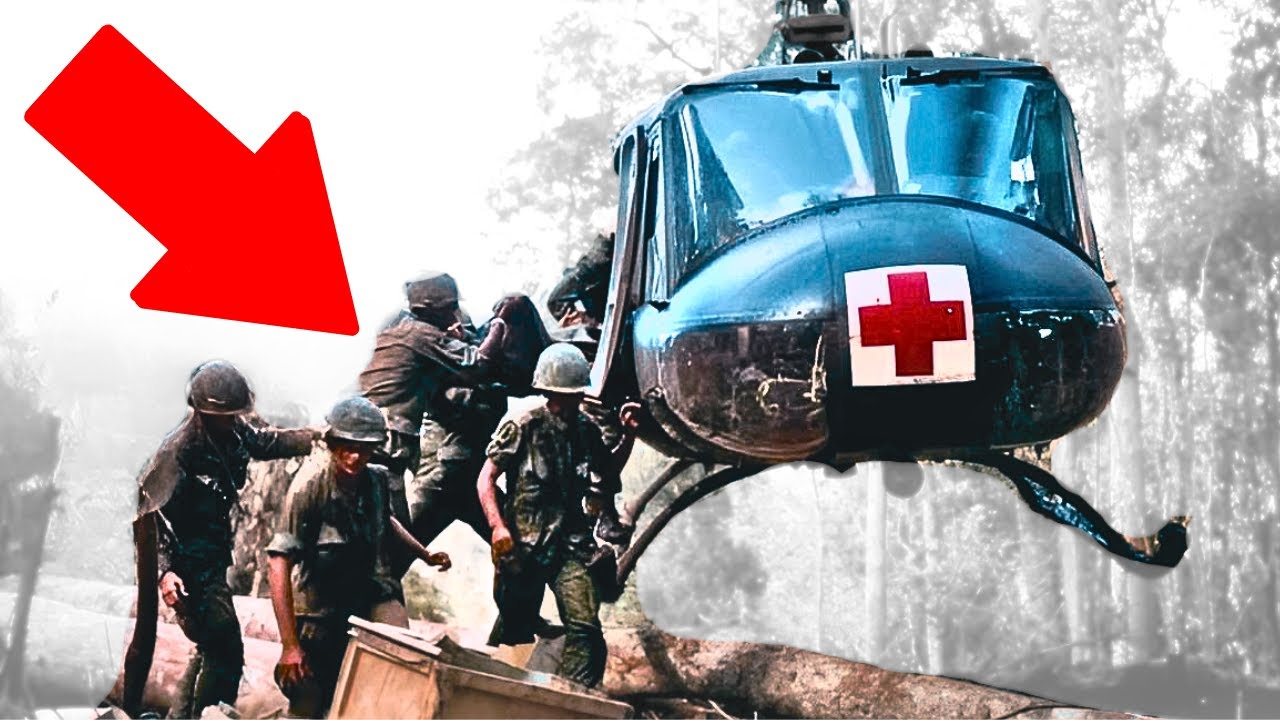 The Vietnam War presented a nightmare of terrain: triple-canopy jungles, marshy plains, and steep mountains that made ground evacuation almost impossible. Helicopters were the only way to get wounded soldiers to surgical care within minutes.
In April 1962, the 57th Medical Detachment arrived in Vietnam with five UH-1 Huey ambulances. Crews soon earned the nickname Dustoff because their rotor wash kicked up blinding clouds of dust as they touched down for just seconds to load casualties. The name stuck and became official.
Each Dustoff crew consisted of a pilot, co-pilot, medic, and crew chief. Most were in their early twenties, barely out of training before being thrust into daily combat rescues. They learned on the fly, developing tactics that defied common sense.
Pilots used low-level flying, corkscrew descents into hot landing zones, and one-skid landings on slopes or rice paddies. At night, they flew with flares, exposing themselves to enemy fire. Major Patrick Brady once tricked enemy mortars by landing at one end of a strip, waiting for them to zero in, then scooting to the other end to pick up wounded.
Early in the war, most patients were South Vietnamese troops or civilians. That changed dramatically when American ground units poured in. The concept of the golden hour was born: a wounded soldier could be on an operating table within 30 minutes.
Statistics show Dustoffs delivered patients in an average of 33 minutes, with a 99 percent survival rate for those brought in within that window.
But that survival rate came at a horrific cost. The enemy did not respect the red cross. Medical helicopters were attacked deliberately.
Major Charles Kelly, who shaped Dustoff doctrine, famously refused to leave casualties behind. On July 1, 1964, he flew into heavy fire to save a wounded adviser. Ground forces warned him not to land.
 He replied, “When I have your wounded.” A bullet struck his heart. He managed to hover for seconds before crashing.
His crew survived. He was posthumously awarded the Distinguished Service Cross. His motto became the unit’s creed: never refuse a mission, always put the wounded first.
As demand soared, the military deployed more medevac helicopters. The rescue hoist was a critical innovation, allowing extractions without landing. But hovering above trees made helicopters seven times more likely to be shot up.
The forest penetrator seat replaced earlier, unreliable hoists, but the danger remained extreme.
By late 1967, over 100 medevac helicopters were in Vietnam. At peak, Dustoff crews flew 400 missions per day. The Tet Offensive in January 1968 tested them like never before.
In 12 days, 64 helicopters evacuated over 8,000 casualties. Forty of those helicopters were hit by enemy fire. Crews worked 12-hour shifts, often flying continuously.
Nurses handed them sandwiches through windows mid-flight because there was no time to land.
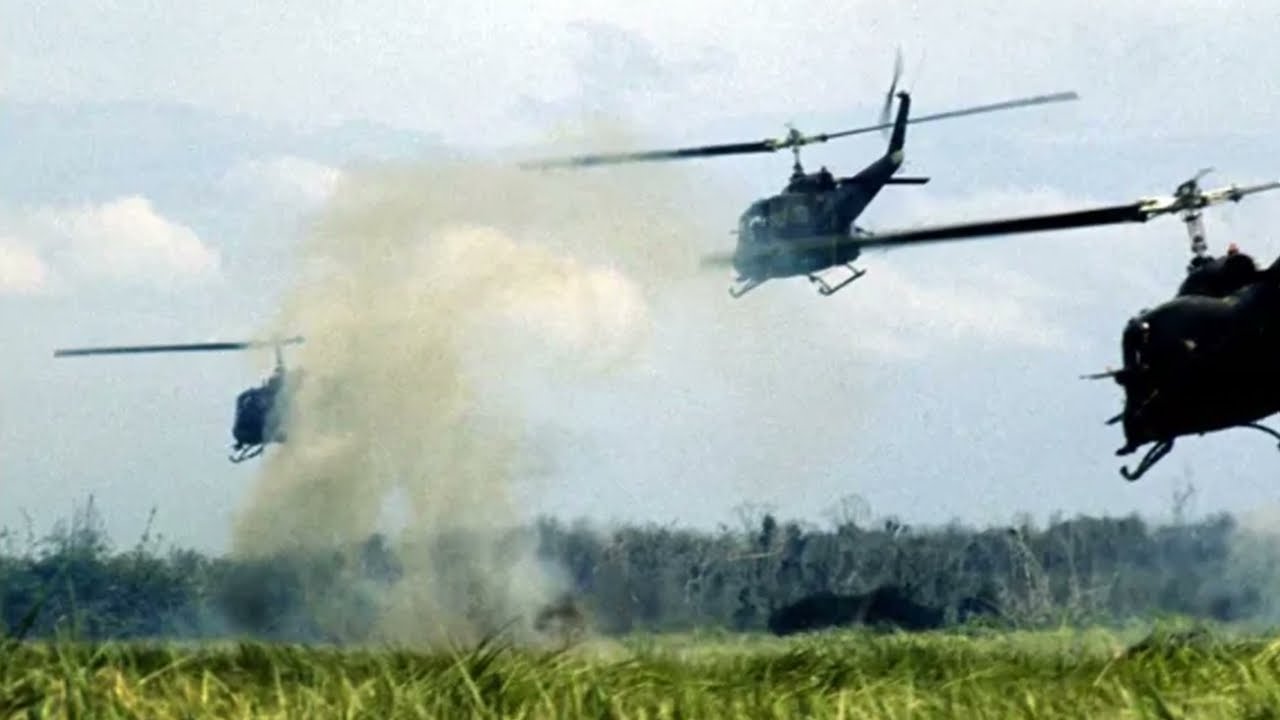 The cumulative stress was devastating. Dustoff crews suffered the highest rates of PTSD. They landed helicopters in shallow rivers to wash out the inside.
The horrors they witnessed are almost unspeakable.
In 1969, Dustoff operations peaked. More missions and more patients were moved than in any other year. Helicopters designed for 11 passengers lifted off with 32 panicked soldiers clinging to the outside.
Pilots bunny-hopped their overloaded birds to maintain lift.
The enemy often intercepted radio frequencies, making ghost calls to lure Dustoffs into ambushes. They would pop smoke in different colors to confuse pilots. Dustoff crews learned to ask ground units to pop smoke without revealing the color, then verify.
Why were they attacked despite the red cross? Under the Geneva Convention, medical vehicles are protected only if used exclusively for medical purposes and not flown over enemy areas without prior agreement. Vietnam had no front lines.
The red cross offered no shield. Some crews stripped off the crosses and mounted machine guns for protection.
 Wounded enemy soldiers were sometimes evacuated alongside Americans, treated equally. That paradox did not stop the killing.
Major Patrick Brady earned the Medal of Honor for a series of rescues in a minefield under sniper fire. When his first helicopter was damaged by a mine, he jumped into a second. When that was shot up, he found a third.
By day’s end, he saved 51 men.
Chief Warrant Officer Michael Novosel, a WWII bomber pilot who came out of retirement to fly Dustoff alongside his son, made over 10 extractions in two and a half hours under heavy fire. He saved 29 soldiers while his helicopter was riddled with bullets.
The evacuation hospitals that received the wounded were another link in the chain. Nurses like Linda Van Devanter described the sorting of mass casualties. Patients were categorized into three groups: immediate, delayed, and expectant.
The expectant were given pain relief and left to die because helping them would cost the lives of several others. Medics and nurses had to play God, making decisions that haunted them forever.
By the war’s end, Dustoff crews evacuated roughly 900,000 casualties. Half were Vietnamese soldiers or civilians. The sacrifice was immense, but they followed Major Kelly’s final words: never leave the wounded behind.