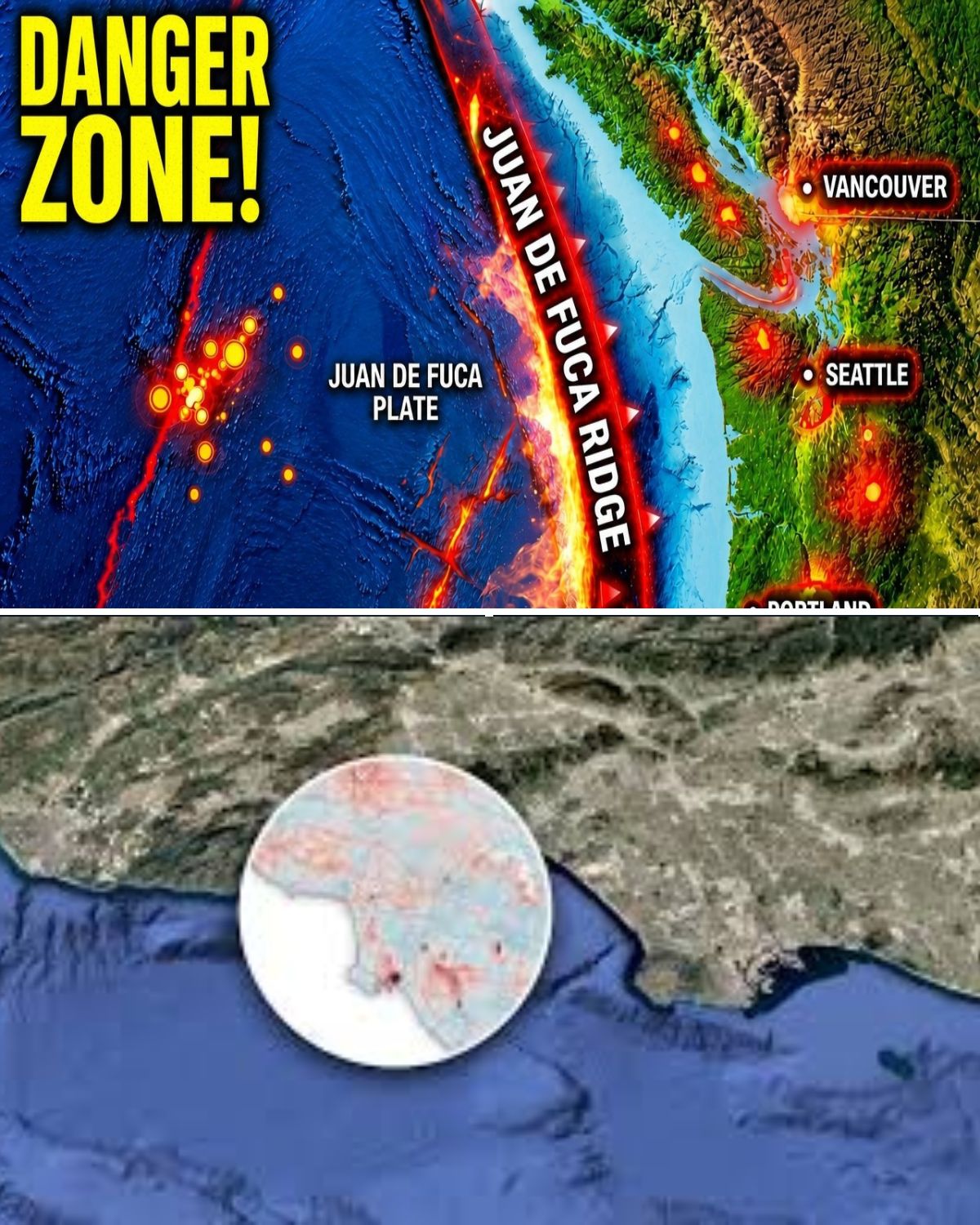
California, the land of sun-soaked beaches and majestic mountains, is undergoing a transformation that’s invisible to the naked eye but vividly captured by satellites orbiting above. Beneath the feet of its 40 million residents, the ground is shifting, with valleys sinking, mountains rising, and faults sliding in a silent, ongoing 𝒹𝓇𝒶𝓂𝒶.
 The San Bernardino Mountains, a beloved escape for city dwellers near Los Angeles, are not as eternal as they seem. Recent satellite data reveals that this picturesque range is gradually being pushed upward, thanks to the infamous San Andreas Fault. Unlike what many might think, the mountains are not rising at a rapid pace; they’re gaining only a few millimeters each year. While that may sound slow, it’s enough to cause noticeable changes over a human lifetime, including cracked roads and altered landscapes.
Meanwhile, head north into the Central Valley, California’s agricultural powerhouse, and you’ll find a different story. This region is reportedly sinking faster than any other large area in the country. Since the 1920s, extensive groundwater pumping for irrigation has led to a dramatic decline in land elevation. The clay-rich ground, once buoyed by water, is compacting, causing the surface to drop. By 1970, parts of the San Joaquin Valley had already sunk over a foot, with some areas experiencing a staggering drop of nearly 28 feet. Recent satellite measurements show alarming rates of subsidence, with some sections sinking up to 10 inches annually.
This sinking is not just a geological curiosity; it’s impacting California’s critical water infrastructure. Canals and aqueducts are losing capacity as the ground beneath them shifts, leading to costly repairs. The situation is dire, as much of the damage appears to be permanent, leaving the state with less underground water storage for the future.
 Interestingly, the valley’s decline is linked to the mountains’ rise. As groundwater is extracted, the weight on the land diminishes, allowing the Sierra Nevada and other nearby mountains to slowly rebound. It’s a fascinating geological seesaw, where human activity is nudging some of the tallest peaks in the lower 48 states higher each year.
Of course, California is no stranger to earthquakes. The state has a long history of seismic activity, with notable quakes like the 1906 San Francisco disaster and the 1994 Northridge quake etched into memory. But many of the most significant movements are happening beneath the surface, unnoticed by residents. Scientists have developed advanced monitoring techniques that detect two types of subtle movements: fault creep and slow slip. These silent shifts can redistribute stress along major faults, potentially setting the stage for future earthquakes.
Adding to California’s geological intrigue is the Long Valley Caldera, often overshadowed by the state’s more famous seismic threats. This supervolcano, located near Mammoth, erupted around 760,000 years ago in a cataclysmic event that reshaped the landscape. Despite its dormant appearance, the caldera is still active, with recent monitoring indicating signs of unrest. While experts maintain that there’s no imminent threat of eruption, the area is under constant observation due to its potential hazards.

California’s geological phenomena are interconnected, creating a chain reaction of natural disasters. For instance, wildfires can strip hillsides of vegetation, leading to mudslides when heavy rains follow. This cycle of fire and flood can devastate communities, highlighting the precarious balance of California’s environment.
Even the picturesque coastline is not immune to change. Erosion is a constant threat, with storms and rising sea levels causing beaches and cliffs to retreat. Coastal towns face the risk of losing homes and infrastructure to the relentless forces of nature, prompting ongoing adjustments to hazard maps and building codes.
 As satellites continue to monitor California’s surface, a clearer picture emerges of a state in constant flux. The ground is alive, reshaping itself in real time, and the data collected is crucial for urban planning, infrastructure development, and disaster preparedness.
While the dramatic shifts in California’s landscape may sound alarming, it’s important to remember that these changes occur over long periods. The slow rise of mountains and the gradual sinking of valleys are not immediate threats but rather ongoing processes that require careful management.
So, the next time you find yourself standing on California’s sunlit soil, consider this: How much do you really know about the ground beneath your feet? What secrets might it still hold?