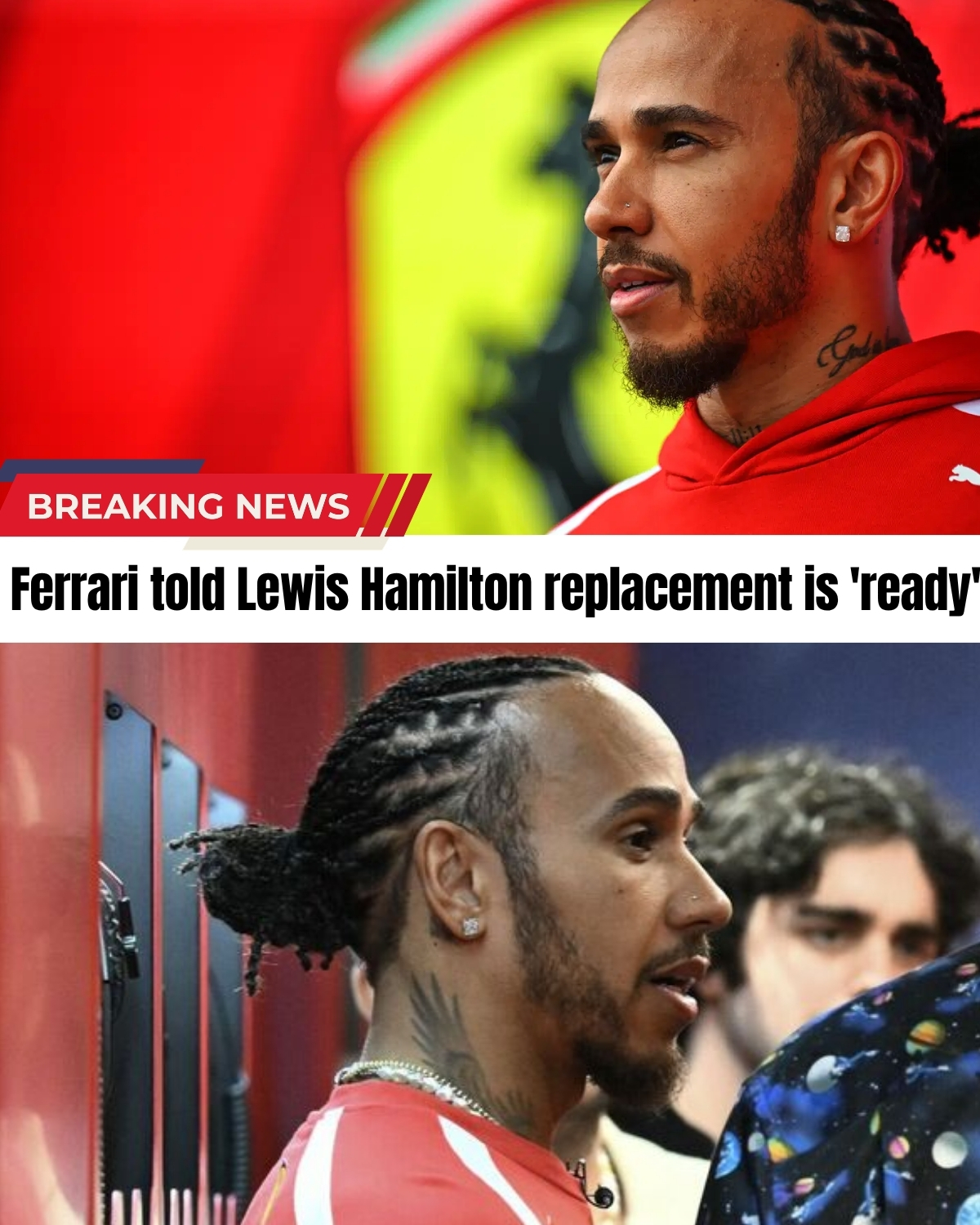
The first time Lewis Hamilton drove the 2026 Ferrari, he said something he had not said in years: “This car talks to me. I like the way it moves around.” For a driver coming off the worst season of his career, with no podiums and openly questioning whether he still had it, that sentence should have been impossible. The question of how a 41-year-old, written off by half the paddock, ended up winning a Grand Prix by almost 20 seconds—the oldest race winner the sport has seen since 1970—is answered not by the car alone, nor the driver alone, but by the way the two finally fit.

The answer begins with how Hamilton brakes. He brakes later than almost anyone on the grid, and he brakes hard, loading the front of the car into the turn and trusting the rear to follow. When it works, it is the fastest way through a corner that exists. When the car cannot support it, the same inputs look ragged and nervous. For most of the ground effect era, the car could not support it. By the end of 2025, his first year in red, Hamilton had finished a full season without a single podium for the first time in his career, and the talk in the paddock was about whether the move to Ferrari had been a mistake.
None of that talk accounted for one detail: the rules were about to change, and the style everyone wanted him to soften was about to become an advantage. To see why, one must look at what aggression actually means inside a Formula 1 car. A late breaker carries speed deeper into the braking zone, then asks the front tires to do an enormous amount of work in a very short window. For that to pay off, the front of the car has to bite the instant he turns in and hold its line while the rear stays just loose enough to rotate. Hamilton has built his entire career around this need for a pointy front end. He needs the car to change direction the moment he asks, and he is willing to manage a rear that moves around underneath him to get it.
Charles Leclerc, his teammate, drives the same machinery a different way. He brakes earlier and smoother, carrying more speed through the middle of the corner. Across the garage at Mercedes, George Russell sits at a third point, quick and precise, but more exposed when the grip falls away and the rear starts sliding in high temperatures. In Barcelona, the track climbed past 50 degrees, and the way a driver lives with a sliding rear in the heat decided the race. Hamilton’s whole style is built on a moving rear; for him, that is not a problem to survive, but the window he drives in. The same style looked ordinary for four years because from 2022 onward, Formula 1 ran heavy ground effect machines that made their grip from a stiff, low platform sealed close to the track, rewarding smooth drivers who kept the platform stable.
Hamilton spent those seasons fighting the machine instead of attacking the track. At Mercedes, the car bounced and slid and never gave him the front end he needed. He then moved to Ferrari for 2025, and the problem followed him because the new car carried the same ground effect approach and the same demand for a calm, planted style. The 2025 Ferrari was a particularly cruel fit; it needed to be run low and stiff to find its lap time, and the lower it ran, the more it punished a driver who leaned on the front. Hamilton found himself backing out of the very inputs that made him Hamilton, and the results told the story without mercy. He was out-qualified and out-scored by Leclerc across the year, with no podiums, and by the time the season closed, he had gone more than a year and a half without a win.
For 2026, the rulebook was torn up. New cars, lighter and shorter, with active wings and a completely different balance of power and aerodynamics, moved away from the extreme ground effect platform that had defined the previous four seasons. The cars no longer demanded that a driver tiptoe around a rigid floor; they moved around more and rewarded a driver who could attack, place the car, and live with a rear that talked back. The rules quietly handed Hamilton the kind of car his style had been asking for since 2021. The first sign that it had worked came on a quiet shakedown lap at Barcelona months earlier, when Hamilton climbed out and said the car talked to him. For four years he had been driving cars that went silent on him at the worst possible moment.
What followed was a slow climb rather than a sudden switch. A podium in China early in the year, his first in Ferrari colors, hinted at what the car could be. The middle of the season wobbled, with a flat run through Japan and Miami where the package and the weekends refused to come together. Then the form arrived in a sequence: second place in Canada, second again in Monaco, three podiums in a row leading into Barcelona. The clearest evidence that Hamilton was reshaping the car around his style sits in the brakes. Ferrari had run the same brake supplier for years, but Hamilton arrived using a different set of carbon discs made by a French manufacturer called Carbon Industrie. From the Japanese Grand Prix onward, Ferrari switched him onto the discs that suit how he drives, causing real friction inside Maranello but signaling that the team was now adapting to Hamilton.
The upgrade Ferrari brought to Barcelona was the largest package the team produced all season, including a revised front wing, a completely redesigned floor, and new bodywork around the side pods. On race day, everything came together in a single afternoon. Hamilton started second on a set of used soft tires, and Ferrari committed to an aggressive three-stop plan. The decisive moment came near two-thirds distance when an Aston Martin stopped out on track and brought out a virtual safety car. Ferrari called Hamilton in instantly, and he took fresh tires at a fraction of the usual cost. From there, he pulled away from George Russell at a pace nobody else could match, and by the flag, the margin was almost 20 seconds—19 and a half to be exact.
The records that fell that afternoon included Hamilton’s 106th Grand Prix victory and his first in Ferrari red. At 41, he became the oldest driver to win a Formula 1 race since Jack Brabham in 1970. Behind him, Russell and Lando Norris completed the podium, the first time three British drivers had filled all three steps since 1968. Hamilton also became the first driver in the history of the sport to win Grands Prix in his 20s, his 30s, and his 40s. There was one more twist that afternoon: the runaway points leader, Kimi Antonelli, was running a strong second when his car failed, ending his race on the spot. Antonelli’s lead was cut to 41 points, with Hamilton climbing to second in the standings and moving clear of his own teammate, Leclerc.
The team is careful not to declare the problem solved, with their own leadership blunt that one win does not make everything magic. However, the deeper shift is real and mechanical rather than emotional. The rules changed in a way that rewards how Hamilton drives, the team changed the brakes to suit how he stops the car, and the development direction followed the map he spent a losing year drawing. Next comes the Austrian Grand Prix at the Red Bull Ring, a shorter, sharper circuit that asks different questions. Hamilton sits 41 points behind in the championship, a gap that a month ago looked like a formality but now looks like a target. For the first time since he pulled on a Ferrari suit, the car is working with him instead of against him.