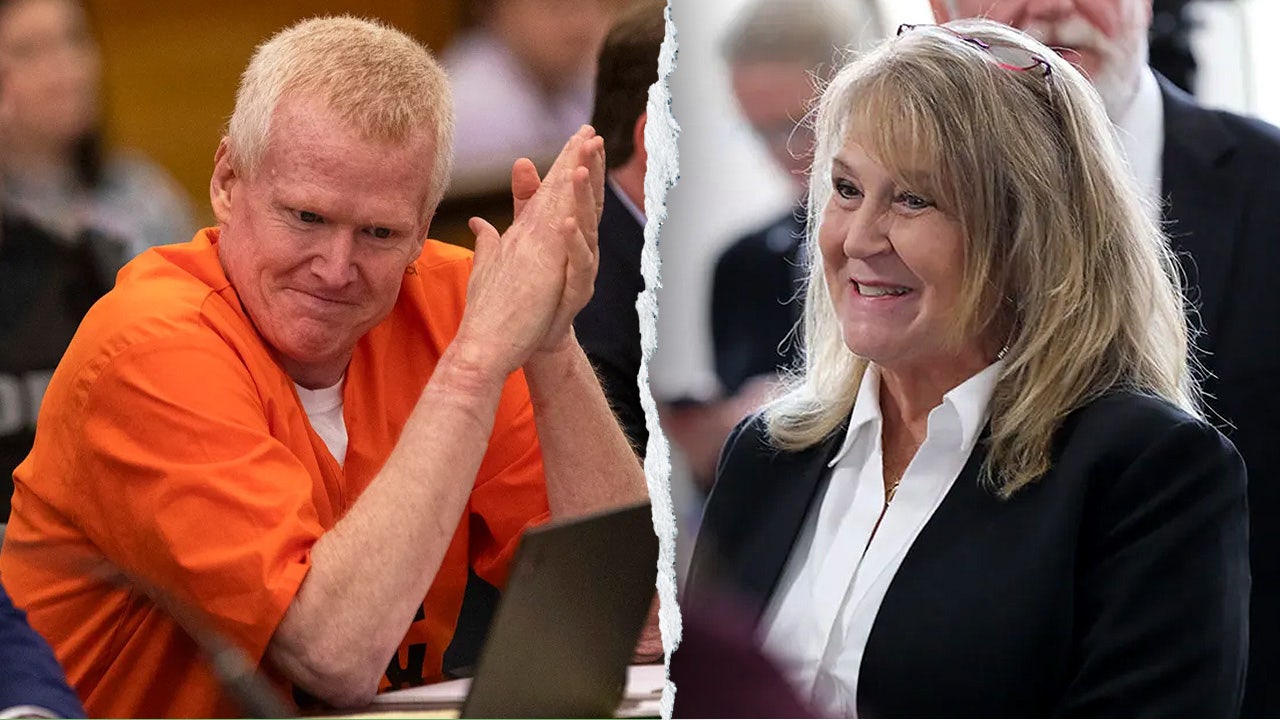
In a dramatic twist to an already sensational case, Alex Murdaugh, the disgraced attorney whose double-murder conviction was recently overturned, is now taking legal action against court clerk Rebecca “Becky” Hill. Murdaugh claims that Hill tampered with the jury during his trial, allegedly violating his civil rights in the process.
The lawsuit, filed on Monday in federal court in Columbia, South Carolina, spans 17 pages and accuses Hill of manipulating jurors to ensure a guilty verdict. Murdaugh’s attorney, Jim Griffin, asserts that Hill’s motivations were tied to her desire to sell books about the case, which she believed would be more marketable with a guilty verdict.
At a press conference, Griffin emphasized the lawsuit’s purpose: to hold Hill accountable for her actions. “She has not been held to account at all for her conduct,” he stated, highlighting the need for transparency regarding Hill’s alleged influence on the jury.
The lawsuit follows a significant ruling by the South Carolina Supreme Court on May 13, which vacated Murdaugh’s convictions. The court found that Hill had “placed her fingers on the scales of justice,” leading to claims that her actions improperly swayed jurors. According to court documents, Hill reportedly told jurors to be wary of the defense’s arguments and instructed them to scrutinize Murdaugh’s demeanor during his testimony. Notably, at least one juror later indicated that Hill’s comments affected her decision to vote guilty.
Further complicating the narrative, the lawsuit alleges that Hill had private discussions with the jury foreperson in secluded locations, including the bathroom of the jury room. Reports claim that Hill expressed that a guilty verdict would boost her book sales, as she “needed a lake house.” Hill co-authored a book titled “Behind the Doors of Justice: The Murdaugh Murders,” which reportedly earned around $100,000 before being withdrawn due to plagiarism claims.
Murdaugh’s legal team is also contemplating a change of venue for the upcoming retrial. Griffin mentioned that they are considering moving the trial to a different county with similar demographics to Colleton County, where the original trial took place. Charleston County has been suggested as a possible option.
Additionally, Murdaugh’s attorneys are raising concerns about DNA evidence that they believe was not adequately investigated during the initial trial. They claim that forensic testing uncovered unidentified male DNA beneath the fingernails of Maggie Murdaugh, Alex’s late wife, which did not match any known family members. Griffin indicated that they may seek a court order to submit this DNA to CODIS, the FBI’s national DNA database, to pursue further leads.
The defense team has also criticized South Carolina Attorney General Alan Wilson for announcing plans to seek the death penalty again if Murdaugh is retried. Harpootlian, another member of Murdaugh’s legal team, expressed frustration over what he perceives as political maneuvering rather than a focus on justice, questioning the rationale behind pursuing the death penalty after the conviction was overturned.
Murdaugh is seeking both compensatory and punitive damages under federal civil rights law, including the recovery of approximately $600,000 spent on his defense during the original trial. The lawsuit follows the South Carolina Supreme Court’s ruling that Hill’s actions created a presumption of improper jury influence, ultimately leading to the reversal of Murdaugh’s conviction.
As this legal saga unfolds, the timeline reveals a series of pivotal moments: starting with the allegations of jury tampering in October 2023, jurors testifying under oath by January 2024, and the Supreme Court’s ruling in May 2026 that set the stage for Murdaugh’s current lawsuit against Hill.
With so many layers to this case, one question remains: what will be the next chapter in the Murdaugh saga?