I used to think if you met a murderer, you’d know. That they’d have something off about them, something dark you could sense. But the ones who get away with it for forty years? They hide it.
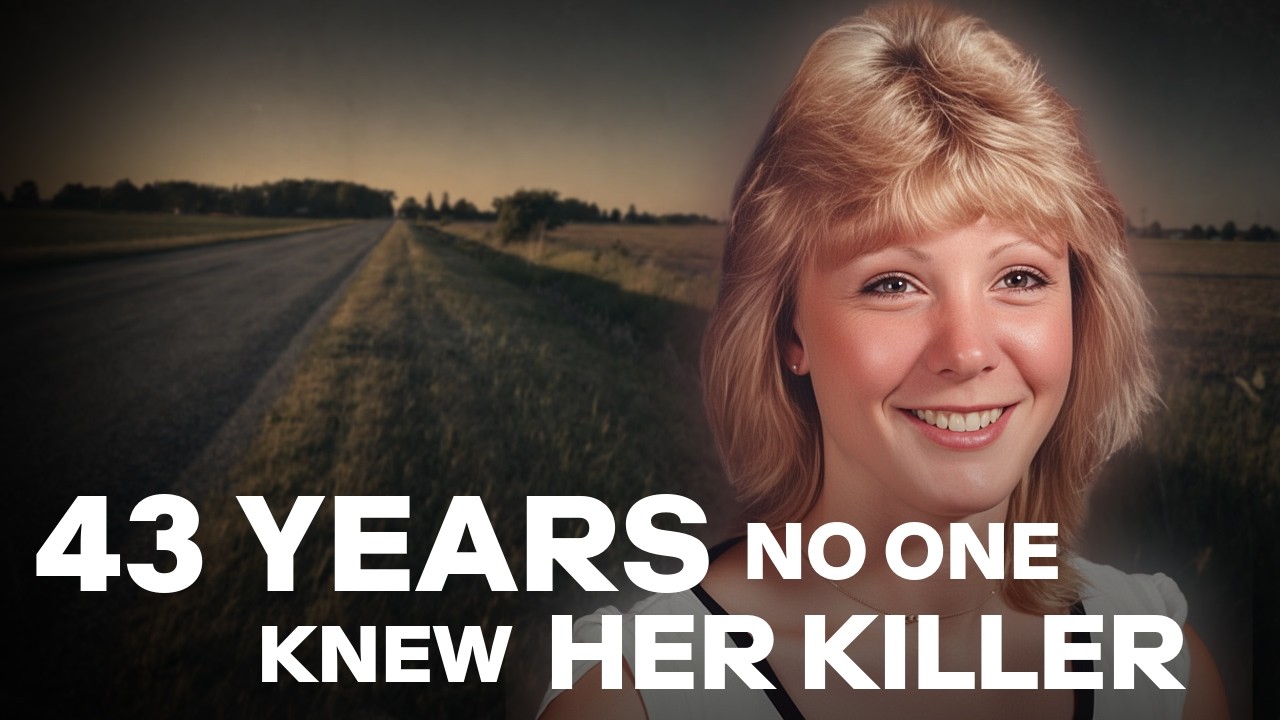
They live right next door, and you never see the monster underneath. Sherry Joe Elliott was sixteen years old. She was getting ready for school on a cold November morning in 1983, and Joyce, her mother, told her to dress warm. She had to walk two blocks to the bus stop.
“Sherry, it’s cold. Make sure and dress warm. ”
Sherry was meticulous about her appearance. She wouldn’t leave the house unless everything matched, every hair in place.
She was shy, cautious. She wouldn’t get in a car with anybody she didn’t know. When she lived with her dad for two years, a couple stopped asking for directions, and her friend went up to the car—but Sherry wouldn’t go near it. That morning, she wanted to leave for school early.
“No, Sherry, it’s not safe,” Joyce said. “I don’t want police knocking on my door to tell me you’re murdered or raped. ”
Sherry said, “Okay, love you. ” And she left.
Then Joyce went to work. Her husband Bob went to work. That afternoon, Sherry was supposed to come home, do her nails, watch *The Young and the Restless*, and eat the yogurt Joyce made with Cool Whip and froze. It was their daily routine.
About noon, Bob showed up where Joyce was working. “Sherry didn’t come home. ”
When Joyce got home, Sherry still wasn’t there. It got later and later.
She called Sherry’s dad. No one had heard from her. So they called the police. “Oh, she’s a teenager.
She’s run away. ”
“No, she didn’t,” Joyce said. “There’s nothing missing. She would never go with just the clothes on her back.
”
They had to wait two days for the missing person report. They treated her as a runaway. But Joyce knew she didn’t run. Sherry wouldn’t leave without telling anyone.
The family passed out flyers, searched dumpsters and alleys. Joyce couldn’t eat. She lost ten pounds in a week. Every time she walked into a restaurant, she’d think, “Is Sherry eating?
I wonder if she’s eating. ” She’d see a guy walking down the street and think, “Is that him? Is he the one who took Sherry? ”
On November 20th, 1983, a local trapper checking his traps found Sherry’s body in a ditch along Mueller Road, about fifteen miles north of Flint.
She was face down in a watery ditch, her pants unbuckled. She’d been shot four times—once in the abdomen, twice in the back, and once in the back of the head. The bullet to the head suggested execution. Detective Doug knocked on the door early Sunday morning.
He held one of Joyce’s necklaces, the one Sherry wore to school. “Is that Sherry’s? ”
“Yeah, that’s Sherry’s. ”
“Well, she’s dead.
”
Sherry had been shot and raped. She’d been in the water long enough to be disfigured. Joyce’s husband Bob went to identify the body. He told his sister that Joyce never would have survived seeing her like that.
At the funeral, they had a friend watch everyone who came in, looking for anyone suspicious. Joyce saw a man she didn’t know and asked her sister, “Do you know him? ” She didn’t. He turned out to be a long-lost cousin.
But you always hear they sometimes show up at the funeral, proud of what they did. Flint in the 80s was a General Motors town. People were making money, crime wasn’t high, but when something like this happened—especially to a juvenile—the community was outraged. Thousands of tips came in.
One said she got into a white van. Another said a yellow Camaro. Joyce took Sherry’s picture to a man who claimed he saw her get into the yellow Camaro. “Are you sure this is who you saw?
”
“Yeah. ”
Investigators spent days, weeks, months running down those tips. They made spreadsheets of thousands of yellow Camaros and white vans. Nothing.
The man who claimed he saw her get into the yellow Camaro was lying through his teeth. Why? He had a daughter too. The police focused on Robert Schulz, Sherry’s stepfather.
He was the last person to see her alive. They tried to interview him. He had inconsistencies in his story. He wouldn’t take a polygraph.
They set up a surreptitious phone call with Joyce calling him on a one-party consent line. Nothing. The detective kept asking Joyce questions. “What are you going to do if you find out he murdered her?
”
“How am I supposed to feel? ” she answered. “I know we didn’t do it. But what a question to ask.
”
Over the years, detectives took about 123 DNA samples. DNA wasn’t really a thing in 1983. They collected evidence, clipped fingernails, swabs. But without a suspect, there was nothing to match.
The leads dried up. The case went cold. Joyce lived in fear for years. She’d get nightmares: “Mom, why haven’t you found me?
” She’d find Sherry’s old things. She was scared for years she’d get a phone call saying Joyce was gone. Because when a child dies, a mother doesn’t just lose her daughter—she feels like she’s losing herself. In 2002, the Michigan State Police violent crime task force took another look.
They ran down the white van, the yellow Camaro, reinterviewed the stepfather. They collected more DNA samples. Nothing matched. The same year, they entered the DNA profile into CODIS, the national database.
No hit. Not a surprise—CODIS didn’t exist until the mid-90s. The unknown male’s DNA sat there, waiting. In 2022, Detective Sergeant William Art got a call from a border patrol agent in Utah.
A neighbor of Sherry’s had been caught using a fictitious name. He’d been living under a false identity for sixteen years. He’d been interviewed in the case originally, and he left Michigan shortly after Sherry’s homicide. They got a DNA sample.
It didn’t match. But it was the beginning. Art thought, with the technology we have now, maybe this case could be reopened. The files had been put in boxes—tens of thousands of pages from twenty prior detectives.
Western Michigan University students organized the case, cleared and background-checked through Michigan State Police, putting everything on a digital platform. In late fall of 2025, Michigan State Police reached out to ARAM, a company that works on cold cases using forensic genetic genealogy. A piece of evidence from Sherry’s case was sent to them—a sanitary napkin Sherry was wearing that day, containing semen DNA. They examined the DNA.
Forty years old, degraded, but suitable. It was a rush against time. Sherry’s dad was dealing with dementia. Her stepfather was gone.
The people most affected by the answers often don’t live forever. ARAM used forensic-grade genome sequencing to translate the physical DNA into a profile consisting of hundreds of thousands of markers. They executed a genetic genealogy search and found relatives. The lead pointed to a lady in Wichita, Kansas—potentially a relative of the suspect.
Unfortunately, she had seventy-nine grandchildren. “I wasn’t sure we were going to get anywhere with that many,” Art said. Art and his partner flew to Kansas. Sweet old lady.
She provided a DNA sample. Her son came over and provided one too. Months of work followed. Western students did open-source searches.
Art and his partner worked the genealogical analysis. The process narrowed to a candidate that made sense—both genetically and investigationally. Ronnie Collins. He would have been in his early thirties at the time of the crime.
He was definitely in the area. He was seventy-five now. Art wanted to talk to him. He called a few times.
Collins put him off over the holidays. They agreed to meet in early January 2026. Collins never showed up. Art got a search warrant for his DNA.
He tried calling multiple times. No answer. So Art and his partner went to his house. His current wife told them the news.
The day the interview was supposed to happen, Ronnie Collins committed suicide. By all accounts, Ronnie was a good citizen. No significant criminal history. Good family man.
Good job—a dental hygienist at Michigan prison. He was in a band that traveled around Michigan. At the time of the murder, he had a white van for his bandmates and equipment. The tip back in 1983?
A white van. “He knew what was going to happen if he went to prison,” Art said. They confirmed beyond a shadow of a doubt—Ronnie Collins raped and murdered Sherry Joe Elliott in November of 1983. When Art called Joyce, he asked, “Knowing this, how is that going to affect you?
”
“It’s not going to,” she said. “Nothing’s changed. I still can’t hug her. I still can’t tell her I love her.
”
He filled her in on information she didn’t know. Sherry bled to death in the ditch. She was still alive when he threw her in the water. “What a terrible way to go.
She’s laying in a ditch by herself, cold winter time, half covered in water. Maybe three or four hours before she bled to death. That’s going to haunt me because I couldn’t find her. ”
Collins had her for three to four days.
No one knows what Sherry went through in those days. “I was angry when I found out he was seventy-five. He got a marriage. He got a life.
We don’t know if Sherry would have gotten married. We don’t know if she would have had kids. My sister got robbed. ”
When the news broke, people posted tributes to Ronnie Collins, saying what a good guy he was, how much he’d be missed.
Joyce commented, “No he didn’t. He murdered my daughter. ” The responses were so overwhelming the posts had to be taken down. “I wish Bob was here to see this,” Joyce said.
“They put him through hell. My husband passed away in January 2025. But I tell him every day—we got him. ”
Art suspects Collins in another cold case—two girls who went missing in 1969 in Oscoda.
Same situation—Halloween, they left school early, last seen getting into a white van. Collins played in a band in Oscoda that weekend. But without the girls’ bodies, there’s no way to prove it. “At least in my experience, you don’t just go abduct, rape, and kill on your very first occasion,” Art said.
“It starts with some type of assault and progresses. I think he’s still got bodies out there. ”
Joyce has a message for anyone still waiting for answers. “Never give up hope just because it’s been forty years.
Technology is so much better. They will get them with the stuff they’re doing with DNA and so forth. We’ll be one of the last of the few that has to wait forty-three years. ”
Sherry deserved a life.
She deserved children. All of that was taken from her. She was a sweetheart. She was her mother’s one and only daughter.
“I just ripped my heart out,” Joyce said. “But if it gives anybody some hope, then I hope that helps them. “