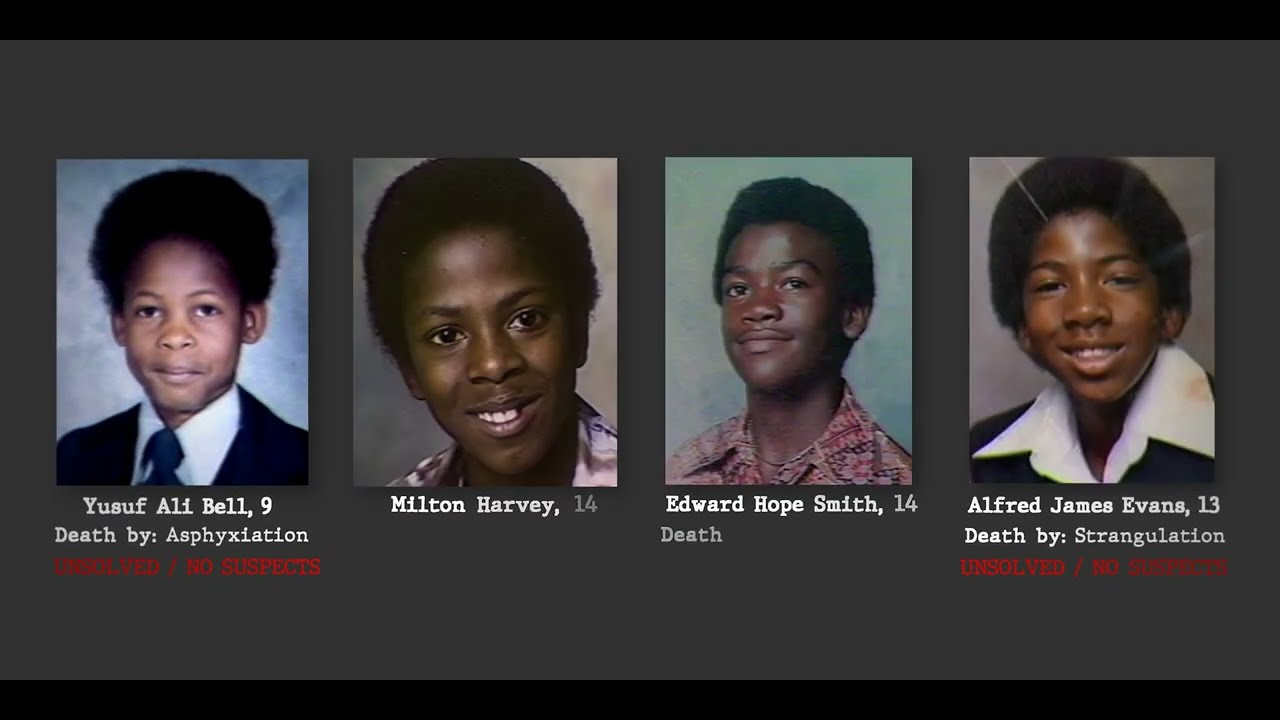
On a sweltering July day in 1979, a woman collecting cans off an abandoned lot on Niskey Lake Road in Atlanta stumbled upon the unmistakable odor of decomposition. What she found would ignite a reign of terror that would haunt the city for years. The body of 14-year-old Edward Hope Smith, known as Teddy, lay in the woods, shot in the back with a .

22 caliber pistol. Within 150 yards, another body was discovered, that of 13-year-old Alfred James Evans, strangled. Both were Black, both from low-income neighborhoods.
Yet police, eager to protect Atlanta’s image as a booming “New South” hub, initially dismissed the deaths as unrelated 𝒹𝓇𝓊𝑔 violence. The city was too busy to hate, or so it claimed.
But the murders did not stop.
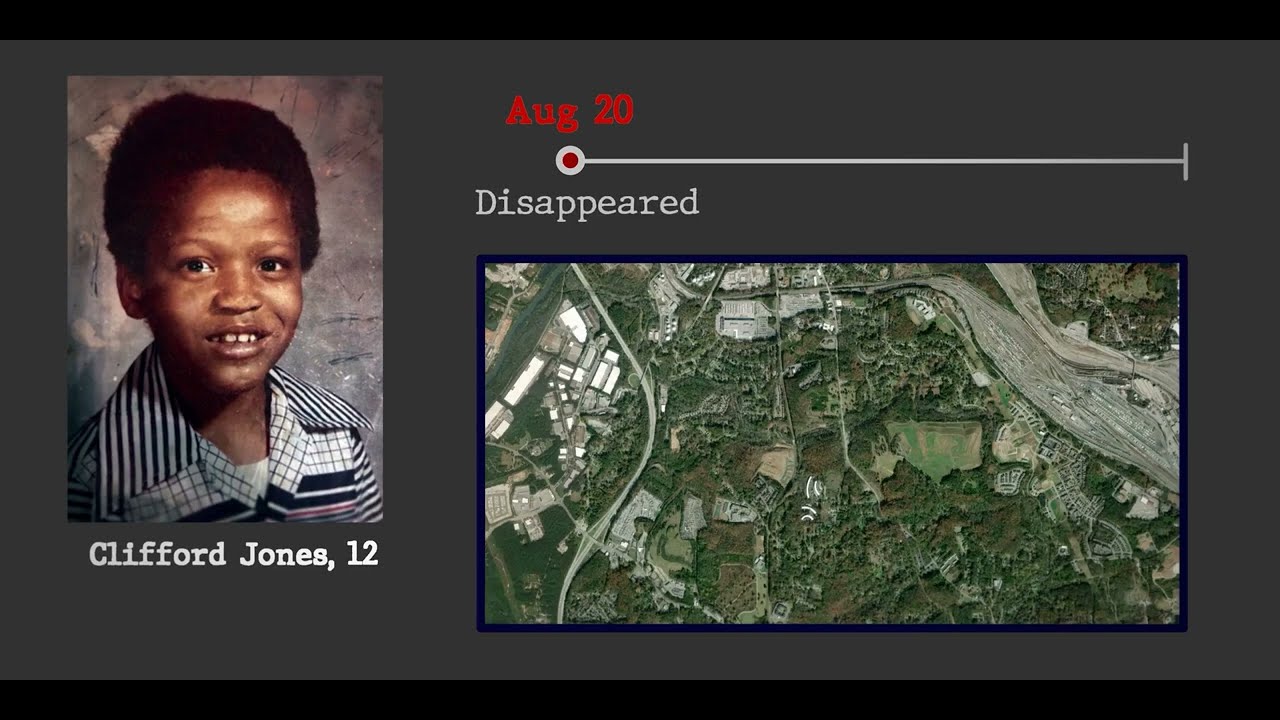
Over the next two years, a wave of abductions and killings swept through Atlanta’s Black communities. Children vanished while running errands, walking to pools, or playing outside. Their bodies turned up in woods, rivers, and abandoned buildings, often strangled, sometimes with traces of green carpet fibers clinging to their clothes.
The killer grew bolder, striking nearly every month. By 1981, the death toll had climbed to over 20, mostly children and teenagers, but also young adults. The city’s reputation crumbled as businesses fled and national media descended.

Mothers like Camille Bell, whose 9-year-old son Yusuf was found strangled in a school crawlspace, refused to accept official indifference. They formed the Committee to Stop Children’s Murders, or STOP, demanding that the Atlanta Police Department connect the cases. Under mounting pressure, a special task force was created, eventually involving the FBI.
Yet the killings continued. In May 1981, a police stakeout on the James Jackson Parkway Bridge led to the stop of a white Chevrolet station wagon driven by 23-year-old Wayne Bertram Williams, a music talent scout. Officers had heard a splash in the river below.
Williams claimed he was looking for an address. He was released, but the next day, the body of 27-year-old Nathaniel Cater was found downstream, strangled.
 Williams became the prime suspect.
Investigators found rare carpet fibers in his home and car that matched those on multiple victims, as well as dog hairs from his German Shepherd. Despite circumstantial evidence, he was arrested in June 1981 and charged with the murders of Cater and Jimmy Ray Payne. The trial, held in early 1982, was a media spectacle.
Prosecutors painted Williams as a “mad dog killer” who targeted Black children out of contempt. Witnesses testified to seeing him with victims. The defense argued that the fiber evidence was weak and that police had ignored other leads, including possible Klan involvement.
After two months, the jury convicted Williams, sentencing him to two consecutive life sentences.
 Law enforcement closed 23 cases, attributing them to Williams, but many families felt cheated. No trial was held for the other victims.
Rumors persisted that the KKK had been involved, with secret wiretaps revealing Klan members discussing abductions. Critics argued that the official list of victims was arbitrary, excluding cases that didn’t fit a pattern. Some believed the killings continued after Williams’ imprisonment, but the city, eager to move on, declared the crisis over.
The mothers of the lost children never got full closure. The legacy of the Atlanta Child Murders remains a dark chapter, a story of systemic neglect, rushed justice, and a community’s desperate fight for answers. The city too busy to hate had failed its most vulnerable, and the truth may never be fully known.