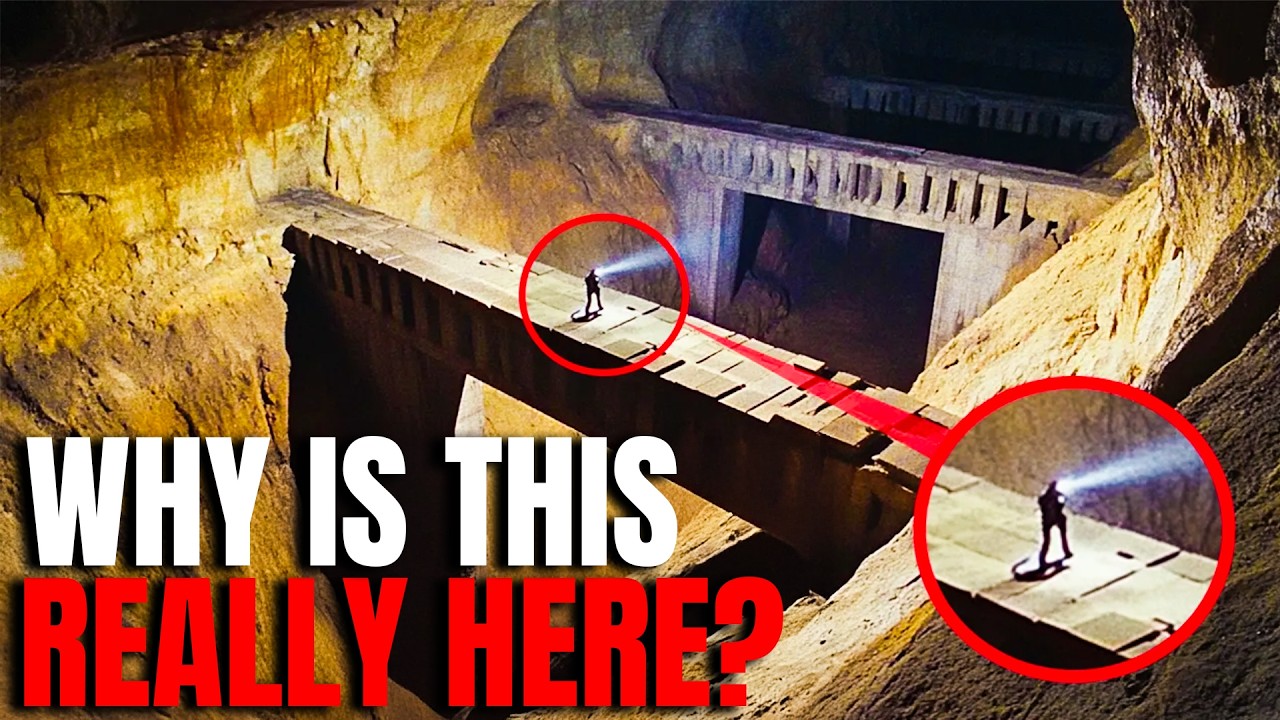
Could there really be an ancient pyramid hidden in the heart of France? This intriguing question has emerged as researchers delve into the mysterious Pyramid of Kuad, a remarkable relic that overlooks the quaint town of Autton in central-eastern France.

This ancient monument, dating back to the first century AD, has a square base measuring approximately 35 feet on each side and rises to a height of 74 feet. Unlike the iconic pyramids of Egypt, the Pyramid of Kuad resembles the Nubian style more closely. It was constructed shortly after the famed Pyramid of Cestius in Rome, which dates back to between 18 and 12 BC. Originally, the pyramid was believed to be adorned with white marble, giving it a stunning appearance.
Autton, known as Augusta Dunham during Roman times, was founded under Emperor Augustus and served as a bustling urban center, potentially housing between 30,000 to 100,000 residents. The area is rich in Roman history, featuring remnants of walls, gates, and even an amphitheater. The Pyramid of Kuad stands as a testament to this vibrant past, although its history has largely faded into obscurity due to various battles and changes in rule over the centuries.

For hundreds of years, the pyramid has captivated the imagination of locals and historians alike. An 18th-century watercolor by Jean Baptiste Lamand captures its enigmatic presence, while records indicate that the abbot of Castile attempted to excavate the site in 1640, hoping to uncover hidden chambers. Unfortunately, his efforts yielded no significant findings, as the pyramid is primarily a solid stone structure.
Further excavations occurred in the 19th century, but they too failed to reveal substantial discoveries. However, in 1960, a lead tablet measuring about 6 inches by 2 inches was unearthed, dating back to the 2nd century AD. This artifact, now housed in the Rollin Museum in Autton, features inscriptions in both Latin and Greek, along with a prominent cross.

Today, the Pyramid of Kuad shows signs of wear, with a large cavity on one side and patched holes from past excavations. To preserve this historical gem, restoration efforts began in the 1980s, but the use of cement mortar ultimately caused more harm than good. As the structure continued to deteriorate, a new restoration campaign was launched in the early 21st century, aimed at replacing the cement with lime to better protect the original stonework. The estimated cost for this project was around €275,000, and recent reports suggest that the restoration has now been completed, ensuring the pyramid’s stability for at least another 40 years.

Experts speculate that the pyramid may have served as a cenotaph, honoring a significant figure from Roman times, possibly a local ruler. Its proximity to an ancient necropolis adds to the intrigue, as the absence of an internal chamber leaves room for the possibility of undiscovered burials beneath its stones. The lead tablet could also be linked to the monument’s historical significance, perhaps as an offering or tribute.
As we uncover more about this hidden treasure in France, one can’t help but wonder what other secrets lie buried beneath the surface, waiting to be revealed. What other ancient wonders might be lurking in unexpected places?