Before the dawn of recorded history, long before the pyramids rose and civilizations flourished, ancient peoples were erecting structures that continue to baffle modern minds. These colossal stone temples, intricate underground cities, and precisely carved megaliths have withstood the test of time, some lying hidden for millennia until their rediscovery.
Interestingly, nearly every ancient culture has a narrative of a great flood, from Mesopotamia to the Maya, suggesting a shared memory of a cataclysmic event. What if some of these remarkable structures predate that disaster? Today, we delve into the top ten ancient sites that might have been constructed before the legendary flood, showcasing real archaeological wonders that remain shrouded in mystery.
Kicking off our countdown at number ten is the enigmatic Bimini Road, an array of massive limestone blocks submerged beneath 18 feet of water in the Bahamas. Discovered in 1968, this underwater formation sparked excitement as many believed it could be a pathway to the fabled Atlantis. However, scientists assert that it is a natural formation, a type of beach rock that fractures into straight, block-like shapes, reminding us how nature can sometimes mimic human creation.
Next, we journey to Japan to explore the Yonaguni Monument, a breathtaking underwater formation that some argue resembles a sunken city. Discovered by a diver, this massive structure features flat terraces and sharp angles that have led to speculation about its origins. While the prevailing scientific view attributes its shape to natural seismic activity, the striking visuals leave many questioning its true nature.
Our third stop takes us to the Pacific, where the ancient city of Nan Madol in Micronesia captivates with its unique architecture. Dubbed the “Venice of the Pacific,” this city comprises nearly 100 artificial islands constructed from colossal basalt columns. Built by the Sodelor Dynasty between 1200 and 1600 AD, the mystery lies not in who built it, but how such enormous stones were transported.
Local legends speak of sorcery, but archaeologists propose ingenious engineering techniques involving rollers and ramps.
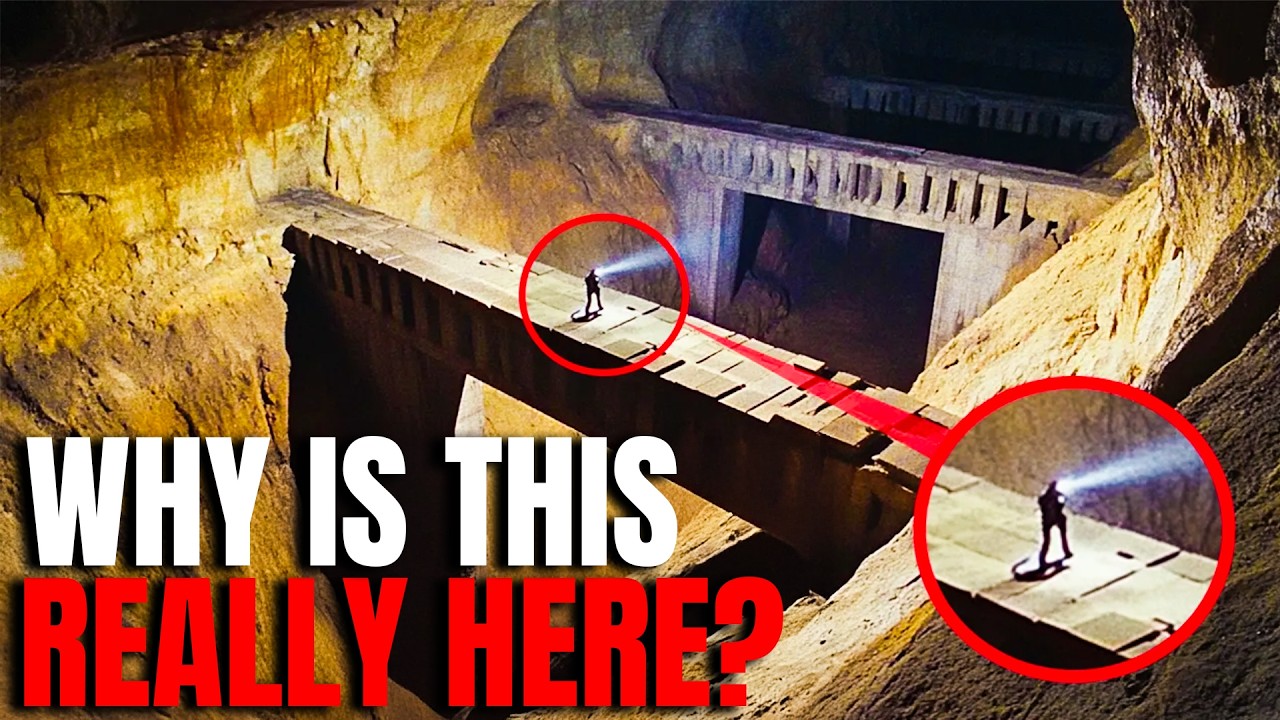
At number seven, we uncover an underground marvel in Egypt: the Saqqara tunnels. Beneath the desert, a network of tunnels houses 25 massive granite boxes, each weighing between 60 and 80 tons. Originally believed to be burial sites for sacred bulls, the precision of their construction has led some to theorize that these boxes may have been repurposed from an earlier civilization.

While there is no definitive proof, the craftsmanship continues to spark debate among scholars.
Next, we visit Baalbek in Lebanon, home to some of the largest worked stones known to humanity. The Romans constructed a grand temple here, but the true wonder lies beneath it—the Trilithon, a foundation made of three limestone blocks weighing around 800 tons each. While mainstream archaeology credits the Romans with moving these colossal stones, the logistics of such an endeavor remain a topic of fascination and speculation.
At number five, we return to Egypt to examine the Osireion, a temple that stands out for its distinct architectural style. Built with massive granite blocks, some weighing up to 100 tons, this structure is often flooded, enhancing its ancient aura. Egyptologists attribute it to Pharaoh Seti I around 1290 BC, yet its design resembles older temples, prompting questions about its true origins.
No list of ancient wonders would be complete without the Great Pyramid of Giza, our number four entry. Constructed for Pharaoh Khufu around 2550 BC, this engineering marvel is aligned with astonishing precision to true north. Although mainstream historians date its construction to this time, fringe theories suggest it may be linked to much earlier dates.

Recent discoveries, including a hidden corridor near the entrance, continue to fuel intrigue surrounding this iconic structure.
Diving deep into the Black Sea, we find evidence of an ancient shoreline uncovered by explorer Dr. Robert Ballard in the late ’90s. This discovery supports the Black Sea deluge hypothesis, suggesting it was once a freshwater lake flooded by the Mediterranean.
Alongside the shoreline, researchers have identified what appears to be a rectangular structure, hinting at a submerged settlement that may have been lost to time.
At number two, we explore Karahantepe in Turkey, a site that is challenging our understanding of prehistoric architecture. Dated to around 11,000 years ago, this location features T-shaped pillars and buildings carved from solid rock. The ongoing excavations reveal life-size human statues and artifacts, suggesting a complex society existed far earlier than previously thought.

Finally, topping our list is Göbeklitepe, a groundbreaking archaeological site in Turkey, believed to be over 11,600 years old. This monumental complex, featuring massive stone circles and intricately carved pillars, predates Stonehenge and the pyramids. Remarkably, it was constructed by hunter-gatherers who had not yet developed agriculture.
The site was intentionally buried around 8,000 BC, preserving it as a time capsule that offers a glimpse into a long-lost world.
From submerged wonders to ancient temples, these ten sites challenge our understanding of history and the ingenuity of early humans. As researchers continue to unearth secrets, one question lingers: what other mysteries from our past await discovery?