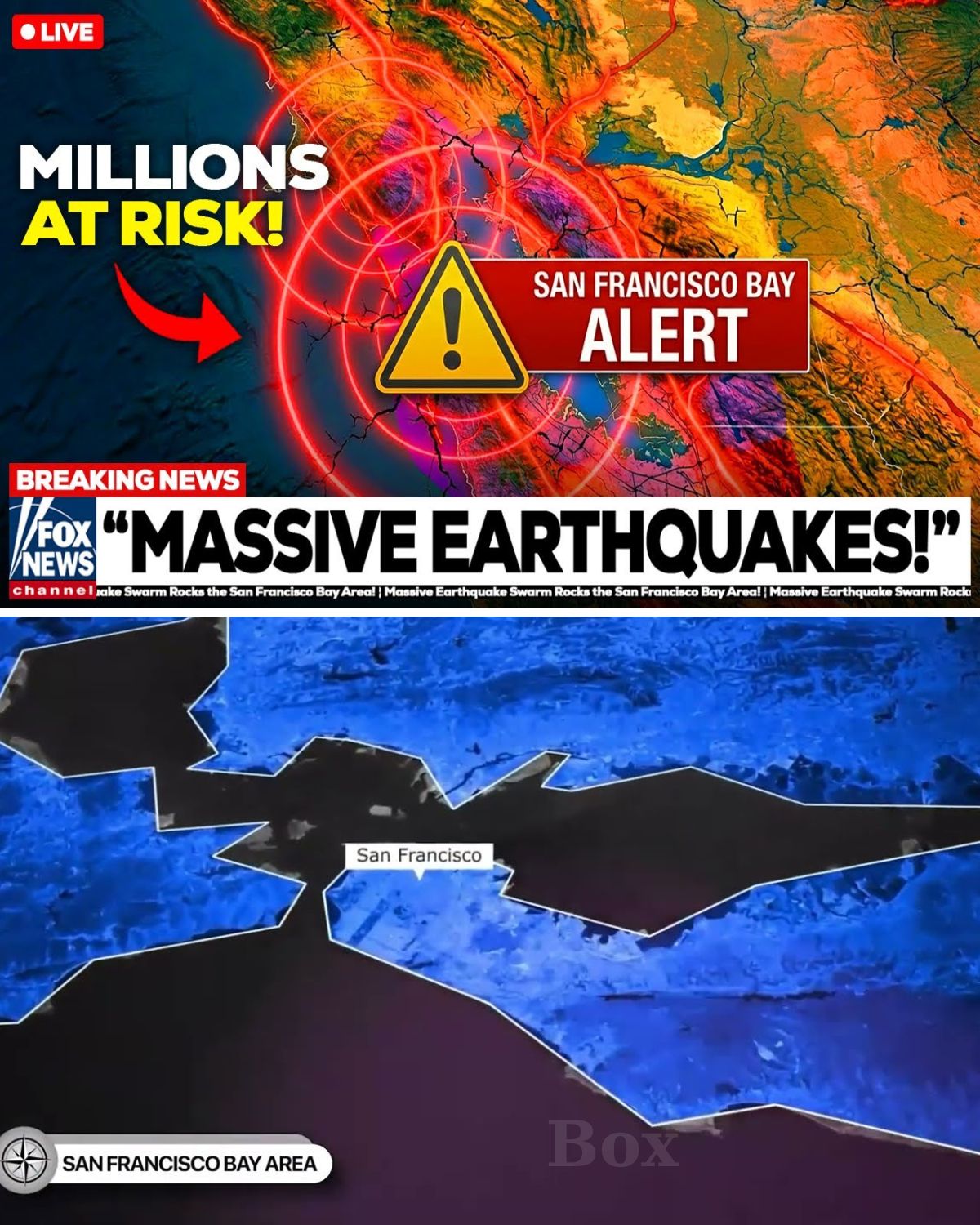
The San Francisco Bay Area is once again in the spotlight after a series of powerful earthquakes rattled the region, leaving residents on edge and sparking urgent conversations about seismic safety. Last week, a swarm of quakes, including a notable 4.0 magnitude tremor, sent shockwaves from the East Bay hills to Gilroy and San Ramon, raising questions about what lies beneath the surface.
 As dawn broke, the calm of the Bay Area was shattered by a rapid succession of tremors. Eight distinct quakes struck in quick succession, each one amplifying the anxiety felt by those living in the shadow of the infamous fault lines. Why do these seismic events often come in clusters? Scientists explain that when one segment of the Earth’s crust shifts, it can trigger a chain reaction, redistributing stress and causing nearby faults to slip. This interconnectedness can lead to what’s known as an earthquake swarm, where multiple quakes occur in close proximity without a single dominant event.
The recent swarm has been particularly intense, with over 20 quakes recorded near San Ramon alone, each ranging from magnitudes of 2.5 to 3.8. This level of activity is unusual for the region, prompting experts to analyze the patterns closely. Unlike typical aftershocks that follow a major quake, swarms are characterized by their clustering and can occur independently, often leaving scientists to ponder their implications. The Bay Area’s geological landscape is a complex web of fault lines, including the notorious San Andreas, Calaveras, and Hayward faults. These interconnected systems are constantly absorbing and releasing tectonic stress, which can lead to swarms like the one currently being experienced. While there is no immediate indication that this activity heralds a larger quake, the alignment of these tremors along key fault lines has experts on alert.
Seismologists are carefully monitoring the situation, looking for signs of escalating patterns or shifts that could indicate a potential risk. Each swarm serves as a reminder of the Earth’s dynamic nature, and while today’s activity may not signal an impending catastrophe, it underscores the importance of preparedness in a region known for its seismic history.

Residents of the Bay Area are no strangers to the rumblings of the Earth. Conversations about the recent quakes have sparked discussions about readiness and resilience. Many are taking the opportunity to review emergency plans and check supplies, while others wonder if these swarms will become a normalized part of life.
 The past week’s seismic activity offers a unique glimpse into the mechanics of the Earth’s crust. With over 60 quakes logged in just seven days, scientists are eager to understand the underlying causes and what they might reveal about future risks. Each tremor provides valuable data that could help refine earthquake prediction models and improve community safety.
As the dust settles and daily life resumes, one question lingers: How prepared is the Bay Area for the next big quake? The mysteries of the Earth lie just beneath the surface, waiting to be unraveled. What lessons will these recent tremors teach us about living in harmony with a restless landscape?
https://www.youtube.com/embed/aM3F9Xjvsls