Have you noticed that Formula 1 still hasn’t released its 2027 calendar? It’s a strange silence for a sport that usually has its schedule locked in well over a year ahead, and the reason behind the delay is sending shockwaves through the paddock.
The 2026 calendar dropped in June 2025, and the 2025 version came out even earlier, in April. But now, with 2027 just around the corner, fans and organizers are left guessing. The usual clues are there—Vegas late in the year, trips to Brazil, China, Japan, and Portugal—but the actual dates remain a mystery.
According to reports, the hold-up isn’t about adding more races or sorting out logistics. It’s about something much bigger: the ongoing conflict in the Middle East. The war, which escalated after the US launched operations against Iran earlier this year, has already forced major changes to the 2026 season.
Saudi Arabia’s race was canceled, and Bahrain’s weekend was moved to Malaysia.
Now, Qatar and Abu Dhabi are reportedly on shaky ground too. And that’s just the short-term headache. The real concern, sources claim, is what happens next.
The 2027 calendar is expected to include a season-opening double-header in Bahrain and Saudi Arabia, but committing to those March dates feels nearly impossible given the current instability.
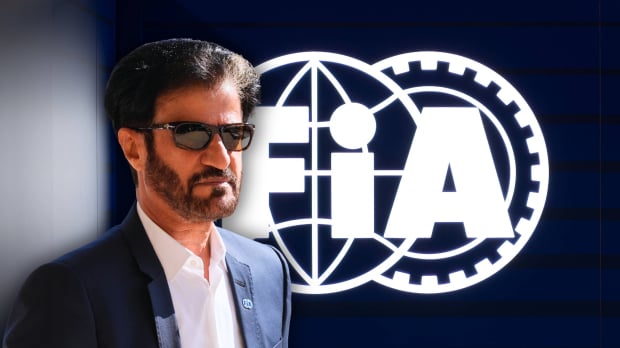
FIA president Mohammed Ben Sulayem recently told the AP there’s “no emergency” over the calendar, but he also refused to confirm whether races just months away would go ahead. “Being from that part of the world, we can’t jump the gun,” he said, adding that safety for staff, drivers, and teams is the top priority.
 The problem is that no one knows what comes next. Much of the uncertainty reportedly hinges on the unpredictable decisions coming out of the White House. With Donald Trump in charge, the sport can’t plan around US policy because, as insiders put it, even the president himself likely doesn’t know what he’ll do next.
This isn’t just a scheduling headache—it’s a financial earthquake. Bahrain, Qatar, Abu Dhabi, and Saudi Arabia pay tens of millions more than traditional European venues to host races. They also fuel major sponsorship deals with companies like Aramco and Qatar Airways.
 If those races disappear for an extended period, the money could vanish too.
There’s also the $480 million Qiddiya Speed Park Track in Saudi Arabia, set to host its first race in 2028. If conflict drags on, that project could become a massive white elephant, straining relationships between F1 and the region’s decision-makers.
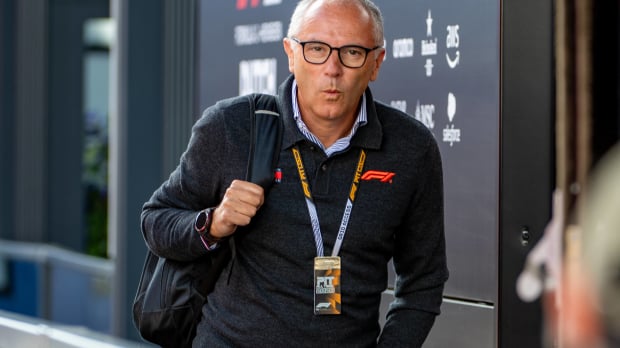
F1 CEO Stefano Domenicali has previously defended the sport’s expansion into the Middle East, telling the BBC that “money is part of the business” and that big investments from certain countries benefit everyone. Now, those investments are under threat in a way that could reshape the entire sport.
So, as the world watches and waits, one question lingers: can F1 survive losing four of its biggest cash cows, or is the sport about to face its most expensive crisis yet?