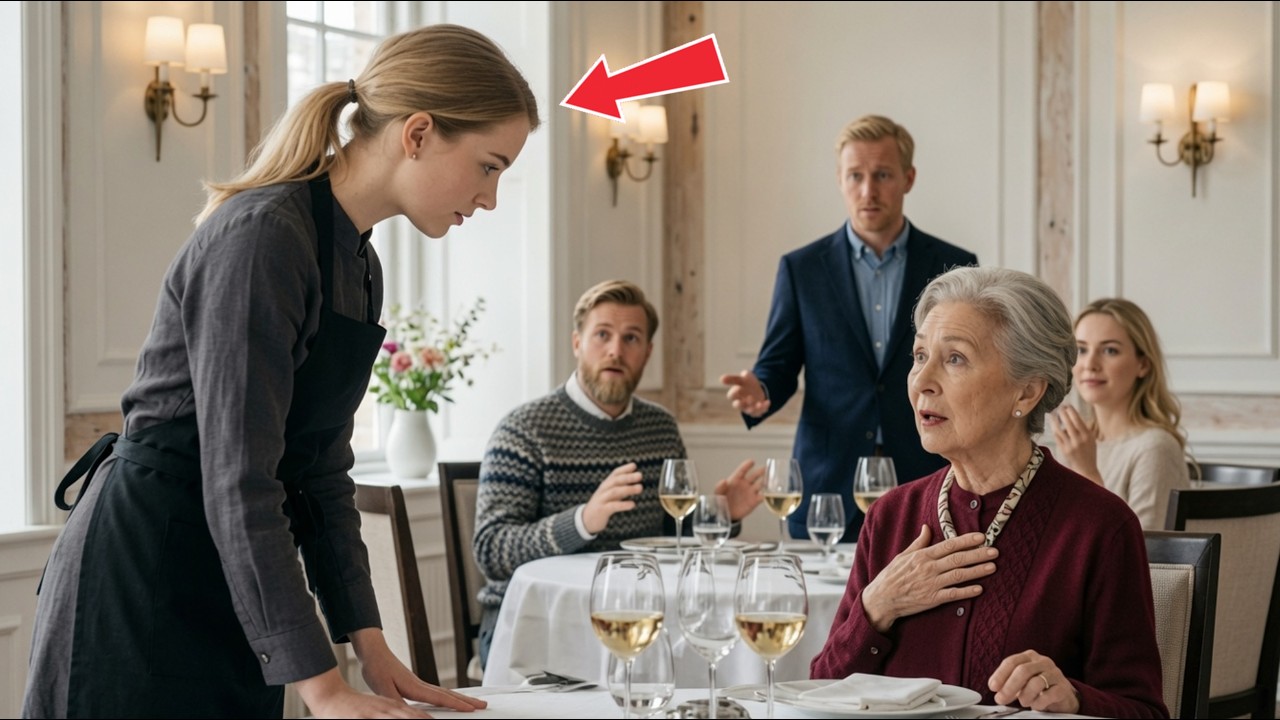
My dad laughed. “Leftovers aren’t a real job. ” My brother didn’t even look up from his phone. “That’s a dumb idea.

Who’s going to pay for old bread? ”
I stared at my bowl of rice and said nothing. I had been thinking about this idea for months, mapping out how to connect bakeries with people who needed food, how to sell surplus at a discount before it hit the trash. But no one asked what I was building.
The conversation just moved on, like I had commented on the weather. It wasn’t the laughter that hurt. It was the absence of interest. That night, lying in bed, I replayed the moment.
I knew the rules of that house: practicality over possibility, safety over curiosity. Still, some part of me had hoped for a single question. Instead, there was silence, then talk about my brother’s promotion. I didn’t decide to prove them wrong.
That kind of motivation burns out. I decided something quieter, heavier. If they couldn’t believe in it, I would believe in it long enough to see what happened. The idea came from observation.
Every night on my walk home from my coffee shop job, I passed a small bakery. Right before closing, the staff carried out heavy trash bags. One night, a bag tore open. Bread spilled onto the pavement—croissants, baguettes, rolls, still warm, perfectly edible.
Across the street, families counted every dollar. I knew because I had grown up near places like that. Hunger didn’t always look like empty plates. Sometimes it looked like pretending you weren’t hungry so someone else could eat.
Food wasted on one side of the street. Food needed on the other. I started reading about food waste in other countries. Platforms in Europe selling surprise bags, community groups redistributing excess.
The word that stayed with me was “value. ” Not charity. Not pity. Value.
Three years later, I was standing in a crowded business hall. My dad’s friend leaned in and asked, “Why didn’t you ever tell me your daughter runs that $150 million company? ”
I watched my father’s face change. Confusion.
Surprise. Something close to disbelief. He didn’t look proud at first. He looked startled, like the story he had been telling himself about me no longer worked.
When my phone lit up with his name that night, I let it ring. I wasn’t ready to compress three years of silence into one conversation. Because this story didn’t begin with success. It began with laughter at a dinner table.
It didn’t look like a startup at first. No logo, no office, no pitch deck. Just a secondhand motorbike I bought for $300, a few cracked plastic crates from a convenience store, and a stash of reused plastic bags. My uniform was a dust mask, a hoodie, and worn-out sneakers.
I remember the first night. It was past 10 p. m. when I parked outside a small bakery.
The closed sign was flipped. A woman was stacking trays. My heart pounded. “Hi, sorry to bother you.
If you have any leftover pastries tonight, would it be okay if I took some? ”
She looked up, confused. “You mean for yourself? ”
I nodded.
I was too embarrassed to explain the full plan, too afraid she would laugh at me the way my family had. She paused, then half-smiled. “We usually just toss them, but I guess I can give you a few today. ”
She wrapped three croissants in a paper bag and slid them across the counter without making eye contact.
That walk home was the heaviest one I had taken in a while. I didn’t feel proud. I felt ashamed. But then I passed the alley and saw a garbage bag split open.
Three whole loaves of bread lying on the pavement. That was the moment I turned back. Over the next week, I visited two more shops. One gave me extras without hesitation.
The other told me flat out, “We don’t want the risk. What if someone gets sick and blames us? ”
I didn’t argue. The rejections didn’t cut deepest—it was the looks.
Suspicion. Pity. As if I were scavenging for myself. I wanted to disappear every time someone called me “the leftovers girl.
”
Still, I kept collecting. By week two, I split the food into smaller packages, labeled each with a pickup date, and added a sticker printed on my cheap inkjet: “Collected fresh, still good until ____ PM. ” I wrapped each package like it was a gift. If I didn’t treat the food with dignity, how could I expect anyone else to?
Then came the real wall: distribution. I started at a local park. I offered a wrapped sandwich to a man sitting alone. “No thanks.
”
“It’s still fresh,” I said gently. He looked at the label, then at me. “Still looks like trash to me. ”
Another woman waved me off.
“I’d rather be hungry than eat what someone else threw away. ”
I wasn’t prepared for that. I thought need would override pride. But people didn’t just want food.
They wanted to feel safe and respected when receiving it. That night, I wrote in my journal: “If this is going to work, I need to learn how to deliver trust, not just food. ”
So I learned. Food safety videos.
Storage timelines from a friend studying microbiology. A secondhand cooler box. I changed the wording on the labels from “leftovers” to “rescued meals. ”
The next week, I handed the same man a tightly sealed package.
“This one’s from a cafe that sells out by lunch most days. They had extras today. ”
He took it. Two days later, he asked, “You got any of those cinnamon rolls again?
”
A bakery owner started texting me before closing. “We have a few extras tonight. Swing by. ” A woman who had previously refused now waited near her gate when I passed.
This was what the beginning looked like. Not grand, not loud, just a girl with a trash bag trying to build something the world didn’t know it needed. Then the tide came in, and I couldn’t stop it. The texts multiplied.
Two, then eight bakery owners messaging me in the evenings. I remember dancing around my room after picking up from four shops in one night. But then came night six. I collected 37 pastries, two bags of baguettes, leftover quiches, more than a dozen croissants.
My crates were full. My motorbike sagged. I had only brought enough bags for half. I tried to rush home and come back, but two bakeries had already closed.
I lost their trust that night. They stopped texting. I went home, stared at the uneaten sandwiches on the kitchen floor, and whispered, “You asked for this. ”
If I kept doing it alone, I wasn’t just failing—I might start resenting the very thing I cared about.
I was the collector, the sorter, the delivery person, the label writer, the cleaner. I was burning out quietly, and no one knew. A friend suggested, “You should start charging the shops a small pickup fee. ”
I shook my head too fast.
“It’s not about money. ”
But even as I said it, I heard the fear in my own voice. I wasn’t rejecting the idea. I was afraid I didn’t know how to build anything that wasn’t held together by idealism.
I asked three friends to help. One of them was Evelyn. We had met at a community cleanup, both of us staying until the sun went down while everyone else took photos. When I told her about the food rescue idea, she didn’t laugh.
She just said, “When do we start? ”
Rachel stayed. She was warm where I was awkward, confident where I was hesitant. By the end of the first month, half of our partner bakeries had been recruited by her.
I started building structure. A simple online form for sign-ups. A tracking sheet for pickups and deliveries. A rule: no more last-minute bakery runs.
For the first time, I wasn’t just reacting. I was designing. A friend from college doing her MBA stumbled across my initiative. “I just showed this to my professor.
He thinks you’re building something really interesting. ”
We built a tracker to measure pounds of food recovered each week. We made graphs. We had data.
And the data told a story: this wasn’t just kind, it was effective. Then the email arrived on an ordinary morning. “Proposal for waste management collaboration from Greenbake Chain. ”
17 branches across the city.
Hundreds of kilograms of surplus food every day. They had been watching what I was doing. They wanted to know if I could collect and process surplus food according to “the model you’ve been operating. ”
My first thought wasn’t excitement.
It was suspicion. Surely they had the wrong person. When I walked into their office, the lobby smelled like coffee and polished wood. The receptionist smiled and said, “They’re expecting you, founder.
”
The word hit harder than any insult. I had never called myself that. I sat across from three executives in tailored suits. “How do you guarantee hygiene standards?
What are your time commitments? Do you have a scalable model? ”
They weren’t mocking me. They were serious.
Painfully serious. Rachel stayed up with me until 3 a. m. , rehearsing answers.
We printed cheap uniforms with a logo that still felt too new. The meeting itself was quieter than I expected. At one point, one of them leaned back and said, “I like this model. It’s not perfect, but it’s very human.
”
Then came the sentence that changed everything: “We’re willing to pilot this with three branches. ”
Five times the volume. Five times the risk. The pilot nearly broke us.
One evening, a batch of pastries dried out. Another day, a customer complained about an odd smell. I called their representative to explain a problem before they discovered it themselves. “We’ve been in this industry for 10 years,” she said.
“We don’t need perfection. We need people who fix mistakes. ”
A month later, they signed a six-month contract. They posted about the collaboration, calling it a “green partnership.
” Not long ago, I had avoided familiar streets while carrying leftover bread. Now a national chain was publicly associating their brand with my work. I had proven I could sit at the table. Now I had to learn how to stay there.
The Greenbake contract meant handling more than 300 kg of food every day. Our borrowed trucks and volunteer schedule weren’t built for that scale. I had a real contract, real expectations, real food in my hands every day. Money wasn’t a nice-to-have.
Money was endurance. Money was trust. But I didn’t know what a pre-seed round was. Terms like “burn rate” and “cap table” sounded like a different language.
I stayed up nights reading articles, watching videos, trying to rewrite the foundation of how I thought about work. I opened a presentation program and stared at a blank canvas titled “Pitch Deck Version One. ” I typed “Problem,” “Solution,” “Market,” and then deleted it all because it was meaningless without numbers. Finally, I had something that looked like a pitch deck.
I chose simple designs, honest assumptions. No buzzwords. I clicked send on the email to a startup funding event. My stomach was a knot of anticipation and dread.
The day of the pitch arrived. I wore a blazer that made me feel both professional and fraudulent. The lights were brighter than expected. I had 10 minutes.
When the timer beeped, I was barely halfway through the technical details. The Q&A was worse. “How will you scale without technology? Who is on your team?
Where is your chief technology officer? What’s your customer acquisition cost? What’s your exit strategy? ”
One man, mid-50s, looked at me with professional distance.
“You’re solving a worthy problem. But this is not a scalable business as it stands. ” He paused. “Come back when you know exactly how much you need and what you will do with every dollar.
”
I walked out without an offer. Alone on a bench in the twilight, a wave of clarity washed over me. The problem wasn’t the idea. I had pitched my heart instead of my head.
Investors don’t invest in emotion. They invest in confidence, in planning, in execution. I took a month off from fundraising. Not to retreat, but to learn.
I read books on financial modeling. I watched lectures on startup finance. I reached out to other founders. Unexpected supporters emerged.
A longtime customer offered $50,000 as a partnership contribution. Rachel quit her social work job to join full-time as co-founder. A local cafe offered storage space. I wrote one line in my journal: “No one invests because they feel moved.
They invest because they trust in the plan behind the feeling. ”
I stopped asking for money. I started inviting partners to believe with me. A friend texted: “You should meet Howard.
He’s easy to talk to. ”
I treated it as a courtesy call. But when he sat down at the cafe table, he didn’t offer a handshake. He just leaned in and said, “So, tell me what keeps you awake at night.
”
I found myself talking about rejection, about the echoes of “no” that followed me. He listened without interruption. “Why are you still doing this even though people have told you it won’t work? ”
I paused.
“Because every time someone refuses to take a leftover meal, I see their fear of waste more than their hunger for food. ”
He nodded slowly. Then came the question that caught me off guard: “If I gave you one person, one system, and one chance, what would you build with it? ”
He pointed out three blind spots.
My operation relied entirely on manual labor. There was no technology backbone. And our message—”reduce waste”—lacked emotional resonance. “I don’t invest in your business idea,” he said.
“I invest in people and the way they think. ”
He wouldn’t write a check right away. Instead, he offered one mentor, one part-time CTO, and access to his network. “Show me consistent progress over the next three months, and then we talk about actual funding.
”
I wanted to say no. But something in his calm certainty made me nod. The CTO built us a dashboard that tracked orders, pickups, retention rates, and delivery times. It saved nearly 40% of our operational time.
The mentor reframed our narrative: “Stop talking about waste. Talk about delicious food at great value. ”
We redesigned our messaging around a concept called the “surprise bag. ” A playful offer that turned surplus into a treasure hunt.
Each bag cost $3 to $5 and contained food worth at least $15. “Eat well, save money, help the planet. ”
After 90 days, we sat down again at that same cafe. I opened my slides with data: retention rates, cost savings, projected growth curves.
The language had shifted. It was no longer “please believe in us. ” It was “here’s what we’ve proven. ”
The commitment letter arrived.
$150,000 to scale what we had built. I stared at the figure. This was more than capital. It was trust.
Someone willing to put real skin in the game because they saw not just the model, but the person behind it. I wasn’t the lone collector anymore. I was the founder of something scalable, strategic, and meaningful. Everything was finally moving in the right direction.
We had expanded into two new cities, hired people I once could only dream of, moved into a real office. A sustainability magazine ran a feature with a headline that made my chest tighten: “The startup turning food waste into urban impact. ”
Then, late one evening, my phone buzzed. Rachel’s text was short: “You need to see this.
I’m sorry. ”
The post was from a well-known environmental group I had long admired. The title was sharp: they accused models like ours of “legalizing profit from trash,” arguing that leftover food should be given away, not sold. They implied that companies like mine were exploiting morality for revenue.
What cut deepest wasn’t the anger. It was recognition. Many of the people questioning us had once been supporters, volunteers, early users. I sat up late drafting a long response explaining our entire process.
I pressed publish. It didn’t help. People weren’t looking for explanations. They were looking for a reason to decide whether to trust us.
“Use to give food away. Now you sell it. ” “Another startup pretending to be ethical. ”
At the emergency meeting, the room was divided.
One group argued we should go silent. Another wanted to fight back with data. Rachel sat in the corner, unusually quiet. I said the only thing that felt honest: “We’re not going to win this by being louder.
”
Instead of counterattacking, we reached out to the group that had criticized us and invited them to visit. We announced a live stream that would show everything—pickup, sorting, safety checks, distribution. No filters. No editing.
During the live stream, viewers watched gloves being changed, food logged, timestamps recorded. We explained why some food couldn’t be donated freely, why systems were necessary. Comments shifted. Questions replaced accusations.
A week later, another environmental organization reached out to propose a joint campaign on responsible food rescue. What began as an attack turned into a conversation, then into collaboration. I learned that being right was less important than being responsible. Fear, when faced directly, could become alignment instead of retreat.
Just as I began to breathe again, a new challenge surfaced—this one from within. The message came late at night. Rachel. “Can we talk tomorrow?
”
I didn’t sleep much. Rachel never texted this late unless something was wrong. She had been there for everything. The riverbank cleanup.
The first bakery run. The 3 a. m. rehearsal.
The day she quit her job. The next morning, in the small conference room, she said it: “I think I want to leave the company. ”
“I feel disconnected from the pace, from the direction,” she said. “I miss the early days, when we used to deliver bread ourselves.
When we knew every single person who received a meal. Now I spend my days in spreadsheets and conference calls. I joined this because I wanted to help people, not manage systems. ”
I wanted to argue.
But I knew what she meant. I felt it too, late at night, when I couldn’t remember the last time I had handed a meal to someone directly. “Thank you for telling me,” I said. “I’m sorry you feel this way.
”
She left a little while later. No drama. Just a quiet closure. Her departure created a real problem.
She had been the one handling relationships with our original bakery partners. Without her, those relationships became transactions. Within a week, three partners stopped returning calls. We lost 15% of our pickup volume.
I found myself back on the motorbike some nights, doing pickups I hadn’t done in over a year. I drafted a note to the team. Not a press release—just honesty about change, about how growth sometimes means people have to find their own paths. I posted it on our internal channel.
Slowly, responses came. Thank you. Reflection. Vulnerability.
We created a dedicated partner relations role. We started a mentorship circle for regular check-ins about purpose, not just KPIs. Two of the three silent partners came back. Mrs.
Patterson from the Corner Bakery called after I visited her with a box of her favorite tea and an apology. Startup life wasn’t linear. It was about weathering internal shifts without losing sight of why this all began. The email came on a Tuesday afternoon.
From a retail chain CEO I had met at a sustainability forum. Subject line: “National Expansion Partnership Proposal. ”
His company had 300 stores nationwide. They wanted to integrate our food recovery model into their operations.
Shared branding. Unified logistics. Potential market exclusivity. For a moment, I allowed myself the thrill.
But then a different thought crept up: at what cost would this growth come? The proposal required standardizing everything. They wanted to remove the term “surprise bag” in favor of a more corporate label. They wanted to shift decision-making to their central office.
Most significantly, they wanted to integrate our core model into their proprietary logistics infrastructure. In one clause, we were no longer calling it “leftover food rescue. ” We had to use “inventory optimization for commercial distribution. ”
In the quiet hours of the morning, I wrote: “I’m not sure this is what we started for.
”
At the company-wide meeting, someone asked the question I had been tiptoeing around: “Are we going to be doing something we regret? ”
I didn’t have an answer yet. I drafted an email requesting a phone call. For an hour, we discussed definitions, identities, purpose.
He spoke of growth, market, strategy. I spoke of impact, dignity, community. At the end, he said, “We want to grow with you, not over you. ”
That evening, we defined our non-negotiables: transparency in all operations, dignity for recipients, named “surprise bags,” not corporate jargon, decentralized choice of beneficiaries, an advisory council that included community voices.
We drafted a counter proposal. It wasn’t just a list of conditions. It was a value manifesto. “We value reach,” I said on the next call, “but we value identity more.
”
After a long silence, he said, “If we can meet at the intersection of scale and soul, let’s build that path together. ”
A week later, they sent back a revised offer. Shared branding only at flagship locations. A dual-track logistics option that preserved our independent routing for local partners.
An agreement to keep “surprise bag” as a featured term in customer communications. They had not only accepted our manifesto—they had adapted parts of their own playbook to accommodate it. I wrote in my notebook: “Growth is not about being bigger, but becoming truer. ”
I didn’t know exactly when he arrived.
One moment I was surrounded by charts. The next, in the middle of a crowded sustainability conference hall, I saw him. A familiar silhouette. My father, standing near the refreshments table, arms loosely folded, eyes scanning the room as if he were looking for someone he used to know.
The first thing I noticed was that he wasn’t laughing. At a break between panels, he approached me. “You’ve been busy. ” Not a critique.
Not a question. A statement. He smiled—just a tiny shift of his lips—and in that half-smile was nostalgia, curiosity, and something like pride fighting its way through years of silence. “I heard your name mentioned a few times,” he said.
“People seem to think you’re doing important work. ”
Later, we found a quiet corner outside. I told him about everything: the first bakery pickups, the chaos of scaling, the media storm, Rachel’s departure, the new manifesto, the retail chain. He listened.
For a long time, he didn’t say much. Then he said, “I tried to imagine what it would be like, turning leftovers into something more. But I couldn’t see it. I don’t know if I get it now, but I see you.
I see what it means to you. And now I’m proud. ”
No “I told you so. ” Just “I see you.
”
“What changed? ” I asked gently. “I came because I heard people talking about your work,” he said slowly. “Not just what you do, but how you do it.
”
Later that evening, we walked through the lobby together. Not awkward. Not tense. Just present.
“You’ve built something real,” he said. “Not rich, not successful. Just real. ”
The next day, I took the stage again, this time without the weight of unspoken judgment.
I didn’t use slides. I spoke about the torn trash bag, the man in the park who said my food looked like trash, Rachel who believed in me before I believed in myself. When I mentioned the $3 surprise bags feeding thousands each week, there was a murmur. When I talked about the bakery owner who cried the first time she saw her surplus bread go to a family instead of a dumpster, people in the front row wiped their eyes.
After the talk, a woman my mother’s age held my hands and said, “My daughter thinks she has a stupid idea, too. I’m going to call her tonight and apologize. ”
Later, my father approached again. “Do you remember that dinner?
” I asked, “when you said ‘Leftovers aren’t a real job’? ”
He was quiet for a moment. Then he nodded slowly. “I remember.
I was wrong. ”
Three words. Simple, direct, unadorned. The three words I had waited three years to hear.
That night on the plane, I wrote in my journal: “Sometimes the greatest endorsement isn’t applause, it’s understanding. ”
When my phone lit up with his name, I answered. We talked longer than I expected. He asked questions about the business—real questions, the kind he used to reserve for my brother’s accounting career.
He wanted to know how the surprise bags worked, how we kept the food safe, how many people we fed each day. Before we hung up, he said, “Your mother wants to volunteer at one of your distribution sites. She said she wants to help pack bags. ”
I laughed, tears pressing at the corners of my eyes.
“Tell her I’ll put her on the schedule. ”
In the months that followed, success stopped feeling like a finish line and started feeling like a responsibility. We faced questions about expansion, about staying true to our mission while navigating markets that wanted speed over care. We turned down opportunities that would have made us bigger faster but hollowed out our soul.
We said yes to slower paths that kept communities involved. On the anniversary of the company’s founding, we held a simple gathering. Croissants from the bakery where it all began. Sandwiches from the cafe that gave us our first storage space.
Fruit from the grocery chain that had once rejected us and now partnered with us in three states. My phone buzzed with a message from Rachel—a photo of her at a community garden in Portland, surrounded by teenagers sorting vegetables. The caption read: “Still rescuing, just in a different way. Happy anniversary.
I’m proud of what we built. ”
I showed it to my father. “Is that the one who left? ” he asked.
I nodded. “Sometimes the best people are the ones who know when to leave,” he said. “Doesn’t mean they didn’t matter. ”
My mother was there, wearing one of our volunteer aprons, arranging plates with the same quiet efficiency she had always brought to family dinners.
At one point, my father caught my eye and smiled—a real smile, unguarded. The table was full. And this time, the silence felt like peace. The first email came from a stranger on the other side of the country.
“I started a group here in my town using your framework. We call it ‘Too Good To Waste: High School Edition. ‘ It’s changed the way we think about food in our community. ”
There were photos attached: a dozen teenagers in reflective vests, bikes loaded with baskets of bread and fruit, and on a chalkboard behind them, the words “Reduce, Rescue, Respect.
”
This wasn’t just my story anymore. It was a story others were living too. More messages arrived. A university chapter.
A nonprofit hosting a city-wide food share. A group of high schoolers who unfurled a banner at a farmers market reading “Leftovers are potential. ”
I began to see myself in them. I saw my early nights of loneliness in the tired but determined eyes of a volunteer coordinator in a rural county.
I saw my anxieties in the cautious optimism of a small business owner. I saw my hope in the smile of a child distributing her first rescued sandwich. A national forum on social innovation invited me to speak—not about financial results, but about how small actions lead to systemic change. “Change doesn’t start in boardrooms,” I said.
“It starts in tiny, unglamorous moments. In the act of noticing what most people ignore. In the torn seam of a trash bag. In the hesitation of someone deciding whether to take a surprise bag.
In the rhythm of people choosing to show up. ”
Afterward, in the quiet of the backstage area, my phone buzzed again. A teacher I had never met. “Your story inspired my students to start their own zero-waste garden project.
” Underneath, a photo of children kneeling in soil, planting seeds. I stared at that photo and a thought came unbidden: This isn’t just impact. This is a legacy. When people ask me now what the secret was, I don’t give them a formula.
I tell them there was no moment when it suddenly made sense. No guarantee the risk would pay off. There was only a series of choices made without applause, guided by a quiet insistence that meaning matters. I tell them that being underestimated is not a curse if you’re willing to do the work in the shadows.
That the world doesn’t need more perfect plans. It needs more people willing to start with what they have and learn out loud. Sometimes late at night, I think about that first dinner again—not with bitterness, but with a strange affection for the person I was then, sitting silently, holding an idea no one else could see. The company is valued now in numbers that make headlines, but those numbers are not what sustain me.
What sustains me are the messages from people who say they see food differently now. Who say they feel less ashamed asking for help. Who say they started something small because they saw someone else do it first. What sustains me is the knowledge that a dismissive laugh didn’t get the last word.
The things worth building rarely look like jobs at first. They look like questions no one else is asking yet. If you’re holding a question no one else is asking yet, this might be your moment.