On September 22, 2019, Ivonne Parks walked into her grandmother’s apartment in Bradenton, Florida, and found her brother Joel still in the recliner where she’d seen him the night before. A blanket covered him. He hadn’t moved in hours. When she looked closer, his chest wasn’t rising.
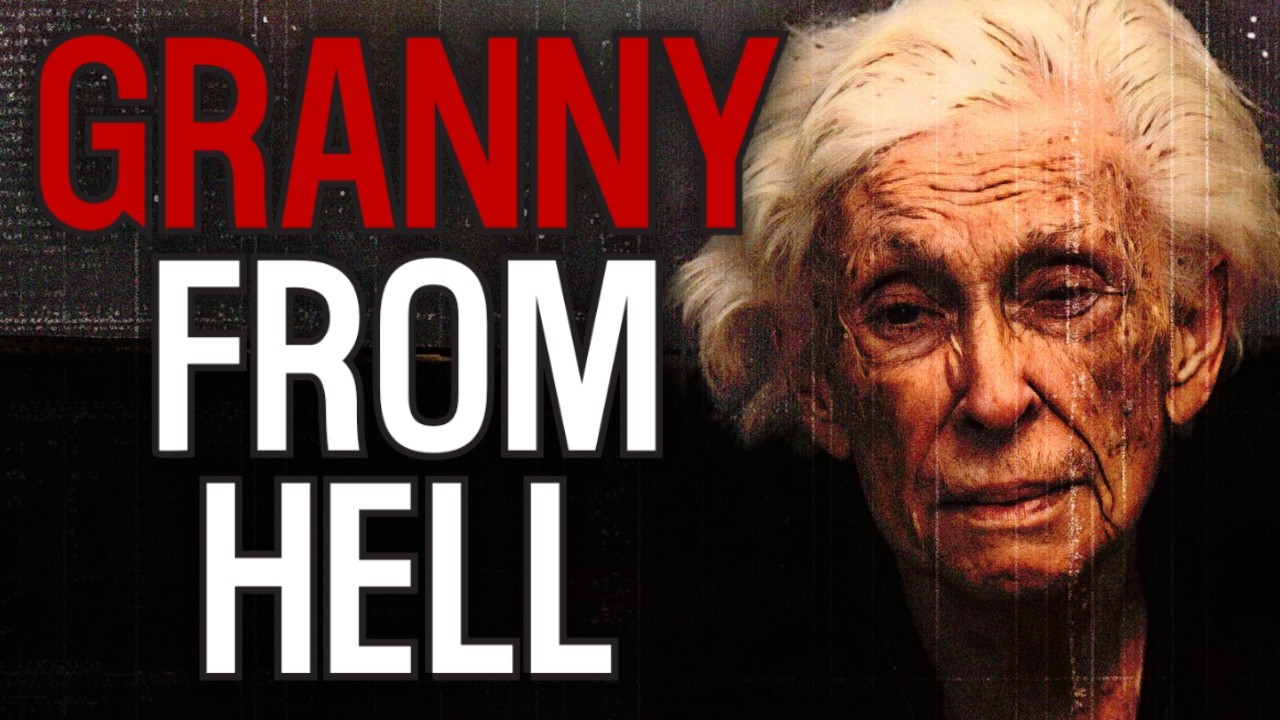
“It doesn’t look like he’s breathing,” she told her grandmother. “That’s because he’s not,” Lillian Parks replied. Ivonne pressed her. “What do you mean he’s not?
What are you talking about? ”
“Oh, I’m doing us both in. We’re going together. ”
Ivonne saw a pill in her grandmother’s mouth.
She ran out and called the police. Joel David Parks Jr. was 30 years old. He was born on February 17, 1989, in Meriden, Florida.
His parents divorced when he was four, and after his father died, his mother struggled to raise him and his sister on her own. Custody shifted to their grandmother, Lillian, then 61. From that point on, she raised Joel and Ivonne, and by all accounts she gave them consistent care. Joel had a cognitive disability.
Some reports attributed it to autism; others suggested a brain injury from a car accident in his infancy. He was physically healthy but needed lifelong support. He had a bright personality, a constant smile, and gave the strongest hugs. His family called him Bubby.
His sister called him Bonnie. Joel attended the Easter Seals day program in Southwest Florida. The CEO, Tom Waters, remembered him as one of the happiest guys you could ever meet. He’d walk up to people and call out, “Hi, friend,” then wrap them in a bear hug that left no doubt you’d been hugged.
He volunteered at the Manatee Players, a local performing arts organization, and never left the building without hugging every staff member. He loved baseball and played in the Miracle League, where teammates nicknamed him Home Run Joel. Coaches watched him improve game after game, and he was proud of his own progress. As Joel grew older, state funding allowed him to move into a group home for adults with disabilities.
He could handle some tasks on his own—he held a part-time job and took care of his basic needs—but he required daily support. His grandmother, now in her 70s, couldn’t provide full-time care because of her own health problems. Joel stayed at the group home during the week and spent weekends with Lillian. His mother, stepfather, and sister lived in Ohio.
According to Lillian, Joel disliked the group home. He often wandered off, and she gave him his medication every day. In September 2019, Lillian was scheduled for hernia surgery and expected to recover in a nursing home. Knowing she couldn’t care for Joel during that period, she asked Ivonne to travel from Ohio to Bradenton to help.
Ivonne arrived around mid-September. Lillian instructed her to clear out most of the apartment—even her couch and car—leaving only the bedroom furniture. That evening, Ivonne spent time with her grandmother and Joel before going out with friends. As she left, Joel asked if he’d see her later.
They exchanged “I love yous. ” It was the last time she saw him alive. On the morning of September 21, Joel was seen at a local convenience store near his grandmother’s home, in good spirits, before heading back to the apartment. He was supposed to be on the baseball field that night, but his grandmother had other plans for him.
Ivonne spent that day with her boyfriend and friends. When she returned to the apartment late that night, she saw Joel asleep in a recliner with the TV on while her grandmother rested nearby. Nothing seemed unusual, so she went to bed. The next morning, around 8 a.
m. , she saw Joel still in the recliner, covered with a blanket. She accidentally bumped the chair, but thought he was just sleeping in. Hours passed, and he never moved.
When Ivonne grew concerned, Lillian told her he’d stayed up late watching movies. By noon, Ivonne checked on him again. He hadn’t shifted at all. That’s when she realized he wasn’t breathing.
When the ambulance pulled up outside the apartment, neighbors assumed it was for the elderly grandmother. Instead, they were stunned to learn the call was for Joel. Officers found him lifeless in the recliner while Lillian remained in a bed nearby. Joel was pronounced dead at the scene.
There were no signs of physical injury or struggle. Police first spoke with Ivonne, who explained she’d come to Florida to help clean out her grandmother’s apartment. Then they questioned Lillian, who stayed in bed. “He’s needed help his whole life and has been living in a home, but he doesn’t do well there,” she told them.
“He walks around outside here, and I have to go find him. I’ve been taking care of him and giving him his medication every day. ”
She admitted that around noon the day before, she gave Joel an unknown amount of prescription pain medication, then took some pills herself. She said she’d been told she had about five months left to live and didn’t want Joel to suffer alone after her death.
“I want him to be with me when I go, so I put him to sleep, and then I’ll go to sleep too,” she said. “I wanted him to go to sleep, and now he’s asleep. ”
She said she wanted him in heaven with her. She’d written letters to family members and left behind $1,500 to cover cremation costs for both of them.
With her health failing, she didn’t want to spend her final months in a nursing home. Lillian was taken to Manatee Memorial Hospital under the Baker Act, a Florida law permitting involuntary hospitalization for those who pose a danger to themselves or others. A search of her apartment revealed a prescription bottle in her name, filled on September 17 with 120 pills. Only two remained.
Investigators concluded Joel had likely been given a fatal dose. Multiple letters addressed to family were recovered, each containing explanations and instructions about what she did. Police noted that Lillian had described Joel’s relationship with his mother as estranged. But Tashia and her then-husband James pushed back.
They denied any estrangement and insisted they’d always been present in Joel’s life. They said they were ready to take him in and had been preparing for Ivonne to bring him back to Ohio. If that hadn’t happened, Tashia said she would have come to collect him herself. It also became clear that Lillian had never set up any formal guardianship arrangements for Joel, despite her advanced age and health issues.
She could have legally transferred responsibility to a family member. She chose not to. Ivonne later reflected that her grandmother likely already knew her time was limited when she asked her to come help clean the apartment. She believed Lillian had been weighing two paths: undergo the hernia surgery, stay in a nursing home, and trust that Joel would be taken to Ohio, or do what she ultimately chose to do.
In the end, however she justified it, she chose the latter. Ivonne expressed disbelief at her grandmother’s choice. There were plenty of relatives willing and perfectly able to care for Joel, she said. It was wrong for Lillian to insist there were no other alternatives.
Joel also had state funding that would have guaranteed his care even after Lillian died. Bradenton Police Captain Brian Thies described the case as complicated for detectives. On one side, they saw an elderly woman worried about her grandson’s future care. On the other, they couldn’t ignore that she intentionally ended his life.
He emphasized the department’s responsibility to look at the situation as a whole and uphold Joel’s rights as the victim. Regardless of Lillian’s age or Joel’s disability, a life had been taken. “At the end of the day, she took the life of Joel Parks,” Thies said. Cases where caregivers murder disabled dependents are not rare.
While no national database exists, research shows that filicide is more common among children with disabilities than those without. According to research by the Ruderman Family Foundation, killings of disabled individuals by a family member or caregiver happen about once a week. The true number is believed to be higher because many cases go unreported or the victim’s disability is never disclosed. When such cases go to trial, courts often show leniency.
The culprits may receive lighter sentences than other murderers because juries sometimes accept hardship as a defense. Advocates for justice strongly reject this framing, but history reflects how people with disabilities have long been devalued. In World War II Germany, around 200,000 disabled individuals were killed between 1940 and 1945, with medical doctors overseeing the executions. In the United States, a 1927 Supreme Court ruling upheld sterilization, and roughly 65,000 disabled Americans were forcibly sterilized across 30 states.
That wasn’t even 100 years ago. Advocates warn that a justice system built on such biases often delays or weakens justice for disabled victims. Lack of resources also plays a role. Adults with developmental and intellectual disabilities face limited care options once they leave the school system.
Without a national support framework, many rely solely on family members, most of whom aren’t equipped to provide long-term care. After being discharged from the hospital 12 days after being admitted, Lillian was taken into custody at the Manatee County Jail and charged with second-degree murder, awaiting trial. Her case was later reduced to manslaughter. This decision drew further frustration from Joel’s family, who argued the act had been planned for weeks and should have counted as first-degree murder.
But the trial never happened. On January 1, 2020, a little over three months after Joel’s murder, Lillian Parks died. With her passing, the case effectively ended. Authorities did not release Joel’s autopsy results, nor were the letters Lillian left behind ever made public.
The family did not speak further, and no obituary for Lillian appeared after her death. What remained were unanswered questions. No official details came out about Joel’s final moments, and nothing more was said about Lillian’s writings. After his death, the community that surrounded Joel was devastated.
Leaders at Easter Seals, along with many in Joel’s community, described the loss as deeply painful. They offered condolences to his family while also choosing to honor Joel by celebrating the happiness he brought to everybody who knew him. “The Easter Seals family is in mourning,” Tom Waters said. “The disabilities community is in mourning.
Lots of people are in mourning because everything in this situation is tragic. We want to express our condolences because as we mourn, I know they do, but we’re celebrating him. We’re celebrating the life that he had and the life he shared with us. ”
Jordan Jones of the Miracle League shared: “I think our whole entire community has been shook by this.
We know he may be in a better place, but it’s just not something anybody saw coming. ”
Joel’s celebration of life was held on Thursday, October 3, 2019, at the Salvation Army in Venice, Florida. On his online obituary, friends who knew him from Chase Bank remembered his smile and hugs, writing how much they would miss him. One caregiver shared how special it had been to know him, recalling his bright smile in their last conversation at a neighborhood Walmart.
She described it as an honor to have cared for him. Now his loved ones are left only with memories and a voicemail from Joel telling his mother, “I love you. ”
His sister Ivonne still remembers the last exchange they shared. “I was headed out the front door.
He goes, ‘Bonnie, see you later. ’ I said, ‘Yes, Bubby, we’ll see you later. I love you. ’ He goes, ‘I love you, too.
’ And that was the last time I seen him alive. ”
She said her grandmother’s claim that Joel was estranged from his mother was a lie. “I have never been estranged from my children by choice. I’d have come and gotten Joel.
”
“She took my brother for no reason,” Ivonne said. “And to sit there and say that there was no option, that this is the only way she knew how to take care of him—that’s crap. He lit up the room when he walked in the door. ”
His mother, Tashia, said Lillian tried to keep her out of Joel’s life.
“For her to sit there and just take it not just away from me, but his siblings, the world that he touched. ”
The family said Joel’s death was unnecessary and premeditated. “His life was cut way too short,” they said. “Nothing like this should have ever happened to him.
”
One disabled person is killed each week by a parent or caregiver. Most people don’t know that statistic. Joel Parks was one of them. He was a man who greeted everyone as a friend, hugged everyone he met, and lit up every room he walked into.
He was thriving. He had a community, a job, a team, and a family who loved him. And his grandmother decided, without asking anyone, that his life wasn’t worth living without her. She was a former nurse.
She knew the system. She had decades to put legal protections in place for Joel. She chose not to. And when her own health failed, she chose to end his life rather than trust the many people who were willing and able to care for him.
The case closed without resolution in court. But for those who knew Joel, the loss remains. They’re left with memories of his smile, his hugs, his voice on a voicemail saying, “I love you.
” And the knowledge that his life was snuffed out for nothing.