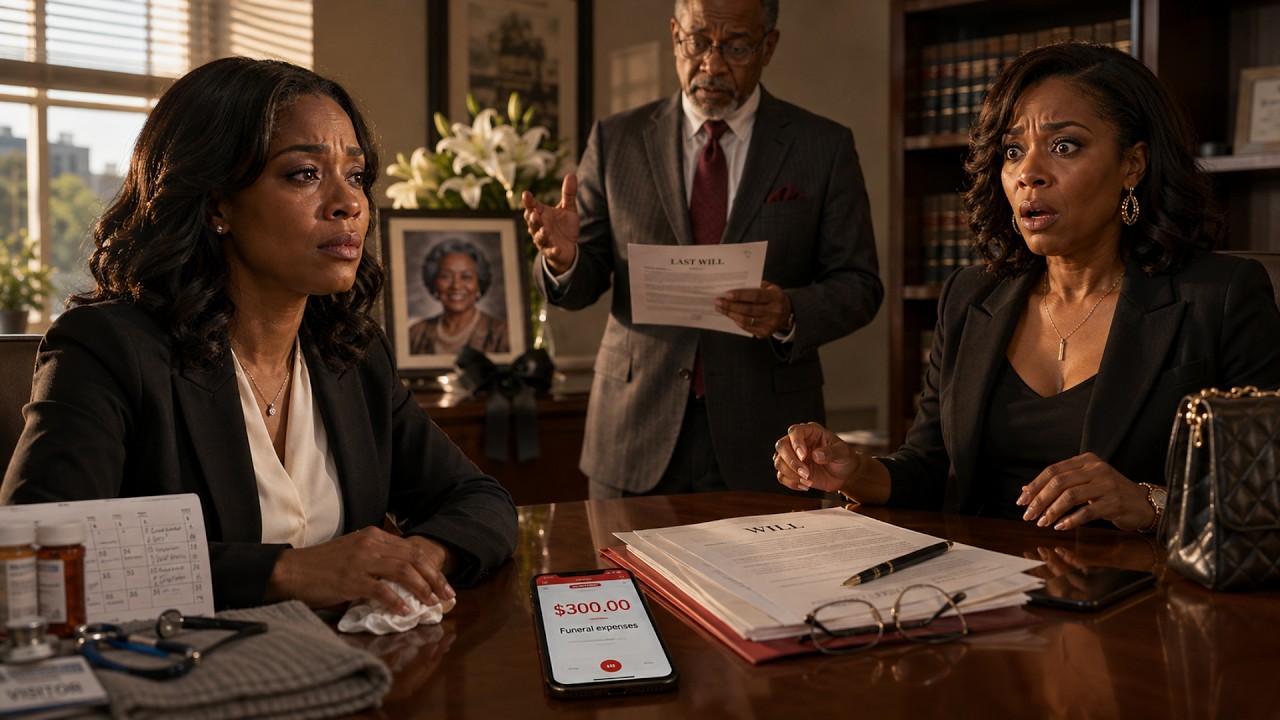
Frank’s hand came down hard on the dining table. The sound cracked through the room like a gunshot. “Buy your little brother a house or get the hell out of here. ”
The fork I’d been holding slipped from my fingers and clattered onto my plate.
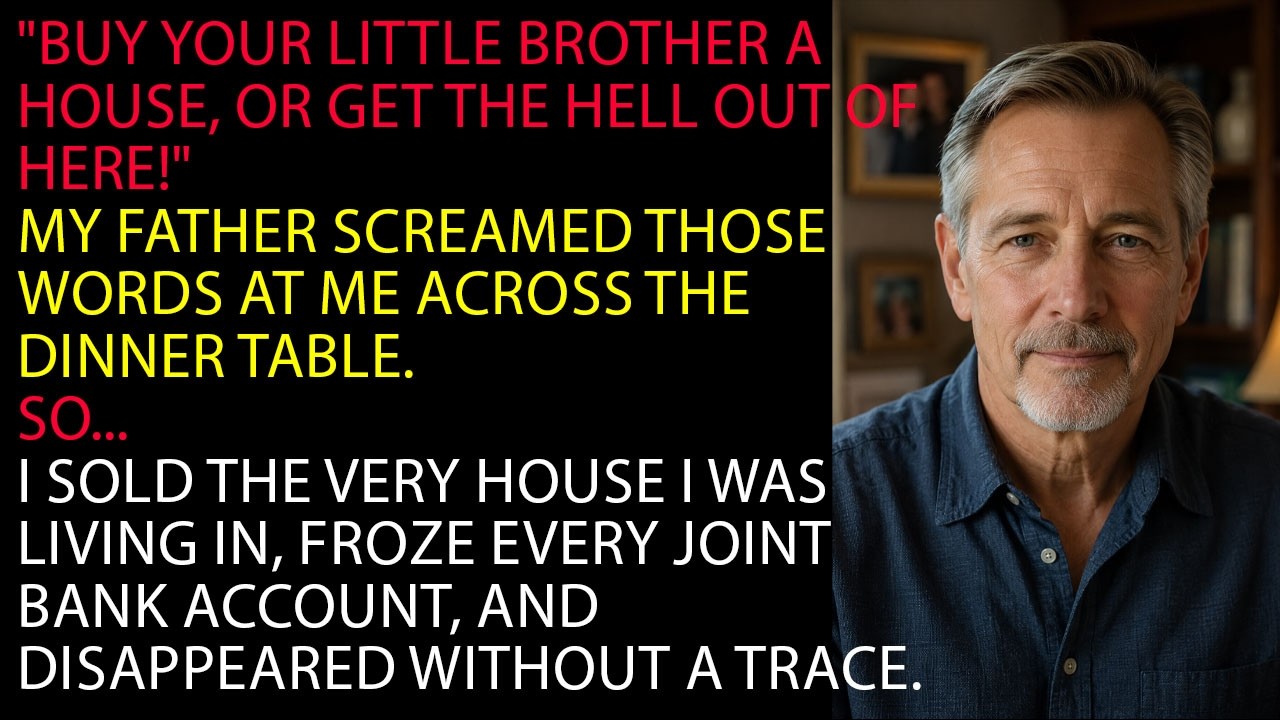
Nobody moved. My sister-in-law stared at her mashed potatoes. Tyler kept his eyes on the turkey. Even the kids went quiet.
I was fifty-seven years old. I’d built a heating and cooling business from a borrowed pickup and a toolbox. I’d buried my mother. I’d covered Tyler’s debts for more than a decade.
And somehow, sitting at that table in my father’s house in Columbus, Ohio, I was still the selfish one. I didn’t answer right away. I just looked at the man who’d raised me. Frank’s face was red, jaw tight, the way it always got when he decided something was settled.
Thanksgiving had started like any other year. Smell of sage and roasted turkey, football on low in the living room, the same chipped gravy boat my mother used to insist on. Then the conversation turned the way it always did—to Tyler’s latest mess. He’d lost another job.
The rent was three months behind. The landlord was talking eviction. And according to my father, the solution was simple. I had the money.
I had the house. I should just buy Tyler one of his own. I thought about the F-150. Three years earlier, Tyler had borrowed it to haul some junk and brought it back with a crumpled front end and a story about a deer.
The repair shop wanted sixty-eight hundred. He said he’d pay me back when things turned around. Things never turned around. I paid it.
I thought about the night his son ended up in the ER with a broken arm. Tyler’s phone went straight to voicemail. I drove over, sat with my nephew until two in the morning, and covered the bill the insurance wouldn’t touch. I thought about the bass boat.
The same month Tyler promised he’d start making payments on the money he owed me, he showed up at the lake with a shiny new sixteen-footer and a cooler full of beer. None of that mattered at the table. Frank leaned forward. His voice dropped, but it hit harder.
“Your mother would have wanted you to help him. ”
That one landed different. Three years earlier, in a hospital room that smelled like antiseptic and wilted flowers, my mother had taken my hand. Her voice was thin but clear.
“Promise me you’ll look after your brother. ”
I promised. I meant it. I spent the next three years trying to keep that promise in every way that made sense to me.
Money, time, second chances, third chances. Apparently, it still wasn’t enough. I set my napkin down carefully and pushed my chair back. The legs scraped against the hardwood.
Everyone watched. I walked over to the coat rack by the front door, pulled on my jacket, and turned around one last time. “Happy Thanksgiving,” I said. Then I stepped out into the cold November air and closed the door behind me.
The rain had started while we were eating. Light and steady, the kind that makes streetlights smear. I sat in my truck for a minute with the engine off, just listening to the drops hit the roof. Then I started up and pulled away from the curb.
The drive back to my place on the east side of Columbus should have taken twenty minutes. It felt longer. The radio was on some local station talking about an accident on I-70. The wipers thumped in their slow rhythm.
I kept both hands on the wheel and tried not to think about the look on my father’s face when I walked out. He hadn’t called after me. Nobody had. When I got home, the house felt bigger than usual.
I hung my wet jacket by the door and went straight to the kitchen. The refrigerator light came on when I opened it. Leftover turkey from the day before, still in the same plastic container. One can of diet Coke on the top shelf.
That was it. I sat at the small table by the window. I ate standing up first, then sitting down, not really tasting anything. The clock on the microwave said 8:47.
Outside, the rain kept coming. Somewhere down the block, a dog barked once and went quiet. I didn’t cry at the table in my father’s house. I didn’t cry in the truck.
I cried there in my own kitchen with a paper plate of cold turkey and a can of soda that had gone flat. Not loud. Just the kind of quiet that comes when you finally understand something you’ve been avoiding for years. My phone rang at 9:32.
Marcus. He’d been my attorney since the early days of the business, back when I was still fixing furnaces out of the back of that old pickup. He didn’t waste time with small talk. “Ethan,” he said, “I heard what happened tonight.
You finally ready to stop carrying everyone else’s life? ”
I looked around the empty kitchen. The rain against the window, the half-eaten plate in front of me. “Yeah,” I said.
“I think I am. ”
He was quiet for a second. “Then good. Call me in the morning.
We’ll figure out the next part. ”
I hung up and sat there a while longer. The house was still. No television, no voices from the other room.
Just the sound of the rain and the low hum of the refrigerator. For the first time in a long time, I didn’t feel the need to fix anything for anybody else. I just felt tired. And underneath the tired, something else.
Something that felt a little like the ground finally stopping its slow tilt. I rinsed the plate, put the diet Coke can in the recycling, and turned off the kitchen light. Tomorrow would come soon enough. There would be calls to make, papers to sign, decisions that couldn’t be walked back.
But for tonight, the only thing left to do was go to bed in a house that was still mine for a little while longer, and try to sleep. Outside, the rain kept falling on Columbus. Steady and unremarkable. Like nothing important had happened at all.
I didn’t sell the house in a fit of anger. That would have been easier to explain later. Instead, I spent three weeks doing it the slow way—the way you do something you know you can’t take back. The realtor came on a Tuesday morning.
She walked through the rooms with a tablet, nodding at the hardwood floors and the updated kitchen I’d put in five years earlier. I stood in the doorway of the spare bedroom and watched her measure the windows. She asked if I was relocating for work. I told her I was just relocating.
She didn’t push. By the end of the week, the listing photos were online. By the second week, I had an offer that was close enough. I signed the papers at her office on a gray afternoon while a young couple waited in the lobby, already talking about which wall they’d paint first.
I shook their hands on the way out. They looked happy. I was glad for them. Clearing the place took longer than I expected.
Thirty years of tools, tax records, old work jackets, a box of my mother’s recipe cards I’d never had the heart to throw away. Most of the furniture went to a consignment shop. The good tools—socket sets, pipe wrenches, the big pipe threader—I loaded into the back of my truck and drove over to the Habitat for Humanity ReStore on the west side. The guy who took them asked if I was sure.
I told him I was. He wrote me a receipt for the donation and wished me luck. No one from the family called. Not Frank, not Tyler, not my sister-in-law.
The silence was cleaner than I thought it would be. I found a one-bedroom apartment in Indianapolis on a quiet street near Broad Ripple. Nothing special. White walls, beige carpet, a kitchen just big enough for one person to turn around in.
The landlord handed me the keys and said the previous tenant had been a nurse who worked nights. The place still smelled faintly of her laundry detergent. The first morning I woke up at 5:03, same as always. For a few seconds, I lay there waiting for the mental list to start.
Service calls. Parts orders. Which crew was running behind. Then I remembered.
There was no list. No shop to open. No one expecting me. I sat on the edge of the mattress and listened to a garbage truck go by outside.
The quiet felt heavier than any argument I’d ever had. I spent those early days walking. Coffee from a place on College Avenue, long loops around the canal. Sometimes I’d end up at the hardware store just to walk the aisles and remember the weight of a good crescent wrench in my hand.
Nobody knew me. Nobody asked how the business was doing or whether Tyler had straightened out yet. It was strange at first. Then it started to feel like oxygen.
The neighbor lady on the first floor decided I was the UPS man. She was in her seventies, sharp-eyed, and one afternoon she intercepted me on the sidewalk with three Amazon boxes stacked in her arms. “You’re early today,” she said, and pushed the boxes toward me before I could explain. I carried them up the stairs to her door.
She tipped me five dollars and told me the new driver was much more reliable than the last one. I didn’t correct her. When I got back to my apartment, I sat on the couch and laughed out loud for the first time in months. It surprised me how good it felt.
Two weeks after I moved, Marcus called with the first piece of news that actually surprised me. He’d been going through the company books with the accountant I’d used for years. What they found wasn’t pretty. My father had drained his retirement accounts.
He’d taken a second mortgage on the house in Columbus. He’d even sold the old Corvette he’d restored with my mother back in the nineties—the one he used to polish every Sunday like it was sacred. All of it had gone to cover Tyler’s debts and keep the landlord from changing the locks. I sat with that information for a long time.
I’d spent years believing Frank was simply choosing sides. It turned out he was drowning right alongside the person he kept trying to save. That didn’t make what he’d said at Thanksgiving right. But it made it harder to hate him cleanly.
The second call from Marcus came three days later and hit different. Tyler hadn’t just fallen behind on bills. He’d been signing my name. Loan documents.
Equipment leases. A line of credit against the company I still technically owned. And when people started asking questions about where I’d gone, the story he told was simple. I’d taken money and run.
The old man who’d handled our bigger commercial accounts for fifteen years wouldn’t even return Marcus’s calls. One of the younger techs had posted something online about how the boss had finally shown his true colors. I walked around the apartment after that call and ended up at the window. Rain again.
Indianapolis rain is the same as Columbus rain. Steady gray, uninterested in whatever you’re going through. I thought about the version of me that had existed for so long. The one who showed up, who covered, who kept the peace by absorbing the cost.
That man had been useful to a lot of people. He’d also been slowly disappearing inside his own life. I didn’t just leave a family when I walked out of that Thanksgiving dinner. I left the only version of myself they ever allowed me to be.
And for the first time, standing in a rented living room with nothing on the walls and no one expecting me in the morning, I wasn’t sure I wanted him back. I drove back to Columbus on a Thursday morning in early spring. The fields along I-70 were still brown, but you could feel the ground starting to wake up. I hadn’t been gone that long—eight months, give or take—but the city looked exactly the same.
Same water tower off the highway. Same crooked sign at the old diner on the east side. Same potholes the city never quite got around to fixing. People, though.
People were different. I stopped by the shop first. Not to go inside. Just to look.
The bay doors were open. I could see one of the newer vans parked half in, half out. A guy I’d hired two years earlier glanced up from the engine he was working on, saw me standing across the street, and turned back to the motor like I wasn’t there. No nod.
No wave. Nothing. Later that afternoon I ran into Bill Henderson at the hardware store. Bill had been a commercial account for fifteen years.
We used to shake hands every time I walked into his building. That day, he saw me in the aisle between the pipe fittings and the electrical, and he looked past me like I was a stranger asking for directions he didn’t feel like giving. He turned his cart and went the other way. Those moments hurt more than anything Tyler had ever said out loud.
That night in the motel room—I wasn’t ready to stay anywhere permanent yet—I sat on the edge of the bed and asked myself the question I’d been dodging since Thanksgiving. Had I been wrong to leave? Was walking away just a quieter kind of selfishness? I’d spent most of my adult life believing that keeping the peace was the same thing as doing the right thing.
Maybe I’d gotten those two mixed up. Maybe the cost of staying would have been smaller than the cost of the silence. I didn’t sleep much. The next morning, I got a text from a number I still had saved under Mike.
Shop. You around. Need to talk. Not at the shop.
Mike had been with me twenty-four years. Started as a helper when he was still young enough to think working in the heat was temporary. He was the one who could diagnose a bad compressor by sound alone. The one who stayed late without being asked.
The one who’d pulled me aside years ago and said, real quiet, that Tyler was becoming a problem around the younger guys. We met at a diner out by the airport, the kind with sticky menus and coffee that tastes like it was made yesterday. Mike looked older. More gray.
He didn’t smile when he sat down. “I thought you quit on us,” he said. I started to explain. He held up a hand.
“I know what they told everybody. That you took money and ran. I didn’t want to believe it, but after a while you weren’t here to say different. ”
He stared at his coffee.
“I should have known better. I’m sorry. ”
Then this man I’d worked beside for half my life put one rough hand over his eyes and cried. Not loud.
Just the kind of crying that comes from being tired and disappointed in yourself at the same time. When he got it under control, he reached into his jacket and slid a small USB drive across the table. “I kept records,” he said. “Emails, texts, and one recording I shouldn’t have, but I did.
”
I plugged it into the laptop Marcus had told me to bring. The recording was short. Tyler’s voice, clear enough, telling someone how to sign my name on a lease document so it would look official enough. The emails backed it up.
Dates. Amounts. Instructions. Mike had been quietly collecting proof while everyone else decided I was the villain.
“There’s more,” Mike said. “The lawyer who helped him—name’s Reynolds. Same guy who handled Tyler’s divorce a few years back. He didn’t just look the other way.
He cleaned the paperwork up. Made it look legitimate. Fifteen thousand cash. Tyler bragged about it one night when he thought nobody was listening.
”
I sat there staring at the screen long after Mike left. The evidence was clean. Ugly, but clean. For months I’d been walking around with the quiet fear that maybe I’d overreacted.
That maybe the story Tyler told had some version of truth in it. Now I knew better. The truth was simpler and worse. My brother hadn’t just needed help.
He decided the company and my name were his to use. Marcus called that evening while I was still sitting in the motel parking lot. “I’ve seen what Mike gave you,” he said. “We’ve already turned copies over to the right people.
The bank’s been looking into the signatures for weeks. They weren’t waiting on us. ”
I watched a plane come in low over the trees. “Tomorrow,” Marcus said, “everyone tells the truth under oath.
Including your father. ”
I hung up and sat there a while longer with the windows down. The air smelled like wet pavement in early spring. Somewhere across the city, the shop was closing up for the night.
Guys were washing their hands, clocking out, driving home to whatever version of family they had waiting. For the first time since I’d left, I didn’t feel like a stranger to myself. I just felt like a man who finally had the facts in front of him and no more excuses left for looking away. The hearing was held in a small courtroom on the third floor of the county building, the kind with scuffed wooden benches and a clock that ticked too loud.
It wasn’t a full criminal trial—not yet—but it was close enough. The bank had filed first. Then the state followed. By the time we sat down, the question wasn’t whether the signatures were fake.
It was how many people had looked the other way while it happened. I sat at the table with Marcus. Across the aisle, Tyler kept bouncing one knee, trying to look bored. Frank sat two rows behind him, hands folded, staring straight ahead like a man waiting for weather that wouldn’t pass.
They started with the bank’s security footage. Clear color video from a Tuesday morning in February. Tyler at the commercial counter, sliding papers across. The teller’s face when she compared the signature card.
The way Tyler smiled and said everything was fine—just a quick line of credit for seasonal equipment. No one stopped him. The footage was only four minutes long. It felt longer.
Next came the handwriting expert. A quiet woman with glasses and a stack of enlarged photos. She walked the judge through the pressure points, the slant, the little loop on the capital E that I’d always made a certain way—and Tyler had never quite copied right. She didn’t dramatize it.
She just laid the facts out like someone explaining why a furnace won’t light. Then the account statements. Page after page of money moving in directions it had no business moving. Equipment leases I’d never approved.
A short-term loan against receivables. Small transfers that added up. Marcus didn’t need to say much. The numbers did the talking.
Sarah took the stand after lunch. She’d been our bookkeeper for nine years before she quit last fall. She looked nervous, but steady. She told the room how Tyler had started asking her to process this one without the usual backup.
How he’d gotten short with her when she pushed back. How one afternoon he’d stood in the office doorway and said it would be easier for everyone if she stopped asking so many questions. She quit two weeks later. She still had the emails.
The last witness was the financial advisor Frank had used for twenty years. An older man with a careful voice. He testified that he’d warned Frank three separate times about the withdrawals from the retirement accounts. Warned him about the second mortgage.
Told him selling the Corvette was a mistake he wouldn’t recover from. Frank had listened each time. Then done it anyway. Through all of it, Tyler kept that same half-smile, like none of this could touch him.
When the judge asked if he had anything to say, Tyler leaned forward. “You can’t prove any of this,” he said. “Not really. It’s all just paper and talk.
”
I looked at him for a long second. The room was quiet enough to hear the clock. “I don’t have to,” I said. “The bank already did.
”
The side door opened. A man in a plain suit walked in, nodded to the judge, and took a seat near the front. He didn’t need to introduce himself. Everyone in the room understood what his presence meant.
The temperature changed. Tyler’s knee finally stopped bouncing. I turned just enough to see my father. Frank wasn’t looking at Tyler anymore.
He was looking down at his own hands. His shoulders had folded in. For a moment, I thought he might stand up and say something. Defend.
Explain. Make one more excuse. Instead, he just sat there and cried. No sound.
Just the slow collapse of a man who had finally run out of ways to protect the wrong person. The rest of the afternoon was procedural. Dates for next steps. Conditions.
Paperwork. When it was over, I walked out into the hallway and kept going until I was outside on the steps. The rain had started again. Light and cold.
Frank came out a few minutes later. He looked smaller than I remembered. The authority he’d carried my whole life was gone. He stopped a few feet away and stood there with his hands in his coat pockets, rain beating on his shoulders.
He didn’t ask for money. He didn’t ask for forgiveness. He didn’t try to explain the choices that had brought us here. He just said, real quiet, “I should have been your father instead of his rescuer.
”
I looked at him for a long moment. The rain collected in the brim of his old ball cap and dripped off onto his jacket. There were a dozen things I could have said. All the years.
All the times I’d covered the shortfalls. All the silence after Thanksgiving. None of them felt useful anymore. I nodded once.
Then I turned and walked down the steps toward the parking lot. I didn’t look back. Behind me, I could hear the courthouse door open and close again. Then just the sound of the rain on the pavement and the low traffic on the street.
The longest day of my life didn’t end with shouting or courtroom theatrics. It ended with a tired man standing in the rain, finally out of stories to tell himself. And me, walking away with nothing left to prove. Six months later, I was living in a small house on the edge of a quiet town about an hour outside Indianapolis.
Nothing fancy. One story, white siding that needed fresh paint, a front porch just wide enough for two chairs, and a backyard that got good morning sun. I wasn’t richer. I wasn’t anybody special.
I was just quieter inside than I’d been in years. Most days started the same way. Coffee on the porch while the sky turned from dark to gray to pale blue. Scout, the three-year-old golden retriever I’d adopted from the county shelter, would sit beside me and watch the squirrels like they were personal insults.
After that, I checked the garden. Tomatoes, peppers, a couple of rows of green beans. Nothing that would win prizes. Just enough to remind me that some things grow if you leave them alone and give them water.
On Tuesdays, I drove over to Mrs. Delgado’s place and checked her air conditioner. She was a widow in her late seventies who paid me in coffee and stories about her late husband. The first time I fixed the unit, she tried to hand me money.
I told her the parts had been sitting in my truck and the labor was free. She didn’t argue after that. She just poured two cups, and we’d sit at her kitchen table for twenty minutes before I left. Weekends I fished when the weather was decent.
Small lake, twenty minutes north. Nothing trophy-sized. Mostly bluegill and the occasional bass. I threw most of them back.
The point wasn’t the fish. Frank showed up on a Thursday afternoon in October. I saw the old Buick pull into the driveway and felt my shoulders tighten out of habit. He looked older.
The strong posture was gone. He walked like a man who’d had a long argument with his own body and lost. Scout trotted over, sniffed his pant leg, and decided he was acceptable. We sat on the porch.
I made tea because it felt less complicated than coffee. For a long time, neither of us said anything. The wind moved through the trees at the edge of the yard. Somewhere down the road, a dog barked and then stopped.
Frank set his cup down carefully. “I’m sorry,” he said. That was all. No explanation.
No list of reasons. No request for things to go back to the way they were. Just those two words, spoken like they cost him something. I looked at him.
At the man who’d raised me. Who’d chosen the wrong son over and over. Who’d finally run out of ways to defend the indefensible. The anger I’d carried had burned down to something smaller and quieter.
I didn’t need him to suffer. I didn’t need a big reconciliation scene. “I know,” I said. We finished the tea.
When he left, he shook my hand in the same firm grip I remembered from childhood, and then drove away. I watched the Buick until it turned the corner. I didn’t follow. Forgiveness didn’t mean reopening the door to the old life.
It just meant I no longer needed to keep the wound fresh. The next Saturday, I was out with Habitat for Humanity, same as most Saturdays. We were framing a small house on a side street for a young couple with two kids. The morning was cool and clear.
I was on the saw, cutting studs, when a college kid on the crew wiped his forehead and asked, “You really spend every Saturday doing this? ”
I looked at the partially raised walls, the stack of lumber, the way the whole thing was starting to look like a place someone could one day come home to. “Funny thing,” I said. “My father once told me to buy my brother a house.
I finally realized the only homes worth paying for are the ones people are willing to help build themselves. ”
He nodded like he understood, even if he probably didn’t. Not yet. That evening, I sat on the porch again with Scout at my feet.
The sky was turning the soft color it gets just before dark. I thought about the Thanksgiving table. The rain on the windshield. The empty apartment in Indianapolis.
The courtroom. My father’s face when he finally stopped pretending. All of it felt far away. Like something that had happened to a different man.
Walking away wasn’t the hardest thing I’d ever done. Staying away was. But sometimes peace costs more than pride.
And it’s still the best bargain you’ll ever make.