The skull sat inside the rolled-up carpet in the back garden like it had been waiting years for someone to care enough to look. It was December 1989 when construction workers at a house in Cardiff uncovered that carpet, and inside it, a perfectly preserved skeleton. They called the police. Detective Jeff Norman took the call.
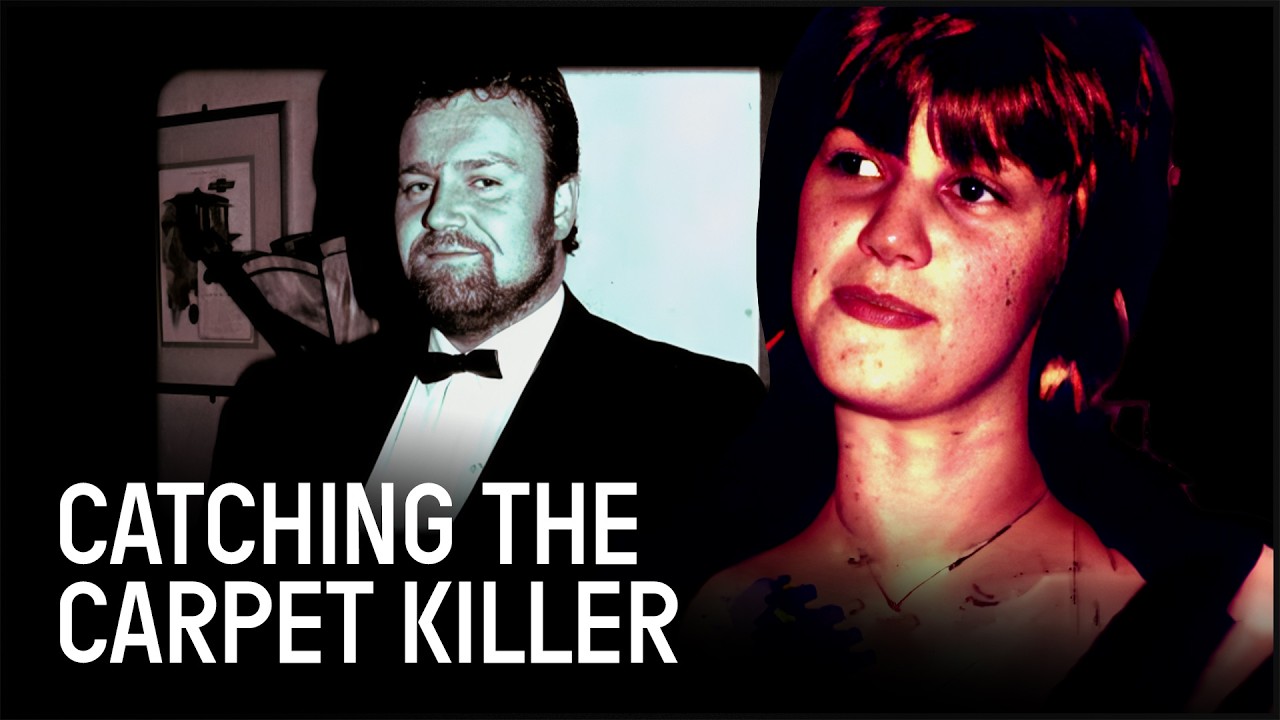
He was young then, and he knew from the moment he arrived this wasn’t just some old bag of bones. There were black bags, carrier bags, electrical flex, all wrapped around a human body. He looked at the grave, only about six feet from the rear door of the basement flat, and he understood. Whoever buried her there had to have known something about what happened.
The problem was, nobody knew who she was. The body was sent to Professor Bernard Knight, one of the most distinguished forensic pathologists in the country. He laid the bones out on the postmortem table and got to work. They were in good condition, almost as good as new.
From the pelvis and skull, he could see it was female. The bones weren’t fully fused at the knees and elbows, which meant a young person. Some fair hair remained. So, a teenage girl with fair hair.
But that was it. There were no signs of how she died. No broken bones. No bullet holes.
Nothing. So the police brought in specialist after specialist. Dr. Zachariah Erzinçlioglu studied the insects found in and around the carpet.
He could tell from certain insects that wouldn’t attack a body for years that she had been in the ground for at least five years. And from other evidence, he could even say the body had been left unburied for a day or two before being put in the ground. Professor David Whittaker examined the teeth. He found unerupted teeth still developing underneath, which allowed him to pinpoint her age at around fifteen years and three months.
And then there was something strange. Pink teeth. A violent death, he explained, like strangulation, pushes the blood pressure up as the person fights to breathe. That pressure can burst tiny blood vessels.
Sometimes it happens behind the eyes. Inside the teeth is rare, but in her case, it happened. The pink teeth were a strong suggestion that her death had been violent. Still, the police had no name.
Missing persons records drew a blank. So they tried something completely new. They called Richard Neave, an artist at Manchester University who pioneered facial reconstruction. His job was to put a face on this nameless girl and hope someone recognized her.
Richard made a plastic copy of the skull, drilled holes at specific anatomical points, and inserted pegs to indicate the thickness of tissue. He built up the features piece by piece. The eyes, the nose, the mouth. Then came the hard part, the final layer that makes a face look human.
That, he said, is where science and art cross over. South Wales Police were impatient. They called every day. Finally, on a Friday afternoon, they told him they were coming to collect it within the hour.
When Richard’s clay face was revealed, it was put on television and in the press. She became known as Little Miss Nobody. Within days, two independent social workers came forward. They recognized the reconstruction.
Her name was Karen Price. She was a fifteen-year-old runaway who had disappeared from a children’s home years ago. I remember seeing that face on the cover of a magazine when I was a detective. It’s startling, bringing her back to life like that.
And there she was. Karen. Then came another breakthrough, something that had never been done before in a criminal case. DNA extracted from Karen’s bones was matched to DNA from her father.
It proved beyond any doubt that the body was Karen Price. Karen had last been seen in July 1981, after running away from a children’s home following an argument. Nothing is known about what happened after that for years. She was a girl with no one looking for her.
A product of the care system in the seventies and eighties, missing from home, going back, running away again. Kids like that fell between the cracks. It was one of my big priorities as a detective to check the missing persons register every single day, because nobody else would. Karen was the kind of girl who disappears without a ripple.
The press called her a skeleton in the carpet, Little Miss Nobody. It sold papers but ignored her as a person. In most murders, there’s a family affected, neighbors, a community. Not in this case.
Nobody cared enough to report her missing. Nobody cared enough to find her. But Jeff Norman did. For five years, he stayed on that case.
He went back to the site of the murder with me, thirty years later, and showed me the spot where her body had been buried, just a few feet from the back door of the basement flat. What kind of area was this? It was a dangerous area. People moved in and out constantly, drug users, alcoholics.
The area was well known for prostitution. Through painstaking police work, knocking on doors and making calls, Jeff and his team tracked down a former landlady who proved the carpet Karen had been wrapped in came from that basement flat. That evidence led them to a man named Alan Charlton, a thirty-one-year-old who worked as a doorman at a nightclub in Cardiff. Charlton was known for holding parties at his property.
He asked a local man about town named Idris Ali to provide girls from time to time. On that particular night, Ali brought Dee and Karen Price. Charlton’s intention was to take pornographic photographs of the girls. Both refused.
According to the evidence, that’s when Charlton lost his temper. He struck out and hit Karen hard, knocking her down. He tried to force her to go along with what he wanted, and in the struggle, she was strangled. The body was left where it fell for a day or two while the two men decided what to do.
Then they wrapped her in a piece of carpet and buried her in the garden, just yards from the flat where Charlton lived. It was a spontaneous act, not premeditated. That’s what makes it so chilling. A young girl said no, and that was enough to get her killed.
In 1990, two and a half months after the discovery of the bones, Alan Charlton and Idris Ali were both charged with the murder of Karen Price. They were convicted at Crown Court. Jeff remembered sitting in the courtroom, waiting for the jury to return. When the guilty verdict came in, he felt a strange mix of emotions.
Delight, certainly. But also the knowledge that with every murder conviction, there are victims. You feel like celebrating, but you remember that something terrible had to happen first. Idris Ali’s conviction was later reduced to manslaughter on appeal.
Alan Charlton remains in prison to this day. Forensic psychologist Dr. Julian Boon explained that Charlton likely targeted highly vulnerable girls, cared nothing for them, and reacted with power-assertive rage when challenged. Who the hell are you, he thought, to tell me no?
How dare you. You don’t say no to someone like that unless you’re prepared for consequences. He probably thought Karen was the perfect victim because no one would miss her. And for nearly nine years, he was right.
If the construction workers hadn’t started digging that day, she’d probably still be there now. When the case was over, I spoke to Karen’s sister. Hearing the story of this young girl, a life so sad and chaotic, moved me deeply. I asked Jeff Norman to join me at her graveside.
It was something he said he had thought about over the years. Standing at her grave, Jeff told me that kind of investigation never leaves you. For a long time, they didn’t even know who she was. Then they identified her and got the conviction they always strive for.
But for him personally, standing there was almost closure. It was good to see her in a proper resting place, in stark contrast to the last time he saw her. I asked Jeff to lay flowers on her grave. He agreed without hesitation.
He said he was doing it on behalf of everyone who worked so hard on the investigation, the police officers, the experts, all those people who made the prosecution happen. And of course, he was thinking of the family. She was a girl who lost her way, only fifteen years old, callously murdered and buried and forgotten. But detectives always care about the investigation when it’s a murder, whoever the victim is.
Karen finally got the justice she deserved. And someone finally remembered her name.