My mother told me which of her children actually mattered on a Tuesday in April, six weeks before my college deposit was due. I was eighteen, and my grandparents had spent eighteen years building a fund for me out of milk money. By then, it was worth $187,000. It was gone.
My parents had emptied it the previous October to buy my brother a house on the other side of town. When I asked my mother why, she looked right at me and said, “Because he’s the one who actually matters in this family. ”
I didn’t scream. I didn’t sue.
A lawyer would later explain exactly why I couldn’t. I just called my grandmother. And what that seventy-four-year-old woman did in a milking parlor at four in the morning ended up on national television. Harlo Falls is the kind of town where everybody knows what your father does for a living.
Mine sold tractors—Gray Equipment and Supply, right on Route 12. In April of 2013, I was a senior in high school, and my days ran on rails. Up at five, a three-hour shift at the farm supply store before first period. Homework at the kitchen table while my mother cooked for four and talked about one.
My brother Brandon was twenty-four, six years ahead of me, selling balers at my dad’s dealership. Every dinner was a report on his day. Which farmer he’d charmed, which commission he’d landed. Nobody was cruel to me in that house.
I was fed, clothed, driven to church. I just learned early that the spotlight had one setting, and it wasn’t aimed at me. So I did what girls do. I got straight A’s nobody asked about.
I fixed things before anyone noticed they were broken. I made myself the cheapest child anyone ever raised. And I told myself that was the same as being loved. On the refrigerator that spring, held up by a magnet shaped like a Gray Equipment tractor, was my acceptance letter from Cornell.
Animal science, pre-vet. The one thing I had ever wanted out loud. My mother walked past that letter forty times a day. She never once touched it.
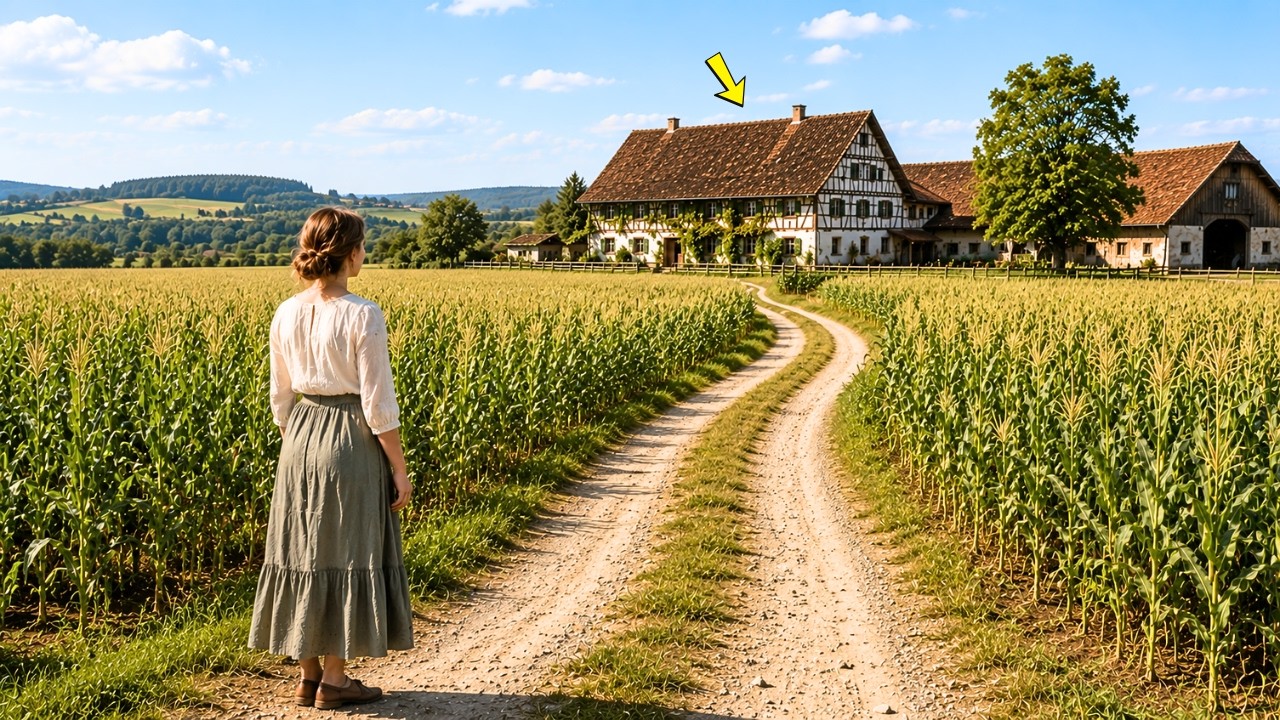
The story started the week I was born. My grandparents, Walter and Ruth Kesler, ran a small dairy six miles out of town. The story goes that Grandpa Walter held me in the hospital, drove straight to the bank in his church coat, and opened an account with that month’s milk check. Close to $500 a month went in after that.
Every month, every year, through drought years and flood years and the year milk prices fell so low that half the county sold their herds. Grandpa kept a ledger—a blue cloth notebook. He wrote every deposit in pencil, in handwriting like barbed wire. “Milk money is honest money,” he liked to say.
“It comes out of your knuckles. ”
In 2004, they sold the back forty acres, and $15,000 of that went into one line in the blue book, underlined twice. Around 2002, a financial adviser talked them into moving everything into a proper college plan. Better growth, tax benefits, all of it true.
And one piece of advice that would cost me my future: put the account in your daughter’s name. Parents as owners, simpler for financial aid later. So my mother’s name went on my money. My grandparents kept writing checks.
Nobody thought twice, because who would? Grandpa Walter died in the fall of 2011, in the barn he built. Grandma Ruth sold the herd that winter but kept the land, leased the pasture, and kept making deposits out of the lease checks. By the September of my senior year, eighteen years of knuckles and weather had grown into $187,000.
I knew the number because Grandma showed me the statement at her kitchen table the week I mailed my applications. She was so proud. The deposit for Cornell was due May 1st. On a Tuesday afternoon, Grandma Ruth picked me up from school and we drove to the bank together.
She wore her good coat. She’d brought the blue ledger for no reason except that she liked the weight of it. We sat across from a teller named Dana, who had been two years ahead of me in school. Dana typed the account number.
Then she stopped typing. She looked at the screen a little too long and asked, very quietly, if we wanted to speak with the branch manager. The balance of my college fund was $63. 11.
The rest had been withdrawn in one transaction the previous October. All of it. Six months before, while I was filling out applications at the kitchen table while my mother refilled my coffee and told me not to stay up too late. Grandma Ruth didn’t raise her voice.
She didn’t ask Dana to check again. She sat with her hands folded on that blue notebook, and I watched something in her face close and lock. Only two people could touch that account. One of them was dead.
On the way out, she stopped on the sidewalk and said, “Ask your mother. ” She said it the way you say a diagnosis. She was too quiet to drive, so I took the wheel of her truck, hands at ten and two, very carefully. She let me off at the end of Maple Street, took the wheel back, and drove herself home.
My mother was in the kitchen when I got home, browning onions. I stood in the doorway and told her where I’d been. She turned the burner down, wiped her hands, and faced me with the calm of a woman who had been waiting six months for this conversation and had already won it in her head. “Yes,” she said.
She’d moved the money. All of it. “Your brother needed a real start. He’s got a family coming someday, a name to carry, the business.
A man can’t build anything from an apartment. ”
The house on Quarry Road had come up for sale in October. A good price. And good prices don’t wait for graduations.
I asked the only question I had. Why? And my mother looked at me, looked right at me, not away. She said, “Because he’s the one who actually matters in this family.
”
The onions kept cooking. The clock over the stove kept going. I didn’t say a word. I put my keys on the hook where they’d hung since I was sixteen and walked up the stairs past the school pictures—hers, Brandon’s, mine, in matching frames like we’d been the same kind of children.
From my window, I could see my father in the yard by his truck. He wasn’t coming in. He’d heard every word through the screen door, and he was checking a tire that didn’t need checking. That’s when I understood the vote had been unanimous.
That night, I sat on my bedroom floor with my back against the bed and called my grandmother. She answered on the second ring, because widows who ran dairies never really learned to sleep in. I told her all of it. And then, because she had earned the truth, I repeated the sentence.
The line went so quiet I thought the call had dropped. When she finally spoke, her voice wasn’t shaking. It was flat and level, like a road you could drive all night. “I’ve paid for that sentence once already,” she said.
“I won’t pay for it twice. ”
I didn’t understand what she meant. I started to say something about lawyers, and she cut me off. “Not tonight.
Tonight you’ll pack a bag for the weekend. I need your hands. ”
That was it. She didn’t tell me it would be okay.
She didn’t say a single soft thing, and I have loved her for that ever since, because soft things were what everyone else offered instead of the truth. That weekend, Grandma Ruth laid the blue ledger open on the kitchen table between us like a will. She walked me through eighteen years, page by page. Deposit by deposit, their part came to over $120,000, and the market had grown it patiently into $187,000.
“Eighteen years of four a. m. milkings are sitting in that number,” she said. “Eighteen years of his hands and mine.
”
Then she closed the book and we did my math, which took less time. The deposit due May 1st. Fall tuition after that. My savings from the farm store came to $1,100.
I said maybe I’d defer a year, work, figure something out. Grandma got up, took the phone off the wall—she still had a phone on the wall—and called the bank’s customer line herself. She asked one question. What could be done when contributed funds were withdrawn by the account owner?
I watched her listen. I watched her thank the young man politely, the way you’d thank a vet who just told you the cow won’t make it. Then she hung the phone back on its hook and stood there looking out the window at the empty barn. I went back to my parents’ house Sunday night because I still lived there.
Dinner was pot roast. Brandon came flushed and happy, and he talked about the house—his house—the fence quotes he was getting, cedar versus vinyl. He thanked my parents at that table for their savings. Their savings.
He said he knew what it cost them, that he’d make them proud. And here is the strangest thing I learned that night. He didn’t know. My mother patted his hand and let the word stand.
My father studied his plate like there was a map on it. Brandon wasn’t gloating. You can’t gloat over a theft you’ve never heard of. He believed the story he’d been told.
Same as I’d believed mine. Two children, two stories, one teller. I excused myself before pie. In the hallway, my mother stopped me with a hand on my arm and said we would all move forward now.
Family meant not keeping score. She’d kept the only score that ever counted, and now that she’d won, the scoreboard was suddenly bad manners. Upstairs, I did something I had never done in my obedient straight-A life. I opened the phone book and found the number for the only lawyer in Harlo Falls, and I wrote it on my wrist like a girl writing a test answer she intended to use.
The lawyer could see me Tuesday after school. Monday, I had a shift at the farm store, and on my break, I walked over to the dealership to pick up my last paycheck. Two of the salesmen were leaning on a hay rake by the service bay, and they didn’t see me behind the row of mowers. They were talking about Brandon’s house, about the closing last fall, about how Rick had taken a long lunch that day and driven Brandon up to the title office for the closing.
How they’d come back with a case of beer and passed bottles around the service bay like it was a christening. “Boss was grinning all week. Paid the whole thing outright. No mortgage.
Can you believe that in this economy? ”
Then they saw me. I already knew the money was gone and where it went. What changed was the shape of my father.
For six months, I’d built him a little shelter in my head. He didn’t know the details. He went along. He was weak.
Weak isn’t wicked. It turns out he took a long lunch. He drove the truck. He bought the beer.
My quiet, tired father was the getaway driver, and the whole sales floor had toasted my college fund without knowing they were drinking it. Ed Harmon had been practicing law in Harlo Falls for thirty years. He had the decency to make me coffee before he broke my legs. The college plan belonged to its owner, my mother.
The day my grandparents’ checks cleared into it, those checks became gifts. Hers in every way the law cared about. She had the right to withdraw every cent. Unethical as hell, he said, and legal as Sunday.
He’d seen it twice before in his career. Both times he’d had nothing to offer but coffee. I asked about suing anyway, about making it public, about anything with a docket number. He shook his head at each one.
Then, as I was picking up my bag, he added the thing lawyers add at the door. “There’s one more problem, and it’s worse. You’re seventeen or eighteen. Let me tell you what the financial aid people are going to say to you.
”
Until you turn twenty-four, unless you’re married or a veteran or a ward of the court, the financial aid forms don’t care where you sleep or who pays your bills. They want your parents’ income. Period. And on paper, the Grays of Harlo Falls looked wonderful.
A dealership, a paid-off house on Maple Street, and now, thanks to my college fund, a second house with no mortgage on Quarry Road. I called the aid office myself that week. A patient woman walked me through it. Refusing to help doesn’t make you independent.
She said she was sorry. Based on the family’s numbers, I should expect little to nothing. There was no box on the form for what had actually happened to me. There was one thread left.
Cornell would let me push my start to January. A spring admit, one semester grace if I confirmed by fall and showed I could pay when I got there. When I hung up, I laid it all out loud: no lawsuit, no aid, no fund. A January deadline and $1,100.
Grandma Ruth kept shelling peas. She was quiet so long I thought she hadn’t been listening. Then she set the bowl down and asked me a question so far from anything I was thinking that I made her repeat it. “How much a month does Marty Hollis pay a milker?
”
She was seventy-four years old. My mother found out about the lawyer by Thursday, because in Harlo Falls, the pharmacy is under the law office and the pharmacist plays bridge with her. She was waiting in the living room when I came home from school, sitting in the good chair. “You will not embarrass this family,” she said, “over money that was never yours.
”
That was the whole speech. Not an apology, not even anger. A property line being read aloud. Something in me went very calm, the way the air goes still before hail.
And I heard myself say that I understood perfectly. And I went upstairs and packed. It took forty minutes to box up eighteen years. All of it fit in the bed of my grandmother’s truck when she came for me.
My mother stayed in her chair, but my father was standing in the hallway when I carried the last box down, and he pressed $200 into my hand, folded small, the way you’d pass a note in church. He looked at the wall while he did it. I took it. I needed gas and a phone bill, and I hated that I took it.
Grandma Ruth’s spare bedroom had daisy wallpaper and a bed with a headboard like a garden gate. That first night, she told me whose room it had been. “Your mother’s,” she said, and closed the door. Four days after I moved in, I woke at 3:40 in the morning to light under my door and the smell of coffee.
I found my grandmother at the kitchen table in her barn coat, lacing rubber boots. “Marty Hollis needs a morning milker,” she said, like she was reporting weather. “Starting today, four to seven, six days a week. His parlor, his machines, my hands.
”
I stood in that doorway in my socks and argued with her. That she was seventy-four. That her knuckles ached on rainy days. That this wasn’t her debt.
She let me run out of words. Then she picked up the thermos. “Every dollar of it goes in a new account. I opened it Monday.
This one has my name on it. Only mine. ”
I told her she couldn’t rebuild eighteen years at four in the morning. She stopped at the door with her hand on the latch.
“Cows don’t care whose name is on the barn,” she said. And she walked out into the cold. The second morning, I went with her. I didn’t ask permission.
I just set my alarm and was standing at the truck at ten to four. She looked at me and nodded once, and that was the whole conversation. If you’ve never been inside a milking parlor before dawn, I’ll try to make you feel it. Steam off the cows’ backs, the pulse of the vacuum pump steady as a heart.
Iodine and warm rubber and the radio on the gospel station at almost nothing. Ruth Kesler worked the line like she’d never left. Dip, strip, attach. Her bad knuckles moving anyway.
Marty paid her wages like any hand, and me a little less, which was fair because I was slower. We taped a chart inside the farmhouse cupboard door, and every Friday she wrote the week’s deposits in pencil, in handwriting that got more like Grandpa Walter’s every month. I did the long division in my head and kept the answer to myself. At that rate, rebuilding what was taken would take longer than the years either of us could spare.
She caught me doing that math once. “We won’t get there in time,” she said, not even pretending otherwise. “We’ll get there anyway. ”
On the fifth or sixth morning, Marty came down the pit line and watched me strip a cow.
“Aren’t you the Gray girl? ” he said, not unkindly. My grandmother answered without looking up from the cups. “She’s mine.
”
The pump kept its heartbeat. Nobody argued with her. That same month, my brother had his housewarming. I wasn’t invited.
But my friend Kayla’s mother did the baking for it, and Kayla gave me the whole tour secondhand. Three kinds of pie. Folding chairs on the new cedar deck my father had helped stain. A banner from the dealership.
My mother in her state fair apron presiding, telling anyone who held still that this was what family was for—investing in the right places at the right time. Those were her words. Then Kayla got quiet and told me the part she’d actually walked over to tell me. Late in the afternoon, somebody’s uncle, a dairyman from out by the county line, had asked in a loud, friendly way, “What ever happened to Frankie’s Cornell thing?
Wasn’t she supposed to be some kind of scholar? ”
The deck went quiet, Kayla said. Not dramatic. Just a click, like a switch being turned off.
Then my mother offered pie, and the conversation moved along like a stream around a rock. That’s the part I thought about during the four a. m. shifts that week.
Not the deck, not the banner. The click. Silence like that isn’t empty. It turns out it’s load-bearing.
Every family like mine is a barn held up by the questions nobody asks. In June, I went up to the farmhouse attic looking for a box fan and found my mother instead. Her cedar chest sat under the window, and I opened it because I was eighteen and it was there. Inside was a dance dress, homemade robin’s egg blue, with a hem someone had picked out and resewn twice.
Under the dress, 4-H ribbons. And under the ribbons, a letter from the state college, dated 1979, offering admission to Carolanne Kesler. Along with it, the housing form filled out in a girl’s careful cursive. Never mailed.
My grandmother was in the doorway. She told it plain. Your mother tested into that school all on her own. Best marks in her class.
And that same spring, your uncle Dale wanted to expand the herd, and the new parlor cost what it cost. And your grandfather sat at the supper table and said, “The money follows the name, and girls marry into other people’s names. ”
She recited that the way you recite scripture you’ve stopped believing. Carol did the sensible thing.
Stayed. Married Rick. Folded the dream up with the dress. I asked if Grandpa ever made it right.
My grandmother looked at the envelope a long time. “He spent the last sixteen years of his life apologizing to a girl who hadn’t been born yet. He never once said it to the girl in this chest. ”
I sat in the hot attic holding my mother’s future in my hands.
And for one terrible minute, I loved her. And it changed nothing. And I knew both of those things could be true at once. That night we ended up at the kitchen table at midnight.
I told Grandma Ruth what scared me: the part of me that wanted to make my parents pay, because I could feel how good it would taste. And something else, too. Making them pay meant agreeing to the scale. Arguing I was worth $187,000 is still arguing I have a price.
She let me get all the way to the end of it. Then she turned her mug in a slow circle. “I’m not raising money to buy you back a seat, Frankie. ”
So what are we building?
I asked. “A table,” she said. And because she was Ruth Kesler, she added, “Four a. m.
comes early. Drink your cocoa. ”
By midsummer, we had a rhythm you could set a watch by. I’d confirmed my January start with Cornell, which felt like promising to meet a train with no ticket in my hand.
My mother had gone quiet. Her kind of quiet, which is a weather system. In July, she sent me one text, the only one all summer. “Your little performance at Hollis’s is being noticed.
Stop it. ”
I read it standing in the parlor pit with iodine on my gloves. I didn’t answer. I photographed the time clock, my card and my grandmother’s in the rack, and sent that.
No caption. She never replied. Then on a Tuesday toward the end of July, the something that slipped showed up on our road wearing khakis and holding a camera. A woman, around forty, was standing at the fence line at six in the morning, photographing the parlor lights.
She introduced herself as June Carver from the Harlo County Gazette. She was doing a summer series, portraits of the county’s oldest working hands. Somebody at the co-op had told her there was a woman in her seventies milking at Hollis Dairy. She had no idea what she was standing next to.
Neither, honestly, did we. June Carver came back two mornings later with permission from Marty and sat on an overturned crate in the parlor pit from four to seven, watching my grandmother work. She asked about the herd we used to have, about Grandpa Walter. My grandmother answered in her flat, level way, and slowly the notebook filled.
It would have made a lovely little feature, the kind you clip and put on the refrigerator. For two and a half hours, that’s all it was. Then near the end, with the last string of cows filing out, June asked the question any decent reporter asks a seventy-four-year-old widow hauling herself out of bed for wages. “What are you saving for?
”
The parlor got very quiet in that particular way. My grandmother finished hanging the cups. She dried her hands on her coveralls, taking her time. Then she looked over at me, one look, level as a fence rail.
Then she turned back to June Carver and said, “That’s my granddaughter’s story to tell. ”
June Carver turned to me and uncapped her pen. We stood by the bulk tank. She told me straight what she’d already half assembled.
A house on Quarry Road bought outright in November, and a girl who’d been Cornell bound suddenly milking at dawn. “I can write the sweet version,” she said. “Nobody would blame you. Or you can tell me, on the record, what the money was.
”
I thought about the click on the cedar deck. I thought about a housing form filled out in careful cursive and never mailed. Silence was the family business, longer than the dealership, older than the fund. I heard myself say, “Yes, it was my college fund.
My grandparents built it for eighteen years. It was $187,000. And it’s gone. You can use my name.
”
June Carver wrote for a long time. Somewhere in the middle of it, I felt the floor of my old life give way quietly. Because in a town of three thousand people, there is no unsaying your own name in the county paper. The headline ran across the top of the front page on Thursday.
“18 Years, 4 a. m. : Why Ruth Kesler, 74, Went Back to the Parlor. ” No name-calling, no adjectives doing crimes.
Just the ledger of it. The fund begun the week a granddaughter was born. The monthly milk checks. The withdrawal in October.
The house in November. The balance of $63. 11. The town split the way ice splits.
Quiet first, then loud. Two booths got into it at the diner before eight a. m. A farmer we barely knew left a gallon of maple syrup on the farmhouse porch with a note that said, “For the milker’s girl.
” No signature. And sometime that night, someone taped a photocopy of the front page to the glass door of Gray Equipment and Supply, so whoever unlocked the dealership Friday morning had to peel their own family off the door before the customers came. My mother did not call me. My father did not call me.
Across town, the curtains on Maple Street stayed drawn all day. Then, forty miles away, the regional wire service picked the story up Friday. By the following week, it had stopped being ours. Papers across three states ran the photo of my grandmother in the steam.
Then the sharing started. The farmhouse phone began ringing at supper. A radio host from Syracuse. A station in Albany.
Then, on a Wednesday, a producer from a national morning show, asking whether Ruth and Francis would come to New York and tell the story on live television. And before we’d answered anybody anything, my mother came to the farmhouse. First time in years. She did not say sorry.
She stood in her own mother’s kitchen in her good coat with the Gazette folded under her arm. She said, “Call the paper. Tell them it was a family matter and they misquoted you. Tell them.
And this all stops, and we can be a family again. ”
She said it to her mother, not to me. My grandmother set the plate down, and the towel, and answered in the voice level as a road. “I’ve paid for that sentence once already, Carol.
I won’t pay for it twice. ”
I watched my mother’s face go white. Because she knew exactly which sentence, and exactly what it had cost. For one breath, she was eighteen and standing at a supper table hearing that the money follows the name.
Then she left. Somewhere in that week, a stranger in Ohio started an online fundraiser. We didn’t ask for it. “Rebuild the milk money,” the page said, with June Carver’s photograph on it.
The number climbed like flood water. Past what had been taken within days. Then past $200,000. Then further.
And with the money came the letters. Hundreds, then more. Women mostly. My grandmother’s age, and my mother’s age, and mine.
“I was the daughter who stayed home so my brother could go. ”
“My father said educating me was watering another man’s garden. ”
I read them at the kitchen table until I couldn’t. My grandmother read every single one straight through, like sitting up with the sick.
Here’s what I couldn’t say out loud yet. The numbers scared me. Because if I just took it, all of it, what was I then? The girl bought back at a markup.
The scale still standing, only now with the whole country’s thumb on my side of it. My mother says I’m worth nothing. Ten thousand strangers vote I’m worth plenty. Either way, somebody else is holding the price tag, and I’d sworn in a midnight kitchen that I was done being appraised.
In the middle of all that noise, my phone buzzed with a name it had never once shown me. Brandon. Two lines. “Did you know the house came from your fund?
Because I didn’t. ”
I called him back that night, and we talked for an hour. He’d believed the savings story to the letter. He’d thanked them at that table meaning every word.
And when the Gazette hit his porch, he’d sat on his cedar deck and read the ledger of his own house, and something he’d been carrying his whole life finally had a name on it, too. “You think being the one who matters is free? ” he said near the end, and didn’t finish. I didn’t make him.
The morning show booked us for a live segment at the end of August. The producer wanted what she called the full family picture and phoned my mother for comment. She declined through a lawyer. The dealership lost two fleet contracts in one week.
Farmers can do arithmetic. And my father called me the first time all summer, from the office after close. He sounded old and tired. “You’re burning this family down,” he said.
“No, Dad,” I said. “You sold it. I’m just reading the receipt out loud. ”
Two days later, Grandma Ruth and I rode a bus four and a half hours to New York City, with the blue ledger in her lap.
At the hotel, eleven floors above a street that never got quiet, my phone lit up. My mother’s voice was one I hadn’t heard in years. Small and close to the receiver, like she was cupping the phone against a wind. “Come home.
We’ll sell the house. Every cent goes back. Your grandmother’s account, your name on it this time. You’re my daughter.
”
For a second, the entire year fell away. There it was at last. She wanted me. Then she finished the sentence.
“All you have to do is tell them tomorrow it was a misunderstanding. A family matter that got out of hand. Say the paper got it wrong. ”
There it was.
The price tag, swinging gently from the gift. “I’ll think about it,” I said. And I hung up. And God forgive me, I meant it.
I thought about it all night. On one side, my mother wanting me, the house sold, the money back, holidays repaired. Everything restored for one sentence on television. One little lie, hardly bigger than the silences my family had been living in comfortably for two generations.
Then I made myself walk through it. Say the words. Watch the town nod relieved. Watch the story fold itself up like a housing form into an envelope into a chest under a dress.
And then live there, back at that table, welcome and warm, knowing my seat had been purchased with the one currency my family always accepted and always demanded: a woman agreeing to carry the silence for everyone. My mother had paid it in 1979. Her mother had watched it paid. I took the blue ledger off the nightstand and opened it to 2004, to the line underlined twice.
“Land you sell for a child isn’t sold, it’s planted. ”
Somewhere in me, quietly, the question I’d been carrying all summer stopped being a question. I took the hotel notepad off the desk, wrote a few lines, and folded the page into my jacket pocket. I set two alarms and slept like a farmer.
The studio was colder than any barn I’ve worked in, and brighter than noon. They miked my grandmother first. She sat on the white couch in her church coat with the blue ledger flat on her knees. When the host asked if she was nervous, she said she’d been up earlier than this every day since Eisenhower.
The host walked the country through it. The fund. The eighteen years. The October withdrawal.
The house. Then she turned to me. “Your mother has said through her attorney that this was a private family matter that has been mischaracterized. A misunderstanding.
” She let the word sit there. “Is it? ”
I took the folded page out of my jacket pocket and smoothed it on my knee. “No,” I answered.
“It wasn’t a misunderstanding. It was a decision. And I’m done paying for other people’s decisions with my silence. ”
Then I told the whole spine of it.
Level, the way my grandmother taught me. The sentence in the kitchen. And then the older sentence, the 1979 sentence, the housing form folded under a dress for forty years. “My mother was told she didn’t matter long before I was.
I’m not on this couch to make her pay. I’m here so that nobody in my family ever says that sentence again. ”
The studio had gone absolutely still. Then I read from the notepad page.
The fundraiser stood at more than $300,000. We announced—because her hand came over onto mine at exactly the right word—that we would keep only what was taken. $187,000 for tuition, to the dollar against the blue ledger. Every dollar above it would found a scholarship.
The Kesler Fund, for first-generation farm kids, with one rule written into its charter. Sons and daughters. Same money, same table. My grandmother signed the founding letter right there on live television, on top of the ledger, with the host’s pen.
While she signed, my phone lit up with a message from my mother. “Then you are no daughter of mine. ”
I read it. I turned the phone face down.
And I finished announcing the scholarship, and my voice held to the end. In the green room, my grandmother took my hand and held it. She didn’t say she was proud of me. Pride would have made it a performance.
What she said, straightening my collar with her thumb, was, “Four a. m. tomorrow. ”
I laughed.
We were two hundred and fifty miles from the nearest cow either of us was allowed to touch. And she almost smiled. “Cows don’t care whose name is on the barn. ”
By the time the bus brought us home, the clip had gone everywhere.
The segment ran again that evening. The papers that had run my grandmother in the steam now ran my grandmother signing the ledger under the lights, jaw set. The national news my mother’s sentence had made was no longer about what was taken. It was about what got built instead.
A scholarship with our name on it, funded by strangers, chartered on a morning show couch. I had gained a future and lost my mother in the same six minutes of air time. What I didn’t expect, pulling into the farmhouse yard that night, was the name that lit my phone next. Brandon.
We met at the diner, in the back booth. He put his keyring on the table and worked one key off it and set it down separate. “I’m selling the house,” he said. He had already called the realtor.
Whatever it brought would go to Grandma Ruth, every cent. Her call. I asked if he was sure. He looked at the key a while.
“I can’t live inside the reason you left. ”
That fall he took a sales job in Syracuse. The house on Quarry Road sold that winter for just about what was paid for it. My brother handed his own mother’s theft back across a diner table without her permission.
My parents never forgave him for it either, which tells you everything about what the gift had actually been for. My mother did not call me that year or the next. The sentence held on both sides. I started at Cornell that January, spring admit, with tuition drawn to the dollar against the blue ledger, and a work-study job washing glassware in a dairy science lab.
There were loans for vet school. There were Christmases that were just two plates and a rooster clock. My father sent a card every December, signed “Dad,” nothing else, no second name. And I kept every one.
The Kesler Fund sent its first four kids to college the fall I turned twenty. The ceremony was folding chairs in the Hollis machine shed, and my grandmother handed each of them the envelope personally. Two young women, two young men. Same money, same table.
She retired from the parlor at seventy-six. Marty Hollis threw her a party with three kinds of pie, which she pronounced excessive and ate anyway. She’s eighty-seven now. She still beats me downstairs to the coffee pot.
These mornings, I’m Dr. Gray, large animal practice. My rounds start where everything started. Hollis Dairy, five a.
m. Herd check, steam, iodine, the gospel station turned low. I pull on coveralls with my name stitched over the pocket. I paid for the stitching myself, which is a small thing and also the entire point.
I work the line where my grandmother rebuilt a stolen future eight dollars and change at a time, thirteen years ago. Marty’s grandson runs the parlor now. Half the hands are women. Nobody asks whose girl I am anymore.
And if they did, I know the answer. Because a woman in rubber boots claimed me out loud in the steam all those mornings ago. In this barn, every cow gets milked. Every cow gets fed.
Every cow gets her name called down the line. Nobody stands in the pit deciding which ones matter. It took three generations of Kesler women to build one room that works like that. I get to work in it.
When someone hands you a price tag with your name on it, you don’t have to argue the number. You can hand it back, walk out of the store, and go build a table where nobody’s seat is up for appraisal. One sentence at a dinner table. One grandmother in rubber boots at four a.
m. And a fund that carries our name for the right reason.