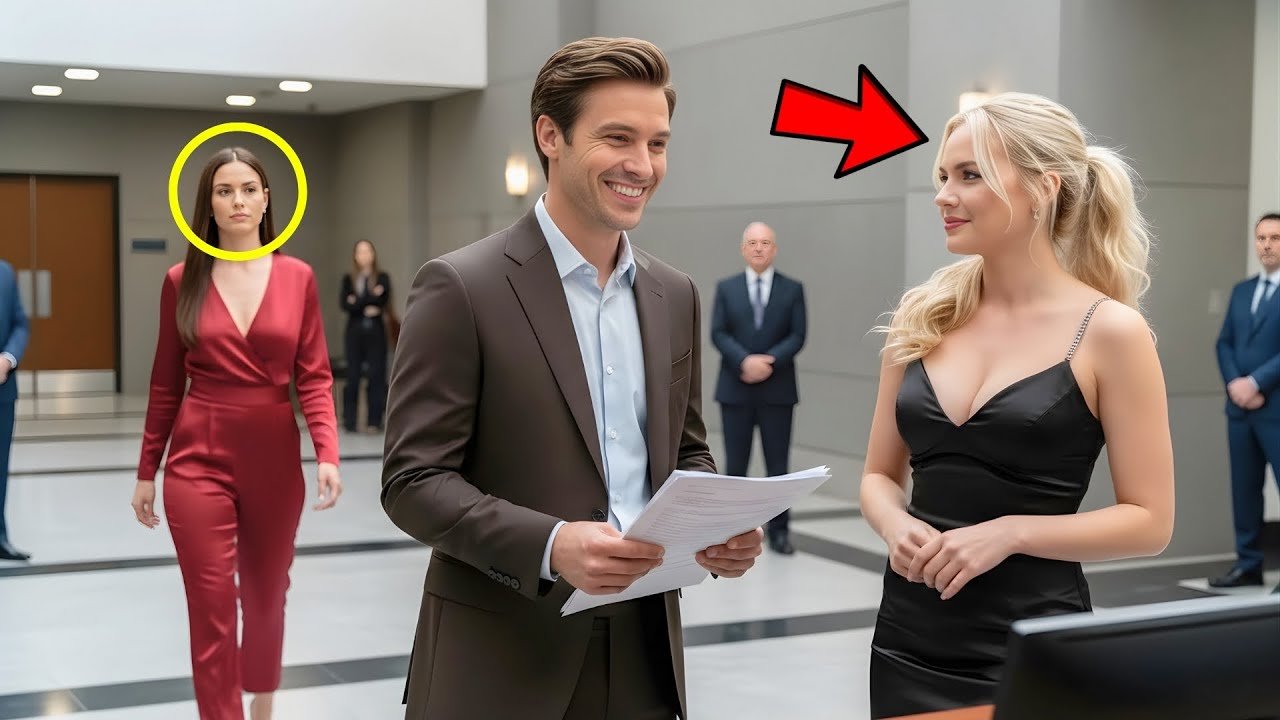
The woman at the welcome table smiled the way people smile when they’re about to say something you won’t like. “Welcome to the Meridian Cardiac Wing Gala. Do you have a reservation? ”
“I’m Fletcher Caldwell’s wife,” I said.

“He’s the chief of surgery. I’m not on the list, but I just wanted to drop something off for him. ”
Her smile didn’t change, but something behind her eyes did. “I’m sorry, ma’am.
Dr. Caldwell left specific instructions that he wasn’t to be interrupted this evening. ”
I laughed a little. “I’m his wife.
I made him food. I’ll be two minutes. ”
“I can’t let unregistered guests through,” she said again. My four-year-old daughter Lily tugged my hand.
“Mama, is Daddy inside? ”
“Just a second, baby. ” I looked back at the woman. “Can you at least call him?
Tell him Adela is here. ”
She hesitated, then picked up a walkie-talkie and turned slightly away. When she turned back, her expression was carefully neutral. “Dr.
Caldwell says he’ll catch up with you at home. He’s with a guest right now. ”
A guest. Not a colleague.
Not a board member. A guest. I stood there for a moment. Lily was watching my face the way children do when they’re trying to read a situation they don’t have words for yet.
“It’s okay,” I told her. I set the casserole dish on the welcome table. “Can you make sure he gets this? ”
She nodded quickly, relieved.
We walked back to the parking garage. Lily had a phase about elevators that night and wouldn’t take them, so I carried her up three flights of stairs with a casserole dish balanced against my hip. I should have known then. When a man angles his phone screen away from you at dinner for six months, you already know.
You just haven’t admitted it yet. I buckled Lily into her car seat and called my brother Reed. He was already at the gala. I could hear the noise in the background.
“I was just turned away at the door,” I said. “Fletcher told them not to let me in. ”
A pause. Long enough that I knew he understood exactly what I was saying.
“Where are you? ”
“Parking garage, level three. ”
“Stay there,” he said. “Don’t go anywhere.
”
He called me back eleven minutes later. His voice was very even, the way it gets when he’s furious but keeping it contained. “He’s at table seven. With a woman named Courtney Marsh.
She’s a pharmaceutical sales rep. He introduced her to Dr. Okafor as his plus one. ”
I pressed my fingers against my eyes.
“Reed, he brought her to the gala for the building our family built. ”
“I know, Adela. ”
Lily had fallen asleep in the backseat. She’d wanted to look fancy for her daddy in her little red dress.
“Call Dad,” I said. “Tell him to call Roger Hensley. ”
Roger was our family’s attorney, and he had been managing Ashbridge Development’s legal affairs for twenty-three years. He was not a gentleman in negotiations.
I drove Lily home, gave her a bath even though she was barely awake, and put her to bed. Then I sat in the kitchen and did not cry. I felt something closer to clarity, that cold, still feeling of finally seeing the full shape of something you’d been looking at sideways for too long. Fletcher came home at 11:15.
He was still in his tuxedo and smelled like wine. He set his keys on the hook by the door the way he always did, then walked into the kitchen and found me sitting at the table with a cup of tea that had gone cold an hour ago. “Hey,” he said. “How was dinner?
”
“Good. Ran long. ” He opened the refrigerator, looked inside, closed it. “You should have come.
”
“I tried. ”
He turned around. “You left instructions at the welcome desk not to let me in,” I said. “You told them you were with a guest.
”
The silence that followed was not the silence of a man who didn’t know what to say. It was the silence of a man calculating what he could still salvage. “Adela, don’t. ”
“Please don’t start with my name like that.
It just wastes both of our time. ”
He sat down across from me and put his hands flat on the table. He was very good at looking reasonable. “It isn’t what you think,” he said.
“Fletcher, I know who Courtney Marsh is. I know you introduced her as your plus one to Philip Okafor. I know you’ve been angling your phone away from me at dinner for six months. So please tell me specifically what part of this isn’t what I think.
”
He didn’t answer. That answer was its own kind of answer. “Okay,” I said. I stood up and poured the cold tea down the sink.
“I’m going to sleep in the guest room tonight. In the morning, you should probably call your attorney. ”
He stood up quickly. “Adela, wait.
Let’s just talk about this. We have Lily. We have a life. Whatever you think happened, it hasn’t gone where you think it’s gone.
I made a mistake. I can fix it. ”
I looked at him for a moment. “You didn’t make a mistake at the gala tonight.
You made a plan. You called ahead and told the staff to turn me away. You brought her to an event celebrating the building my family constructed. That’s not a mistake, Fletcher.
That’s a choice. ”
He had nothing to say to that. I went to the guest room and lay on top of the covers fully dressed, staring at the ceiling. I woke up to Lily standing in the doorway at 6:30 in the morning holding her stuffed rabbit.
“Mama, why are you in here? ”
“I needed a different pillow,” I told her. “Come here. ”
She climbed up and curled against me, and I held her and thought very carefully about the next several months of my life.
I called my mother first, then Roger Hensley. Roger was at his desk by eight o’clock. He was seventy-one years old and had the energy of a man who genuinely loved conflict. “Your father already called me last night,” he told me.
“We’ve been waiting to hear from you. ”
“I want to know where we stand. ”
“You stand well. Better than Fletcher does, I can tell you that.
Are you in the house? ”
“Yes. ”
“Good. Stay there.
Don’t move anything. Don’t delete anything, and don’t have any conversations about asset division without me in the room. ”
“And your brother tells me there’s a pharmaceutical rep involved. Courtney Marsh.
She was at the gala last night, right? ”
I could hear him writing. “We’ll pull phone records through discovery. That’ll tell us how long.
Has he given her anything? Gifts, money, access to accounts? ”
“I don’t know yet. ”
“We’ll find out.
Here’s what you need to understand. In this state, documented adultery affects the divorce proceedings. Not always dramatically, but it affects them. And given that your family’s company was the primary contractor on a forty-two million dollar expansion at his hospital, an expansion that substantially enhanced the value of his professional reputation, your father and I have some thoughts about what fair compensation looks like.
”
I didn’t say anything. “The groundbreaking, the ribbon-cutting, the press coverage. All of that attached Fletcher’s name to a project that your family built. That’s leverage.
We intend to use it. ”
“I just want out,” I said. “And I want Lily protected. ”
“Both of those things are achievable.
Probably more easily than you think. ”
The next three weeks were the kind of weeks you don’t talk about much afterward, because there’s no good way to describe what it feels like to dismantle a life you built carefully. Fletcher moved to a hotel after the second day. Lily asked where Daddy was, and I said he was staying somewhere else for a little while.
Fletcher, I later learned, had been seeing Courtney Marsh for almost ten months. Lily had just turned three when it started. I’d been finishing a freelance project, working long nights at the kitchen table, and Fletcher had apparently taken my distraction as an opening. That was the part I kept returning to, not just the betrayal but the timing, the specific, particular cruelty of it.
My father didn’t say much about it directly. That was his way. He showed up one Saturday morning with Reed, and they fixed the gutters on the house that had needed fixing since October. Then he stood in my kitchen afterward and drank a cup of coffee.
“You doing okay, sweetheart? ”
“I will be. ”
He nodded. “Roger’s got it handled.
”
“I know. ”
“Your mother wants to take Lily for the weekend if you need some time. ”
“That would help. ”
He rinsed his cup, set it in the drying rack, and said, “You know we’re with you, whatever you need.
”
That was all he said. It was enough. What Fletcher hadn’t calculated, what I suspect he hadn’t thought about at all, was what it meant to have my family’s name on that cardiac wing. The building was done, but Ashbridge Development’s relationship with Meridian Medical was ongoing.
My father had three follow-up proposals on the table, together representing about sixty-eight million dollars in future work. Roger called the hospital’s board attorney on a Tuesday. By Thursday, the board had quietly requested a meeting with my father. I wasn’t in that meeting.
What I know is what Reed told me afterward. My father walked in, shook hands with everyone, sat down, and said very simply that given the circumstances of his son-in-law’s behavior, including the fact that Dr. Caldwell had used a family-funded gala event for a personal liaison and had deliberately blocked the contractor’s daughter from entering a building her family had constructed, he felt it was appropriate to revisit the terms of the ongoing relationship. He didn’t threaten anything.
He didn’t make demands. He simply made clear that Ashbridge Development’s continued investment was contingent on a professional environment that respected boundaries. The board thanked him for his candor. Two days later, Fletcher was asked to step back from the cardiac wing dedication committee.
It was framed as a reorganization. Everyone understood what it was. Courtney Marsh’s pharmaceutical company had a primary distribution contract with Meridian that came up for renewal in the spring. Reed made a call to a colleague at another medical center.
Nothing improper, just a conversation. The contract went to renewal review six weeks early. I’m not going to pretend any of this was accidental. When you introduce your girlfriend to your colleagues at the gala celebrating the building your wife’s family built, when you call ahead to make sure your wife is turned away at the door with your four-year-old daughter in her little red dress, you have made certain choices.
And choices have consequences. The divorce was finalized four months later. We had a settlement conference in Roger’s office on a gray November afternoon. Fletcher looked tired.
His attorney looked competent but slightly overwhelmed, which Roger later told me was the intended effect. The settlement gave me the house, primary physical custody of Lily with generous visitation for Fletcher, a maintenance agreement for three years while I rebuilt my professional practice, and a fair division of retirement accounts. Fletcher’s attorney pushed back on the maintenance. Roger produced documentation of the ways my career had been sidelined during the marriage, the conferences I hadn’t attended, the partnership I’d turned down, the three years of kitchen-table freelancing while Fletcher advanced.
The pushback stopped. There was no dramatic confrontation. I sat at that table and signed the papers, and I watched Fletcher sign them, and I thought, six years, a daughter, a house with gutters that needed fixing. And it came down to a gray afternoon in a law office and two people who had run out of things to say to each other.
He looked at me once near the end. Not with hostility, but with something that might have been regret or might have just been exhaustion. I didn’t look away. I also didn’t give him anything to hold on to.
Lily asked about Daddy less after the first month. She settled into the rhythm of two houses the way children do, pragmatically, with occasional grief and then back to the business of being four years old. Fletcher was a good father in the specific ways he was capable of being a good father. I never said otherwise.
I never said anything to her about what had happened, and I never will. What I will tell you is that the worst night was not the night in the parking garage. It wasn’t the night Fletcher came home and I sat at the kitchen table with cold tea. It wasn’t even the day I signed the papers.
The worst night was two weeks after the gala, when Lily climbed into my bed at two in the morning because she’d had a bad dream. She curled against me and said, “Mama, is our family still a family? ”
I held her tighter. “Yes.
We are absolutely still a family. ”
And then I lay there in the dark with her breathing going slow and even against my shoulder, and I made myself a very specific promise. I was going to rebuild everything, my career, my confidence, my sense of my own life, and I was going to do it in a way she could see. Not for her, exactly.
But I wanted to become someone she would look at when she was old enough to understand what had happened and think, she handled that. She didn’t fall apart. She figured it out. That’s still the promise I’m keeping.
I reopened my architectural design practice eight months after the divorce. Not freelancing from a kitchen table, an actual office, a small one, two rooms above a coffee shop on Garfield Street, my name on the door, a business license, and a printer that worked on the first try. My first project was a renovation for a family in our neighborhood who needed an addition. Nothing glamorous, but I drew the plans myself and I sat in the meetings myself and I watched the thing get built.
The day they moved in, the husband shook my hand and said his kids were going to grow up in that addition. There are things I lost that I won’t get back. Six years, a version of the future I’d imagined, a trust that once broken doesn’t reconstitute itself. I lost the particular comfort of believing I knew who I was married to.
But here is what I know now that I didn’t know the morning I drove to that gala with a casserole on the passenger seat. I know what I’m made of. I know how my family shows up. I know that my four-year-old daughter, faced with a situation she didn’t understand, looked at my face to figure out how to feel.
And I know that what I gave her in that moment was steadiness, even when I had very little of it to spare. Lily started kindergarten last fall. On the first day, she wore a yellow backpack approximately the size of her torso and refused to let me carry it. She walked into that school like she owned it.
I stood on the sidewalk and watched her go and thought, there she is. There is my whole heart walking around in the world on her own. Fletcher and I are civil, not warm, but civil. We text about pick-up times and school events and whether Lily needs new sneakers.
It works because we’ve both decided it has to work for her. That decision feels like the last good thing we did together. As for Courtney Marsh, I heard through Reed that things with her and Fletcher ended last spring. I have no feelings about that one way or another.
Whatever they had or didn’t have is entirely their business. What’s mine is mine. The office on Garfield Street. The house with the fixed gutters.
The daughter in the yellow backpack. That’s more than enough to be going on with.