The 911 call came in just after midnight. The man on the other end of the line didn’t sound like a monster. He sounded almost calm. “I need to turn myself in,” he said.
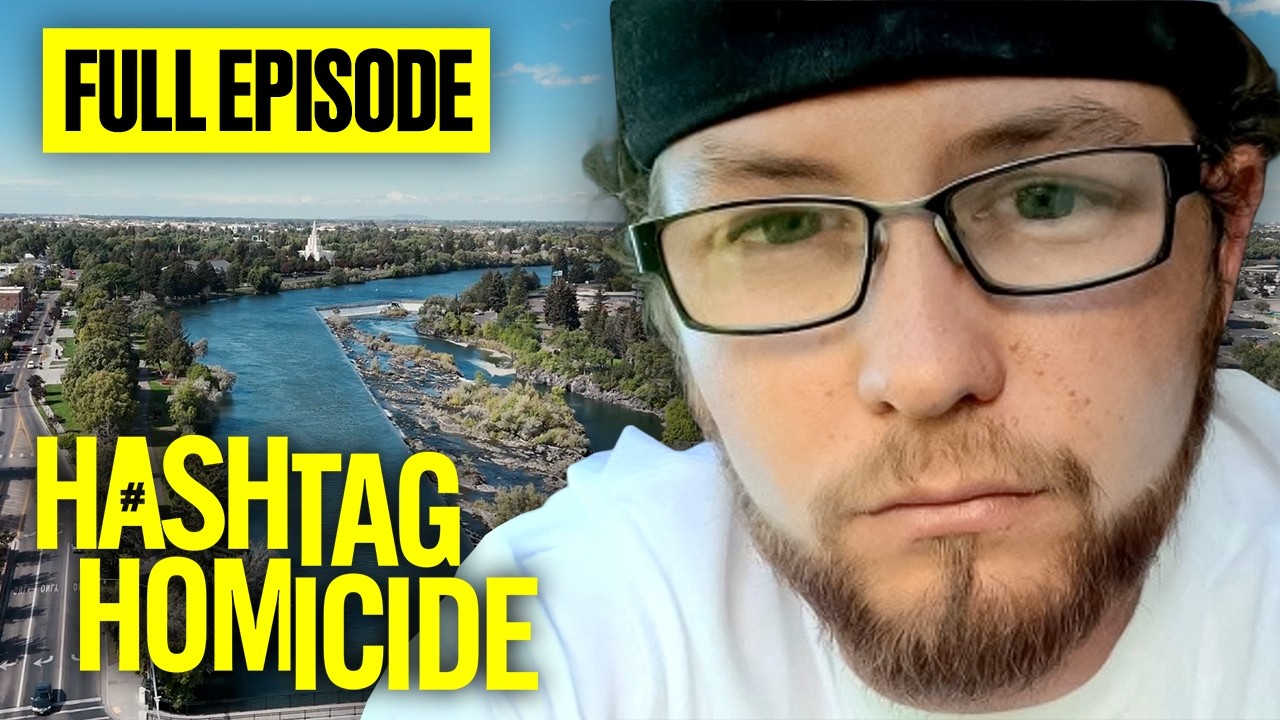
“I shot someone. ”
The dispatcher kept him talking. She asked his name. Mark Bent.
She asked who the victim was. Nicholas Byrd. She asked where he was. He told her he was parked in a lot off Howard Street.
She told him to step out of his truck, to lie down on the asphalt with his hands stretched out, so the responding officers wouldn’t see him as a threat. He did exactly what she said. When the officers arrived, they found him lying there, cooperative, unarmed. The gun was still inside his truck.
On his phone, there was a post he’d made to a Facebook group minutes after the shooting—an open confession, explaining everything. Twenty-three-year-old Nick Byrd was dead. He’d been shot seventeen times on a dark residential street in Idaho Falls. His killer, a forty-three-year-old man he’d met in a car club Facebook group, had already told the world what he did.
Nick’s mother, Tara, still remembers him as the little boy who came running into the house to tell her there were two “pill-a-pills” in the yard. She walked outside and found two caterpillars. He was that kind of kid—gentle, pure, always looking out for others. If someone was being bullied at school, Nick would walk over and say, “Why don’t you come sit with us?
” He refused to let anyone be left out. As he got older, he fell in love with cars. He started a Facebook group called The Castaways, a place for local car enthusiasts to share their passion, organize meetups, and build community. He had a Subaru he worked on constantly, a tight-knit group of friends, a girlfriend, and a dog.
He had everything he wanted. His best friend, Skyler, remembers how Nick never let a friend go hungry—if he invited you out to eat and your paycheck was tight, he’d pay without a second thought. The Castaways grew. They held car shows and group drives around town.
It was about respect and enjoying a shared passion. And for a while, that’s all it was. Then Mark Bent moved to Idaho from Washington State in February 2021. He was a skilled mechanic, but he struggled keeping jobs and clashed with co-workers.
He was described as isolated, someone who had trouble creating and keeping relationships. He didn’t have many friends. He was looking for a community. He found the Castaways on Facebook.
At first, he seemed to fit in. But it didn’t take long for things to go sour. Mark started arguments in the group, often with multiple accounts. Members suspected he’d created fake profiles, like one called “Doug Cook,” to argue with people and stir up drama.
He would look up other members’ public criminal records online and throw them in their faces, calling them criminals and saying he didn’t want to associate with them. That rumor spread that he might be a police informant—which wasn’t true, but he didn’t do anything to dispel it. In June of that year, Mark announced he no longer wanted to be associated with the club. That led to a heated argument with Nick.
Nick didn’t want to fight. He just wanted to cut ties and go separate ways. He tried over and over to make peace: “Look, I know you feel differently. Let’s just leave everything alone.
”
But Mark kept pressing. He said derogatory things to get a rise out of Nick. Then, in February 2022, Nick’s grandmother died. Mark reached out to Nick on social media to mock him for the loss.
He laughed at his grief. Nick went to Skyler for advice, frustrated that he couldn’t get away from this man no matter how hard he tried. Skyler told him to just ignore it, don’t feed into it. But Mark wasn’t satisfied unless he got a reaction.
Mark documented every negative interaction. He took screenshots of arguments and the profiles of the people he felt wronged him. He kept a record of wrongs against him. He harbored deep anger toward the people he believed had hurt him—especially Nick.
Nick just wanted to live his life. He had his friends, his car, his future. He wasn’t a bully, and everyone who knew him said it. Mark didn’t see it that way.
He saw an enemy. On the night of September 3rd, 2022, Mark left his home in Pocatello and drove fifty miles to Idaho Falls. He’d planned to attack the Castaways at their next meetup, but Nick had canceled it. So Mark drove around, hunting for members.
His truck had a dash cam under the rearview mirror. It recorded everything. On the footage, you can watch him check five different locations where the club members usually gathered, looking for prey. Then he found Nick’s car, parked at a friend’s house on Clearview Lane.
He parked behind it and waited. The camera turned off because the car was off. For two hours, he sat in the dark, lying in wait. Then he came up with a plan to lure Nick out.
He got out of his truck and smashed Nick’s driver-side side mirror. The shards of glass fell to the ground. Nick came outside, took a picture of the damage on Snapchat—angry, confused, planning to send it to his friends. He never got the chance.
Mark came up behind him and started shooting. Seventeen times. A neighbor heard the shots and saw a shadowy figure get back into the truck and drive away. When police arrived, Nick was lying on the road, still conscious, still breathing.
They rushed him to the hospital, but he didn’t make it. Minutes later, Mark posted the confession on the Castaways Facebook page. He explained that he was being cyberbullied, that he wanted to kill Nick specifically. He signed it with his name, admitting to everything.
The dispatcher on the 911 call had gotten Mark to surrender. He waited for the police to arrive. He was taken into custody without a fight. At the station, he initially admitted he shot Nick, but when the detective asked him to explain his full story, he said he needed a lawyer.
Investigators found the confession in his phone’s notes app. He had written it weeks before the murder. What started as a suicide note had evolved—he decided he wasn’t going to just kill himself. He was going to take Nick with him.
He had planned this for a long time. During the trial, the prosecution showed the dash cam footage. They watched Mark drive up the freeway into town and stalk his target. They watched him wait.
They watched him break the mirror. They couldn’t see the shooting itself because the camera had turned off, but they had the glass, the Snapchat photo, the neighbor’s testimony. Mark took the stand in his own defense. He said he blacked out during the shooting.
He said he didn’t remember getting out of the truck or firing his gun. He claimed the harassment on Facebook had consumed him, that he was the real victim, driven beyond his limits by online bullying. He showed emotion, even tears, in court. But the defense never produced a single screenshot to back up his claims of being bullied.
The jury didn’t buy it. They found him guilty of first-degree murder. The judge sentenced him to forty-five years to life in prison. After the verdict, Nick’s mother stood outside the courthouse and thought about her son.
She thought about how Nick’s friends still text her, asking if they can name their babies after him. She thought about the hundreds of people whose lives he’d touched in just twenty-three years. “He was everything to a lot of people,” she said. “He was like a shining light.
”
Mark Bent will spend decades in prison for what he did. But for Tara and everyone who loved Nick, the sentence doesn’t erase the pain. It doesn’t bring back the boy who loved his car, his dog, his friends, and his mother. It doesn’t undo the fact that a social media argument ended in a street in Idaho Falls, with a young man lying in the dark, bleeding, miles from anyone who loved him.
Nick’s best friend, Skyler, still carries him. “He’s one of the purest souls I’ve ever met,” he said. “Because of him, I strive to be like him. I strive to carry out his legacy.
”