The first time I heard about the tradition, I laughed. It sounded like a joke, some silly old wives’ tale. But then I started digging, and what I found made me feel sick. My wedding was six months away.
I was deep in the planning, drowning in Pinterest boards and seating charts, when my fiancé’s grandmother pulled me aside at a family dinner. She was a sweet, frail woman in her eighties, and she smiled at me with that knowing look older women get. “You know, dear,” she said, her voice low and conspiratorial, “in the old days, we had a saying. Something old, something new, something borrowed, something blue.
For luck. ”
I nodded, eager to please her. “I’ve heard of that one. It’s so romantic.
”
Her smile didn’t waver, but something shifted in her eyes. “Romantic, yes. But do you know what the ‘something borrowed’ really was? ”
I shook my head, intrigued.
“It was an undergarment,” she said. “From a woman who had already given birth. You’d wear it beneath your dress, and it would trick the evil spirits into thinking you were already fertile. ”
I blinked.
“Evil spirits? ”
“Oh, yes,” she said, taking a sip of her tea. “They were always hovering around weddings. Jealous things.
They’d put a curse on you if they could, steal your happiness. The borrowed undergarment made them think you were already pregnant. They’d leave you alone. ”
I laughed nervously, unsure if she was joking.
But she didn’t laugh. She just stared at me, her eyes sharp and serious. “And the veil? ” I asked, trying to keep the conversation light.
“What was that for? ”
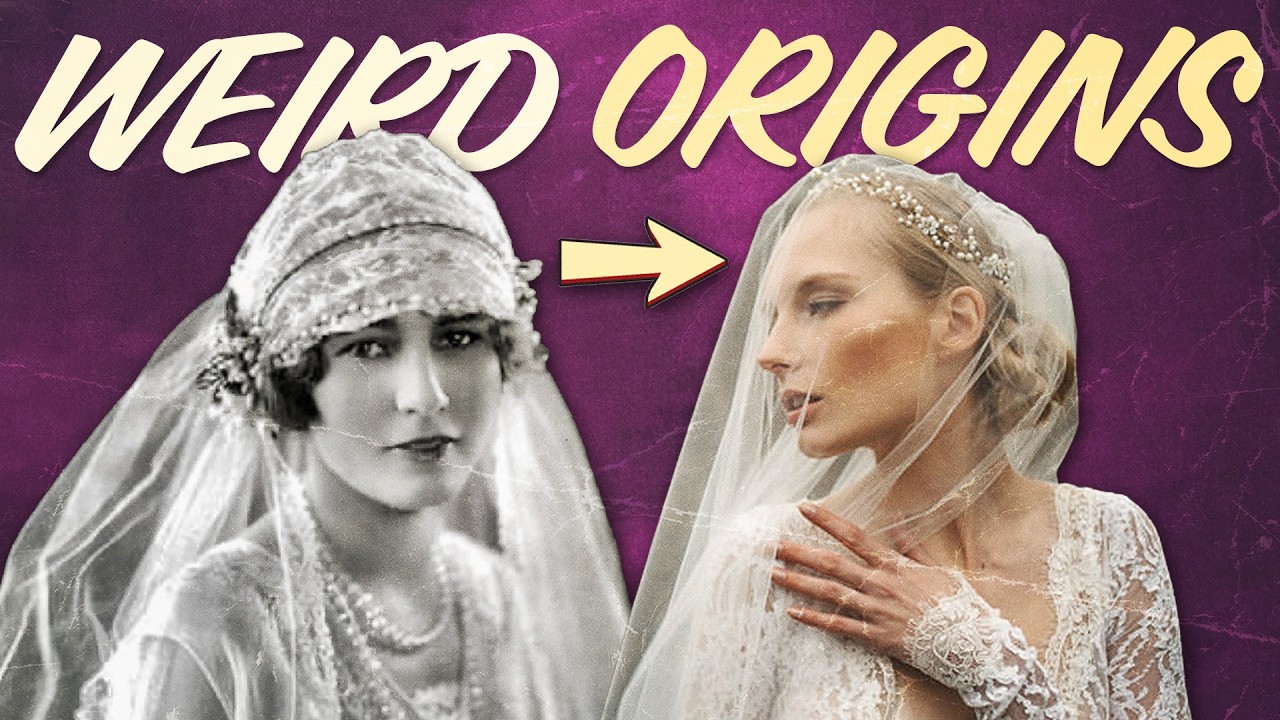
“Oh, that was to hide your face,” she said matter-of-factly. “In an arranged marriage, the groom wouldn’t know what you looked like until the ceremony was over. By then, it was too late to back out.
”
I felt a cold knot tighten in my stomach. “That’s… horrible. ”
“That’s tradition,” she said. “You should be grateful you get to choose your own groom.
”
I tried to laugh it off, but the image stuck with me. A bride, terrified, hidden behind a veil, being married to a stranger she’d never even seen. And no one thought twice about it. It was just how things were done.
I went home and started researching. I couldn’t stop. Wedding traditions, I discovered, weren’t about love or romance at all. They were about control, fear, and survival.
The white dress I’d been dreaming of since I was a little girl? Before Queen Victoria, brides wore bright colors, dresses they could wear again. White was a status symbol, a way to show off wealth, because only the rich could afford to clean such a fragile garment. It had nothing to do with purity.
Nothing at all. The bouquet I’d planned to carry down the aisle? In medieval Europe, brides carried strong-smelling herbs and spices, not flowers. They were meant to ward off illness and evil spirits, but they also did double duty: masking the smell of body odor.
Because under those heavy dresses, in the summer heat, you could get pretty ripe. I stayed up late, night after night, reading. The bridesmaids I’d asked to stand by my side? In ancient Rome, they were decoys.
Brides were often kidnapped on their way to the wedding—by robbers, rival suitors, or anyone who wanted a piece of the dowry. The identical dresses were meant to confuse attackers, so they wouldn’t know which woman to grab. Roman law even required ten witnesses to attend a wedding, all dressed in matching colors, or the marriage was considered invalid. The father walking me down the aisle?
Wedding historians believed that tradition also came from the days of arranged marriages. It was less about “giving the daughter away” and more about the groom being too intimidated to back out when his future father-in-law was staring him down, scowling the whole way. Even the engagement ring I wore on my finger had a dark past. In ancient Rome, rings were a way to mark ownership.
They were a symbol of a business contract, a bill of sale. Some brides were given two rings: an iron one to wear at home and a gold one for public appearances. The diamond on my finger? It only became the standard thanks to a De Beers advertising campaign in 1947.
Before that, it was just another gemstone. I looked down at my own ring, the one my fiancé had given me with so much love. It felt different now. Heavy.
Like it carried centuries of fear and submission. And the bouquet toss? My heart sank when I read that one. In medieval Europe, guests didn’t wait for the bride to toss anything.
They rushed her and physically ripped her dress to shreds. The scraps were considered good luck charms, fertility tokens. The bouquet toss was invented as a distraction, a way to get the frenzied crowd to chase something else so the bride could escape with her dress intact. And the fertility part?
Couples would consume the spices and herbs together during the reception to increase sexual desire. Because nothing says romance like eating a spice rack. I started to feel dizzy. Every single thing I’d planned, every tradition I’d wanted to honor, had a story I’d never been told.
The groom carrying the bride over the threshold? It dated back to ancient Rome, where men would literally carry off women to be married against their will. The veil? A shield against evil spirits, or a way to hide the bride’s face from a groom who might not like what he saw.
The rule that the bride and groom couldn’t see each other before the ceremony? It was to keep the groom from bolting after laying eyes on his mystery bride. I sat in my living room, surrounded by wedding magazines and fabric swatches, and I felt like I was in a horror movie. Every one of these sacred, romantic rituals was built on a foundation of fear and control.
I thought about my own wedding day. It was supposed to be the happiest day of my life. But now, all I could picture was a terrified bride in ancient Rome, dressed in identical robes to her bridesmaids, trembling as she walked toward a man she’d never met. I could picture the Scottish woman, her dress ripped to shreds, screaming as the guests descended on her.
I could picture the Greek bride, forced to hide her face, praying the man waiting at the altar wouldn’t reject her. And I thought about the “something borrowed” undergarment, and the women who were so desperate to prove their fertility that they would wear a stranger’s underwear beneath their wedding dress, just to trick the invisible spirits who were supposedly out to get them. I felt sick. And then, slowly, I felt angry.
Why had no one ever told me this? Why was I only hearing about the fears, the curses, the violence, the ownership? Why was I sold a fairy tale when the reality was so much darker? I decided I couldn’t keep it to myself.
I couldn’t just smile and nod and walk down the aisle in a white dress without acknowledging what it stood for. So, at my bridal shower, surrounded by the women I loved most, I stood up and told them everything. I watched their faces change as I spoke. Laughter turned to confusion.
Confusion turned to horror. And then, silence. “We can’t do this anymore,” I said. “This isn’t what we want.
This isn’t what any of us want. ”
My mom looked at me, tears in her eyes. “But it’s tradition. ”
“Tradition isn’t a reason,” I said.
“Not when it comes from fear. Not when it was designed to control us. ”
I don’t know what we’ll do on my wedding day. Maybe I’ll walk down the aisle myself.
Maybe I won’t carry a bouquet. Maybe I won’t wear white. Maybe I’ll just wear something that makes me happy. But one thing I know for sure: I am not going to hide my face, I am not going to be a decoy, and I am not going to wear a dead woman’s underwear to trick ghosts.
My wedding is going to be mine. Not theirs. Not the ghosts’. Not the centuries of frightened brides.
Mine.