The driver saw it first—something massive rolling and plunging in the water, breaking the surface of the lake before vanishing into the black depths. That was May 2, 1933, and the Inverness Courier printed the couple’s claim the next day: an enormous animal had been seen in Loch Ness. Within weeks, London newspapers sent correspondents to Scotland, and a circus offered £20,000 to anyone who could capture the beast alive. The legend had officially begun.
But the story didn’t start in 1933. Long before the road brought tourists and cameras to the shoreline, the locals believed something lived in that water. Around 500 AD, the Picts carved strange aquatic creatures into standing stones near the shore. A 7th-century biography of Saint Columba describes the saint stopping at Loch Ness on his way to visit a Pictish king and commanding a beast that had been killing people to “go back with all speed.
” According to the text, it obeyed. For centuries after, the monster stayed quiet—until the new road gave the world a clear view of the water, and everything changed. The first modern sighting sparked a frenzy. Another couple claimed they saw the beast cross the road on land.
London’s Daily Mail hired big-game hunter Marmaduke Weatherell to capture it. After days of searching, Weatherell found footprints of a large, four-legged animal. The Daily Mail ran the headline: “Monster of Loch Ness is not legend, but a fact. ” Tourists flooded the lake, sitting in boats and deck chairs, waiting for the monster to appear.
Then the British Natural History Museum analyzed the footprint casts. The tracks belonged to a hippopotamus—likely the stuffed foot of one. Weatherell’s hoax temporarily cooled the craze. But not for long.
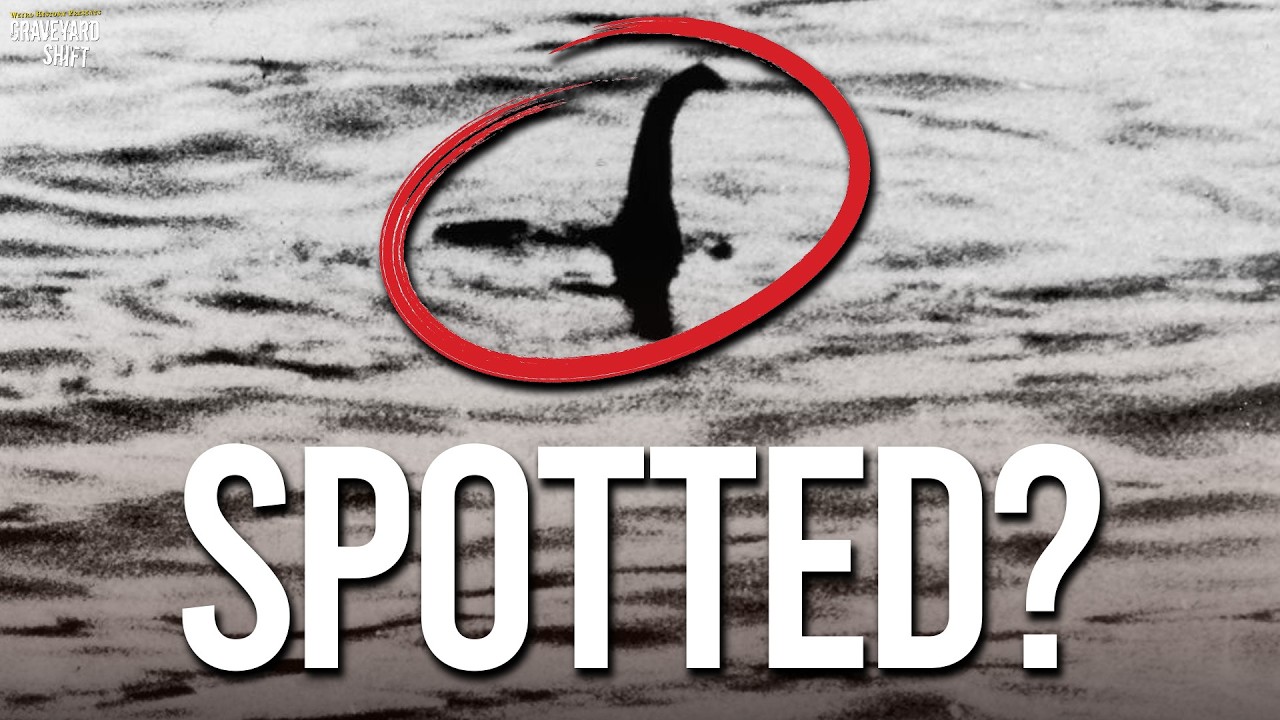
The following year, the most famous photograph in the monster’s history appeared. A physician named Colonel Wilson offered it to the Daily Mail but refused to have his name attached. The image seemed to show a dinosaur-like creature with a long, graceful neck rising from the murky water. It became known as the Surgeon’s Photograph, and it fueled the theory that Nessie was a surviving plesiosaur—an aquatic dinosaur thought to have vanished 65 million years ago.
Believers pointed to the loch’s geography to explain how such a creature could exist. But the theory had holes: the loch had frozen solid during the ice ages, and it would be difficult to explain how a plesiosaur made its way from the ocean up the River Ness. More importantly, plesiosaurs were thought to be cold-blooded, and the waters of Loch Ness are frigid. So some offered an alternative: the monster was an ancient warm-blooded whale called an archaeocete, with a serpentine neck, extinct for 18 million years.
Others offered more mundane explanations—seiches, water oscillations caused by cold river water flowing into the warmer loch. But rational answers rarely satisfy when the imagination offers something extraordinary. Some believed the monster was created accidentally by the occultist Aleister Crowley during a failed attempt to conjure evil spirits at his home by the loch. Science and technology took over in the later 20th century.
Tim Dinsdale, a self-declared Nessie hunter, mounted 56 missions between 1960 and 1987. His best evidence was a grainy piece of black-and-white 16mm film from April 1960 showing a mysterious object in the water. What you saw in it depended on what you wanted to believe. In 1962, the Loch Ness Phenomena Investigation Bureau was formed to objectively uncover the truth.
Expeditions mounted 35mm cameras with telephoto lenses on fixed platforms and vehicles. Despite the resources, the group failed to solve the mystery and disbanded in 1972. In 1975, Boston’s Academy of Applied Science combined sonar and underwater photography. The enhanced photo seemed to show the giant flipper of a plesiosaur-like creature.
Sonar expeditions in the 1980s and 1990s produced even more provocative findings. Still, no answer. Then, in 1994, part of the legend finally unraveled. The iconic 1934 Surgeon’s Photograph was declared a fake.
After the death of Maurice Chambers, his personal papers revealed that the photo had been an elaborate hoax by him and a group of conspirators. Colonel Wilson had merely been the face of the plot, his role as a physician lending credibility when the photo was presented to the Daily Mail. According to Chambers’ deathbed confession, the photo was taken by Marmaduke Weatherell—the same big-game hunter the Daily Mail had hired the year before, the one who had faked his sighting and been publicly humiliated. This was his revenge plot against the newspaper.
Chris Spurling, Weatherell’s son-in-law, corroborated the story. Spurling claimed he had used a Woolworth’s toy submarine with a sculpted wooden head attached to create the creature in the famous photo. But the revelation didn’t hurt the legend much. By the time the hoax was exposed, Nessie had already made a sizable impact on pop culture.
Her first surge of fame in 1933 may have been linked to another fictional monster: the same year as the first modern sighting, King Kong hit theaters. The film featured a giant ape grappling with dinosaurs. People had dinos on the brain, and they were looking for living prehistoric beasts. Nessie would go on to star in or be referenced in numerous films.
The first was *Secret of the Loch* in 1934, which used an iguana as a stand-in for the monster. In *The Private Life of Sherlock Holmes* from 1970, the creature is revealed to be a miniature submarine. In 1984’s *Ghostbusters*, Nessie appears in a list of things Janine asks Winston if he believes in to test his sanity. The 1996 film *Loch Ness*, starring Ted Danson, handled the legend with surprising respect, ending with the scientist realizing the monster is best left alone.
The best depiction, perhaps, remains *The Water Horse: Legend of the Deep* from 2007, which even reimagines the Surgeon’s Photograph as a staged re-enactment of a genuine sighting. People want to believe. The myth draws millions of visitors to the region each year, bringing an estimated £25 million to the local economy. But perhaps it runs deeper than money.
Maybe the Loch Ness Monster, real or imagined, proves our need to believe that there’s more to the world than what sits on the surface—that deep down, far below what can be seen, there are still secrets waiting to be found.