The police were called at nine in the morning, but the damage had been done hours earlier. Two college girls stood in the kitchen of their friend’s house, staring at an empty couch, trying to understand how someone could vanish without a sound. Their friend, Briana, had been asleep there just a few hours ago. Now she was gone.
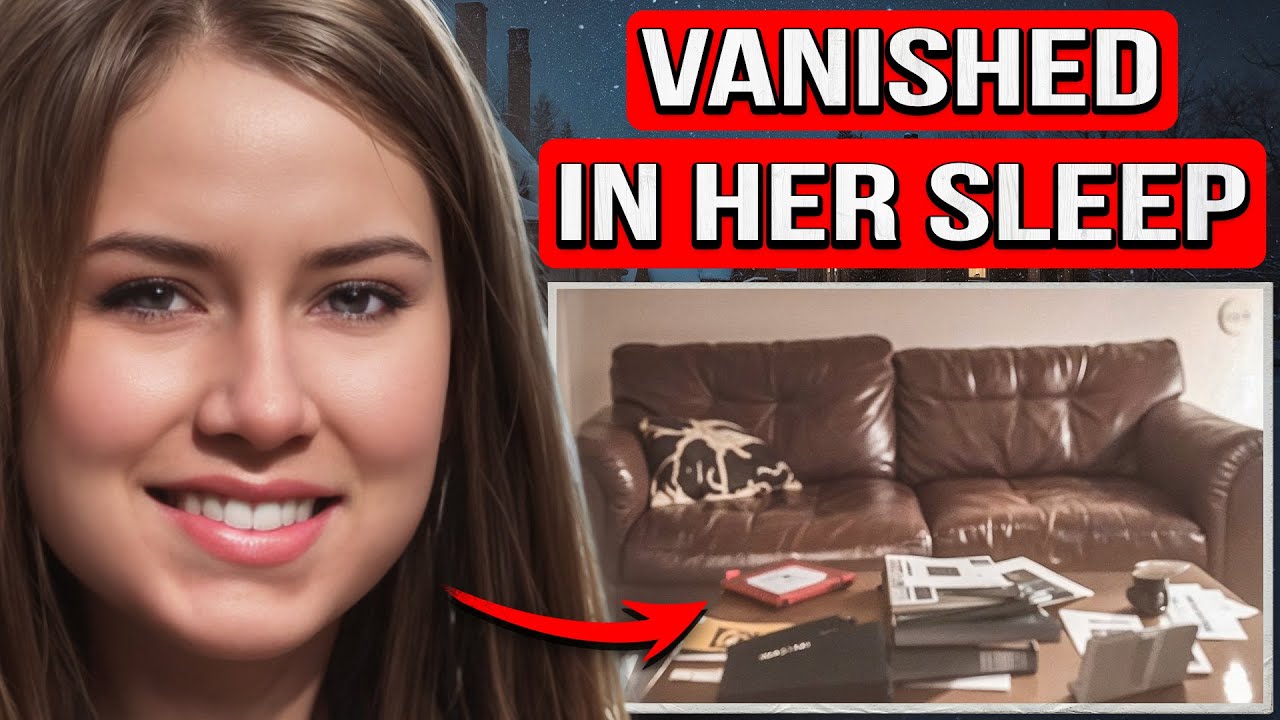
They had all come back from a concert around 3:30 in the morning. The three of them chatted for a bit before settling in for the night. Brianna, who was fighting a cold, crashed on the couch in the kitchen. The other two girls slept in the bedroom next door.
Around 4:30, Briana texted her boyfriend goodnight. That was the last anyone heard from her. When the girls woke up and started making breakfast, they figured Briana had moved into the bedroom for more comfort. The door was shut, so they didn’t check on her.
But when they finally knocked and got no answer, they opened the door to find an empty room. They searched the entire house. Her phone, her purse, her clothes, even her shoes—everything was still there. It was below freezing outside, and she was in a t-shirt.
None of it made sense. Then they saw the blood. A few small reddish stains on the pillow where Briana had been sleeping. Her friends called her mom, who rushed over immediately.
Then they called the police. Officers found no signs of a struggle, but the blanket Briana had slept under was lying several feet from the couch. And the teddy bear she’d been using as a pillow was missing. The front door wasn’t locked, and it was right in front of where she had been sleeping.
Forensic experts later confirmed the blood on the pillow was Briana’s. They believed someone had pressed her face into the pillow with enough force to keep her from screaming while the other girls slept in the next room. On the front door handle, they found DNA belonging to an unknown man. He wasn’t in any database.
Police launched a massive search. They went door to door asking men in the neighborhood for voluntary DNA samples. Thousands of tips poured in. Detectives first looked at her boyfriend, who had sent her a string of insulting messages on the night she vanished.
But he was in another state at the time, and they cleared him quickly. As the search stretched into weeks, the case became national news. Briana’s face was on billboards. Police collected around 3,000 DNA samples from local residents, but none matched the man on the door handle.
The FBI joined the investigation. They looked into the man who had given Briana a ride home from the concert, but he had a solid alibi and was cleared. About a week after she disappeared, a neighbor across the street came forward. He said he couldn’t sleep that night and was sitting in his living room around 5:00 a.
m. when he saw a shadow pass by his window. Then he heard someone trying to open his front door. After a few failed attempts, the noise stopped.
He assumed it was just a drunk who had the wrong house. Detectives started looking into unsolved attacks in the area and found two that stood out. In November 2007, a 21-year-old student was assaulted in a parking lot. The man knocked her to the ground, pulled a gun, and attacked her.
When he told her to keep quiet, she screamed, and he ran off, dropping a pack of condoms. A month later, a 22-year-old student was attacked outside her home. A man covered her mouth and nose, and she passed out. She woke up in the cab of a pickup truck.
He sexually assaulted her, then drove her back to her house and told her not to turn around as she walked to the door. She described him as a heavy-set white male with tanned arms. She also remembered seeing a child’s shoe in the truck. In both cases, the attacker took the victim’s underwear with him.
The DNA from both victims matched each other. And when detectives compared it to the sample from Briana’s front door handle, it matched. They were dealing with a serial predator. And when the news hit the public, another woman came forward.
She said someone had tried to break into her home one night, yanking on the front door handle so hard that it bent, but he couldn’t get inside. Police put together a composite sketch and a profile. A man of average height, between 28 and 40, with a solid, muscular build. Panic spread through Reno.
Gun and pepper spray sales skyrocketed. Women were afraid to stay home alone. Hundreds of volunteers braved the freezing cold to join the search. Divers searched the river.
Police received over 5,000 tips. None of it led anywhere. On February 15th, almost a month after Briana vanished, a worker cut through an abandoned lot on his way to lunch. He spotted a discarded Christmas tree in a ditch and saw a pair of socks sticking out from behind it.
When he got closer, he realized it wasn’t a mannequin. It was a body. It was Briana. She was completely naked except for her socks.
Lying next to her were two pairs of women’s underwear. The medical examiner determined she had died from strangulation. The killer had used underwear to do it. She had been murdered inside the house on the night she disappeared.
One pair of underwear belonged to her friend, who hadn’t even realized they were missing. The second pair wasn’t hers. Detectives believed the killer left it there to taunt them. Male DNA was recovered from Briana’s body.
It matched the samples from the two earlier assaults. But even with all of that, the case went cold. Weeks turned into months. It was starting to feel like the killer got away with it.
Then, on November 1st, almost a year after the murder, police got an anonymous call. A woman said that her friend had found women’s underwear in her boyfriend’s pickup truck. When she asked him about it, his excuse sounded extremely suspicious. And shortly after Briana’s murder, he sold the truck and left town.
That man was 27-year-old James Biela. He was a former Marine with extensive training in martial arts. At the time of Briana’s murder, he had been working construction projects near the university, right in the neighborhood where Briana’s friend lived. His ex-girlfriend told detectives he had a violent streak.
He had hit her multiple times. He had once nearly killed someone with a knife. He had broken a dog’s leg for no reason at all. But James had never faced any charges.
Police had never collected his DNA. Detectives put him under surveillance and called to ask if he’d talk. He agreed without even asking what it was about. During the interview, he claimed he had been at his girlfriend’s house that night.
But when they asked for a DNA sample, he refused. Police talked to his ex-girlfriend. She told them the alibi was a lie. He hadn’t been with her that night.
James and this woman had a 4-year-old son together. She agreed to let investigators take a DNA sample from the boy. The results were a near-perfect match to the killer’s DNA. Someone in the boy’s immediate family was responsible.
Police arrested James Biela. He was charged in connection with all three cases. Still, he refused to admit any guilt. Detectives kept building their case.
They learned he had a long history of drug abuse, which was why he had been kicked out of the Marines. They found his old van, and fibers from the seat covers matched fibers previously found on the clothing of the student who had been kidnapped and driven home. His former employer said James quit his job the very same day Briana’s body was found, then left the state. At trial, James’s attorney argued the crimes weren’t connected.
But the evidence was overwhelming. And it didn’t help that James kept smiling and smirking through the proceedings. In late May 2010, the jury found him guilty on all counts. The judge sentenced him to death.
A few months later, he received four additional life sentences for other charges. Even if his execution never happens, he will never walk free. Briana’s family pushed for a new law in Nevada requiring police to collect DNA from anyone arrested for a violent crime. They believed that if such a policy existed sooner, her killer might have been caught after his first attack.
Tragically, her death wasn’t the last blow to the family. Exactly ten years after Briana’s murder, her 19-year-old cousin went missing. She told her parents she was going to another state with a man she had recently met. Then she stopped answering her phone.
She has never been found.