She told him her arm hurt, and he walked out of her hospital room to tell the nurses. They rushed in with emergency equipment. Angela Craig had crashed, and her husband stood in the hallway, phone in hand, taking pictures and texting. It was March 15th, 2023.
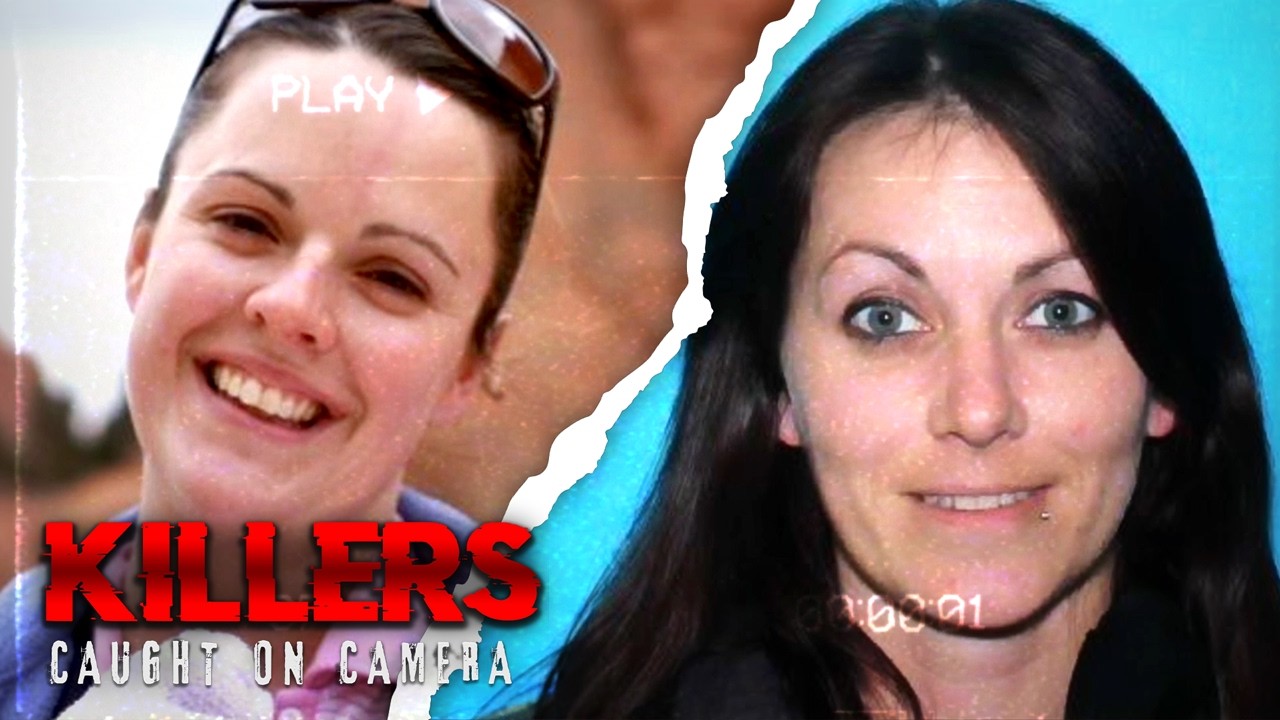
Just ten days earlier, this healthy, athletic mother of six had walked into a hospital complaining of dizziness. Now she was unconscious, and no doctor could figure out why. The medical team was fighting for her life while Jim Craig, the devoted husband by her side, typed away on his phone. For years, the Craig family seemed like the perfect American family.
Jim was a beloved dentist in Aurora, Colorado. Angela was a stay-at-home mom, a supermom by all accounts, who focused entirely on her children and her husband. Their home was full of love, and Jim was known as a great dad and a great family man. So when Angela fell ill in early March, it was a shock.
She had worked out that morning, ridden her bike, had a smoothie. Then she started to feel dizzy. She texted Jim, and they decided she should go to urgent care. The doctors ran blood tests, a CT scan, and an MRI, but could not find anything wrong.
They sent her home with instructions to come back if it got worse. On March 9th, she returned, telling doctors the symptoms were worse. Jim was texting her constantly, sending an overwhelming stream of messages saying he loved her, missed her, and was checking in. On the surface, it looked like a caring, concerned husband.
The sheer volume and frequency, however, struck investigators as odd, almost oppressive. She was admitted to the hospital, and over the next few days, she seemed to improve. On March 14th, she was released, still with no diagnosis. The next morning, she deteriorated badly.
She became disoriented and her stomach was in great distress. Her brother and sister-in-law had flown in to help, and she was taken to a different hospital. Angela told the doctors she felt worse than she had ever felt. An hour later, Jim Craig arrived and sent her brother home.
He spent some time in her room, then came out and told the nurse his wife said her arm hurt. That’s when she crashed. As the emergency team worked on her, Jim stood outside with his phone, taking photos and texting colleagues at his dental practice. He was sharing the crisis in real time, an act that would unravel everything.
An employee at his dental office had recently seen a package addressed to Jim. She had been told not to open it, but she had seen it. The package contained potassium cyanide. When this was reported to the doctors, alarms went off.
They immediately administered the antidote for cyanide poisoning. It helped her heart and her breathing stabilize, but the damage to her brain was already done. Jim Craig told the doctors to stop, to let nature take its course. On March 21st, Angela Craig was declared dead.
Police searched the Craig residence and found their home surveillance cameras were still recording. Jim apparently didn’t know this. The footage showed a loving family, but it also showed Jim making smoothies for his wife, carefully adding something from a bottle he had ordered. He was captured on camera clutching a delivery of arsenic, just 48 hours before Angela’s first trip to the hospital.
Toxicology labs retested all of Angela’s blood samples. The FBI found arsenic in her system from her first hospital visit, but not enough to kill her. The morning of March 15th showed cyanide, but again, not a fatal amount. However, the blood drawn the night she crashed showed a deadly amount of cyanide.
Someone had given her a lethal dose while she was in the hospital. Hospital surveillance showed the chilling truth. Jim Craig walked out of Angela’s room that afternoon, went into a bathroom, and emerged with a syringe in his pocket. He walked back into her room with the medical personnel, and just minutes before he called for the emergency team, she was given the fatal dose in private, just out of frame.
Investigators then looked for a motive. They found that Jim was carrying on intimate relationships with at least three other women. Even as his wife lay dying, he was texting one of them, expressing his concern, performing the role of the grieving husband while seeking attention from other women. Jim was arrested and charged with first-degree murder.
He tried to spin the story, insisting that Angela was suicidal, that she had a death wish and had poisoned herself. He wanted everyone to believe it was an assisted suicide. But the video evidence told a different story. The cameras in the Craig home had caught Angela, frustrated and sick, saying, “It’s your fault they treated me like I was a suicider, like I did it to myself.
” She was heard saying, “Nobody in their right mind would ever think I’d kill myself before I killed you. ”
The prosecution presented the video as a powerful digital witness. It showed Angela fighting for her life and disproving any claim of suicide. After a lengthy trial, on July 31st, 2025, a jury found Jim Craig guilty of first-degree murder by poisoning.
He was sentenced to life in prison. The judge called it one of the most calculating, cold, and deliberated murders he had seen in 35 years. Jim Craig watched his wife get sick, made her sicker, and when she didn’t die fast enough, he murdered her in her hospital bed. Angela is remembered as the supermom she was, over-the-top caring and a special person.
In the second case, in Eugene, Oregon, a patrol officer noticed a vehicle with a stolen license plate on the night of August 5th, 2016. When the officer tried to make a traffic stop, the driver fled on foot. He was quickly caught and arrested. The driver was Jeremy Malutin.
Inside the stolen car, police found a pair of bloody female underwear and a wallet belonging to Cheryl Hart. When officers asked Jeremy about the wallet, he claimed he didn’t know the woman. The trunk release had been disabled, and officers couldn’t get into it. This added to their suspicion that something more was going on.
Police contacted Cheryl’s mother at 2 a. m. She was confused, saying Cheryl was with Jeremy. The fact that Jeremy claimed not to know his own girlfriend raised a red flag.
Cheryl was a kind, generous 35-year-old mother of three, who always took in people who had nowhere else to go. In 2015, she had rekindled a relationship with her childhood sweetheart, Jeremy. At first, things were good. Then it got bad.
Jeremy became controlling and isolated Cheryl from her family. He wouldn’t let them see her. He kept her inside. The family was scared for her, but she thought she loved him.
In late July, they went on a spontaneous road trip, which was very unlike Cheryl. Days later, Jeremy was stopped by police without her. In custody, Jeremy refused to talk to investigators. But in a phone call with his mom, he insisted he dropped Cheryl off at a campsite near Eugene.
Cheryl’s family desperately hoped this was true. They organized volunteer searches, putting up missing posters all over Eugene. Police went back to the stolen car to look for more clues. They found a bottle of bleach, the house brand from a local grocery store.
Surveillance footage from that store showed Jeremy buying the bleach early on the morning of August 5th. This added another layer of concern that he was trying to destroy evidence. They also found blood inside the trunk of the car. Police released images of Jeremy buying bleach, and it prompted a lead from a friend who had recently seen them both.
He told investigators that Cheryl and Jeremy had talked about eloping, but they ran out of money and had to turn back. They had camped out in a shed owned by the friend’s sister. When police walked into the carport of that residence, they immediately saw something that looked like an oil spot. It was blood.
They found shoe prints leading out of the shed in blood. Inside, blood on the mattress, along with bungee cords and packing tape. The blood was confirmed to be Cheryl Hart’s. Without knowing if Cheryl was alive or dead, detectives needed a break.
The owner of the shed reported missing money and credit cards. Bank records showed transactions in Eugene and Klamath Falls. Surveillance footage from a car wash showed the same stolen car Jeremy had been driving. The video showed him meticulously washing the car, an act detectives had never come across before.
He was getting rid of Cheryl’s blood. The stolen credit card led them to more cameras. Jeremy was seen buying a shower and entering a restroom with a large backpack. Forty-five minutes later, he came out wearing a completely different outfit.
He had washed himself, washing away evidence. In all of this video, Cheryl Hart was never seen. Detectives were now certain she had been murdered. Jeremy was still in custody, but only charged with unlawful use of a vehicle.
They didn’t have a body, which made a murder case extremely hard. But on August 9th, Jeremy made a terrible mistake. He was on a phone call with his mom and said, “I’m looking at this is going to be like a life sentence. ” For investigators, this was a huge indicator that Cheryl must be deceased.
You don’t go to jail for life for a stolen car. The investigation spanned several hundred miles between Eugene and Klamath Falls, an area of dense forest and high desert. They wanted to solve the case before the snow hit, as it would make finding remains nearly impossible. After four weeks, police received a tip from a man who recalled seeing the stolen vehicle on a remote back road in Klamath County.
On September 10th, volunteer searchers found human remains. They found Cheryl. At the scene, there were electrical cords and bungee cords wrapped around her body. The autopsy revealed a ligature around her neck, damage typically associated with strangulation.
Cheryl’s pacemaker determined her heart stopped at 11:17 p. m. on August 4th. In search of a motive, police downloaded the messages from Jeremy’s phone.
They found sexual messages to other women. It appeared Cheryl had discovered the infidelity. Posing as Jeremy, she had texted one of the women, saying she found the woman of her dreams and wasn’t interested. When Jeremy found out, he was angry.
After he killed Cheryl, he immediately went back to messaging other women. With Cheryl’s body, police were finally able to charge Jeremy with murder. On May 22nd, 2018, he pleaded guilty. On June 1st, he was sentenced to 30 years in prison.
Afterward, Cheryl’s family grew closer. They cherish each other more now, because they lost someone they cherished so much. When Cheryl’s body was recovered, she was wearing a necklace. A family member took it from evidence, cleaned it up, put it in a jewelry box, and mailed it to her mother.
It was a piece of her, a part of her they could keep. It’s been hard, but her positivity has helped them through. She was their baby girl.