The rain pounded against the glass windows of the Grand Oak Hotel lobby as I stared at my flickering computer screen. I was five years into my night shift as a receptionist, and every night blurred into the next. Tonight was different only because of the storm and the power problems that made everything slow and unsteady. The front door opened, and a man walked in, soaked to the bone.
Water dripped from his coat and his hair, yet he smiled at me with a warmth that felt out of place on such a miserable night. “Good evening,” I said. “Welcome to the Grand Oak. ”
“I need a room for tonight,” he said softly.
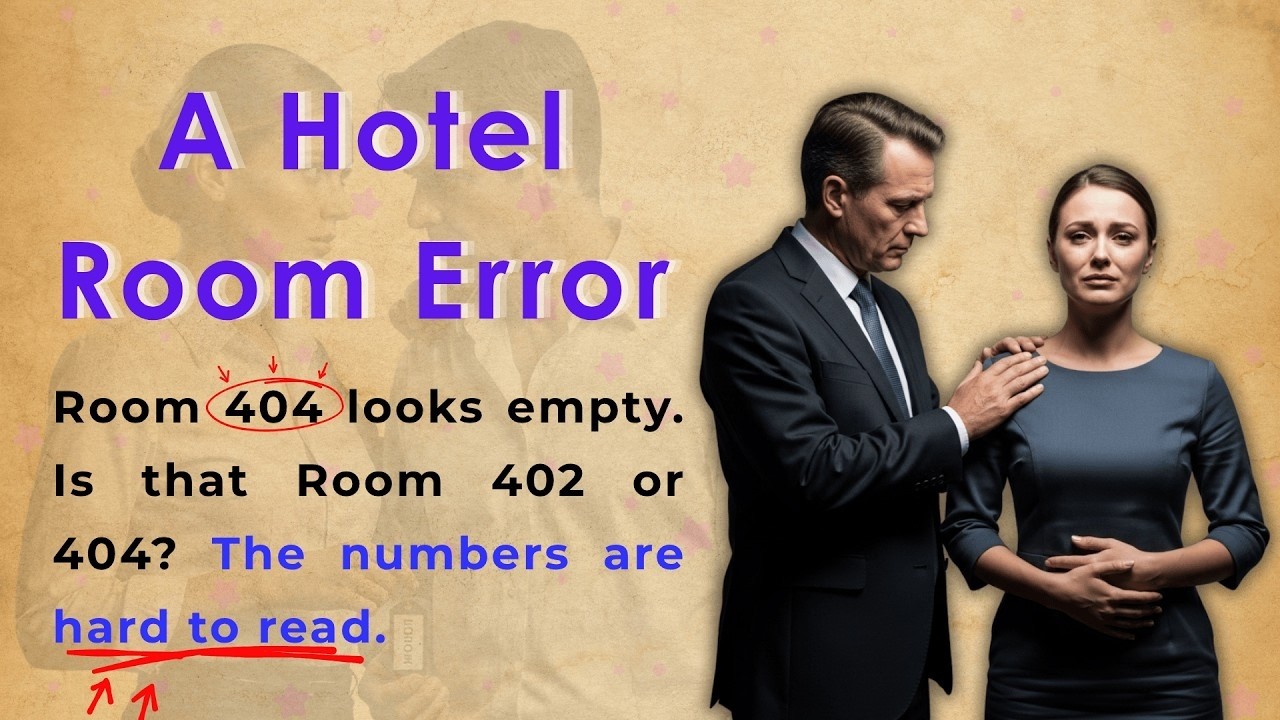
I glanced at the flickering guest list. Room 404 looked empty, or was it room 402? The numbers jumped and blurred across the screen. I clicked on what I believed was correct.
“Room 402,” I said, handing him the key. He thanked me, carried his small wet bag toward the elevator, and disappeared. Minutes later, I looked at the screen again. It had cleared.
My heart stopped. Room 402 was already booked by a family arriving the next morning. Elmer had the wrong room. I told myself it was fine.
He said he only needed a few hours of sleep. The family wouldn’t arrive for many more hours. It should be fine. Twenty minutes later, Elmer returned to the lobby.
He looked better now—dry hair, clean clothes, his smile still kind. “Is everything okay with your room? ” I asked. “Everything is perfect,” he said calmly.
“I need to ask you something. Do you have a pen and some white paper? ”
I handed them over. “Thank you, Mia,” he said, reading my name tag gently.
We talked briefly. He asked about my cat, and I asked about his family. He had a wife and two grown children who lived far away. His voice was strange—too peaceful, like he had set down a heavy burden.
“Sometimes we all need a stopping point,” he said. Then he walked back down the hall and disappeared. I watched his back until the corner swallowed him, my chest cold with a feeling I couldn’t explain. At six in the morning, Rosa, the housekeeper, came running into the lobby, her face pale with terror.
“Mia, come quick. The man in room 402. He doesn’t move. I think he is dead.
”
We found Elmer lying on the bed, his face peaceful, surrounded by empty pill bottles. On the bedside table lay the white paper I had given him. His note read: *”To Mia, thank you for the final kindness. I’m sorry for making this room dirty.
Don’t blame yourself. “*
The police arrived. They asked questions, took photos, and carried him away under a white sheet. I stood shaking in the hallway, trembling as guilt filled my chest.
“I helped him find a quiet place to die. ”
I went home but couldn’t sleep. At noon, Mr. Chen called.
“The family for room 402 arrived early. They want their room. ”
I went back to the hotel. In the lobby stood a man, a woman, and a small child.
The man, Julian, argued loudly with Mr. Chen about their room. The wife, Elena, stood by the window, holding the child’s hand but not looking at him. Her eyes were empty, hollow, with dark circles beneath them.
She moved like a robot, slow and stiff. I checked the booking notes. *”Wife needs quiet rest. Husband and child will visit the city zoo.
Wife stays in room alone for the day. “*
Elena wanted to be alone in that room all day. A quiet room where she could rest. Just like Elmer had wanted.
I looked at her empty eyes and fragile frame. Then it hit me. If I had given Elmer the right room—room 404—then room 402 would have been empty. Elena would have checked in.
Julian would have taken the child to the zoo. She would have stayed alone in that quiet room with her depression, her dark thoughts, her pain. She might have done exactly what Elmer did. My mistake put Elmer in her room.
My mistake saved her life. Three days later, I returned to work, but I couldn’t stop seeing Elmer’s face in every guest who walked in. On my fourth day back, Elmer’s wife came to collect his things. She told me he had terminal cancer.
“He suffered a lot,” she said, her voice calm. “Maybe this is what he truly wanted. Maybe he chose his own end. That is better than waiting for pain.
”
She didn’t cry. Neither did her children. They looked relieved. Then I heard laughter.
Julian sat on a sofa, holding Elena’s hand tightly, while their child ran around them. Elena watched the child, then looked at the sunlight streaming through the window. She smiled. A small, soft, real smile.
For the first time, she seemed alive. I stood between two realities. One family lost someone and felt relief because his pain ended. Another family kept someone and felt joy because she stayed.
My mistake swapped the dead. It gave Elmer what he genuinely wanted and gave Elena the chance she almost never had. I tried to return to my normal work, but every check-in bell made me jump. I saw Elmer’s face everywhere.
Mr. Chen suggested I take a break. Instead, I asked to help people in a different way. He transferred me to Human Resources.
I organized wellness programs, stress management meetings, and counseling sessions for hotel workers. I sat in a small office now, listening to people’s pain, connecting them with professional help. At home, I wrote anonymous letters to mental health support funds, attaching what little money I could spare, asking them to help people who suffer and feel alone. Months passed.
One Sunday afternoon, I sat alone in a park, watching strangers pass. Old people, young parents, people walking alone. I wondered how many of them were hiding their pain. How many mistakes in this life are actually miracles in disguise?
My mistake looked terrible at first. I gave a dying man a quiet place to end his suffering. I carried the guilt like an anchor. But my mistake also gave a grieving mother the time to heal, to smile at the sunlight, to stay with her child.
I am not God. I am not fate. I am just Mia. A woman who makes mistakes and tries to help.
Maybe that is enough. Maybe my clumsy hands served a purpose I couldn’t see at the time. I closed my eyes and felt the sun on my face. I was healing slowly.
I hoped Elmer was at peace now, and I hoped Elena was happy, playing with her child and seeing many more sunrises. I stood up and walked home. Tomorrow I would go back to work and help more people. This is my life now.
This is my purpose. And I accept it.