Inside the sleeper cab of the truck, Lisa was handcuffed, naked, and screaming. Trooper Mike Miller had only pulled over to check on a vehicle with its hazard lights blinking on the shoulder of Interstate 10 near Casa Grande, Arizona. He never expected to walk into a nightmare. Robert Ben Rhoades was caught red-handed.
He tried to talk his way out of it, then went for his gun, but failed. He was cuffed and put in the patrol car. Even then, he made a desperate attempt to escape before being subdued. He was charged with aggravated assault, kidnapping, and unlawful imprisonment.
When Lisa was rescued, she was babbling about secret prisons and needing to see the president. She was clearly not in her right mind after days trapped in his rolling torture chamber. Detective Rick Barnhart took the case, and through dedicated follow-up, he connected Rhoades to a pattern of crimes stretching back at least five months. This wasn’t Robert’s first time.
And it wouldn’t be his last. Patricia Candace Walsh was born on December 18th, 1966, in Seattle. Not much is known about her childhood, but those who knew her remember a devout Christian who loved sharing the word of God. She was outgoing and free-spirited, the kind of person who could sit with anyone and spread the gospel without expecting anything in return.
She was a member of Everyday Church, an evangelical congregation in Seattle that has since closed. Patricia later married Douglas Ziscowski, a fellow church member who shared her faith. The couple loved to travel, and they decided to hitchhike across the country to attend a religious workshop in Georgia. They left Seattle in November of 1989, treating the journey as an act of faith.
Patricia’s brother, Adam, last heard from her in December of 1989. She called to describe their plans and their faith-driven decision to hitchhike. A friend in Georgia last saw the couple in January of 1990 when she dropped them off at Six Flags in Atlanta. Shortly after, the minister from their church received a call from them mentioning they were in El Paso, Texas, and planned to head west toward Arizona.
No one ever heard from them again. Investigators later concluded that they had accepted a ride near El Paso from Robert Ben Rhoades, a long-haul truck driver who preyed on travelers and hitchhikers. Douglas was murdered soon after boarding the truck. His body was found on January 21st, 1990, dumped on the side of Interstate 10 West in Sutton County, Texas.
With her husband gone, Patricia was kept alive and held captive for nearly a week. During that time, she was brutally assaulted and tortured. Douglas’s parents grew increasingly concerned when they didn’t hear from their son. They even set out on the road to search for him, but their efforts turned up nothing.
They filed a missing person’s report. But even though Douglas’s body was discovered in January of 1990, it remained unidentified until 1992. Official reports claimed the delay happened because some of the information from his missing person’s report was compromised during entry into the police computer system. As for Patricia, her remains were discovered on October 26th, 1990, by a group of deer hunters in a remote mountainous area near Interstate 15.
It was an isolated ridge covered with juniper trees, far from any sign of civilization. She had been shot four times in the head and neck with a . 22 caliber rifle. Her body appeared to have been deliberately positioned, with her braided hair draped over her shoulder.
There were no clothes, jewelry, or personal belongings nearby. With nothing to identify her, Patricia became known only as Jane Doe One. For over a decade, her identity remained a mystery. Her murder was believed to be connected to a string of unsolved killings known as the Great Basin Murders, a series of at least nine women murdered between 1983 and 1997 across Wyoming, Utah, Nevada, and Idaho.
Some victims’ bodies were dumped near interstate highways that cut across the region. Thirteen years after Patricia’s murder, in May of 2003, forensic anthropologist Dr. Walter Birkby from the University of Arizona finally solved the mystery. Patricia was positively identified through her dental records.
Captain John Kimble, who had been pursuing the case for over 12 years, recognized the connection between Patricia’s murder and the earlier killing of her husband. That connection was formally confirmed in June of 2003 when a California Department of Justice worker contacted Texas Ranger Brooks Long. The inquiry about the unidentified Utah body finally bridged the two cases. On June 17th, 2003, just one day after Jane Doe One was identified as Patricia, her brother Adam visited the Millard County Sheriff’s Office.
He had spent over a decade desperately searching for his sister. Now, with the identification confirmed, he shared everything he knew about her disappearance and travels. Two years later, in 2005, investigators finally gathered enough evidence to connect Patricia’s and Douglas’s cases to Robert Ben Rhoades, a man already serving a life sentence for another murder. But they were far from his only victims.
Robert, infamously known as the Truck Stop Killer, was confirmed to have murdered at least two couples in Illinois and Texas between 1989 and 1990. Authorities believe he may have tortured, assaulted, and murdered more than 50 women between 1975 and 1990 based on his trucking routes and the disappearances of women matching his victim profile during those years. Who was this man? To understand the evil that took Patricia and Douglas’s lives, we have to go back to where it all began.
Robert was born on November 22nd, 1945, in Council Bluffs, Iowa. He was raised primarily by his mother while his father served in the military in West Germany. When his father returned, he took a job as a firefighter. By all appearances, the Rhoades family seemed to lead a stable, ordinary life.
Robert was described as social and active. He was involved in football, choir, wrestling, and the French club. His first run-in with the law came in 1961 at age 16 when he was arrested for tampering with a vehicle. The following year, he was arrested again, this time for public fighting.
In 1964, Robert graduated from high school and enlisted in the Marine Corps. On the surface, he appeared to be on a path toward a respectable life. But in reality, it would be the complete opposite. That same year, his father was arrested for the assault of a 12-year-old girl.
While awaiting trial, he took his own life. In 1968, Robert was dishonorably discharged from the Marine Corps for his involvement in a robbery. Between 1967 and 1968, he briefly attended college but eventually dropped out. He later tried to join law enforcement, hoping to become a police officer, but was rejected due to his dishonorable discharge.
Upon returning to his hometown, Robert married and had a son. By 1972, when he was just 26, his wife left him. In the years that followed, he married two more times. Both ended in failure.
His third wife, Deborah Davis, whom he married from 1987 to 1989, later spoke out about the violence she endured at his hands. Robert worked a series of odd jobs in stores, warehouses, supermarkets, and restaurants. But during the 1980s, his interests took a disturbing turn. He developed a deep fascination with BDSM.
As his fantasies grew darker, he found a way to live them out through long-haul trucking. The job offered him isolation, anonymity, and a constant stream of potential victims along the highways. Vanessa Veselka, a 15-year-old runaway hitchhiking on interstate highways in the summer of 1985, described that world. Truck stops in the 1980s were closed worlds where what went on passed unnoticed on the outside.
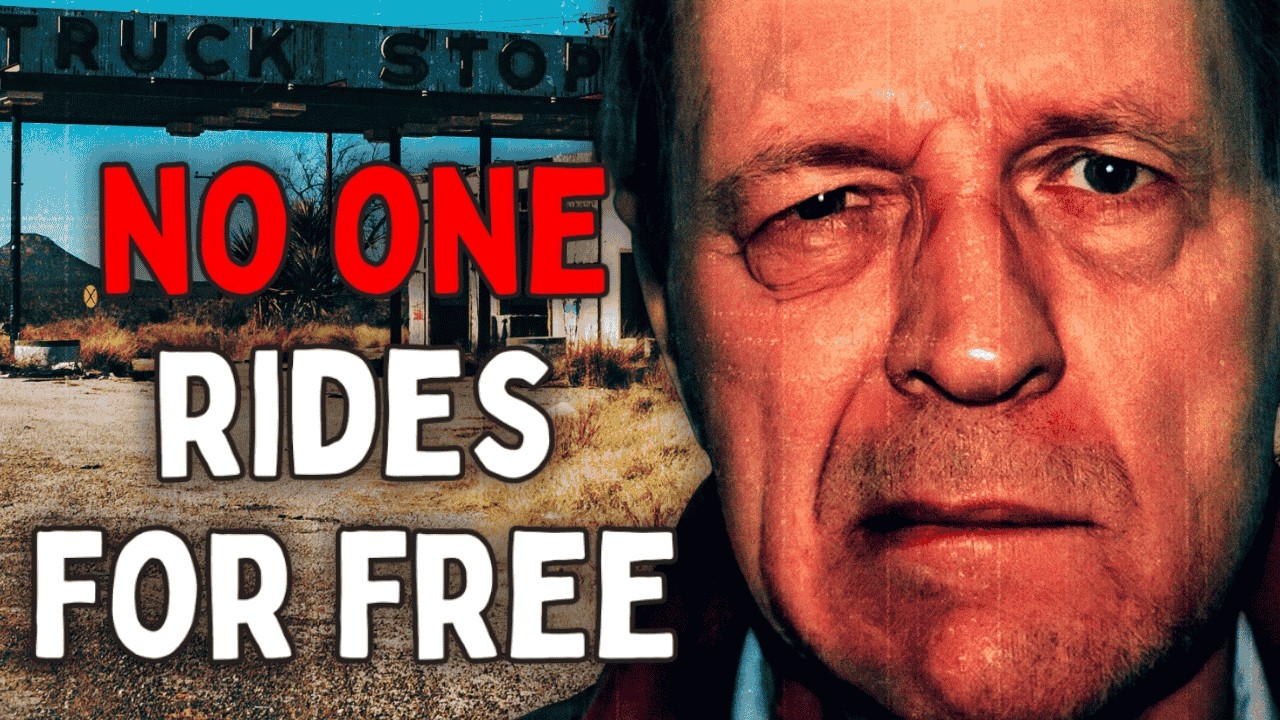
The stores were dimly lit and filled with smoke, radically different from the family travel plazas of today. Pornographic magazines dominated the aisles. Bottles of isobutyl nitrate and cheap aphrodisiacs crowded the counters by the register, along with the iconic bumper sticker: “Gas or grass, no one rides for free. ”
Vanessa had run away with her 21-year-old boyfriend due to problems at home.
Together, they hitched rides from one place to another, living day to day. At one truck stop, while the trucker they were traveling with went to pay for gas, Vanessa and her boyfriend stepped away to use the restroom. When they returned, the truck was gone, along with all of Vanessa’s belongings, including her guitar and knapsack. Only her firearms were left, which she later sold in New Orleans for money.
After about six weeks of this nomadic lifestyle, Vanessa and her boyfriend got into an argument at a station and decided to go their separate ways, each hitching rides on different trucks. Without a fake ID, Vanessa couldn’t stay in shelters, and sleeping on the roadside made her an easy target. “The general rule was that you were a prostitute until proven otherwise, and then you were still a prostitute,” she recalled. The Citizens Band radio was popular among long-haul truckers at the time.
It was the main way truckers shared road info, asked for directions, or just talked to kill time. Since Vanessa was on the run, she had learned to survive with almost nothing. That meant relying on truckers for rides, food, and safety, even when the environment was anything but safe. Walking into truck stop diners wasn’t an option.
Waitresses would kick her out before she could even ask for help. So she was forced to wait by the showers and hallways, hoping to find a driver willing to take her along. Over time, she figured out safer ways to travel. Instead of speaking on the radio herself, which would instantly attract a storm of vulgar comments, she would ask a trucker to use the radio for her.
She came up with sympathetic cover stories to sound less suspicious. These stories usually revolved around a dead grandparent, a sick mom, or a jerk boyfriend who stole her car and her money. In 1985, Vanessa saw police find the body of a young hitchhiker in a truck stop dumpster. She realized it could have easily been her.
Sometime later, she was picked up by a polite-looking trucker who turned disturbingly cold mid-ride. He began talking about the murdered girl and mentioned something called the Laughing Death Society. The society turned out to be just a made-up name. Eventually, he pulled over by a wooded area, drew a knife, and ordered Vanessa to move to the back of the truck.
Vanessa tried to calm him, begging him not to hurt her and promising to stay silent. But his face went blank—cold and empty. After a long pause, he said one word: “Run. ”
Vanessa sprinted into the woods, hiding until his truck disappeared down the highway.
Shaken and in shock, she returned to the road and kept hitchhiking. She never reported the incident for years. But in 2012, the haunting memories of that day returned. By then, Vanessa had long left behind her life on the road.
She graduated from Reed College and built a new life as a writer. That spring, a friend sent her a news article about serial killer Robert Ben Rhoades, asking if he might have been the man who once threatened her life. Although Vanessa couldn’t recognize him at first from the initial photos, she soon noticed similarities to Robert’s older pictures—especially his cheekbones, glasses, and other facial features. As she came across documentaries, articles, and books about the Truck Stop Killer, she realized this was most likely the same guy who held her at knifepoint.
So she began looking into him. The investigation into Robert was complex and stretched across five different states, involving multiple police departments and federal agencies. Tracking his crimes wasn’t easy, as they spanned thousands of miles, and victims were found far from where they disappeared. Eventually, the FBI’s Houston office took the lead, since nearly every major clue pointed back to Texas.
Robert lived there, his wife Deborah was from there, and two of his known victims were also from Texas. During her search for answers, Vanessa reached out to retired FBI special agents Mark Young and Robert F. Lee, both of whom had worked directly on Robert’s case. Vanessa told them everything about the trucker, the Laughing Death Society, and the moment he pulled out a knife.
Agent Young noted that the man’s way of controlling her through fear matched Robert’s psychological profile. He then showed Vanessa a photo of a woman named Shauna Holtz, one of Robert’s few victims who actually made it out alive. Shauna had escaped less than a month after Patricia’s murder. She was only 18 at the time but had been living on the road since she was 12.
By her own account, she had been assaulted nearly 20 times. When Robert picked Shauna up, he chained her inside the back of his truck, which he had turned into a torture chamber. For weeks, he assaulted and tormented her while driving across the country. Her nightmare finally ended when Robert stopped at a brewery in Houston, where she managed to escape and run for her life.
Agent Young told Vanessa that Robert hadn’t left Shauna shackled. He had simply told her to sit there and be a good girl. When Shauna escaped, she still had a chain around her neck. Both her head and body had been shaved by Robert, and she had no clothes on.
It was more than enough evidence to put Robert away for years and open up a real investigation into what else he had done. But that never happened. Shauna refused to press charges, claiming there wasn’t enough evidence. “I don’t see any good in filing charges.
It’s just going to be my word against his. If there was any evidence, I would file. I would file charges and sue him. ”
Even though it was an open secret that women were being found dead along interstate highways and that truckers were thought to be responsible, law enforcement couldn’t pin anything concrete on Robert.
So he walked free. Later on, Vanessa got in touch with Robert’s third wife, Deborah Davis. Deborah told her that back in 1985, Robert was driving for a trucking company out of Georgia, one that had an office right off I-95. The two had met a few years earlier in the early 80s at a Houston bar called Chip Kickers, where Robert had shown up dressed as a pilot.
When Vanessa shared her story of her encounter with the truck driver, the one she suspected to be Robert, Deborah grew excited and remarked, “That’s him. That’s exactly like him. ”
Deborah also recounted how Robert would initially leave his gun at home and take a knife instead. When Vanessa recounted other details about her assault, like the cab of his truck and the clothes he was wearing, her suspicions only grew stronger as Deborah assured her that it sounded just like Robert.
Like the FBI agents, Deborah had never heard of the so-called Laughing Death Society. But when Vanessa asked if that ruled Robert out, Deborah disagreed. She explained that Robert had always been fascinated by secret societies and psychological manipulation. She then recounted the case of Colleen Stan, a 21-year-old hitchhiker kidnapped in 1977 by a couple who held her captive for 7 years.
They forced her to sleep in a wooden box under their bed and convinced her that a secret group called The Company would hunt her down if she ever tried to escape. Deborah said Robert was obsessed with how they used an imaginary secret society to keep her from running away. In the early morning hours of April 1st, 1990, Trooper Mike Miller of the Arizona Highway Patrol noticed a truck pulled over on the shoulder of Interstate 10 near Casa Grande. That was the night Lisa was rescued.
Robert was arrested. Despite being secured in the patrol car, he made a desperate, nearly successful attempt to escape. He was quickly apprehended and charged with aggravated assault, kidnapping, and unlawful imprisonment. Detective Rick Barnhart took the case and connected Rhoades to a pattern of other crimes stretching back at least five months.
Lisa was speaking in what sounded like a jumble of irrational statements, talking about secret prisons and a desperate mission to see the president. It was obvious she wasn’t in the right state of mind after spending days trapped inside Robert’s rolling torture chamber. But what stood out was how much her case resembled Shauna’s. It was like Robert deliberately went after women he believed were vulnerable, the kind who wouldn’t be believed in court.
Back then, detectives often dismissed victims like Lisa, barely taking notes during interviews because they seemed too unstable to testify. Lisa’s statement that night was caught on video. According to FBI agent Robert E. , most people believed Lisa was a sex worker and what happened in the truck was merely a transaction gone bad.
He explained, “Lisa was talking all sorts of crazy stuff. Microchips in her brain, holes in the ozone layer. She was wearing those slippers, but she was telling the truth. ”
Even though Lisa’s statements were all over the place, the cops had more than enough solid evidence to nail Robert.
There was no denying that he held her captive and tortured her. But Robert pleaded guilty to kidnapping with intent to commit sexual assault. In December of 1990, he was sentenced to just 6 years in prison. For the crimes he had committed, 6 years felt like a slap on the wrist.
But that was about to change. On September 29th, 1990, the decomposed body of 14-year-old Regina K. Walters was found nude in the loft of an abandoned barn near Greenville, Illinois. Regina was a runaway just like Vanessa once was, traveling with her 18-year-old boyfriend, Ricky Lee Jones.
The couple was picked up by Robert in February of 1990. Ricky was killed soon after, and his partial skeleton was later found near Carlton, Texas on May 26, 1990, with evidence showing he had been shot. As for Regina, she was kept alive only to suffer the same horrifying fate as Patricia and countless other women who crossed paths with Robert. He shaved her head and body, pierced her skin with fishing hooks, and tormented her for days.
At one point, Robert dressed Regina in a black dress and heels, forcing her to pose for photos while terrified. Finally satisfied, Robert strangled her with a garrote made of bailing wire, leaving her body to decompose in an abandoned barn off Interstate 70. Regina’s autopsy report confirmed she died by strangulation sometime in early March of that year. In February of 1992, while Robert was already locked away in an Arizona jail, investigators executed a search of his home and discovered a collection of truly horrifying photographs.
One of these photos showed the face of Regina K. Walters, barely recognizable. Though some agents initially couldn’t match her with a photo provided by Regina’s mother, FBI agent Young definitively identified Regina by a small gap in her teeth. On the same roll of film was a picture of another girl wearing a gray hoodie.
Detectives theorized that Robert had just picked her up, as her hair was still long and hadn’t been shaved. She was later identified as Pamela Milikin of Saskatchewan after police posted her picture on Facebook. Pamela said she was hitchhiking to find her brother in Winnipeg when she ended up in Robert’s truck. He snapped a photo of her after she just got in.
She asked why, and he told her he kept photos of his passengers so he could show them to the cops in case anyone ever robbed him and fled. Pamela shared, “He told me he was going to Florida and he wanted me to come with him. At one point, he pointed to a sign on his dashboard that said, ‘Cash, grass, or ass. No one rides for free.
‘ I didn’t have any money. I didn’t smoke pot, so I knew which one it would be. ”
According to Pamela, they had what she described as a consensual encounter, and he dropped her off at a bus depot in Winnipeg. Regina’s mother, Carolyn Walters, said in an interview that she was convinced the killer had called Regina’s father, Jerry Walters, around the time their daughter went missing.
The caller made sadistic remarks about what had been done to the young woman. Investigators confirmed the call was placed after the time Regina was believed to have been murdered. Brenda Oldham, the deputy county attorney who prosecuted Robert, told the court that he had welded metal bars with hooks into the back of his truck. He’d used those hooks to fasten chains tied with the horse bridle he had forced his victims to wear around their necks.
Brenda also said that some of Regina’s photos were shown to Robert in jail. Although he made no claims, his face turned white as a ghost, and he looked as if he was about to pass out. Investigators later reported finding a page from Regina’s notebook. On it, Robert had drawn a gun and a large dagger dripping with blood next to the words, “Ricky is a dead man.
”
In September of 1992, Robert finally pleaded guilty to the murder of Regina Walters. That same month, he was convicted at the Menard Correctional Center in Chester, Illinois, and sentenced to life in prison without the possibility of parole. Robert’s other victims were laid to rest with love and dignity. 14-year-old Regina Walters was buried at Mount Zion Cemetery in the Woodlands, Texas.
Her 18-year-old boyfriend, Ricky Lee Jones, rests in Baileytown Christian Church Cemetery in Stokes County, North Carolina. As for Patricia Walsh and Douglas Ziscowski, they were both laid to rest at St. Patrick’s Cemetery in Kent, Washington. Years later, in 2005, Robert was extradited to Utah to face trial for the murders of Patricia Walsh and Douglas Ziscowski.
But following the requests of the victims’ families, who didn’t want to endure the pain of testifying again, the charges were dropped in 2006, and Robert was sent back to Illinois. Eventually, in 2012, Robert appeared before a West Texas judge and pleaded guilty to two counts of capital murder as part of a plea deal to avoid the death penalty. In exchange, he was given two more life sentences. Even though Robert sits behind bars for four confirmed murders and two charges of assault, the true scope of his crimes remains unknown, and it’s likely far darker than what’s been proven.
For context, when an Illinois state trooper circulated a forensic description of Regina K. Walters as a Caucasian female, ages 13 to 15, who had vanished within the last 6 to 9 months, he received over 900 matches. Detectives believe that at his peak, Robert was murdering one to three women every month. While Robert has been sitting away for the rest of his miserable life in prison since his 1992 conviction, one of his victims, Vanessa Veselka, has not only outlived his miseries but has spoken volumes about them.
Today, Vanessa stands as an award-winning author and survivor whose voice carries the weight of countless untold stories. Why are there no serial killers anymore? That’s a question that comes up a lot. The short answer is it’s not that there are no serial killers anymore.
They still exist. But most people who would be serial killers nowadays get caught before they even reach serial killer status, or they decide not to do it because they know they’ll get caught. There are so many ways to get caught right now. DNA analysis and databases have come so far in linking people to crimes.
And think about how much has changed since the golden ages of the serial killer. Back then, you didn’t have to worry about toll booths tracking your every move down the highways. You didn’t have to worry about that little computer in your back pocket tracking everywhere you go, who you talk to, or your movements on social media. It’s easy for police to triangulate somebody’s position with cell phone towers.
People who would be inclined to do such terrible things just aren’t willing to take that chance. And social media means people are more apt to document things. Robert Ben Rhoades flourished on truck stops and highways because there wasn’t a lot of scrutiny and not a lot of public knowledge about that world. Nowadays, anybody can put stuff online.
With a cell phone, you can document anything anywhere. As for the Great Basin Murders, there are several men who have also been linked to those killings, including Scott William Cox, Keith Hunter Jesperson, Howell Williams, Dale Wayne Eaton, and Clark Perry Baldwin. All the victims from the Great Basin Murders have been identified. The most recent was in 2022, when Bitter Creek Betty was identified as Irene Vasquez.
And with the advent of social media, a lot of Jane Doe and John Doe pictures get circulated in various groups. Someone may know a person. DNA kits like Ancestry or 23andMe have led to many identifications, and that’s also where we’re seeing a lot of serial killers get found. Like BTK, or the Golden State Killer.
It’s why we don’t have folks running around doing these terrible things as much. Now, however, it’s very important that we scrutinize the patterns and the ways killers went about doing things so we don’t repeat those types of mistakes from the past. Because a lot of it just happens out on the open road. And a lot of times, serial killers inflate the amount of people they may or may not have killed, or even claim ones they didn’t.
Henry Lee Lucas operated on the road too, and he claimed so many people, some of which were proven not true. Sadly, a lot of those cases we can’t say heads or tails whether it was him or not. There are probably so many killers out there from that golden age who have never gotten caught.


