The name Porsche is synonymous with automotive excellence, wealth, and precision engineering—but beneath the gleaming hood of every luxury vehicle lies a legacy steeped in shadows, one that nearly destroyed the very family that built it. A new investigation into the company’s origins reveals a disturbing truth: the road to Stuttgart’s most celebrated sports car empire was paved with Nazi collaboration, slave labor, and the personal destruction of its founding genius.

Ferdinand Porsche was born in September 1875 in a small village in the Austro-Hungarian Empire, now part of the Czech Republic. While carriages and trains still dominated transport, the young Ferdinand showed little interest in his father’s blacksmithing business. Instead, he became obsessed with the fledgling technology of electricity, experimenting with circuits in his attic while his father dismissed it all as nonsense.
His father eventually relented, enrolling him in the Imperial Technical School of Reichenberg. Within months, the teenager was building his own electric generators and lighting up the family home. It was a talent that would soon launch an entire industry—and eventually entangle him in the darkest political machinery of the 20th century.
At just 18, Porsche took his first engineering job at Bella Egger & Co. in Vienna, a manufacturer of electrical machinery. His brilliance was immediately apparent.
He rose to a leadership position and developed the electric wheel hub motor, a device intended to power any vehicle’s wheels directly. Initially used on bicycles, it soon became the basis for a far more ambitious vision.
In 1898, after five years, Porsche left to join Jacob Lohner & Co. , a carriage maker pivoting to self-powered vehicles. There, at age 23, he built his first automobile—the Porsche P1.
It was fully electric, constructed on a wooden carriage with an approximate 49-mile range. While impressive, its heavy lead-acid batteries limited the car to just 21 miles per hour.
By 1900, Porsche had achieved something truly extraordinary: he combined an internal combustion engine with electric motors to create the world’s first gasoline-electric hybrid. The Lohner-Porsche electromobile broke Austrian speed records, reaching a top speed of 36 miles per hour. Yet its colossal weight and limited range demonstrated exactly why electric vehicles would fail for nearly a century.
The partnership with Lohner eventually dissolved, and Porsche was recruited as chief designer for Austro-Daimler, the leader in combustion engine technology. There he designed his first purely petrol automobile, and the 1910 Prince Henry Trial race proved his turning point. His 85-horsepower model secured a stunning first, second, and third place victory, earning him the title of professor and international acclaim.
When World War I erupted in 1914, Porsche was drawn into the machinery of war. He designed military aircraft engines, airship motors, and artillery tractors like the M17 Goliath, cementing his reputation as one of the finest engineers of his generation. But the skills that made him legendary in peacetime would later make him invaluable to a far more sinister regime.
After the war, Porsche returned to racing. In 1922, his Austro-Daimler Sascha—a smaller, lighter vehicle designed to outperform bigger-engined rivals—won an astonishing 43 of 53 races. The following year, he moved to Stuttgart to become technical director of Daimler, which soon merged with Benz to create Daimler-Benz.
 His designs for Mercedes-Benz, particularly the luxurious S Series, would pioneer high-performance sports cars suitable for both racetrack and road. In 1928, he introduced the Mercedes-Benz SSK, a 7. 1-liter monster with up to 300 horsepower.
It became the most valuable and fastest sports vehicle in the world, dominating Grand Prix races across Argentina, Ireland, and Corsica.
But creative disagreements with the Mercedes-Benz board drove Porsche away. A brief tenure at another car manufacturer collapsed under the weight of the Great Depression, leaving the famous engineer unemployed. It was then that he made the biggest decision of his career: he founded his own company, Porsche GmbH, bringing together former colleagues and, crucially, his own gifted son, Ferry.
The new company initially offered consulting and motor development services rather than building cars under its own name. But clients were scarce; Germany was still reeling from economic devastation, and demand for public automobiles was nearly nonexistent. The struggling business was about to receive a letter that would change its trajectory forever—from a most surprising source.
In 1933, Adolf Hitler became Chancellor of Germany and took a keen interest in automobiles. The dictator wanted every German citizen to own a cheap, fuel-efficient family car. He called it the Volkswagen—the “people’s car”—and demanded it cost just 990 Reichsmarks, a figure many engineers deemed impossible.
Porsche submitted his design and won the contract.
The alliance was mutually beneficial. Hitler needed Porsche’s creative genius; Porsche needed political backing and financial security. In 1934, work began on the Volkswagen Type 1, later known as the Beetle.
With its air-cooled rear engine, easy steering, and remarkable fuel efficiency of 31. 4 miles per gallon, it would become one of the most successful cars in human history.
Three hundred thousand orders were placed. But as the Volkswagen factory prepared for mass production, Hitler invaded Poland in September 1939, plunging Europe into World War II. Beetle production was immediately shelved, and the factory pivoted to war machinery.
Porsche, now a close associate of Hitler, was inevitably drawn into the Nazi military projects.
He developed off-road military vehicles like the Schwimmwagen and the Kübelwagen, as well as the V1 flying bomb missile. However, his greatest failure came in tank design. Hitler had held a contest for the mass production of the Tiger heavy tank.
Porsche designed the Ferdinand, a revolutionary petrol-electric hybrid. But the engine was over-engineered and prone to breakdowns; it lost the contract to Henschel & Son.
Already having built 100 chassis for his rejected prototype, Porsche salvaged the designs by converting 90 tanks into the Elefant tank destroyer. While effective in combat, the vehicles suffered severe mechanical and mobility issues. Most broke down and were lost on the battlefield—a costly engineering failure compounded by a moral catastrophe.
The Porsche company has also been linked to the use of slave laborers in its Stuttgart factory. While the company long denied the accusations, claiming it was a small office during the war, dozens of survivors later came forward in the late 20th century detailing their forced labor conditions. Porsche subsequently admitted the crimes and paid millions of euros to victim compensation funds.
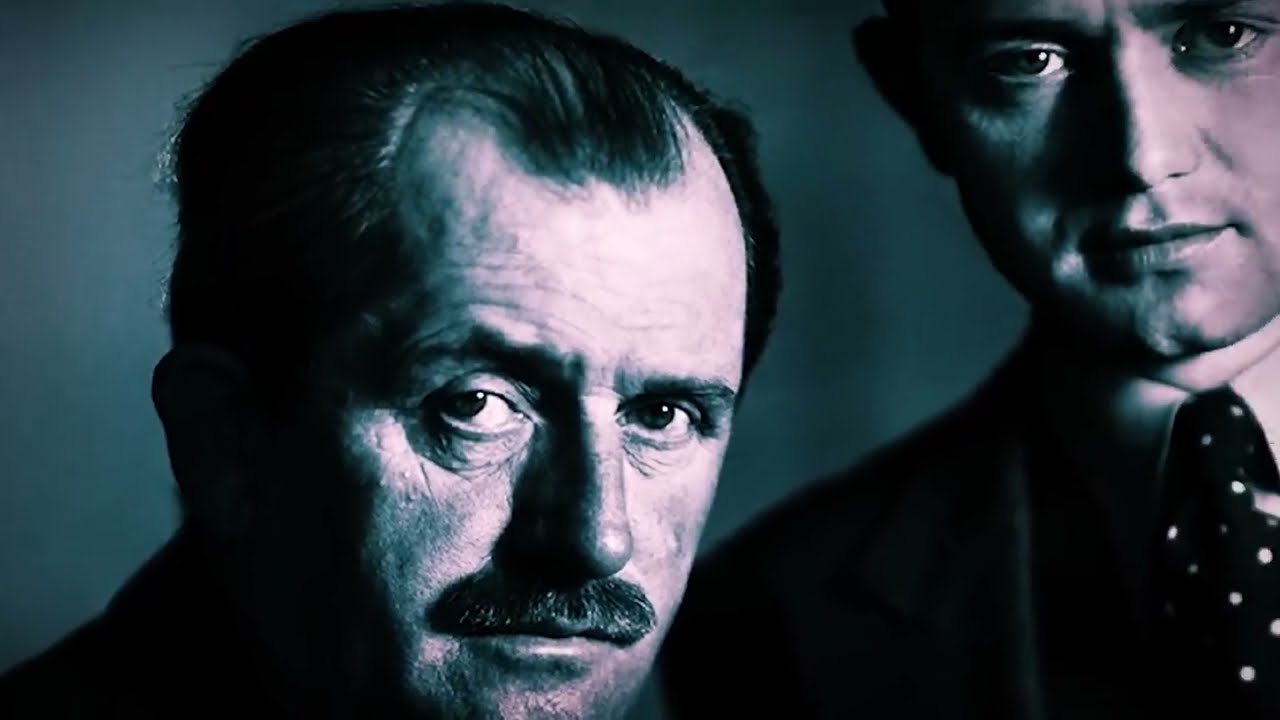
Despite his complicity, Ferdinand Porsche never fully embraced Nazi ideology. He rarely gave the Hitler salute, and his baggy gray coat stood out among the brown uniforms. He reportedly ignored the SS rank bestowed upon him.
His motivation, according to historians, was business—growing his company by supplying what the government demanded. Between 1934 and 1944, his profits soared from 3,000 to over 2 million Reichsmarks.
The cost was devastating. After the war, Porsche was arrested by the French government and imprisoned for war crimes related to his SS membership and close relationship with Hitler. The company he had built and the name he had made legendary were now in ruins.
The burden of saving the family legacy fell to his only son, Ferry—who was also arrested and jailed for months before being released to raise bail money for his father.
Ferry’s release came with a contract from Italian manufacturer Cisitalia, for which he designed the highly advanced Cisitalia 360 Grand Prix car. The vehicle never raced due to financial constraints, but Ferry received his payment and freed his father after 22 months behind bars. The prison conditions, however, had devastated Ferdinand’s health irreversibly.
Unable to return to work, Ferdinand handed the reins to his son. Ferry proved himself not just a talented engineer but a brilliant businessman. He negotiated a deal with Volkswagen, proving that the Beetle was developed by his father before the war, securing a license fee on every VW Beetle built.
This financial foundation allowed Porsche to finally produce cars under its own name.
In 1948, Ferry introduced the Porsche 356, a small two-door Roadster powered by a Volkswagen air-cooled engine. It wasn’t the fastest or most powerful car, but Ferry kept improving it—and won a first-place victory in Innsbruck, Austria, that same year. Ferdinand, though frail, was immensely proud of his son’s success and lived just long enough to see his vision for the Beetle realized.
Ferdinand Porsche died in 1951 at age 75, one year after visiting the Volkswagen factory. His death marked the end of an era, but the Porsche name was only beginning to accelerate. Following a Le Mans victory that same year, sales of the 356 skyrocketed, and new variants—the Speedster and Carrera—captivated sports car enthusiasts and celebrities across the globe.
Yet the 356 was fundamentally still a variation of the Beetle, and Porsche customers grew weary of the design. It was Ferry’s son, Alexander Porsche, a designer and craftsman, who stepped forward to create something entirely new. He began designing what would become one of the most iconic sports cars in history: the 911.
Launched in 1964, the 911 replaced the 356’s four-cylinder engine with a six-cylinder boxer, featuring an air-cooled rear engine that improved steering and acceleration through superior weight balance. It offered a driving experience so smooth it was unmatched by any other automobile. Remarkably, it is estimated that over 70 percent of all 911s ever built are still on the road today.

The 911 proved exceptionally reliable and versatile. It debuted at the Monte Carlo Rally in 1965 and went on to conquer three consecutive victories from 1968 to 1970. It then triumphed at the Targa Florio, the Paris-Dakar Rally, the 24 Hours of Daytona, and countless other motorsport events, becoming one of the most successful competition cars ever made.
But the family’s direct involvement was ending. Ferry Porsche stepped down from his role, and with none of his sons interested in taking over, the family council split the company’s shares and surrendered control. The brand continued to innovate, launching faster models like the Carrera S and the Turbo, and by the 1970s, annual sales exceeded 20,000 units.
Then came disaster. In 1986, a sharp drop in the dollar exchange rate and the high cost of quality production hit Porsche hard. By 1991, sales had halved to just 23,000 units, and losses reached 240 million Deutsche marks.
By 1993, the company was selling only about 14,000 cars per year. Porsche was teetering on the brink of bankruptcy.
Desperate to survive, the company made a drastic and controversial decision: they announced they were entering the SUV business. For a brand synonymous with racetrack performance and luxury sports cars, a family vehicle with four doors was an affront to tradition. In 1999, SUV sales had surpassed those of regular passenger cars in America, and Porsche knew they had to adapt.
When the Cayenne debuted in 2002, critics were ready to write Porsche’s epitaph. Instead, the SUV became their best-selling vehicle. It retained the brand’s signature driving performance and reliability, wrapped in a luxurious, spacious interior.
The Cayenne, followed by the smaller Macan, saved Porsche from financial ruin and now accounts for over 70 percent of its American sales.
Despite the SUV pivot, Porsche has never abandoned its sports car roots. New models like the Panamera and the fully electric Taycan are among the company’s best-selling performance vehicles today. The brand, now owned by the Volkswagen Group, remains one of the most recognized and respected luxury car manufacturers in the world.
The story of Porsche is a study in contradictions—of prodigious genius and profound moral failure, of catastrophic wartime choices and extraordinary redemption. Ferdinand Porsche’s engineering brilliance created an empire, but his decision to partner with a murderous regime nearly extinguished it. His son’s determination rebuilt it, and the company’s willingness to evolve saved it.
As the world continues to revere Porsche for its racing trophies and prestige, historians increasingly remind us of the uncomfortable foundations upon which the brand was built. The luxury vehicles driving through Stuttgart today carry a legacy far more complex and disturbing than any promotional film would ever suggest. The engines may be polished, but the history remains unvarnished.