The skies over the Suffolk countryside erupted in twin balls of fire on the evening of August 12, 1944, and with that blinding flash, the man groomed from birth to become the first Catholic President of the United States was obliterated from the face of the Earth. Lieutenant Joseph Patrick Kennedy Jr., elder brother of the man who would one day inherit that destiny, was vaporized in a top-secret mission that remains shrouded in mystery to this very day.

No trace of the 29-year-old heir to the Kennedy dynasty was ever recovered from the fields near Blythborough. No definitive conclusion as to what caused the two massive explosions that tore his B-24 Liberator apart at just 2,000 feet has ever been officially reached.
The official narrative points to a catastrophic equipment failure in a highly experimental weapons system. But decades later, questions persist: Was Joe Kennedy sent recklessly to his death? Did a sibling rivalry fostered by a ruthless father drive him to volunteer for a suicide mission?
And why were the details of the operation suppressed for so long?
The story begins in the picture-postcard village of Dunkwell, nestled in Devon’s Black Down Hills. In 1943, this quiet corner of rural England was transformed when 5,000 US servicemen descended upon it, with farmland requisitioned to build an air base from which Liberator bombers flew hundreds of anti-submarine sorties during the Battle of the Atlantic.
Among the servicemen billeted in this unlikely location was the heir to one of America’s greatest political families. Lieutenant Joseph Patrick Kennedy had arrived in England’s West Country in September 1943, expecting to fly dangerous patrols against German U-boats. What he could not have expected was that this quiet Devon backwater would become the launchpad for his final, fatal mission.
Joseph Patrick Kennedy Jr. was born on July 28, 1915, in Massachusetts, into a family already steeped in political power. Both his grandfathers had served in public office, and his father, Joseph Kennedy Sr.
, had built one of the great private fortunes of his era, overcoming the vicious anti-Irish Catholic prejudice that pervaded Boston society.
At the birth of his first child, Joseph Kennedy Sr. reportedly declared that baby Joseph would be the first Kennedy to become president. The boy himself would boast that he was destined to become the first Catholic in the Oval Office.
Every ambition, every hope of the Kennedy family was poured into this one golden child.
Fate, however, had other plans. When war broke out, Joe Jr. volunteered for the Navy and earned his wings as a Liberator pilot in May 1942.
He served in Puerto Rico and Central America before being posted to England, where he and his crew flew dangerous anti-submarine patrols over the Bay of Biscay in missions that could last as long as eleven hours.
By the early summer of 1944, Joe had completed his normal combat tour of 30 missions. Remarkably, he refused his leave and persuaded his crew to remain on for D-Day, flying another ten missions in total. Once D-Day was over, he sent his crew home, but he himself stayed on at Dunkwell, volunteering for a secret Navy project.
That project was known as Anvil, the Navy’s contribution to a larger Army scheme called Aphrodite. It was the first attempt at developing guided missile technology, converting war-weary B-24 Liberator bombers into flying bombs packed with more than 20,000 pounds of Torpex high explosive.
The plan was audacious. The stripped-down aircraft would be flown by a two-man crew, Joe Kennedy and his co-pilot Lieutenant Wilfrid John Wy. Once airborne, a Ventura mother ship would take over remote control of the Liberator.
Only after full control was established and tested over English soil would the crew parachute out through the nose wheel bay, leaving the drone to crash-dive onto its target.
The intended target was the vast German V3 super gun being built near Calais, a weapon of terrifying ambition with 25 barrels capable of firing projectiles at 5,000 feet per second toward London. Yet the V3 sites had already been bombed the month before by Lancasters from 617 Squadron and were never completed.
 Why would a man with the brightest of futures, who had already exceeded his duty obligations, volunteer for such a hazardous mission? The answer may lie in the brutal sibling rivalry instilled by his father. His younger brother John had already been decorated for bravery in the Pacific, winning the Navy and Marine Corps Medal, and Joe lamented in a letter that he would probably return with only the European campaign medal.
That it mattered to him is beyond doubt. The question is whether that burning desire for glory drove him beyond reason, straight into the arms of death.
His co-pilot, Lieutenant Wilfrid John Wy, was a different kind of soldier. Born on May 13, 1919, Wy had served as an able seaman before working his way up through the ranks studying electronics. He had never flown a combat mission before the ill-fated flight, having dedicated his war to research and development on the top secret guided weapons programs.
Ironically, Wy himself had designed most of the weapons systems for the very B-24 drone in which he would die. He pulled rank on Kennedy’s normal co-pilot, Ensign Simpson, believing that only he could ensure the success of the mission. Showing blind faith in the weaponry he had designed, he was absolutely determined to be on that aircraft when it took off.
But there was a problem. Another member of the Anvil team, Ensign Earl Olsen, a highly qualified electronics expert, ran his own tests on the arming plate Wy had designed and discovered what he believed was a potentially fatal error: a plug that would become live once the guidance systems at the front of the plane were activated.
Olsen tried to explain his concerns to Wy, but the headstrong officer would not listen. He took his concerns to Commander James Smith, but the officer in charge of the mission was not a scientific man and could only defer to his senior electronics officer. Wy won the day.
The mission went ahead.
Was Joe Kennedy ever told about the problem with the arming plate? Would he still have flown if he had known? These questions may never be answered.
Once Joe had committed himself to the mission, there was no turning back.
As the shadows lengthened on that warm summer’s evening of August 12, 1944, Kennedy and Wy lined up their stripped-down B-24 bomber on the main runway at Fersfield Air Base in Suffolk. The aircraft had been stripped of all armaments to save weight, with broom handles placed in the turrets to fool the enemy. On board: 21,150 pounds of Torpex high explosive loaded in 347 boxes.
The formation consisted of two Ventura mother ships, one P-38 camera aircraft, four Mustang escorts, one B-17 bomber, and two American Mosquitoes. At 5:59 p. m.
, after a textbook takeoff, Joe Kennedy climbed slowly to 2,000 feet, held his course, and formed up with the rest of the planes over Halesworth.
The first set of radio control tests was completed successfully. Kennedy released control of the aircraft to the mother ship. Then came the second phase: Lieutenant Wy’s job was to switch on the television camera in the nose, which would transmit imagery back to the control aircraft.
Unknown to everyone at the time, the radio emissions from that television camera interfered with the arming panel, causing a buildup of current that allowed electricity to pass through circuitry that should have been dead. They simply flipped a switch. And when they flipped that switch, there were two gigantic explosions.
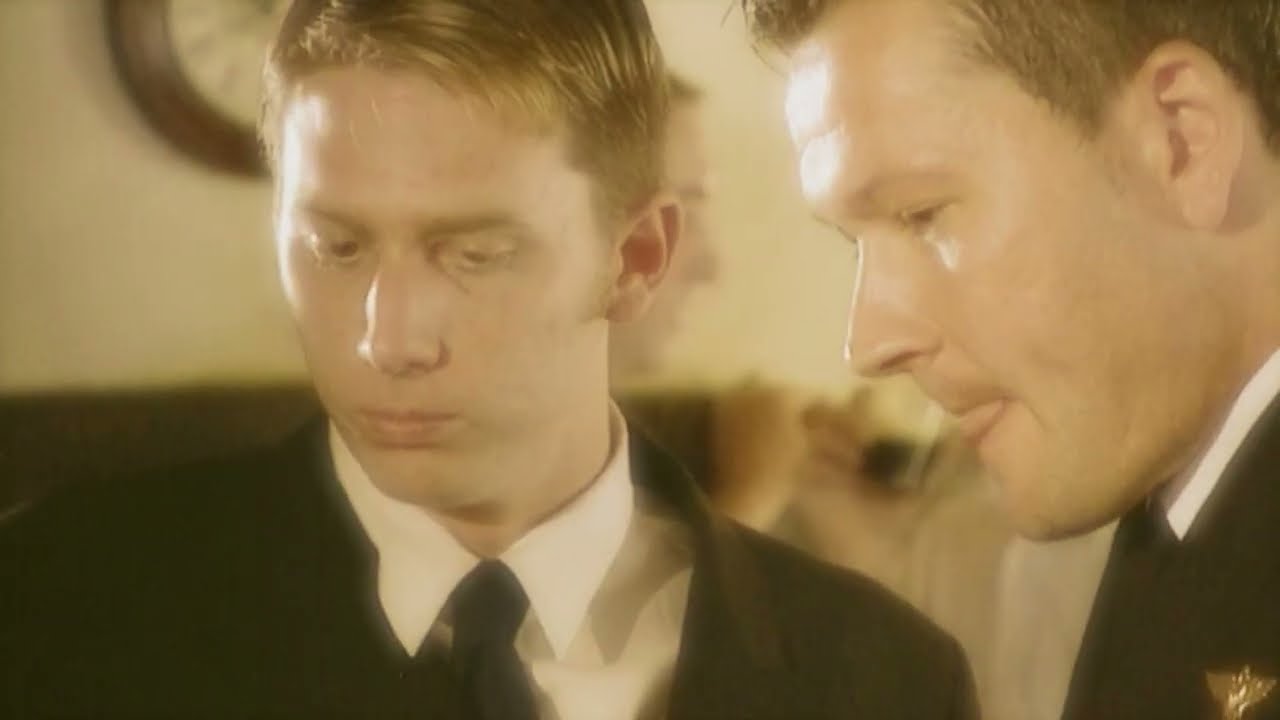 Watching from the ground near his grandparents’ cottage in Blythborough was ten-year-old Mick Muttitt. He had been playing in the garden after tea when he heard a formation of aircraft approaching. He saw a mixed assortment of planes led by a Liberator bomber, trailing a little smoke from the weapons bay.
As he watched, to his horror, it exploded in an enormous fireball.
The engines continued in the direction of flight, propellers still turning as they tore away, landing a good mile to the north. The control aircraft circled the crash site for ten minutes, realized there was nothing they could do, and returned to base. Then everything was quiet.
Almost no remains of the crew were ever found. Despite the size of the explosion, local and national newspapers made no mention of the disaster. Not a word about the fact that the son of the American ambassador to Britain had been vaporized in a mysterious midair explosion above the East Anglian countryside.
The first official documents giving some details of the mission were not released until 1966. The crew was not officially named until 1970. The US Navy’s own report on the incident was not published until 1977.
This silence has inevitably fueled speculation about a cover-up.
Some theories suggest the aircraft was shot down by anti-aircraft fire. Others whisper of sabotage. Mick Muttitt, who witnessed the explosion firsthand, believes the smoke coming from the weapons bay indicated something was overheating in that aircraft, pointing to an electrical fault as the most likely cause.
Officially, the Navy has maintained that this was a tragic accident involving two brave young men, a wartime catastrophe caused by equipment failure. There are those who insist that no cover-up occurred, that this was simply the terrible cost of developing new technology under the pressures of total war.
But the questions refuse to die. Why was the mission allowed to proceed when concerns had been raised about the arming plate? Why were the details suppressed for so long?
And why would a man who had already proved himself a brave and skillful pilot volunteer to risk all on such a hazardous mission when the war was as good as won?
Within a fortnight of the mission, Paris would be liberated. The Allied advance through France was unstoppable. The V3 site near Calais, the supposed target of the mission, was attacked by Canadian forces a month later, only to find that the Germans had deserted the structure under direct orders from Hitler himself.
The futility of what Joe’s mission was trying to achieve seems perhaps the greatest tragedy of all. He gave his life to destroy a weapon system that was already abandoned, in a war that was already effectively won, chasing a glory that his younger brother had already claimed.
Lieutenant Joseph P. Kennedy was posthumously awarded the Navy Cross and the Air Medal. But no grave was ever marked, no body was ever recovered.
His father’s dream of a Kennedy in the White House would eventually be realized by the younger son, Jack, the very brother Joe was trying to outshine.
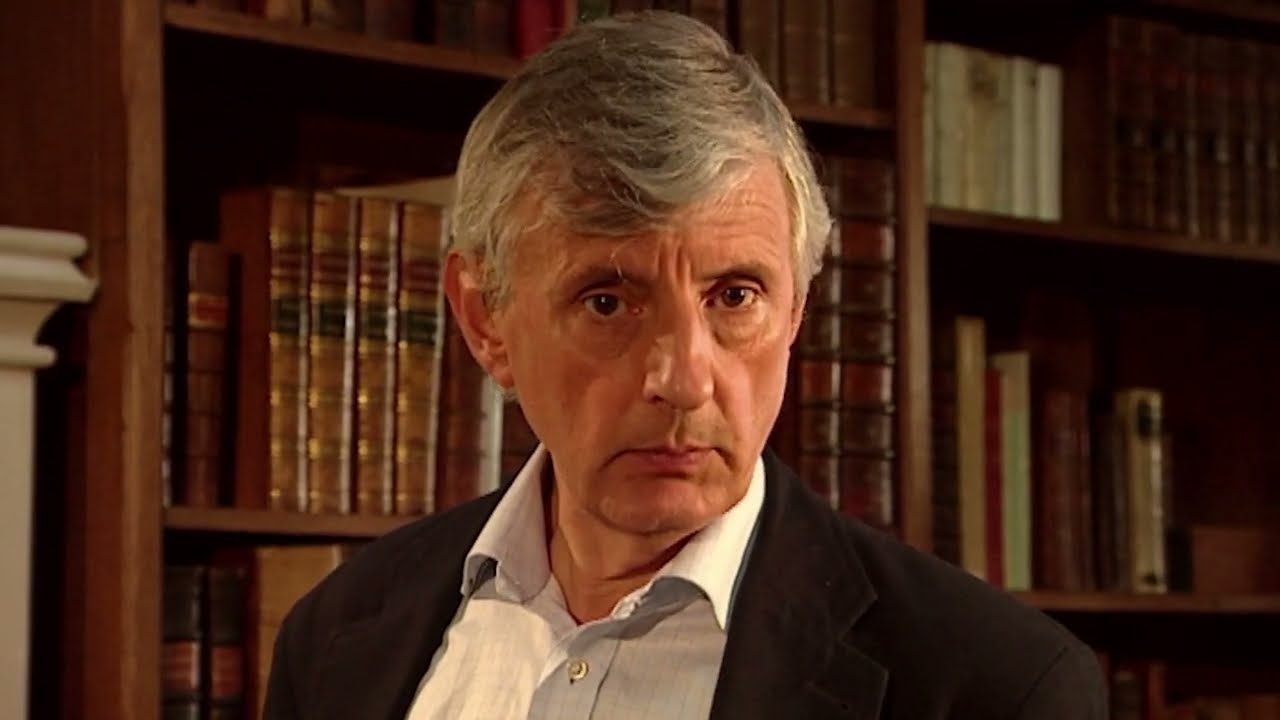 The villagers of Dunkwell know one thing for certain. The curse of the Kennedys began not with a bullet in Dallas in 1963, but in the summer of 1944, when a heroic young pilot took off over the Black Down Hills on route to his final fatal mission.
In the tiny parish church of St. Nicholas in Dunkwell, a brass plaque inside the door lists the names of 183 US servicemen who died flying missions from the airfield above the village. The name of Lieutenant Joseph P.
Kennedy is there with the rest, a permanent reminder of the debt owed to the young men who gave their lives.
His story remains a haunting chapter in the Kennedy family’s tragic history, a tale of ambition, sibling rivalry, and a top-secret mission that went horribly wrong. Whether the true heir of the Kennedy dynasty was sent recklessly to his death, or whether he volunteered willingly in pursuit of glory, remains a question that may never be fully answered.
What is clear is that in war, extraordinary demands are made of very young people. Joe Kennedy was just 29 years old when he climbed into that stripped-down bomber, packed with enough explosives to level a city block, and took off on a mission from which he knew he might never return.
The mystery of what happened in the skies over Blythborough on that August evening has never been definitively solved. But the echoes of those two explosions have reverberated through decades of Kennedy tragedy, from Dallas to Chappaquiddick, reminding us that the curse began long before the world ever heard the name Camelot.
Today, visitors to the remote Suffolk countryside can still find the spot where the wreckage rained down. They come to pay their respects to a man who might have been president, who might have changed the course of American history, had he not been consumed by the very ambition that made him volunteer for that final, fatal mission.
The archives have yielded their secrets slowly, grudgingly. But the full truth of Project Anvil remains classified in parts, locked away in files that have never seen the light of day. Those who believe the official explanation call it a tragic accident.
Those who suspect darker forces point to the decades of silence, the suppressed reports, the ignored warnings.
Earl Olsen, the electronics expert who warned of the fatal flaw, lived with the knowledge that his concerns were dismissed. He watched as the mission went ahead despite his protests, and he watched as the aircraft exploded over the English countryside. His testimony stands as a chilling reminder that sometimes, the most dangerous words in any language are “it will be fine.”
For the Kennedy family, the loss of Joe Jr. was devastating. His father never truly recovered from the death of his golden boy.
When Jack was inaugurated as President in 1961, there must have been a bittersweet irony that the office was being occupied by the second son, the one who was never meant to be first.
And when Jack himself was assassinated in Dallas on November 22, 1963, the nation mourned a president cut down in his prime. But those who knew the full story understood that the tragedy had begun nineteen years earlier, in a fiery explosion over a quiet English county.
The investigation into Joe Kennedy’s death has been reopened and closed many times over the decades. Each generation of researchers brings new questions, new theories, new demands for answers. But the silence from the Pentagon and the Navy has remained remarkably consistent.
Perhaps the most troubling aspect of the entire 𝒶𝒻𝒻𝒶𝒾𝓇 is the possibility that the mission was doomed from the start. The electrical flaw identified by Olsen, the experimental nature of the technology, the abandonment of the actual target before the mission even took off. Joe Kennedy may have died not for a noble cause, but for a bureaucratic imperative to prove that Project Anvil could work.
In the end, all that remains is the memory of a young man who wanted to be a hero, a father who wanted his son to be president, and a family that would be haunted by tragedy for generations to come. The curse of the Kennedys began in the skies over Suffolk, and it has never been lifted.