One of the most important parts of gardening happens long before the first tomato ripens or the first flower opens.
It happens in the soil.
Every time we grow vegetables, herbs, flowers or fruit, plants pull nutrients from the ground. If we want our gardens to keep producing year after year, we have to return something to the soil. That is why fertilizing is not just an optional gardening task. It is part of keeping the whole system alive.
Synthetic fertilizers have helped feed an ever-growing world, but many home gardeners are now looking for gentler, more natural ways to nourish their soil. The good news is that there are plenty of natural fertilizers that can feed plants, improve soil structure and support the living world beneath our feet.
Here are nine tried-and-true natural fertilizers worth adding to your garden routine.
Compost is the natural place to start. It is one of the oldest and most reliable ways to return nutrients to the soil. Made from decomposed organic material, compost contains the three major nutrients plants need most: nitrogen, phosphorus and potassium. But its value goes far beyond basic feeding. Compost also helps balance soil pH, improve moisture retention and support healthier soil structure.
For new organic gardeners, compost is often the best first step. You can buy it, but making your own is even better. Kitchen scraps, leaves, grass clippings and garden waste can all be turned into rich, dark compost with the right method. Whether you use a simple compost bin, hot composting, bokashi or vermicomposting, finished compost becomes a powerful foundation for a productive garden.
Compost tea is another useful option. It takes the benefits of compost and turns them into a liquid feed. Because it is applied in liquid form, compost tea is easy to use around individual plants and can also be sprayed onto leaves as a foliar feed. Plants can absorb nutrients quickly this way, making compost tea especially useful during the active growing season.
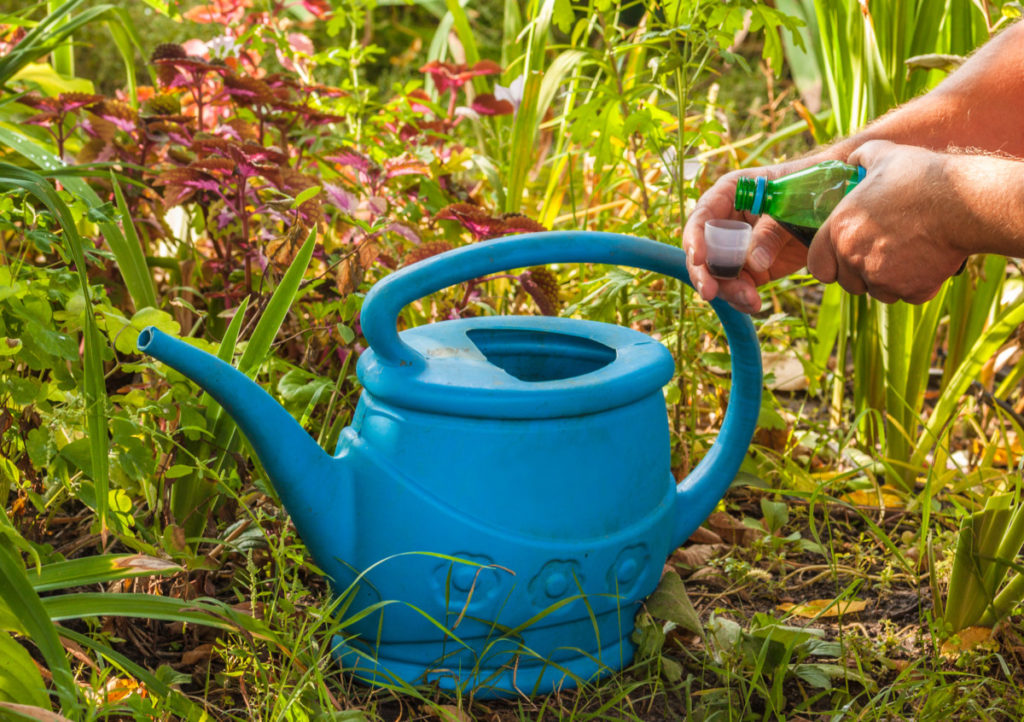
Together, compost and compost tea make an excellent feeding combination. Compost improves the soil over time, while compost tea gives plants a faster nutritional boost when they need it.
Mycorrhizae are not technically fertilizer, but they are too important to ignore. These microscopic fungi form relationships with plant roots, helping plants absorb water and nutrients more efficiently. They can improve drought resistance and make nutrients already present in the soil easier for plants to access.
One of the best ways to support mycorrhizae is to disturb the soil as little as possible. Digging and tilling can break apart the delicate fungal networks that naturally develop underground. That is why many gardeners are turning to no-dig gardening. Over time, a no-dig approach allows the soil microbiome to recover and thrive, giving plants a stronger natural support system.
Worm castings are another powerhouse natural fertilizer. Put simply, worm castings are worm manure, but do not let that description scare you away. They are one of the most gentle and effective fertilizers you can add to a garden.
Worm castings act like a slow-release fertilizer. They improve soil structure, help retain moisture, support beneficial microbes and can feed even delicate plants without burning them. Gardeners who use vermicomposting can produce worm castings at home by feeding kitchen scraps to composting worms. The result is a rich, dark material that plants love.
Bone meal is a slow-release fertilizer made from ground animal bones. It is especially rich in phosphorus, which makes it useful for flowering plants, bulbs and root development. Gardeners often add bone meal to planting holes before transplanting seedlings or bulbs.
Because bone meal releases nutrients slowly, it is best used at planting time rather than as a quick fix. It can also be added to potting mixes when repotting houseplants. Since it is an animal-derived product, some gardeners may choose not to use it for personal, ethical or dietary reasons.
Blood meal is another traditional natural fertilizer made as a byproduct of animal processing. It is high in nitrogen, making it useful for leafy growth and for feeding heavy nitrogen-consuming crops such as tomatoes, peppers, cucumbers, squash and leafy greens.
Because blood meal is concentrated, it should be used carefully. Too much nitrogen can encourage leafy growth at the expense of flowers or fruit. Still, when used properly, blood meal can be an effective way to recharge nitrogen-depleted soil. Its scent may also help deter some garden pests.
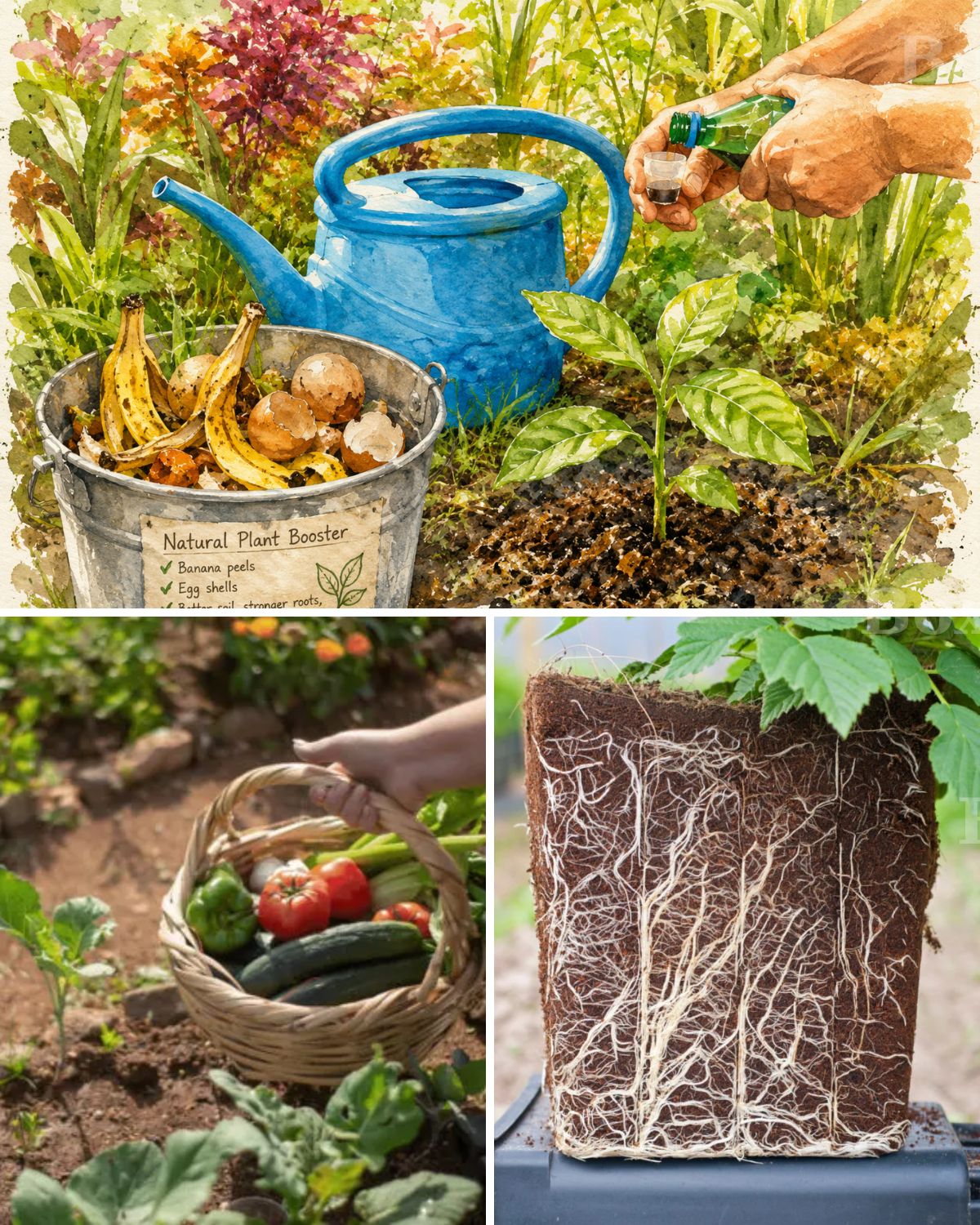
Banana peel fertilizer is one of the easiest homemade liquid fertilizers. Instead of tossing banana peels into the compost, you can soak them in water to create a potassium-rich feed. Banana peels also contain trace nutrients such as calcium, manganese, sulfur and magnesium.
This liquid fertilizer can be used on garden plants or houseplants, either as a soil drench or a foliar spray. It is simple, inexpensive and does not require a compost pile. If you eat bananas, you already have the raw material.
Comfrey liquid fertilizer is another excellent homemade option, especially when your soil needs potassium. Comfrey is a vigorous plant that produces large leaves, which can be chopped and soaked in water to create a nutrient-rich liquid feed.
The process is similar to making compost tea, though the smell can be strong. Once finished, comfrey tea can be diluted and used during regular watering or sprayed on leaves. It is especially helpful for fruiting and flowering plants that benefit from potassium.
Homemade tomato fertilizer deserves special attention because tomatoes are famously hungry plants. They need steady access to nutrients, especially nitrogen and phosphorus, to grow strong vines, set flowers and produce healthy fruit.
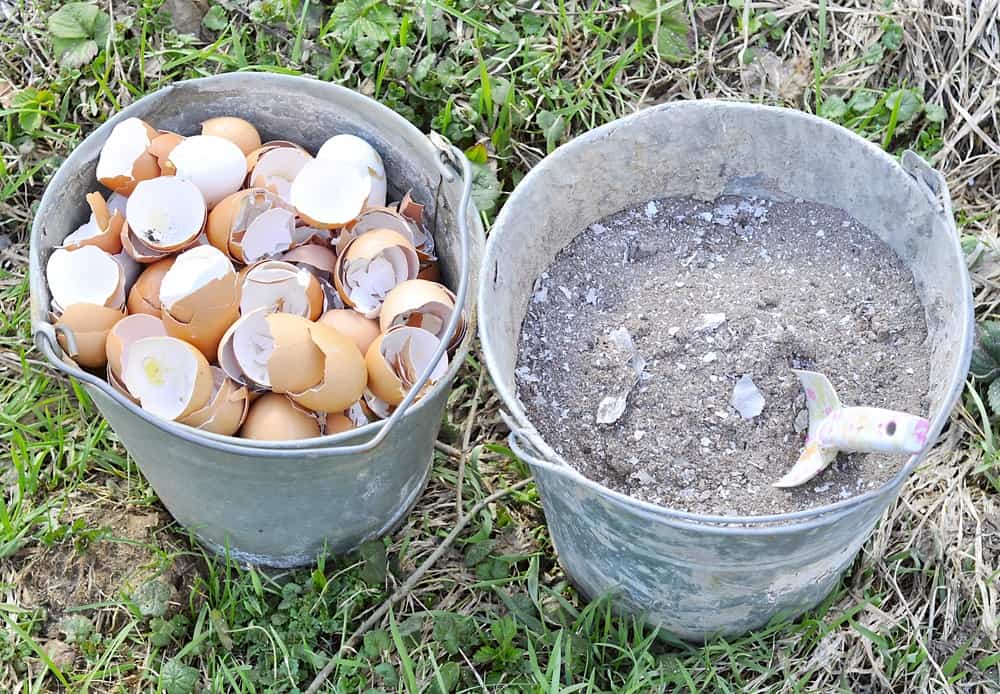
A good homemade tomato fertilizer often combines several natural ingredients, such as compost, bone meal, blood meal, wood ash, eggshells or other mineral-rich additions. The goal is to create a balanced feed that supports both leafy growth and fruit production. For gardeners who grow tomatoes every year, developing a reliable natural tomato fertilizer can make a noticeable difference in plant health and yield.
The most important thing to remember is that natural fertilizing is not about using one magic ingredient. It is about building a soil-feeding routine.
Compost may be your foundation. Worm castings may improve structure and microbial life. Bone meal may support flowers and roots. Blood meal may restore nitrogen. Banana peel fertilizer and comfrey tea may provide liquid boosts during the season. Mycorrhizae may help your plants access all of it more efficiently.
Every garden is different. Soil type, climate, crop choice and watering habits all affect what your plants need. That is why the best approach is to experiment and take notes. Watch how your plants respond. Track what you add, when you add it and what results you see.
Over time, you may discover your own perfect natural fertilizer routine.
And when you do, your garden will not just grow.
It will become healthier from the ground up.