In January 1947, the remains of a young woman were found in the Leimert Park neighborhood of Los Angeles, California. The body of the woman, later identified as Elizabeth Short, had been horrifically mutilated by her killer and cut in half at the waist. In the aftermath of her brutal murder, the press began referring to Short as the Black Dahlia, and portrayed her as a promiscuous temptress.

A complex and extensive investigation involved the identification of some 150 potential suspects, most of whom were eliminated from the inquiry, and numerous letters sent to the press purportedly by the killer. With many rumours and theories surrounding the murder of the Black Dahlia, this haunting case continues to remain as equally unsolved and mysteriously infamous many decades later.
Black Dahlia: The Macabre Murder
On the morning of January 15, 1947, housewife Betty Bersinger was walking with her three-year-old daughter down Leimert Park near Thirty-Ninth and Norton, a residential street in central Los Angeles, when she saw something unusual. Bersinger, who had been on her way to pick up a pair of shoes from the cobbler, moved closer get a better look.
At first, she thought the curious white figure was a broken store mannequin laying a few inches from the sidewalk, but soon she realized it was the body of a woman who had been cut in half and lay laying face-up in the dirt. Betty Bersinger quickly covered her young daughter’s eyes and then run to a nearby residential home to call the police.
Finis Brown and Harry Hansen were two detectives assigned to the case, and by the time they arrived at the scene, located on Norton Avenue between 39th and Coliseum streets in Los Angeles, it was swarming with reporters and ghoulish gawkers who were all carelessly trampling over any evidence left by the killer.
One of the first reporters there that day was reporter Aggie Underwood of the Los Angeles Herald-Express, who took several photos of the body and the crime scene. The detectives ordered everyone away from the ghastly sight, and then began examining the scene. The woman was lying with her arms raised above her head at a 45-degree angle, and her lower half was positioned a foot over from her torso, with her legs straight and spread wide open.
It appeared almost as though the killer had posed the body, which had been washed clean of blood, with the intestines tucked neatly under the buttocks. From the lack of blood at the scene, it was suspected the murder had taken place elsewhere, and the victim dragged onto the lot, one piece at a time.
That overcast morning the weather was cold, and with dew clearly seen under the body, the detectives determined it had been placed there after 2:00am, when the outside temperature dipped the 38 degrees. Notwithstanding the horrific sight of the body neatly dissected in two, the victim’s face had also been hideously defiled.
These further mutilations included several cuts on her breasts and thighs, where large portions of flesh had been removed. The killer had used a knife to slash three-inch gashes into each corner of her mouth, something known as a “Glasgow smile,” giving her the twisted grin of a deranged clown. There were rope marks on her wrist and ankles, indicating the victim had been restrained and possibly tortured before death.
The detectives were able to determine the height of the victim, by measuring the two halves, as 5ft 6in, and her weight as roughly 115 pounds. She had mousy brown hair that had been recently hennaed, and her fingernails were bitten to the quick. There was little evidence left by the killer or killer in the empty lot.
However, they noticed that near the body was a heel print on the ground amid the tire tracks, as well as a cement sack containing watery blood was also found nearby. Once the body was retrieved by the Los Angeles County Coroner, the two detectives were faced with the daunting task of finding out the identity of this woman who had suffered a sickeningly brutal death.
Black Dahlia: Elizabeth Short
During the 1940’s, Los Angeles police and press shared a mutually beneficial relationship, with the reporters using the cops to get the latest inside scoops, and the detectives using the press to disseminate the information they wanted the public to know in the hope it would help solve the case. This latest murder was indicative of this arrangement.
Detectives gave the Los Angeles Examiner fingerprints lifted from the dead woman, and reporters used their “Soundphoto” machine, a precursor to a modern fax machine, to send enlargements of the prints to FBI headquarters in Washington, D.C. The prints were compared by FBI technicians against 104 million fingerprints they had on file.
A match was quickly made a match to one Elizabeth Short, a 22-year-old native of Boston, whose fingerprints had been taken for a mail room job she once had at an army base in California, as well as an arrest record for underage drinking in Santa Barbara. The FBI also sent the paper Short’s government application photo, and once reporters saw how attractive the victim was, they realized how sensational the story could become.
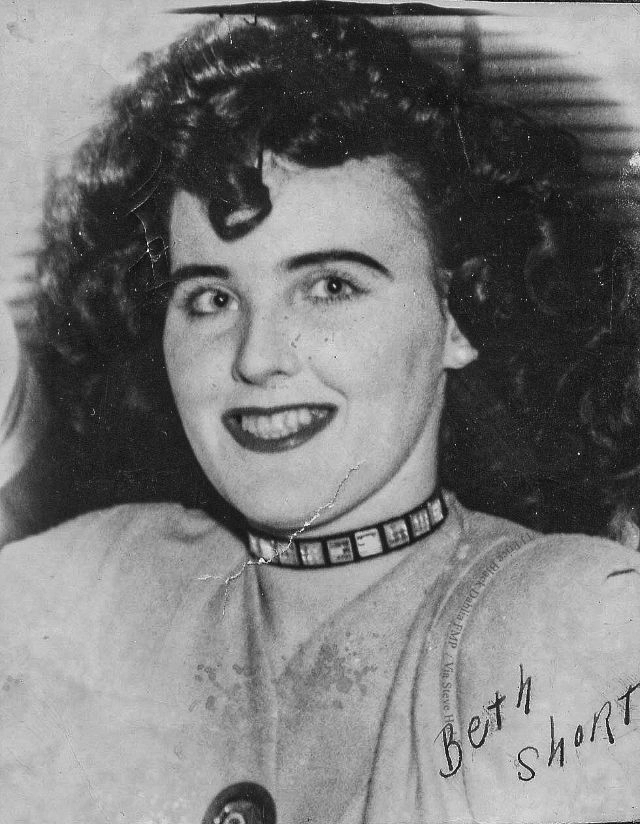 Elizabeth Short, whose body was found in an abandoned lot in Los Angeles.
In an effort to garner as much information about Elizabeth Short as they could, several reporters from the Examiner resorted to an underhanded and unethical ploy. They contacted Short’s mother Phoebe, and explained that her daughter had won a beauty contest. They then started to pry as much personal information about the young woman as they could.
Born on July 29, 1924, in Hyde Park, Massachusetts, Short was one of five daughters born to Phoebe and Cleo Alvin Short Jr. At some point during her childhood, the family moved half an hour north to the town of Medford, and her father launched a successful business building miniature golf courses.
However, the 1929 stock market crash left him bankrupt. As he was unable to provide for his large family, Cleo concocted a plan to 𝒻𝒶𝓀𝑒 his own death, leaving his car on a local bridge to make it look as if he had jumped into the river in despair. Many years later, when he wrote his wife from California saying he was saving up money to move the family there, Phoebe wanted nothing to do with him.
After abandonment of her father, the Short family moved into a cheap apartment building and Phoebe found a job as a bookkeeper. A childhood friend and neighbour, Mary Pacios, recalls that Elizabeth, who was known simply as “Bette,” became something of a big sister of sorts to her, despite being 10 years her junior.
She would often take Pacios out for ice cream or to the movies, where the two girls watched all the Ginger Roger and Fred Astaire films that were popular at the time, as well as the debut of “Gone with the Wind.” It is possible that that small-town theatre, Elizabeth Short first became enamoured with Hollywood, which began her dreams of being an actress.
Born with respiratory problems that developed into asthma and bronchitis as she got older, Short underwent lung surgery at age 15. Afterwards it was suggested by doctors that she periodically relocate to a milder climate to prevent further respiratory problems. When she was 16, her mother started sending her to spend winters with family friends in Miami, where she found work as a waitress.
Short dropped out of Medford High School during her sophomore year, and in late 1942, when her father made contact to reveal he was still alive, Short took a train cross-country at the age of eighteen and relocated to Vallejo, California, to start a new life and live with her father Cleo, who she had not seen since she was six-years-old.
At that time he was working at the nearby Mare Island Naval Shipyard on San Francisco Bay. Short had hoped the move to California would see her break into movies, however arguments between with her father led to her moving out in January 1943. The relationship had been strained from the beginning, mainly because she had not seen him for years.
Cleo Short was haunted by regret, and the two were practically strangers living in the same house, often clashing on how things should be. Her father expected Short to act and perform the duties of a maid of sorts, doing the cooking and cleaning, but Elizabeth was a free spirit who wanted nothing to do with domestic chores.
She eventually found a job in the mail room at the Base Exchange at Camp Cooke (now Vandenberg Air Force Base) in Lompoc, located two and half hours north of Los Angeles. At Camp Cooke, Short was surrounded by entire regiments of lonely, sexually frustrated soldiers who were on the verge of being sent to war.
She left a trail of broken hearts and erotic longing wherever she went, and the young men who clamored for her attention voted her “camp cutie.” They told her she was movie star quality, and she briefly lived with one, a U.S. Army Air Force sergeant, who reportedly abused her. A few months later, she left Lompoc and moved to Santa Barbara.
There, she was arrested on September 23, 1943, for drinking underage at a local bar. She was shipped back home to Medford by juvenile authorities, but instead returned to Florida, after which drifted back and forth across the country, making sporadic visits to her family near Boston, then back to Florida again.
She worked in waitressing to pay her way, enjoying the nigh life, frequenting clubs to socialize and dance to bebop and swing jazz. She enjoyed the atmosphere, music and attention from men, and was never alone unless she wanted it that way. Then, on the last day of December 1944, her bachelorette lifestyle changed when she met a young man who stood out as different from the rest.
Elizabeth Short: Heartache and a New Beginning
During her time in Florida, Short became acquainted with a decorated Army Air Force officer of the 2nd Air Commando Group ‘the Flying Tigers’, Major Matthew Michael Gordon Jr., who was training for deployment to Southeast Asian theater during the Second World War. She sent her mother a gushing letter home, “I met someone New Year’s Eve, a major, Matt Gordon.”
“I’m so much in love, I’m sure it shows. He is so wonderful, not like other men. And he asked me to marry him.” Gordon had indeed written to Short, proposing marriage while he recovered from injuries from a plane crash in India. Short accepted his offer, however it was not to be. In late August, she received a Western Union message.
With the Japanese surrender on August 14th, Short was hoping for her fiancé to return home soon, and she was already planning the wedding arrangements. But the message was from Gordon’s mother, who told her in the terse missive, “Matt killed in plane crash on way home from India. My sympathy is with you. Pray it isn’t so.” His death was four days before Japan’s surrender.
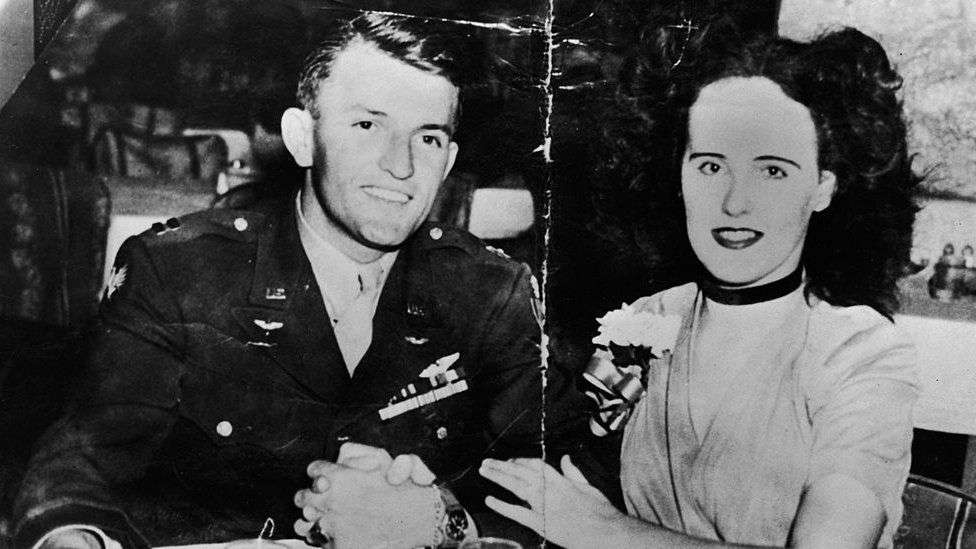 Elizabeth Short and Matthew Gordon.
Short spent the next few days in a deep depression, reading and re-reading Gordon’s letters. When the weather turned colder, she returned to Medford that summer, wearing Gordon’s pilot wings pinned to her blouses, and started a ‘hope chest,’ filling it with the hand-embroidered linens he sent her from the Philippines.
Moving to Miami, Short distracted her broken heart with an endless parade of young men. Although she enjoyed the company of men from every facet of life, young, old, soldier, lawyer, she held a particular regard for men who had plenty of spending money. Aware of the value of her beauty, she would use her feminine charm, walking down the sidewalk in peep-tied heels, immaculately dressed, to full effect on any passersby.
These men wolf whistled, gawked and some even plucked up the courage and offered to buy her dinner, and sometimes she accepted. She was treated to meals, some paid her rent and others gave her cash. She considered it the least such admirers could do in order to bask in her beauty. Some authors have even asserted that she worked as a prostitute, however there is no evidence to support such claims.
This sort of lifestyle gave Short to opportunity to use her own money she earned through waitressing to expand her wardrobe. Her clothes became an extension of her persona, and whenever she stepped outside she was always dressed to immaculate perfection. She favoured black tailored suits, ruffled blouses, long gloves and high heels. She became the embodiment of 1940’s sophistication.
By July 1946, Short returned to Southern California to be close to Joseph Gordon Fickling, a handsome air force lieutenant and old acquaintance with whom she had me in California some two years previous, shortly before he was shipped overseas. Fickling was another in a long line of men in uniform, a particular fetish Short developed from her many suitors.
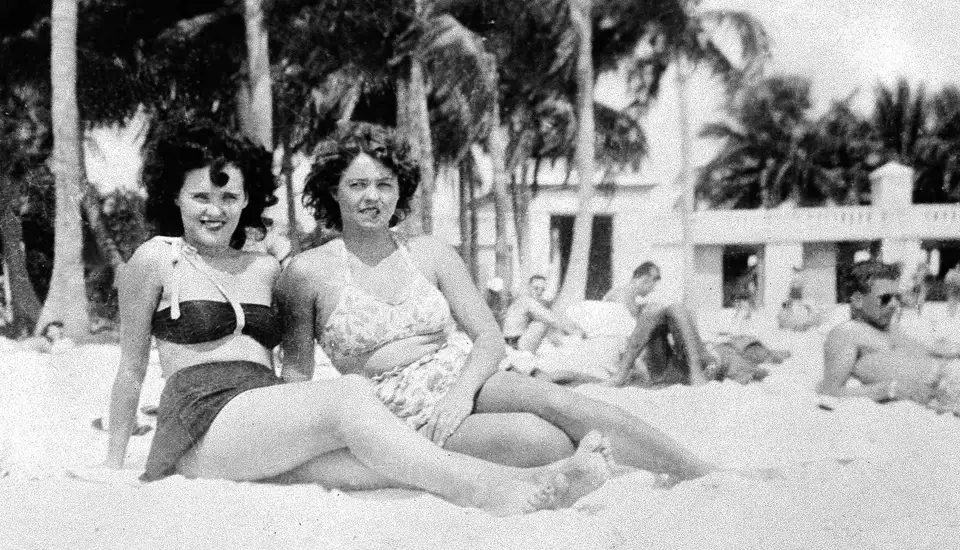 Elizabeth Short and her friend Marge Dyer, on a beach in an undated photo.
The relationship was a turbulent one from the start, as indicated by their private letters, which were confiscated by police during the Black Dahlia murder investigation. Excerpts of these letters appeared in newspapers, and showed that Fickling expressed impatience with Short’s flirtatious nature, often wondering if he was her main priority over other men.
It seemed that Short was either unable, or refused to try and convince him otherwise. Fickling moved to Northern California to work as a commercial airline pilot, but the two stayed in touch, and he continued to send her money, including $100 he wired the month before she died. Seven days before her murder, on January 8, 1947, Short sent Fickling her last letter, in which she told him she was moving to Chicago, where she hoped to become a fashion model.
Black Dahlia: The Media Frenzy
When Short’s mother Phoebe was approached and questioned by journalists from the Examiner, they callously only revealed the fact she had died once they had gleamed as much as they could from her about her daughter. The newspaper then offered to pay her airfare and accommodations if she would travel to Los Angeles to help with the police investigation.
This was yet another ploy, with the tabloid attempting to isolate her from police and other reporters to protect its scoop. The press learned that during the last six months of her life, Short moved constantly between a dozen or more hotels, boarding houses, apartments and private homes in Southern California.
Almost always chronically short on cash, she slept wherever she could and paid as little as possible where she couldn’t. Between November 13 to December 15, she worked as a waitress and lived in a cramped two-bedroom apartment behind the Florentine Gardens nightclub on Hollywood Boulevard. Living alongside her were eight other women, who worked in a variety of professions, cocktail waitresses, dancers and telephone operators.
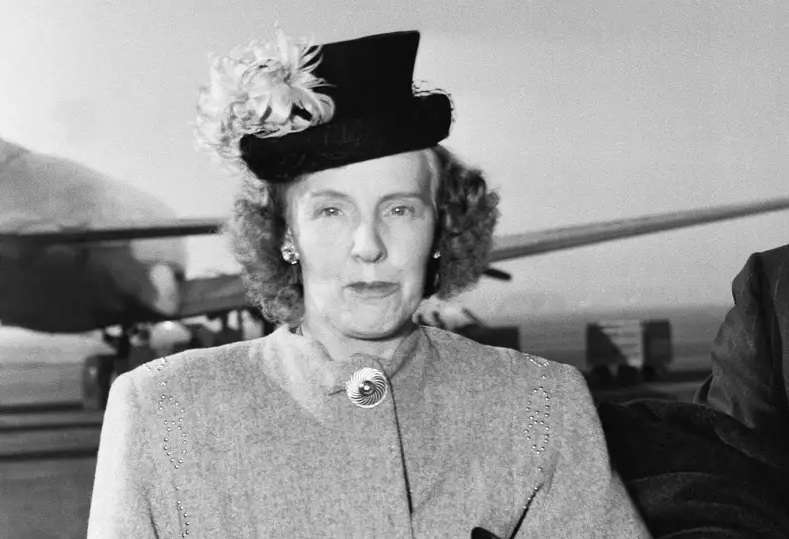 Phoebe Short, the mother of murder victim Elizabeth Short.
Most of these were from out-of-town seeking to break into showbusiness. Each paid $1 a day for a bunk bed and a tiny amount of closet space. But Elizabeth Short couldn’t even afford this, and often snuck out of a side door to avoid the manager whenever the rent was due. Her roommates were questioned by the LA Times after he death and said that Short was often out “with a different boyfriend every night and didn’t have a job.”
“She was always going out to prowl [Hollywood] boulevard,” said 22-year-old Linda Rohr. She was said to have few friends, preferring the company of strangers, and kept only a small group of acquaintances. Her style of dress soon came to the attention of the press, with one Examiner article describing the black tailored suit Short was last seen wearing as “a tight skirt and a sheer blouse”.
As a result, the press gave Elizabeth Short the nickname “Black Dahlia,” and described her as an promiscuous adulterer who preyed on men for her own sexual and financial gain. One report claimed she was an “adventuress” who “prowled Hollywood Boulevard,” and her murder was rumoured to have been a “𝒔𝒆𝒙 fiend slaying”. Because of the brutal nature of the crime, the Herald-Express dubed Elizabeth Short’s murder as the “Werewolf Murder.”
Elizabeth Short was reportedly never known by the nickname Black Dahlia during her lifetime, and Los Angeles Herald-Express reporter Agness “Aggie” Underwood, who was the first reporter at the scene of the crime, later said the popularization of Short’s nickname was the result of information she had received from a Los Angeles Police Department homicide detective.
However, Herald-Express reporter Bevo Means, who interviewed Short’s acquaintances at the Long Beach drugstore she frequented, has been credited with first using the “Black Dahlia” name. Times copy-editor Larry Harnisch claims it was a nickname she earned from the staff at the drugstore, and that she did indeed go by it during her lifetime.
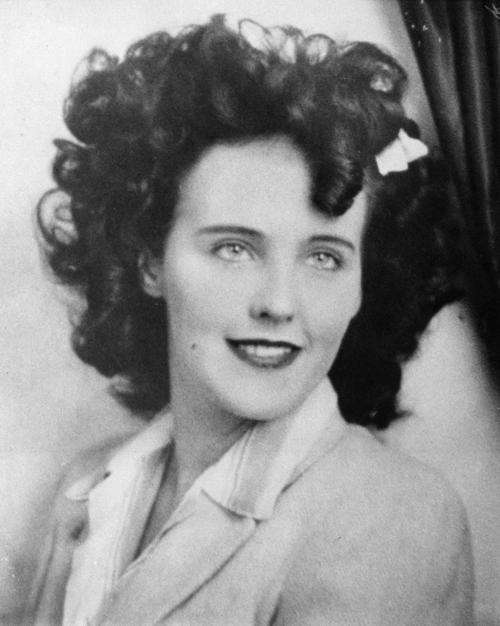 Elizabeth Short, who was known after her death as the Black Dahlia.
The name “Black Dahlia,” could also be a reference to the 1946 crime film noir “The Blue Dahlia,” starring Veronica Lake about an ex-bomber pilot who is suspected of murdering his unfaithful wife. In some publications, Short is described as an aspiring or “would-be” actress, however, although she long held a desire to break-into acting as a film star, she had no known acting roles or credits.
Whatever the truth was about the origin of the Black Dahlia nickname, the press ran with it, publishing sensationalist headlines that caught the attention of the American public, in what was, the first case to garner public attention since the end of World War II. In an effort to keep certain details of the case secret, the police allowed several inconsistencies to be published.
One of these involved the manner of Short’s death, and whether or not she had been tortured prior to her murder. This was denied by law enforcement at the time, but they allowed the claims to circulate. As a result, the average citizen became fascinated with the life of this seemingly ordinary woman who met a particularly gruesome end.
Elizabeth Short: Autopsy Report
Los Angeles County coroner Frederick Newbarr conducted the autopsy of Elizabeth Short on January 16, 1947. It was noted that Short was 5ft 5in tall, weighed 115 pounds, and had light blue eyes with brown hair. It also disclosed a less-than-flattering detail about Short, her teeth were in a “severe” state of decay and plugged with wax.
The body had been cut completely in two, using a technique taught in the 1930’s called a hemicorporectomy, in which following the disarticulation of the lumbar spine and transection of the spinal cord, the pelvic contents, lower extremities and in some cases the external genitalia are removed. It was also been washed thoroughly with gasoline, most likely in an effort to remove any incriminating evidence left by the killer.
There appeared to be little bruising along the incision line, suggesting it had been performed post mortem. There was a “gaping laceration” measuring 4&1/4 in long that ran longitudinally along the abdomen. The lacerations on the victim’s face, known as a “Glasgow Smile,” ran along each side of the face.
The incisions extended from the corners of the lips up to the ears, and measured three inches on the right side and 2&1/2 inches on the left. Newbarr noted ligature marks on Short’s wrists, ankles and neck, indicating she had been restrained with some type of material, most likely rope.
There was also an “irregular laceration with superficial tissue loss” on her right breast, along with superficial lacerations on the left upper arm, right forearm, and the lower left side of the chest. The skull showed no signs of fracture, however there was bruising noted on the front and right side of the scalp.
One source stated, many years after the crime, that Short’s body was covered in cigarette burns inflicted on her while she was still alive. Although she did suffer many horrific mutilations, there was no indication that she was subject to burns, and there is no mention of such wounds in the official autopsy report.
Another incorrect misconception involves the coroner who performed the autopsy, Frederick Newbarr, suggesting during conversation that Elizabeth Short had been forced to consume feces, as indicated from his findings when examining her stomach contents. However, this claim has been denied by others.
Noting a small amount of bleeding on the right side, consistent with blows to the head, Newbarr determined the cause of death as massive internal haemorrhaging caused by blows to the head, and shock from the violence to her head and face. It was also noted that Short’s anal canal was dilated at 1+3⁄4 inches, which seemed to suggest she might have been raped.
The coroner’s report revealed no traces of sperm were found anywhere on her body, however samples were taken from her body and tested for the presence of sperm, but the results came back negative. Elizabeth Short had died a particularly brutal and painful death, and detectives began their investigation to locate the person responsible.
Black Dahlia Investigation
Shortly after the autopsy, the deputy coroner told Herald-Express reporter Bevo Means that Short “wasn’t having 𝒔𝒆𝒙 with men” owing to her allegedly “small” genitalia. Indeed it was noted in the autopsy report that her uterus was “small,” but offers no indication that her reproductive organs were anything other than anatomically normal.
This in-turn led to a series of rumours that circulated widely, which referred to Short as a Lesbian who was unable to have sexual intercourse, because she suffered from a congenital defect that resulted in gonadal dysgenesis, also known as “infantile genitalia.” As a result, some reporters began investigating gay bars in the Los Angeles area.
Immediately after the discovery of Elizabeth Short’s body, around 40 LA police officers conducted a thorough search of the neighbourhood, and went from house-to-house looking for clues and any evidence left by the killer. They scoured dumpsters, checked laundromats for blood-stained clothing and interviewed residents.
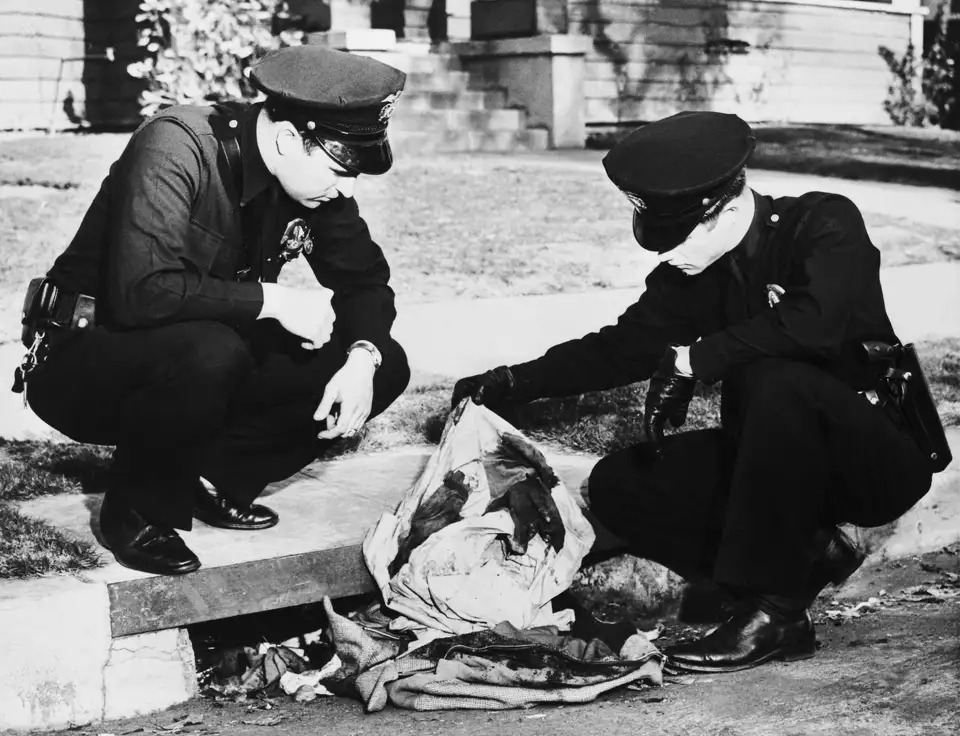 Garments, dragged from a storm drain, are examined by police officers for possible links to the Black Dahlia murder.
They came up with no leads. Short’s father, Cleo Short was tracked down, and found to be living just a mere three miles from where his daughters body had been dumped in the dirt lot. He told detectives he hadn’t see her for the past three years, and was apparently still angry that she refused to tend to his domestic needs when she came to live with him in California, but rather spent her time “running around.” When requested by the coroner to identify the body, he refused.
A witness to lived in the area near the vacant lot where Short’s body was found came forward to report seeing a man standing next to a parked sedan in the early morning hours of January 15, 1947. The neighbour had been driving past that day to dispose of a bag of lawn clippings in the lot, when he saw the man with his vehicle.
The right rear door of the sedan was open, and the driving was standing in the lot. The arrival of the neighbour apparently startled the man, who approached his car and peered into the window, before returning to his own car and driving away. The owner of the sedan was reportedly followed to his place of work, a local restaurant, and later cleared as a suspect.
LAPD investigators focused on the precision with which Short’s body had been cut, they thought it must be the handiwork of an expert, and so, according the FBI, persuaded the University of Southern California, located in the same neighborhood as the corpse was found, to hand over a list of medical students.
The bureau claimed to have been so inundated with hand-written letters to J. Edgar Hoover from individuals claiming to know the identity of the murderer, or who blamed the crime on someone they held a grudge against. One woman wrote the bureau on May 23, 1947, “This suspect swindle[d] $75 out of me, which he promised would put me in motion pictures and make me famous.”
In total around 750 investigators from the LAPD and other departments worked on the Black Dahlia case during the initial stages. This also included 400 sheriff’s deputies and 250 California State Patrol officers. A $10,000 reward for information leading police to Short’s killer was posted by City councilman Lloyd G. Davis.
Sergeant Finis Brown, one of the lead detectives on the case, would later go on to blame the LA press for compromising the investigation. It was his belief that journalists were guilty of a multitude of unverified reporting, most of which caused a plethora of rumours, half-truths and outright fabrications to plague the case.
Black Dahlia: Suspects and Confessions
Like many high profile murder cases, the Black Dahlia investigation had its fair share of confessors. With little choice but to follow up on every lead, no matter how preposterous it might seem, the frustrated detectives travelled down every lead and tip, all which eventually led them to a dead-end.
After the 𝓈𝒽𝓸𝒸𝓀𝒾𝓃𝑔 details of the story hit the headlines and in response to the announcement of a reward, more than thirty confessors came forward to claim they committed the unspeakable crime, most of which were dismissed as 𝒻𝒶𝓀𝑒. These ranged from attention seekers to out-and-out nutjobs, who were all looking to secure their moment of fame in the spotlight. By late January 1947, the first of these confessed their guilt.
Surprisingly, the first to claim they carried out the murder were women. The first, Minnie Sepulveda, telephoned LAPD’s University Station from a bar. She said, “I just stabbed a girl. I killed Elizabeth Short.” This claimed was quickly dismissed. Police also dismissed the confession of Emily Williams, a former WAC, who suffered from an undescribed mental condition.
Another telephone call to the LAPD homicide squad came from thirty-three-year-old Daniel Voorhees, who told them he had murdered Elizabeth Short. After surrendering to police, Voorhees refused to elaborate on his claim, but did say that he dated Short in 1941, however the facts did not match up to his confession, and he was released.
Marvin Hart, a thirty-five-year-old physical culture instructor, was arrested after telling a taxi driver he “just killed a man.” He was brought in for questioning, and although he lived in the same apartment as Short and dated her a few times, but he seemingly had a solid alibi for the night of the murder.
One promising suspect was Joseph Dumais, a good-looking corporal and combat veteran who returned from leave with blood-stained trousers and his pockets full of clippings on the Black Dahlia murder. Although he claimed to suffer from a mental blackout after dating Short, his confession did not hold up and he was sent to an Army psychiatrist.
There were many others, and precious manpower was wasted proving they were innocent, derailing the search for the real killer. Det. Hansen complained to the press that his office had to sort through letters from “pranksters” writing from as far away as El Paso and the Bronx.
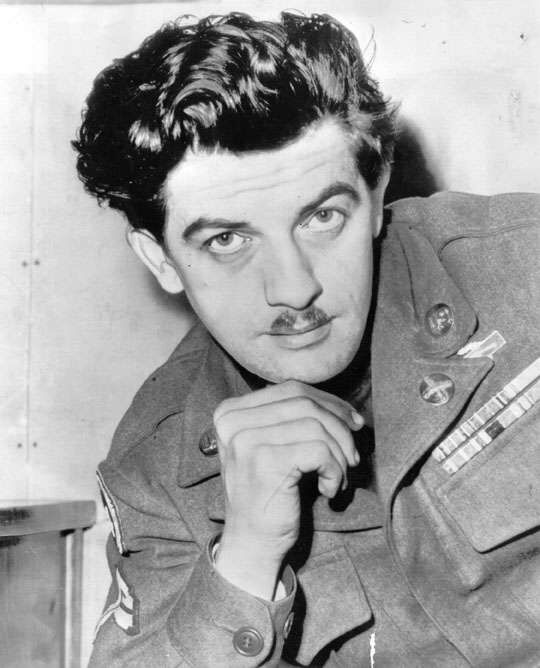 Joseph Dumais, a suspect in the Black Dahlia murder, was later cleared of involvement.
Detectives questioned more than 20 of Short’s former “boyfriends,” but gained no solid leads from these interviews. It was the theory of many detectives that whoever killed Elizabeth Short wasn’t someone she knew, but a rather “pick up.” They began interviewing thousands of people who had even the slightest knowledge of Short or her acquaintance.
Ultimately hundreds of people confessed to the Black Dahlia murder, and hundreds more offered up their own suspect as the killer. “It is amazing how many people offer up a relative as the killer,” said Sergeant John P. St. John, a detective who worked the case until his retirement. All these tips and leads had to be investigated and discounted by the team of detectives.
Meanwhile, investigators looked into the last day of Elizabeth Short’s life, in an attempt to uncover her movements to determine if those she acquainted with had anything to do with her violent end. In the course of that line of enquiry, they came up with another potential suspect, the last person to see the Black Dahlia alive.
Black Dahlia Suspect: George Hodel
The Prime Suspect in the Elizabeth Short Slaying
One suspect put forward by Steven Hodel was a successful doctor who lived in an affluent area of Los Angeles, and his own father, George Hodel. During the investigation into the Black Dahlia murder, Hodel came to the attention of detectives in late 1949, after he was arraigned on felony charges during a three week trial.
The charges stemmed from accusations made by Hodel’s daughter, 14-year-old Tamar Hodel, who claimed she was molest and impregnated by her father, who then forced her to have a back-alley abortion. Witnesses at the trial supported these claims, describing the 𝒔𝒆𝒙 act that had taken place at Hodel’s Franklin house residence.
George Hodel was eventually acquitted of the charges and walked free. This was when investigators, who suspected the involvement of a doctor in the murder of Elizabeth Short, considered Hodel a potential suspect and decided to place him under surveillance. This operation was conducted between February 18, 1950 to March 27, 1950.
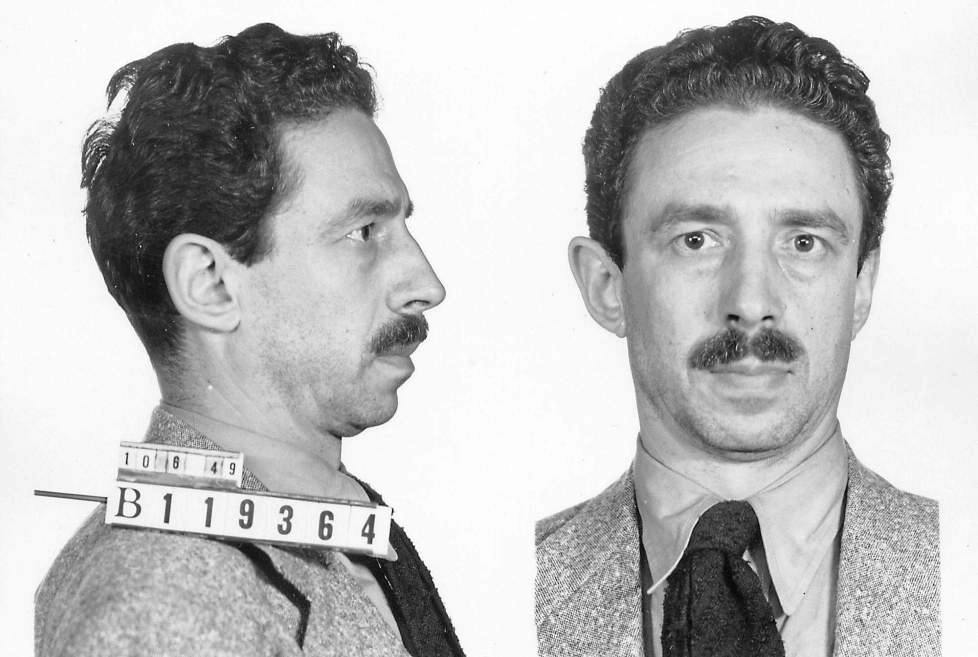 Dr. George Hodel, during his arrest involving incest charges against his daughter.
The purpose of the wiretapping of Hodel’s home was to ascertain if he was speaking openly about the Black Dahlia murder. The transcripts were mostly mundane, however Hodel did make several admissions when in conversation with a person identified only as “The Baron,” which seemed to implicate him in numerous criminal activities.
Hodel can be heard telling this person, “Supposin’ I did 𝓀𝒾𝓁𝓁 the Black Dahlia. They couldn’t prove it now. They can’t talk to my secretary any more because she’s dead… They thought there was something fishy. Anyway, now they may have figured it out. Killed her. Maybe I did 𝓀𝒾𝓁𝓁 my secretary.”
The secretary was Ruth Spaulding, who worked for Hodel and whose death on May 9, 1945 was deemed a suicide. Further conversations appear to involve an unidentified woman, who can be heard screaming before falling silent. Although officers were monitoring these recordings, no effort was made to intervene, and it is unknown what happened to this woman.
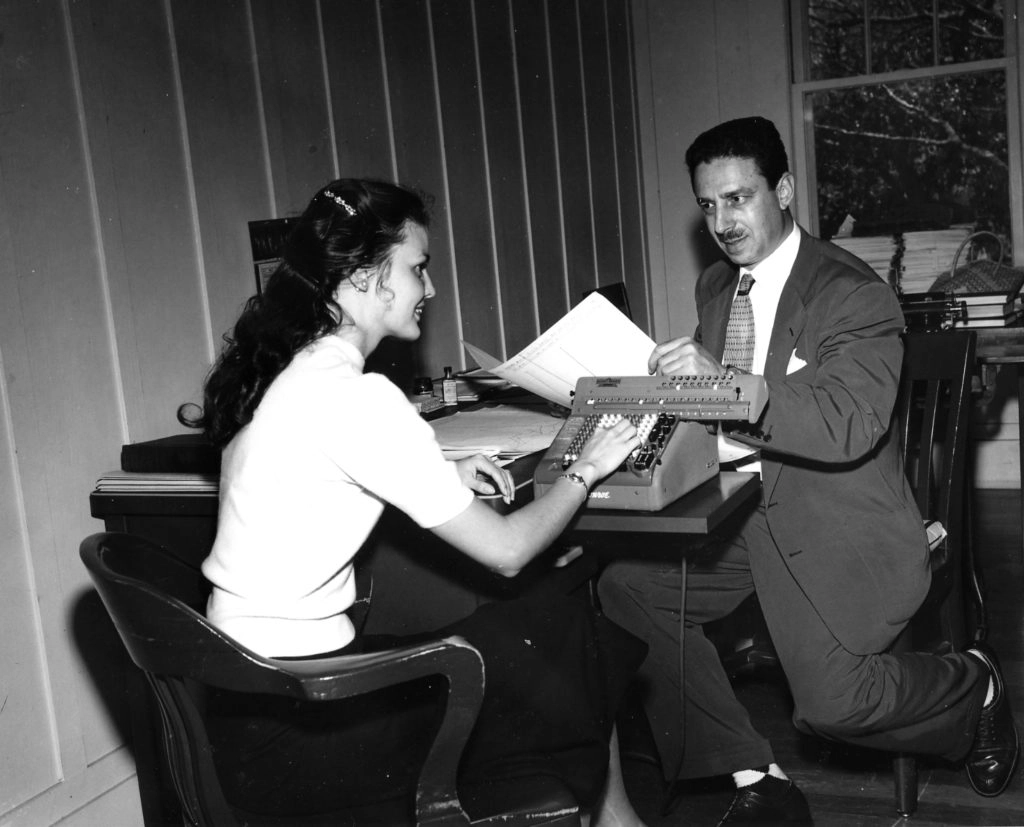 George Hodel and his secretary Ruth Spaulding, who died under mysterious circumstances.
Hodel was subsequently considered a suspect by the LAPD in the murder of his secretary Ruth Spaulding, as well as the murder of Louise Springer in June 1949. But it was Hodel’s mention of the Black Dahlia that was the most sensational aspect of the eavesdropping operation. By April 1950, Lt. Frank Jemison of the Los Angeles County DA’s office had gathered enough evidence to charge Hodel.
However, in late March 1950, George Hodel suddenly left the country. He spent the next three years in Hawaii, then moved to the Philippines, where he remained until 1990. Hodel’s involvement in the Black Dahlia case only came to light in 2003, when a “George Hodel/Black Dahlia File” was discovered in the vault at the Los Angeles County District Attorney’s office, revealing him as the prime suspect in the murder of Elizabeth Short.
After Hodel’s death, his son put forward numerous theories from his own research that implicates George Hodel in numerous unsolved murders. Not only is he considered the prime suspect in the Black Dahlia murder, but his son believes he was also the perpetrator of other unsolved LA murders, as well as the Zodiac killer who terrorized California.
Lt. Frank Jemison said “We know who the Black Dahlia killer was. He was a doctor but we didn’t have enough to put him away.” The DA files confirm that this doctor was George Hodel, with deputy DA Steve Kay, who conducted a review of the case, gave his legal opinion that “the case was solved.”
Elizabeth Short: The Last Day
On January 9, 1947, Elizabeth Short returned home to Los Angeles after a brief trip to San Diego. She had been in the company of 25-year-old married salesman named Robert Manley, nicknamed “Red” for his flaming auburn hair. The two had been dating, and according to the press Manley said he initially picked her up on a street corner in San Diego.
He would go on to say he noticed her standing alone, a mysteriously beautiful woman with no apparent destination. He pulled over to ask if she wanted a ride, and initially Short played coy, turning her head and refusing to look at him. But after Manley kept talking, reassuring her that he was no threat and that he just wanted to help her, she allowed him to give her a lift home.
During that time Short was staying with a family who took pity on her after finding her alone at the 24-hour movie theater where she hoped to spend the night. But they soon tired of her behaviour, as he often lazed around their small house during the day, and spent the evenings out partying. In early January 1947, they asked her to leave.
That was when Manley happened upon her and came to pick her up. They stayed together in a local motel but according to Manley, Short slept in her clothes and the pair didn’t have 𝒔𝒆𝒙. The next day, January 9, he drove her to Los Angeles and there helped to check her luggage at the bus station.
Short told Manley she was going to stay with her sister in Berkeley, and planned to meet her downtown at the Biltmore hotel. Manley accompanied her into the hotel lobby, but took leave of her at 6:30pm, and returned to his family in San Diego. It was reported that staff of the Biltmore recalled having seen Short using the lobby telephone.
Built in the early 1920’s, the Biltmore was a glamourous hotel that attracted wealthy travellers to its luxurious surroundings. The largest hotel in Chicago, with 1,000 rooms, it boasted an impressive lobby, featuring hand-painted cathedral ceilings, crystal chandeliers, and marble floors.
Shortly after Short left the Biltmore, she was allegedly seen by patrons of the Crown Grill Cocktail Lounge at 754 South Olive Street, located not far away from the Biltmore, an elegant setting that was in stark contrast to the abandoned lot where her brutalized body would be dumped one week later.
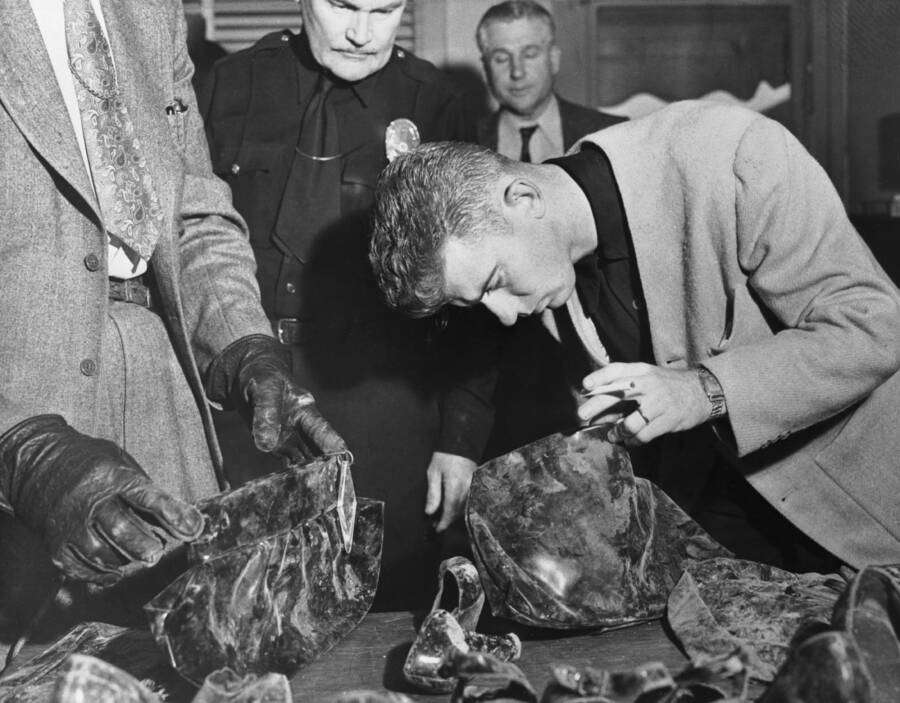 Robert “Red” Manley, identifying Elizabeth Short’s belongings.
Ten days after her body was discovered, Short’s black patent leather purse and one of her black open-toed pumps was found in an alleyway atop a dumpster at 1819th E. 25th street, a short distance from Norton Avenue, located several miles from the crime scene. Robert Manley was called up to identify these items as Short’s, which he did, recognizing the shoes in particular.
Manley explained that he had paid to the black open-tied pumps re-soled in San Diego, and said the handbag smelled of the heavy perfume that Short wore and that had permeated his car as they drove from San Diego to Los Angeles. All of these sordid details were consumed by the five daily LA newspaper, who attempted to out-do one another in competition.
Black Dahlia Letters
Letters from the Black Dahlia Avenger
Someone claiming to be the killer placed a phone call on January 21, 1947, to the office of James Richardson, the editor of the Examiner, and congratulated him on the newspaper’s coverage of the case. The caller said he planned to eventually turn himself in, but not before allowing the police more time to investigate and catch him.
The call was ended with the unknown man telling Richardson to “expect some souvenirs of Beth Short in the mail.” Three days later, on the same day Short’s handbag and shoe were found, a suspicious manila envelope was discovered, addressed to “The Los Angeles Examiner and other Los Angeles papers.”
In the same way Short’s body had been, it reeked of the gasoline the sender used to erase his or her fingerprints from the envelope, leading police to suspect it had been sent by the killer. The words on the front had been compiled using letter cut-and-pasted from newspaper clippings, and read, “Here is Dahlia’s belongings, letter to follow”.
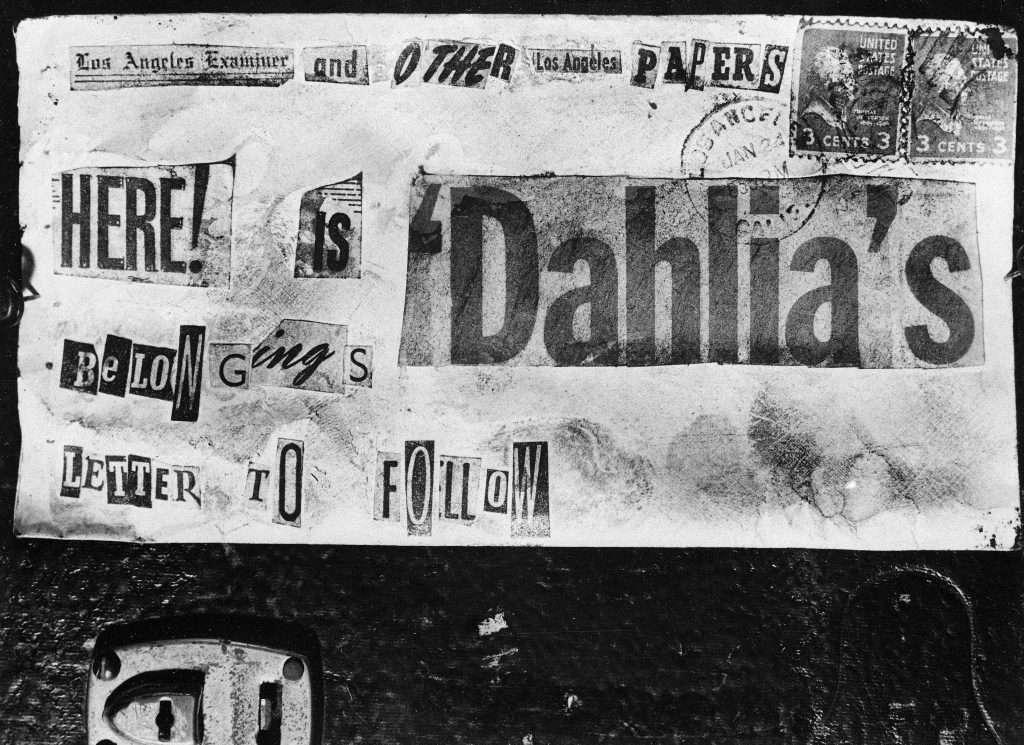 This envelope, containing the birth certificate, address book and personal papers of 22-year-old Elizabeth Short, known as the Black Dahlia, a Los Angeles mutilation slaying victim, was received at the Los Angeles post office Jan. 24, 1947 and turned over to police. (AP Photo)
Inside the envelope was found Short’s birth certificate, business cards, social security card, Matt Gordon’s obituary, names written on pieces of paper, photographs, and an address book embossed on the cover with the name Mark Hansen. Although the sender had gone to some trouble to clean the envelope, several fingerprints were lifted and sent to the FBI for testing. However, the prints were compromised in transit and were subsequently of no further use.
The owner of the address book was soon identified as Mark Hansen, a wealthy local nightclub and theater owner, who quickly became a suspect. Elizabeth Short had reportedly stayed with friends at Hansen’s home, and Hansen was also able to identify the items found as belonging to Short. According to Short’s friend and roommate, Ann Toth, Short had recently spurned Hansen’s sexual advances, and suggested it as a possible motive for her murder.
However, Mark Hansen was soon cleared as a suspect, and detectives were back to square one. In the weeks after her murder, Hansen was one of 150 potential suspect questioned by police. Robert “Red” Manley, the last person to see Elizabeth Short alive was also cleared after he passed several polygraph tests.
Hansen’s address book contained the name of 75 other men. Police made every effort to track each and every one down, and each of the men told investigators a similar story. They said they met Elizabeth Short, either on the street or at a club or bar, and after buying her drinks or dinner, they never saw her again after she made it clear she was uninterested in a physical relationship.
On March 14, 1947, a piece of paper was found tucked in a shoe inside a pile of men’s clothing by the ocean’s edge at the foot of Breeze Avenue in Venice. It read as an apparent suicide note; “To whom it may concern: I have waited for the police to capture me for the Black Dahlia killing, but have not.”
“I am too much of a coward to turn myself in, so this is the best way out for me. I couldn’t help myself for that, or this. Sorry, Mary.” The strange pile of clothing had first been spotted by a beach caretaker who reported the discovery to lifeguard captain John Dillon, who notified Captain L. E. Christensen of West Los Angeles police station.
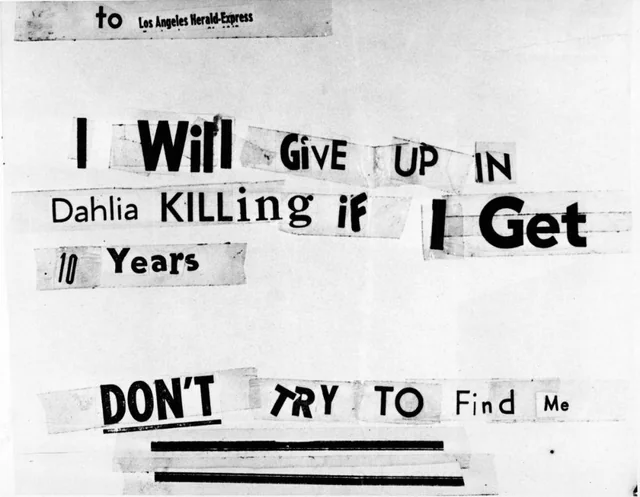 One of thirteen letters sent to police and the press by the alleged Black Dahlia killer.
The clothing included a coat and trousers of blue herringbone tweed, a brown and white T-shirt, white jockey shorts, tan socks and tan moccasin leisure shoes, size about eight. The clothes gave no clue about the identity of their owner, who was never traced. It was but one more mysterious detail in the case was never resolved.
Other letters were received by police, including one in which the author offered to surrender as the perpetrator of the Black Dahlia killing. Police waited at the appointed time, but no-one showed. Another letter that followed in which the author insisted he had “changed my mind…” adding, “you would not give me a square deal.”
Both the Los Angeles Examiner and the Herald Express were sent letters, although the authenticity of these communications has never been confirmed as originating from the Black Dahlia killer. In all thirteen were known to exist, with some composed of the came cut-and-paste style of lettering, while others were hand-written with some signed “Black Dahlia Avenger”.
Elizabeth Short: The Missing Week
One aspect of the Elizabeth Short murder investigation was the so-called “missing week,” between her January 9 disappearance, and the discovery of her mutilated body on January 15. A number of people, none of whom knew Short personally, made contact with detectives and the newspapers to claim they had seen her during that time.
None of these alleged sightings were ever confirmed as being Short, but rather ruled out by police who interviewed the witnesses who had, in some cases, mis-identified other women they had mistaken for Short. LA newspapers also added to the confusion, with the Los Angeles Herald claiming that Short’s murder had taken place at the Aster Motel.
In a bizarre episode, the owners of the Aster Motel in Los Angeles, did indeed report finding one of their rooms “covered in blood and fecal matter” on the morning Short’s body was found. However, this lead was apparently looked into, and in 1949, LAPD chief William A. Worton denied that the Aster Motel had anything to do with the case.
From the moment Elizabeth Short left the Biltmore Hotel, after being dropped off by Robert “Red” Manley, her whereabouts are unknown. What is known, is that at some point, she met her eventual killer, who subjected her to a horrific ordeal that led to her murder and mutilation, and the dumping of her body in two separate parts.
The L.A. and San Diego Murders
The murder of Elizabeth Short was just one of a number of crimes that involved young, often beautiful women, who died insidious deaths, or disappeared without trace. For investigators, it seemed there could be the possibility that the Black Dahlia murder was somehow connected to these other crimes, which were suspected by police of being perpetrated by an unidentified serial killer.
Almost a month after Short’s death, the body of 44-year-old Jeanne French, known as “Nettie” was found in West Los Angeles on Grand View Boulevard, 𝓷𝓾𝓭𝓮 and badly beaten. The killer had presumably written on her stomach using lipstick the words “Fuck You B.D.” and the letters “TEX” below. Comparisons were immediately drawn to the Short murder, however some authors suspect the letters were meant as “P.D,” standing for police department.
Despite this, the two murders are often considered similar due to the brutal nature in which the victims had died. One month later, 43-year-old Evelyn Winters, who was last seen leaving the Albany Hotel, was found bludgeoned and strangled to death in a vacant lot of an abandoned rail yard in Norwalk, California, along the Los Angeles River.
Two months after Winters death, the body of Laura Eliza Trelstad was found in an oil field on Long Beach Boulevard. The 39-year-old had been sexually assaulted before death, then bludgeoned on the head and strangled with a belt before being thrown from a moving vehicle. Trelstad’s killer was dubbed “The Mad Werewolf” by the press, who speculated it was the same individual who murdered both Jeanne French and Elizabeth Short.
A number of other murders committed before and after Short’s slaying have purportedly been associated with the Black Dahlia case, including the infamous murder of 20-year-old oil heiress Georgette Bauerdorf, who was found face down in her bathtub in her apartment in West Hollywood, as well as the July 1946 killing of Gladys Landon and disappearance of 26-year-old Jean Spangler, who vanished under mysterious circumstances in October 1949.
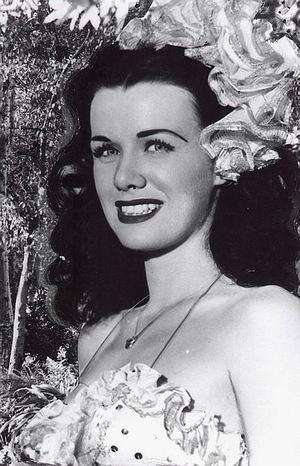 Jean Spangler, who disappeared in October 1949, under mysterious circumstances, a crime that is often linked to the Black Dahlia murder.
Much like the Black Dahlia murder, many of these other crimes were given a sensationalist soubriquet, such the “Red Lipstick Murder” of Jeanne French, the “Red Ribbon Murder” of Olive Laura Hill Gase, the mysterious “Green Twig Murder” of Louise Springer, as well the killing of Mimi Boombauer in August 1949, that became known as the “Happy Widow Murder”.
A similar number of murders had occurred in the decade previous to Short’s murder that were committed against women in San Diego, where she had visited with “Red” Manley. The first such murder occurred in February 1931, when 10-year-old Virginia Brooks, whose body was found in a gunny sack on a mesa near San Diego.
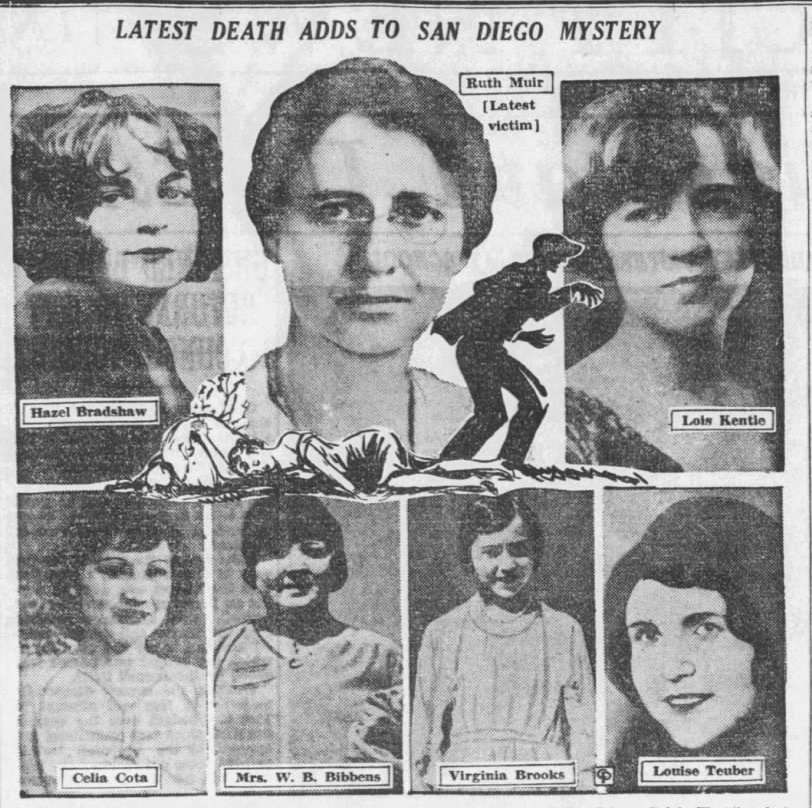 A number of unsolved murders of young women in San Diego, occurred before and after the Black Dahlia slaying.
In April 1931, the almost completely naked body of 17-year-old Louise Teuber was found suspended from a rope that had been tied to a nearby tree or large bush. She had been beaten about the head, before she was hanged, in what looked like an apparent staged suicide scene. The only suspect in the case was given an alibi by his wife for the time of the murder.
Roughly eight other murders were committed between April 1931 and July 1947, that involved women who suffered brutal deaths. Although there was little to connect these crimes with the Black Dahlia case, they are indicative of that time when lone women were targeted by men who often carried out such crimes with a sexual motive.
The Mad Butcher and Lipstick Murders
The same could not be said for horrific series of murders carried out between 1934 and 1938, by a killer the press nicknamed the “Cleveland Torso Murders,” and the “Mad Butcher of Kingsbury Run.” As many as thirteen victims were found dismembered, their bodies dumped, and in most cases, never identified.
A connection between the Cleveland case and the Black Dahlia has been put forward by police detective Peter Merylo, who investigated the Kingsbury Run murders, and suspected the same killer of Elizabeth Short and the butcher they hunted, were one and the same. Despite this theory, a prime suspect for the dismemberment murders was identified as Dr Francis Sweeney, who was never convicted.
Between June 1945 and January 1946, three murders sensationalized by the press as the “Lipstick Murders,” were committed by a killer who wrote a message at one of the crime scenes. Of these killing, the murder of six-year-old Suzanne Degnan was reportedly being investigated by Elizabeth Short in the weeks before her own murder.
The “Lipstick Murders”, were eventually solved when 17-year-old William Heirens was arrested and charged with the three slayings. However, Heirens would claim he had been tortured into confessing by police, and that he was innocent while being made a scapegoat by detectives. Despite many theories that these crimes were committed by the same person who murder Short, no solid evidence had surfaced to support such claims.
Elizabeth Short: Grand Jury
By the spring of 1947, the investigation into Elizabeth Short’s murder had become a cold case, with few leads. Over two years after her murder, a grand jury convened in September 1949 to discuss inadequacies in the LAPD’s homicide unit. There were a startling number of murders committed against women and children that remained unsolved.
Later that same year, the LAPD would be subject to another grand jury over alleged police corruption in connection with the Brenda Allen 𝒔𝒄𝒂𝓃𝒹𝒶𝓁. Allen was a madam who owned a Los Angeles brothel, and paid off police to keep her business of 114 working girls from coming under scrutiny. This collusion between police and Allen reveal widespread corruption.
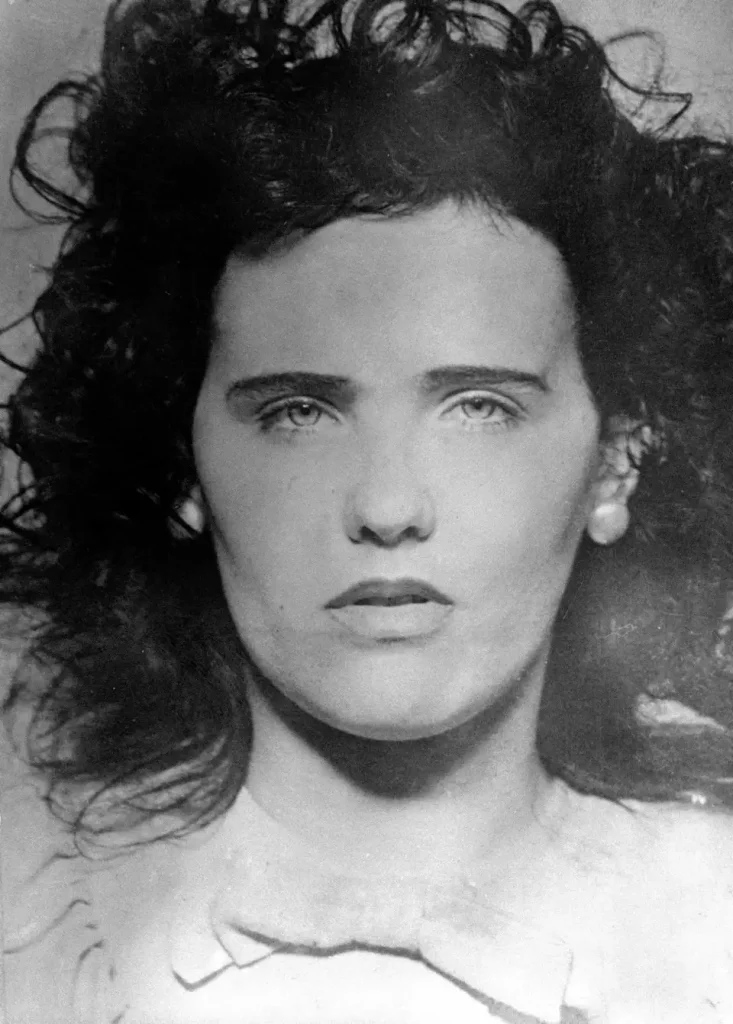 Elizabeth Short’s mugshot from her arrest in Santa Barbara. (Source: Law enforcement mugshot of Elizabeth Short. Used under fair use for educational, historical, and documentary purposes.)
The investigation eventually led to the resignation of L.A.P.D. Chief Clemence B. Horrall and significant reform within the LAPD. The Allen 𝒔𝒄𝒂𝓃𝒹𝒶𝓁 would follow on from the Black Dahlia grand jury with something of a common theme. Elizabeth Short had been described by journalists and authors as a prostitute or call girl during her time in Los Angeles. However, the grand jury found no existing evidence that she was ever a prostitute.
Of the many suspects investigated, five names were mentioned in a formal written report to the grand jury as the prime suspects in the Short murder. Although none of those named as suspects were submitted for consideration for indictment, owing to the investigation’s ongoing status, it was revealed later that one of the suspects named was George Hodel.
At the conclusion of the grand jury, further investigation was conducted into Short’s past, especially her movements between Massachusetts, California and Florida. Detectives also interviewed people who knew her in New Orleans and Texas, however no useful information was gained from these interviews and the case continued to remain unsolved.
Black Dahlia: Elizabeth Short’s Legacy
Elizabeth Short was buried in Oakland’s Mountain View Cemetery in a quiet ceremony attended by only six family members. A number of plain-clothed policemen were also there, waiting on the off-chance that the killer might appear to offer one last goodbye to his victim. Unfortunately, no-one suspicious turned up.
On February 2, 1947, just two weeks after Short’s murder, the introduction of a bill calling for the formation of a 𝒔𝒆𝒙 offender registry was called by Republican state assemblyman C. Don Field, resulting in the state of California becoming the first U.S. state to make the registration of 𝒔𝒆𝒙 offenders mandatory.
The investigation into Short’s murder failed to bring her killer or killers to justice. Despite police questioning over 150 suspects, no charges were ever brought against any of those named in the formal written report to the grand jury. The most promising prime suspect, George Hodel, suspected in many other crimes, was never charged after he left the US.
Most, if not all of the key physical evidence is Black Dahlia case has in the years since been lost, including the original copies of the thirteen scornful letters sent by the purported killer to police and press. The FBI has declassified 203 pages of documents related to its own investigation of the murder.
With her dyed her mousy brown locks raven black, painted her full lips blood red and pinned white flowers in her hair, Elizabeth Short embodied the feminine ideal of the 40’s. When photographs of her appeared in newspapers, with her alabaster skin and startling light blue eyes, the Black Dahlia became the pin-up girl of Los Angeles noir.
Many facts about her life and even her death were misconstrued by the media, who resorted to unethical methods to juice up the story. As a result, the death of Elizabeth Short soon made front page news all across the nation, because it had it all, 𝒔𝒆𝒙, beauty and violence, the key ingredients for a newsworthy murder mystery, that was news noir at its finest.