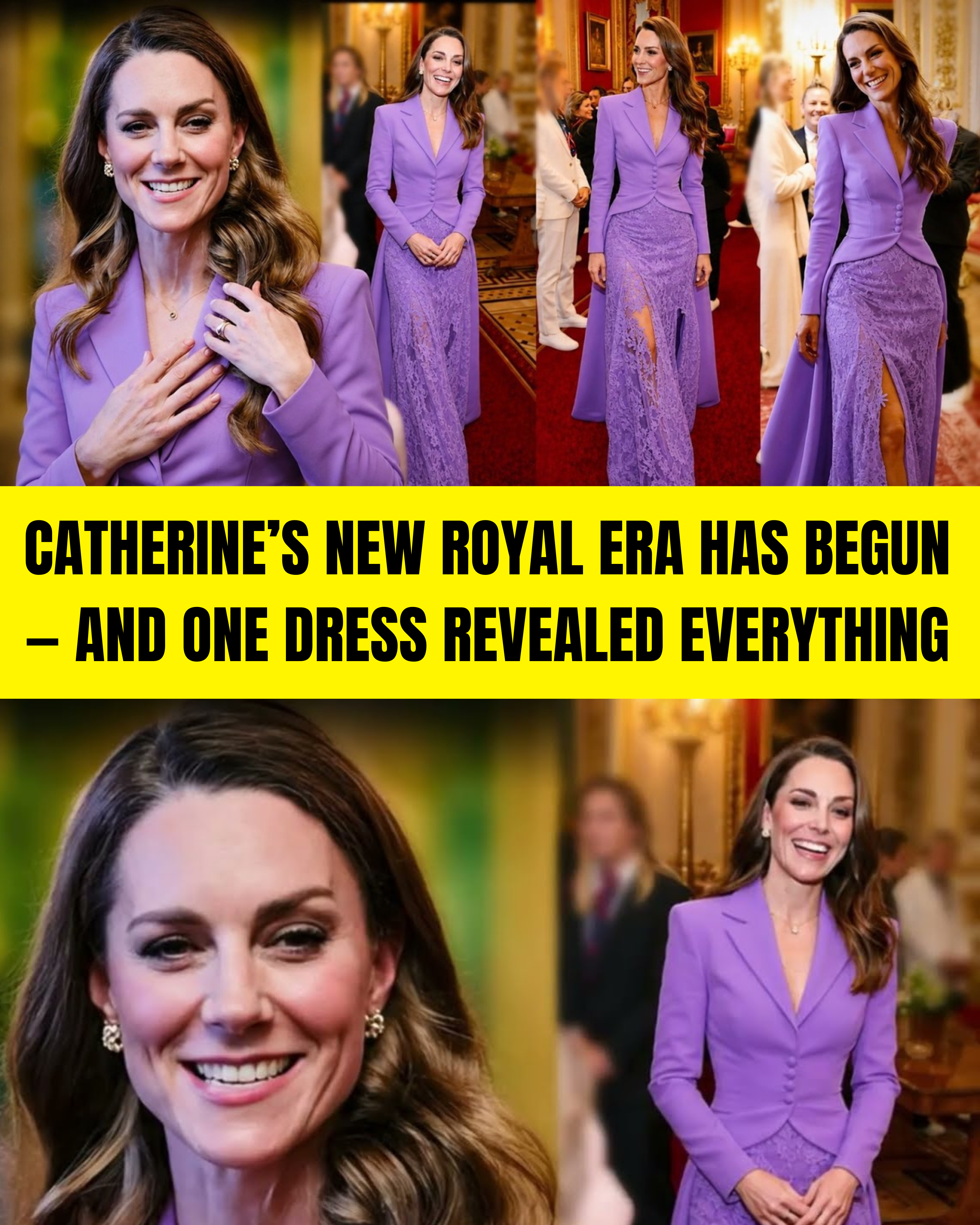
Catherine, Princess of Wales, has once again made it impossible for the public to look away. Not through a royal announcement or an important overseas visit, but through a subtle transformation in the way she presents herself to the world.

On March 12, 2026, Catherine entered the National Portrait Gallery in London wearing an ivory bouclé midi dress by Self-Portrait. Within minutes, the look was being hailed as the defining moment of the “Self-Portrait princess era”—a new chapter in the future queen’s style that feels softer, more personal, and far more emotionally expressive.
The dress was not extravagant. It featured gently rounded shoulders, a softly fitted waist, black velvet trim around the neckline and cuffs, and a line of pearl-encrusted buttons running down the bodice. Catherine completed the look with a structured black leather handbag, Gianvito Rossi heels, and pearl earrings that subtly recalled Diana, Princess of Wales.
But what made the appearance unforgettable was not the accessories.
It was the feeling.
Catherine no longer seemed to need rigid tailoring as a form of armor. With her hair falling in natural waves, understated makeup, and the quiet composure of someone who no longer needed to prove that she belonged near the throne, she appeared entirely at ease.
She did not look as though she were trying to become a queen.
She looked as though she already was one.
This transformation had been unfolding for years. At the G7 reception in 2021, Catherine attracted attention in a blush-pink Self-Portrait dress crafted from lace and chiffon. Earlier that year, at the Hold Still photography exhibition, she wore soft white lace that seemed to echo the stories of grief, isolation, resilience, and hope captured during the pandemic.

At the Together at Christmas service at Westminster Abbey in 2023, her cream bouclé Self-Portrait dress with black velvet bows elevated her image once again: classic without appearing distant, regal without losing its warmth.
Following her battle with cancer, Catherine’s style became even more emotionally meaningful. Gentle colors, lace, pearls, and softened tailoring appeared to tell a story of healing that she did not need to explain aloud.
This was no longer simply fashion.
It was power wrapped in gentleness.
Resilience that did not need to raise its voice.

It was the image of a woman who had endured the pressure of monarchy, illness, motherhood, and relentless public scrutiny—and returned not colder, but softer.
Catherine was not merely wearing a dress.
She was rewriting the visual identity of the modern monarchy: more approachable, more feminine, and more willing to let the heart appear in public.