The state of Indiana executed Benjamin Donny Ritchie by lethal injection early Wednesday morning, a final act that ended a 25-year death row odyssey marked by legal battles, a controversial final statement, and a violent physical reaction to the lethal dose.
Witnesses reported that less than a minute after the pentobarbital began flowing, Ritchie’s left hand clenched into a fist and his feet moved involuntarily. He then sat up on the gurney, violently twitching for roughly three seconds before falling back. Roughly three minutes later, Warden Ronnie Neil closed the blinds.
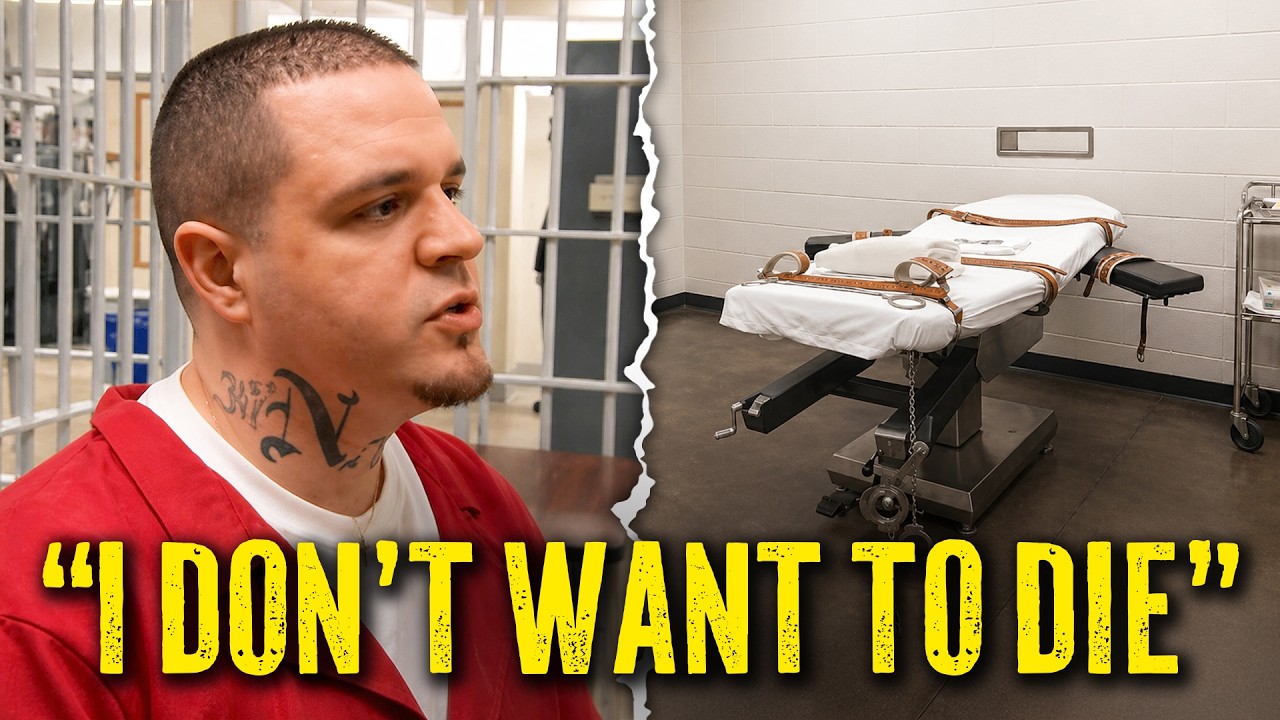 Ritchie, 45, was pronounced dead at 12:46 a. m. The execution team had inserted IV lines into both arms, running the chemicals from an adjacent room where the identities of those who administered them remain protected by state law.
Indiana bars independent media from witnessing executions.
The execution unfolded after a series of last-minute denials. Ritchie’s legal team, led by attorneys Steve Schult and Mark Koselke, had pushed an emergency stay based on claims of severe brain damage caused by fetal alcohol spectrum disorders and lead exposure. The U.
S. Supreme Court refused the final reprieve hours earlier.
“This is a foolish, senseless, agonizing waste of money and time,” Schult told reporters outside the prison. “The man we are executing today, though he himself acknowledges he committed a senseless crime 25 years ago, is not the same person who committed that crime. He is a different man.”
Ritchie had been on death row since 2002, convicted of murdering Beech Grove police officer William “Bill” Toney on September 29, 2000. Ritchie, then 20, was fleeing a stolen van when he shot Toney, who was one day shy of his 32nd birthday and left behind a wife and two young daughters.
During his clemency hearing earlier this month, Ritchie expressed remorse. “I’m not that kid from 25 years ago,” he told the parole board. “If I could go back and just shake that kid.”
He said Officer Toney’s life “could best be served by me helping other guys not reoffend,” but the board denied his request for life without parole.
The final 24 hours began quietly. Ritchie had spent 15 years of his death row sentence in a period where Indiana carried out no executions due to a shortage of lethal injection chemicals. His life had taken strange turns: a relationship with a Swedish woman who wrote to him after seeing a documentary, and abandoned escape plans.
On Tuesday morning, the execution team arrived at his cell without announcement. They placed him in full restraints — handcuffs, waist chain, leg irons — and moved him to the death watch cell inside the execution building at Indiana State Prison in Michigan City. Every move was logged: each meal, hour of sleep, emotional state.
Visitation began in two-hour blocks. Approved visitors included his attorneys, supporters, and a spiritual advisor from the Catholic Diocese of Gary who had pushed for clemency. By 6 p.
m. , the visitors had cleared the grounds. Ritchie picked up a phone to call family, the document never disclosed what was said.
He ordered a final meal from Olive Garden: the Tour of Italy — lasagna, chicken Parmesan, fettuccine Alfredo. He ate while the executioners performed final checks on the lethal injection equipment. Down the hall, the call came in: no reprieve from the high court.
“Ritchie was shaken,” according to the transcript.
An estimated 20 vehicles arrived at the prison lot, carrying current and former police officers, many from Beech Grove. They did not make speeches. They stood in darkness, raising blue glow sticks in tribute to Officer Toney.
Across the same lot, death penalty opponents held a vigil, outnumbered.
“Law enforcement officers are at greater risk of being killed in the line of duty in states that have the death penalty, and even more so in states that use it,” the opponents’ spokesperson said. The officers with glow sticks did not respond. They were there for Bill Toney.
 Ritchie was moved from the death watch cell into the execution chamber and strapped to the gurney. Fluorescent lights, a viewing window. Witnesses on the other side included his two attorneys, a litigation specialist, an unidentified woman, and one empty seat — the fifth allowed by Indiana law.
When asked for a final statement, Ritchie spoke calmly. “I love my family, my friends, and all the support I’ve gotten. I hope they all find peace.”
Then the pentobarbital began to flow. The single chemical was designed to induce rapid unconsciousness, then cardiac and respiratory arrest.
But what witnesses saw diverged from the controlled intention. The clenching, the foot movement, the violent twitch. His legal team described it as a violent reaction.
The state called it orderly. The official protocol — ISP 06-26 — had been followed to the letter, prison officials said.
The execution marks a rare event in Indiana, which had not carried out an execution in 15 years due to the shortage of chemicals. The state resumed executions after securing a supply of pentobarbital. Ritchie’s case drew national attention because of the cognitive impairment arguments.
The Indiana Supreme Court had previously denied his appeal, though a divided decision raised concerns about possible cognitive impairments. Some justices questioned whether the sentence could have been affected, but the majority held that “nothing would have changed the sentence.”
Ritchie’s attorneys argued that executing a man with severe brain damage — caused by fetal alcohol syndrome and childhood lead exposure — violated the Eighth Amendment’s prohibition on cruel and unusual punishment. A federal judge had upheld Indiana’s media ban just a week before the execution.
The legal battles continued until the final hour. Schult and Koselke pushed in federal court for a stay, but the last door closed when the U. S.
Supreme Court denied the emergency petition. Ritchie was then moved into the chamber where his last words were recorded.
The execution unfolded in near-total darkness outside the prison walls. No journalists were inside. Indiana’s policy of barring independent media from the execution chamber contrasts with most other states that regularly carry out executions.
A federal judge upheld the policy, leaving the state as the sole arbiter of what transpired.
At 12:46 a. m. , Benjamin Donny Ritchie was pronounced dead.
The warden closed the blinds. The state reported no further details on the physical reaction. Ritchie’s team said it would continue to fight for transparency regarding the execution process.
The family of Officer William Toney, who attended the execution alongside a former partner who was present the night of the shooting, made no public statement. They left the prison as silent as they arrived. The blue glow sticks had long been extinguished.
Ritchie’s death raises enduring questions about the death penalty in America. Can someone truly change after 25 years? The man who laughed during his own trial, who had his victim’s badge number tattooed on his neck, was not the same person who asked for life, his attorneys argued.
 “Do you believe in second chances?” the documentary narrator asked at the end of the video transcript. “Can someone truly change?
Or is the person who committed the crime still the same, no matter how many years have passed?” Those questions now echo in the silence of Indiana State Prison.
The execution, the first in Indiana since 2019, has reignited debate over lethal injection protocols, the use of pentobarbital, and the state’s media exclusion policy. Ritchie’s legal team has vowed to push for further court review of the physical reaction, but the state considers the matter closed.
Indiana Department of Correction officials did not respond to requests for comment on the specific movements witnessed. They stated only that the execution was conducted in accordance with state law and protocol ISP 06-26. The identities of the execution team remain protected.
Benjamin Ritchie’s case will now be studied by legal scholars and death penalty opponents as a textbook example of the complexities introduced by cognitive impairment claims. His final hours were catalogued in minute detail: every meal, every conversation, every twitch.
The execution was witnessed by five people approved by the state: two attorneys, a litigation specialist, an unidentified woman, and no one in the fifth seat. The media was not present. The only record of the final moments comes from those inside the room, whose accounts may never be fully verified.
As dawn broke over Michigan City, the prison resumed its routine. Death row has one fewer inmate. The empty cell tells a story of 25 years of waiting, of a life that began again behind bars and ended behind blinds.
The state said it was justice. His attorneys called it an agonizing waste.
For the Toney family, the execution closes a chapter that began on a September evening in 2000 when a fleeing 20-year-old fired four shots, one finding the gap above Officer Toney’s bulletproof vest. He left behind two young daughters and a widow who has never remarried.
Benjamin Ritchie’s final statement — “I love my family, my friends, and all the support I’ve gotten. I hope they all find peace” — offered no explanation, no apology directed at the Tonys. But during his clemency hearing he had addressed the widow, Deedee Horan, directly with remorse.
The execution protocol required that Ritchie be transported from death row to the death watch cell at an undisclosed time. The team arrived without announcement. He was placed in full restraints and walked the short distance to the execution building.
The weight in the air changed.
From the death watch cell, Ritchie watched his final hours tick away. Every meal, every hour of sleep, every emotional state was noted and recorded. The clock wasn’t just ticking anymore.
It had a face, as the documentary described.
His spiritual advisor stayed close until the end. The Catholic Diocese of Gary’s representative had pushed for clemency and was among the last to see him alive. The visits ended by 6 p.
m. Protocol didn’t bend for anyone. Then came the last phone call.
 Ritchie ate his final meal without evident distress, according to sources. The execution team performed final checks on the lethal injection equipment. The call came: no reprieve.
The Supreme Court had denied the emergency stay. Ritchie was shaken, but he composed himself.
When he entered the chamber, the fluorescent lights illuminated the gurney. The medical team, identities protected, inserted IV lines into both arms. The lines ran through the wall to the adjacent room.
From there, the chemicals would flow from anonymous hands.
Ritchie made his final statement. Then the pentobarbital began. The initial reaction — clenched fist, moving feet — suggested a physical response that the state said was within expected parameters.
The three-second violent twitch and sitting up, however, raised questions.
The warden closed the blinds after Ritchie was pronounced dead. The state declared the execution orderly. But the narrative left by those who were present contradicts that sanitized assessment.
The legal team called it violent. The state called it controlled.
The broader context of Indiana’s death penalty now must be examined. Fifteen years without an execution, then a single chemical protocol. The absence of media witnesses.
The cognitive impairment arguments that nearly swayed some justices. The case has all the elements of a national debate.
Benjamin Ritchie’s body was removed from the chamber. The execution team completed their post-procedure checklist. The prison shifted back to its regular operations.
But the questions raised by this execution — about brain damage, about change, about the final moments — will not fade with the dawn.
In the parking lot, the blue glow sticks had been lowered. The death penalty opponents had gone home. The media, kept outside, filed their reports based on secondhand accounts.
The state released a brief statement. The only detailed narrative comes from those who were inside.
The execution of Benjamin Donny Ritchie is now history. But it is a history that will be argued over for years. Every detail — the violent twitch, the final meal, the last phone call, the empty chair — will be weighed in the ongoing conversation about justice and punishment.
For now, the cell is empty. The death watch cell holds no one. The state of Indiana has carried out its first execution in over a decade, and the memory of that final night will be carried forward by those who saw it — and by those who will demand to see the next one.