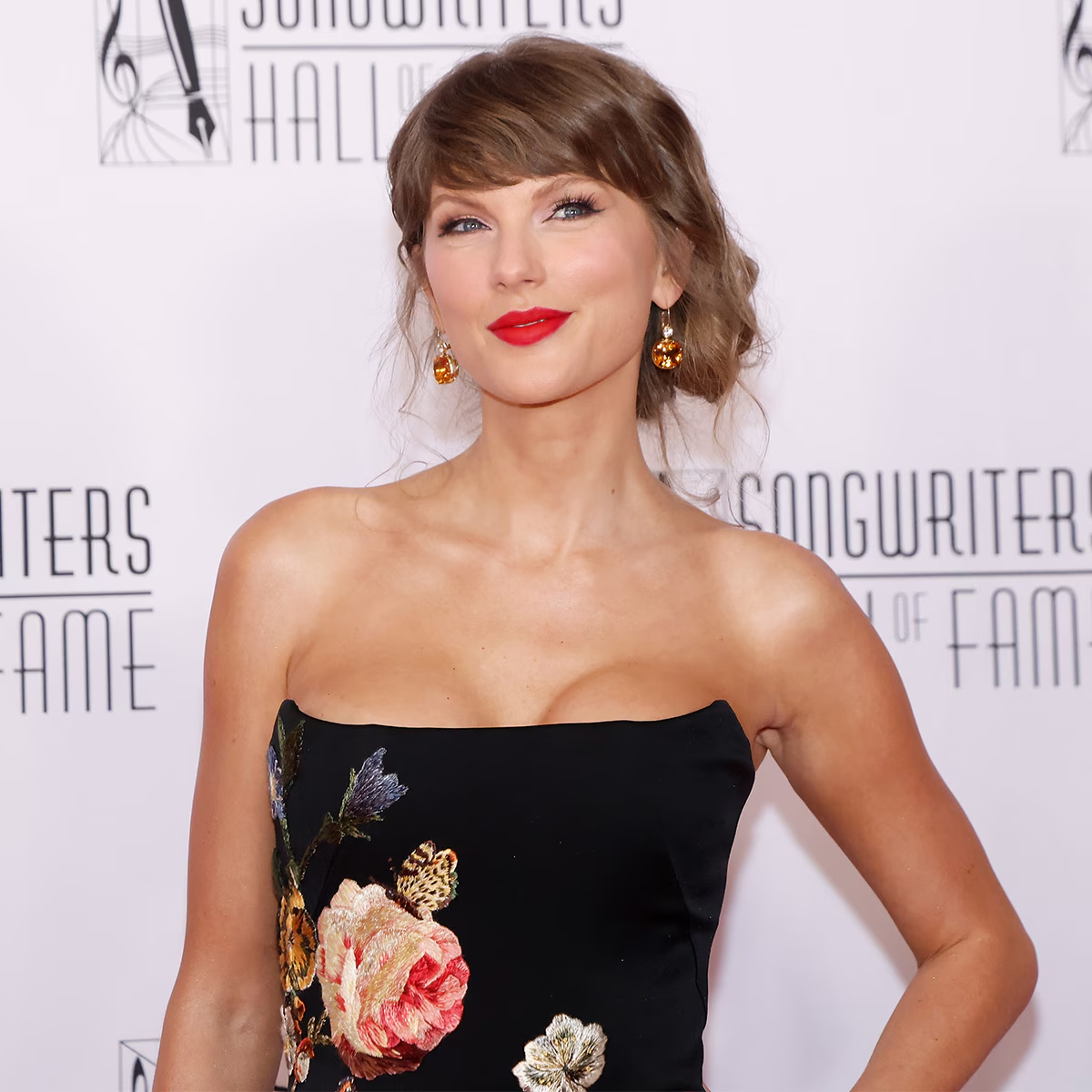
Taylor Swift may be headed for another major songwriting milestone.

Just weeks after being inducted into the Songwriters Hall of Fame in New York City, Swift has been nominated for the Nashville Songwriters Hall of Fame’s Class of 2026 in the Contemporary Songwriter/Artist category. The nomination places her alongside three major names in modern country music: Miranda Lambert, Chris Stapleton and Phil Vassar. Only one nominee from the category will be selected for induction later this year.
The Nashville Songwriters Hall of Fame announced 12 nominees across two contemporary categories on July 15. The Contemporary Songwriter nominees include Jim Beavers, Shawn Camp, Rodney Clawson, Dallas Davidson, Marv Green, Lee Thomas Miller, Neil Thrasher and Chris Tompkins. In the Contemporary Songwriter/Artist category, Swift is competing against Lambert, Stapleton and Vassar — all artists whose reputations rest not only on their voices, but on the songs they helped write.
According to the Hall of Fame’s eligibility rules, nominees must have written their first significant songs at least 20 years ago. That requirement gives Swift’s nomination a symbolic weight. She released her debut single “Tim McGraw” in 2006, making her eligible at the earliest possible moment and connecting the honor directly to the Nashville chapter that launched her career.
For Swift, the nomination is more than another trophy-season headline. It is a return to the city where her songwriting identity began.
Long before she became a global pop phenomenon, Swift was a teenage country songwriter in Nashville, building her career around lyrics that felt unusually personal for a new artist. Her early songs blended country storytelling with diaristic detail, creating a style that would later become one of her defining trademarks. Nashville.com described her as a Pennsylvania-born, Nashville-raised songwriter and cited “Love Story,” “Better Man” for Little Big Town, and her own recent work among the credits connected to her nomination.
The competition is intense.
Miranda Lambert has built one of country music’s most respected catalogs, with writing credits on songs such as “Automatic” and “Over You.” Chris Stapleton is widely admired both as a solo artist and as a songwriter behind hits including “Broken Halos,” “Starting Over” and Kenny Chesney’s “Never Wanted Nothing More.” Phil Vassar’s songwriting legacy includes his own hits as well as songs recorded by artists such as Jo Dee Messina.
That makes Swift’s nomination especially notable. She is not being recognized only as a pop superstar. She is being considered in a Nashville songwriting category against artists deeply rooted in country music’s tradition of craft, storytelling and emotional precision.
The timing also adds to the sense of momentum around Swift’s songwriting legacy.
On June 11, Swift was inducted into the Songwriters Hall of Fame at the Marriott Marquis Hotel in New York City, becoming the youngest woman ever inducted at age 36. The Associated Press reported that filmmaker Steven Spielberg introduced her at the ceremony, where Swift reflected on her roots, her family’s sacrifices and the instinctive nature of songwriting in her life.
The Songwriters Hall of Fame had announced its 2026 inductees earlier in the year, placing Swift in a class that also included Walter Afanasieff, Alanis Morissette, Kenny Loggins, Gene Simmons and Paul Stanley of KISS, Christopher “Tricky” Stewart, and Terry Britten and Graham Lyle.
Swift’s New York induction was historic because it recognized her across genres. The Nashville nomination, however, carries a different emotional meaning. It points back to the city where she learned how to turn small details into songs that felt universal.
That has always been central to Swift’s appeal.
From “Love Story” and “You Belong With Me” to “All Too Well,” “Cardigan” and “Anti-Hero,” Swift’s career has been built on lyrics that fans treat almost like diary entries. Her songs often feel specific enough to be personal but broad enough for millions of listeners to find themselves inside them. That skill — the ability to make private emotion feel communal — is exactly the kind of craft songwriter halls of fame are designed to honor.
The Nashville Songwriters Hall of Fame said the final list of 2026 inductees will be announced in the coming weeks, with the honorees officially welcomed later this year. Voting will be conducted by Hall of Fame members and a select group of professional songwriters and artists. Two Contemporary Songwriters and one Contemporary Songwriter/Artist will be inducted from this year’s contemporary nominees.
For Swifties, the nomination is another reason to watch the fall announcement closely. If Swift is selected, she would complete a remarkable double recognition in the same year: first by the national Songwriters Hall of Fame in New York, then by the Nashville institution tied to the earliest phase of her career.
It would also underline a point that has followed Swift for years but is now impossible to ignore: behind the celebrity, the tours, the business empire and the cultural spectacle, Taylor Swift’s foundation has always been songwriting.
Nashville saw it first.
The rest of the world followed.
Now, nearly two decades after a teenage Swift introduced herself with “Tim McGraw,” the city that helped shape her may be preparing to place her among its songwriting greats.