On November 15, 2007, Michael Jackson tried to do something most people never think twice about.
He went shopping.
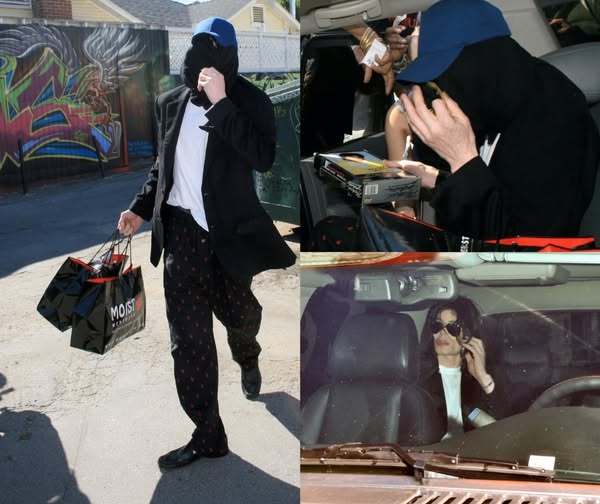
Not on a stage. Not at an awards show. Not surrounded by dancers, lights or cameras. Just a man walking into a clothing boutique on Melrose Avenue in Los Angeles, hoping for a few ordinary minutes in a world that almost never allowed him to be ordinary.
According to reports from the day, Jackson visited the Los Angeles boutique Moist Wear while shopping on Melrose Avenue. He was accompanied by a female companion and asked the store to close briefly so he could browse in private. One fan who spoke with him said Jackson repeatedly asked that no one be told he was there, explaining that he was “just trying to be like you.”
That sentence said almost everything.
Michael Jackson had spent nearly his entire life being watched. He had been famous since childhood, chased by cameras since adolescence, and studied by the public in a way few entertainers have ever experienced. By 2007, even a casual trip to a clothing store could become a public event within minutes.
Inside the boutique, the moment appeared calm. Reports said Jackson selected a few items, including three shirts, and tried to enjoy the simple act of shopping. But outside, the fragile privacy quickly collapsed. As word spread, fans and photographers gathered, turning what was supposed to be a quiet errand into another chaotic celebrity sighting.
When Jackson left the store, he was followed through a nearby alley toward his vehicle. TMZ later described the scene as Jackson being guided down an alley by fans as he tried to find his car. The outlet’s tone was typical of the paparazzi era, but even through the sensational language, one detail stood out: fans were not only chasing him. Some appeared to be helping him.
That is what made the moment memorable.
Instead of simply crowding him for autographs or photographs, several fans seemed to instinctively form a protective barrier around him. Fan accounts from the time described people trying to shield Jackson from cameras and guide him toward the waiting vehicle. One discussion of the video noted that fans acted almost like bodyguards, helping protect him from photographers as he moved through the alley.
For a few minutes, the usual relationship between superstar and crowd seemed to reverse.
The people who normally waited to get closer to Michael Jackson became the people helping him get away.
Jackson appeared nervous, according to reports from the day, but those who encountered him also described him as gracious. One fan said he signed an autograph despite trying to keep a low profile. Another account described him as polite even in the middle of the sudden attention.
That contradiction defined much of Michael Jackson’s public life.
He loved his fans deeply, but fame often made normal contact with them impossible. He understood the devotion of people who waited for him outside hotels, studios and stores. He knew that many of them did not mean him harm. But he also lived with the pressure of being surrounded, followed, photographed and misunderstood almost everywhere he went.
The Melrose Avenue incident captured that tension in one small, revealing scene.
Michael wanted privacy.
Fans wanted a glimpse.
Paparazzi wanted images.
And somewhere inside that collision, a few fans seemed to understand that the man they admired was overwhelmed.
This was not a concert crowd screaming for an encore. It was not a stadium full of people watching the King of Pop perform. It was a narrow Los Angeles alley, a confused exit, a waiting car and a famous man trying to move safely through the noise.
For many fans, the footage and photos from that day became emotional because they showed something rarely captured by headlines. They showed not only Michael’s vulnerability, but also the protective side of his fan base.
People often describe celebrity fandom as obsessive or invasive, and sometimes it can be. But Michael Jackson’s relationship with his supporters was more complicated. Many fans saw him as someone who had given them joy, comfort and identity. They did not simply admire his music. They felt responsible for him in some emotional way.
That feeling was visible on Melrose.
The same people who could have made the moment worse helped make it safer.
The boutique visit also revealed the sadness of Jackson’s fame. A simple request — to shop quietly, to be “just like you” — could not survive for long. The moment he was recognized, the machinery of celebrity moved in around him. Cameras appeared. People gathered. The private errand became public material.
And yet, even there, Michael remained Michael.
He signed an autograph.
He moved gently.
He accepted help.
He left behind a moment that fans still remember because it showed something larger than a shopping trip.
It showed the impossible price of being Michael Jackson.
The world gave him titles: King of Pop, icon, legend, superstar. But sometimes, what he seemed to want most was something far simpler — to walk into a store, look at clothes, buy a few shirts and leave without becoming a spectacle.
On November 15, 2007, he almost got that.
Only for a few minutes.
Then the cameras found him.
But so did the fans who wanted to protect him.
And for one unforgettable afternoon in Los Angeles, the people usually reaching toward Michael Jackson became the ones standing between him and the spotlight.