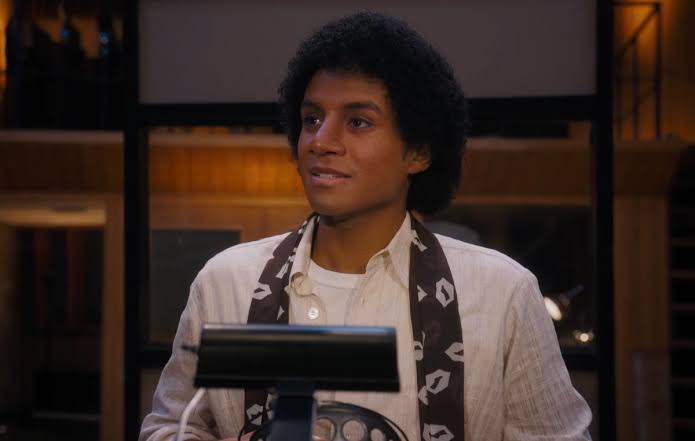
Ever since Jaafar Jackson was chosen to play Michael Jackson in the upcoming biopic Michael, fans have been watching every image, every trailer frame and every preview clip with intense curiosity.
For many, the first reaction was amazement.
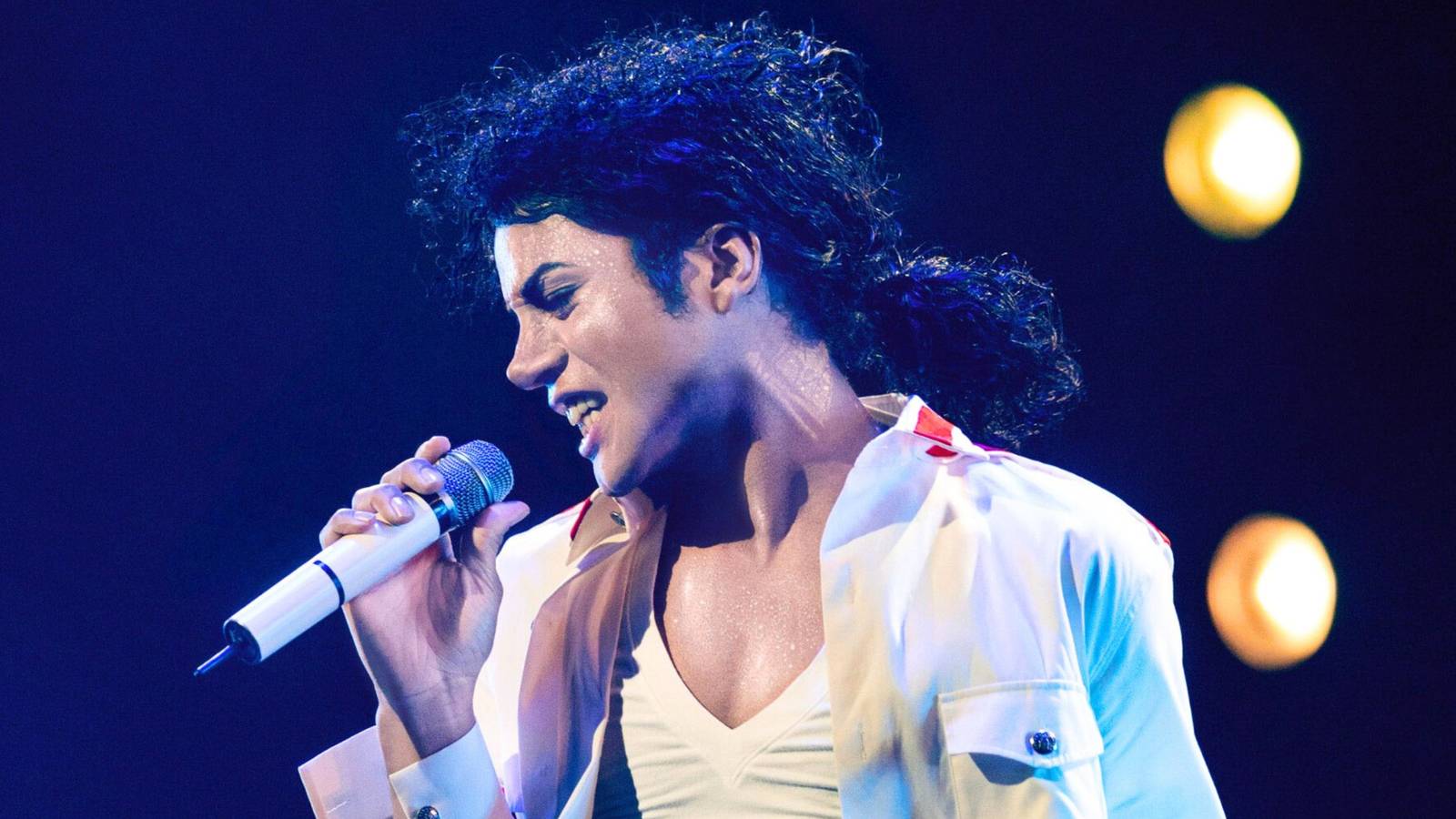
Jaafar, the nephew of the King of Pop, carries a natural family resemblance that immediately caught the attention of Michael’s global fanbase. His facial structure, smile, stage posture and overall presence have convinced many viewers that he was one of the only people who could physically step into the role with any real authenticity.
But even with all that praise, one part of his performance continues to spark debate.
Not the dancing.
Not the costumes.
Not the makeup.
For many fans, the biggest question is whether Jaafar can truly capture Michael Jackson’s voice.
Michael’s speaking voice was one of the most recognizable parts of his public identity. Soft, gentle, careful and almost childlike at times, it carried a vulnerability that contrasted sharply with the explosive power he showed on stage. In interviews, he often spoke with a quiet rhythm, choosing words slowly and emotionally. That voice became as familiar to fans as his glove, his moonwalk or his military-style jackets.
That is why some viewers believe this may be the hardest part of the role.
Dancing like Michael is already nearly impossible. Looking like him requires careful makeup, hair, lighting and styling. But sounding like him — not just copying the pitch, but capturing the emotional tone underneath — is a completely different challenge.
Fans have spent decades watching Michael in interviews, concerts, home videos, documentaries and award shows. They know the way he smiled before answering a question. They know the way his voice changed when he became shy, serious, excited or hurt. They know the small pauses, the nervous laughter, the softness in his delivery and the sudden intensity when he spoke about music or children.
That level of familiarity makes the audience unusually difficult to convince.
Some fans argue that no actor, no matter how talented, could ever fully recreate someone as iconic as Michael Jackson. To them, any difference in voice, expression or body language becomes immediately noticeable because Michael was not simply famous. He was studied, replayed and remembered in extraordinary detail.
Others are more forgiving.

Supporters of Jaafar point out that portraying Michael Jackson was always going to be one of the most difficult acting assignments in modern entertainment. He is not playing a fictional character. He is playing a man whose face, voice and movement are known across generations and across continents.
They also argue that the purpose of a biopic is not to create a perfect copy. It is to capture the essence of the person being portrayed.
From that perspective, Jaafar’s task is not to become Michael in a literal sense. It is to help audiences believe in the emotional truth of Michael’s journey — the talent, the pressure, the loneliness, the discipline, the innocence, the brilliance and the burden of becoming the most famous entertainer on earth.
That may be where Jaafar has earned the most respect.
Even fans who still have questions about the voice often acknowledge the weight of what he accepted. To play Michael Jackson is to invite comparison from millions of people who feel deeply protective of his legacy. Every move will be examined. Every line will be judged. Every difference will be noticed.
But that scrutiny is also proof of how much Michael still matters.
If fans are debating the smallest details of Jaafar’s performance, it is because Michael Jackson remains emotionally present to them. He is not a distant historical figure. He is still someone people feel they know, someone they grew up with, someone whose voice and image remain vivid years after his death.
That is why the debate around Jaafar’s performance is about more than acting.
It is about memory.
It is about whether any film can truly contain a figure as complex and beloved as Michael Jackson. It is about whether an actor can honor a legend without being trapped by imitation. And it is about whether fans are ready to see someone else speak with Michael’s voice, wear his clothes and relive his most defining moments on screen.
As the release of Michael approaches, audiences will eventually decide for themselves.
Some will focus on the resemblance. Some will focus on the differences. Some will be moved by the attempt, while others may never fully accept anyone in the role.
But one thing is certain: Jaafar Jackson stepped into one of the most difficult performances any actor could take on.
Because sometimes the hardest part is not looking like a legend.
It is convincing the world that anyone can.