Ferrari has just unveiled a game-changing upgrade package that could redefine the competitive landscape of Formula 1. Following a stunning performance at Silverstone, where they secured a victory and a double podium finish, the team is poised to challenge the status quo in the 2026 season.
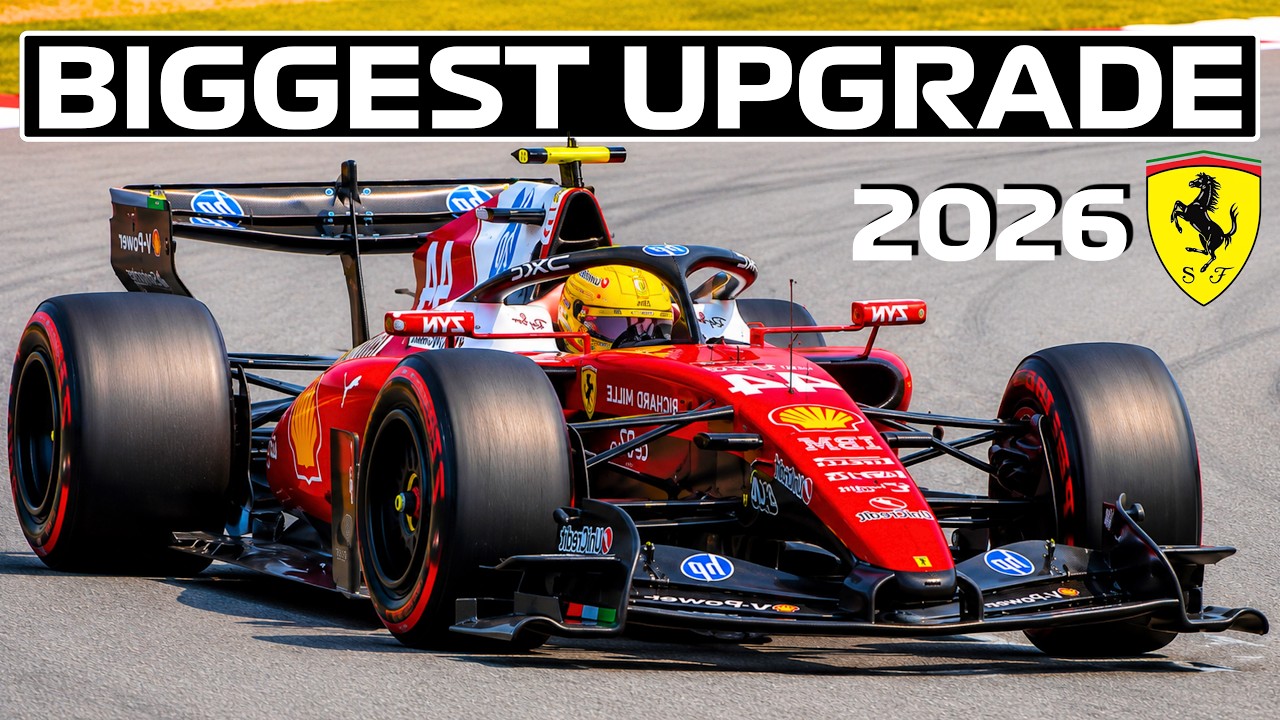 Toto Wolff, the head of Mercedes, acknowledged Ferrari’s advancements, noting that they had made significant strides in energy management. However, what he didn’t emphasize is that the improvements discovered at Silverstone are just the beginning. Internally, Ferrari has dubbed the 15 kilowatts gained from their new aerodynamic efficiency and energy management strategy as a potential game changer—an upgrade that has left even their own engineers astonished.
Charles Leclerc, Ferrari’s star driver, confirmed that this newfound energy management technique is not limited to Silverstone. “I can definitely carry this change we made yesterday onto every single track,” he stated after the race, indicating that this structural shift in the SF-26’s energy deployment will be applicable across all circuits. This is a bold claim from a driver who has faced challenges with confidence throughout the season, suggesting that Ferrari is on the brink of something transformative.
 As Ferrari gears up for the next races, they are already working on a third major aerodynamic package, aimed at Zandvoort after the summer break. This follows two significant upgrades earlier in the season—one in Miami and another in Barcelona—that have already elevated their performance. The anticipation is building as they prepare for Zandvoort, a track that offers a mix of high-speed and technical corners, allowing them to showcase their enhanced aerodynamic capabilities without exposing their weaknesses too severely.
Moreover, Ferrari is set to introduce a second ADUO token focused on turbocharger improvements within the next five races. This is a crucial step, as the turbocharger has been identified as an area with the most potential for enhancement. The first token, which involved combustion chamber modifications, has already shown promise, but the upcoming changes could significantly boost their straight-line performance—something that has been a concern since the FIA altered pre-start procedures mid-season.

The timing of these upgrades is strategic, with Zandvoort and Monza on the horizon. Ferrari aims to arrive at their home race with a fully developed car featuring a revised energy management system and an updated turbocharger. If they can validate their improvements at Zandvoort, they will head into Monza with heightened expectations from their passionate tifosi.
 While Ferrari is ramping up its development efforts, Mercedes appears to be taking a more cautious approach, opting not to introduce significant upgrades at Silverstone. This decision raises questions about their strategy moving forward, especially as both teams prepare for a critical post-summer reset. The upcoming races promise to be pivotal, with Ferrari potentially closing the gap that Silverstone has revealed is narrower than previously thought.
As the excitement builds, fans are left wondering: Can Ferrari truly challenge Mercedes in the second half of the season, or will the championship picture shift once again?