
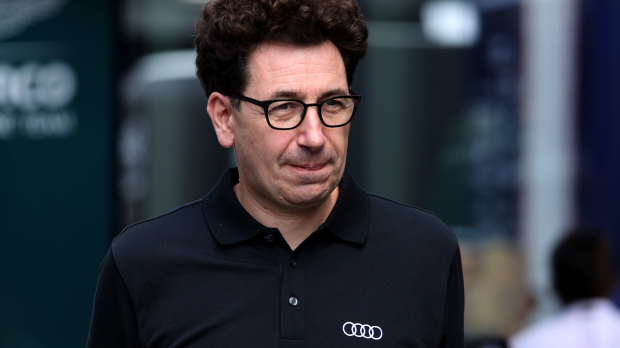
In a dramatic twist in the world of Formula 1, Audi’s team principal Mattia Binotto has raised eyebrows by suggesting that Mercedes might have found a clever way to navigate the FIA’s new upgrade rules. The additional development and upgrade opportunities (ADUO) scheme, introduced at the beginning of the season to assist struggling power unit manufacturers, is now under scrutiny.
The FIA’s ADUO initiative was designed to level the playing field amid the sweeping regulation changes for the 2026 season. According to the rules, power units would be evaluated after the sixth, twelfth, and eighteenth races of the season. If any manufacturer found themselves more than two percent behind the leading power unit, they would be eligible for extra upgrades based on how far behind they were.
However, after the sixth race, it became apparent that Red Bull-Ford had developed the fastest power unit, despite their teams, Red Bull and Racing Bulls, sitting fourth and sixth in the constructors’ standings. The FIA’s analysis focused solely on the internal combustion engines, and they have stated that the methodology behind their findings is currently being reassessed.
As it stands, Mercedes, having claimed victory in seven of the first nine races, is allowed to implement upgrades to their power unit, thanks to the initial ADUO ruling. This has not sat well with Binotto, who believes the rules may need to be adjusted to prevent teams from intentionally underperforming their engines to gain an advantage.
In an interview with Motorsport.com, Binotto expressed his concerns, stating, “The current measurement criteria only assess on-track performance. A team with a significant advantage might not need to push their power unit to its limits, potentially allowing them to gain extra development opportunities.” He emphasized that the original intent of the ADUO was to support those genuinely falling behind, not to create loopholes that obscure the true potential of a power unit.
Later, Binotto clarified that he respects the FIA’s work and acknowledges the complexities involved in their assessments. However, he reiterated the importance of maintaining the ADUO’s original purpose as a safety net for struggling manufacturers.
Mercedes, when approached for comment, reportedly agreed with Binotto’s main point, asserting that the ADUO should serve as a lifeline for those in need rather than a tactical tool for the leading teams.
So, who is truly benefiting from the ADUO scheme? The answer appears to be everyone except Red Bull. Mercedes has secured one homologation for being within two to four percent of Red Bull’s performance, while other manufacturers, including Audi, have received two homologations for being more than four percent behind.
As the season progresses, it seems that Ferrari may not receive further assistance after the next ADUO ruling, while Aston Martin and Audi could still be in line for upgrades, as they continue to trail their competitors.
With the FIA’s analysis following the Monaco Grand Prix revealing the current standings, the question remains: will the ADUO rules be revised to ensure fairness, or will the loopholes persist, allowing teams to exploit the system?