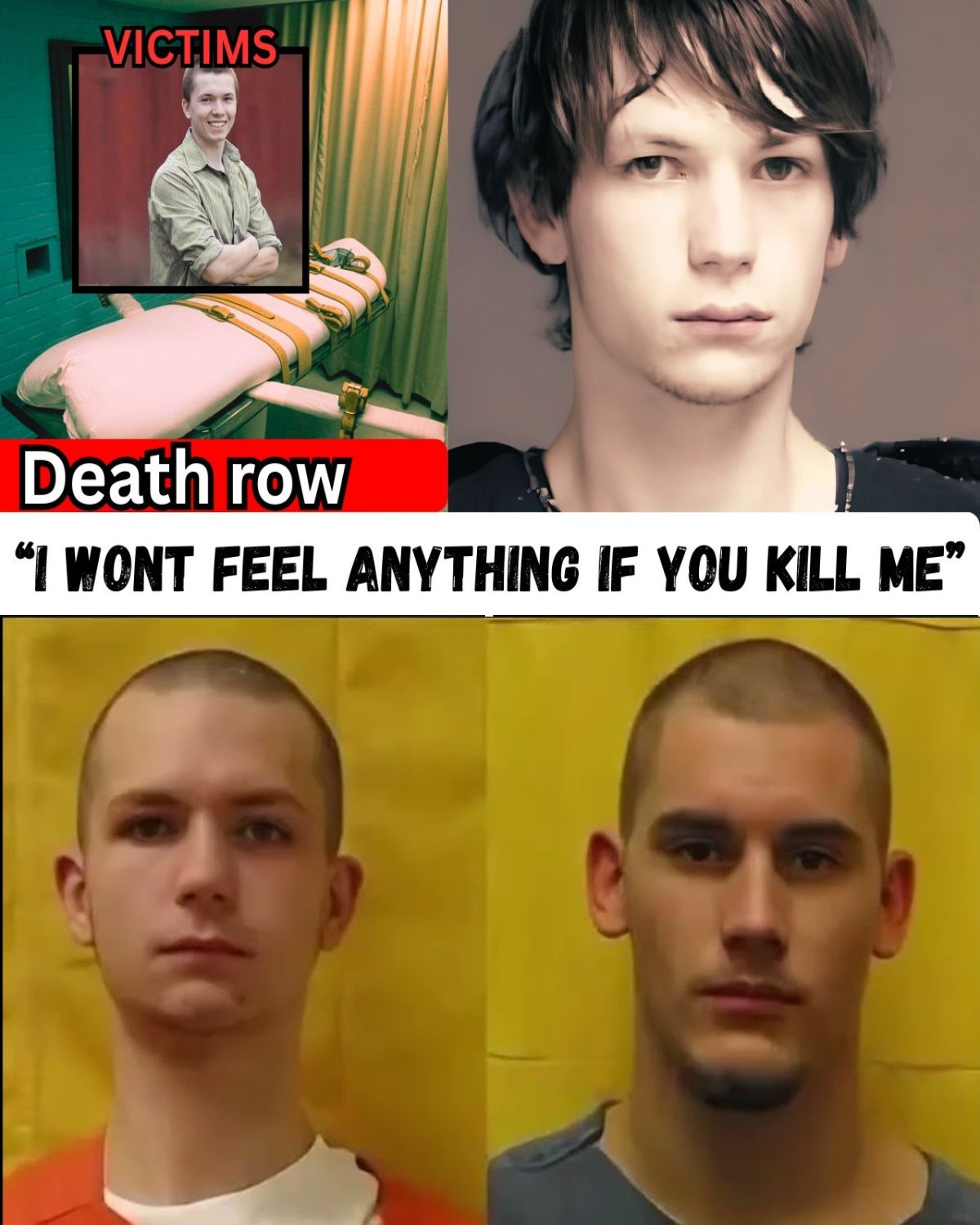
In a haunting courtroom scene on October 16, 2014, Austin Myers, just 19 years old, was sentenced to death, becoming Ohio’s youngest inmate on death row. The tragedy unfolded after he brutally murdered his childhood friend, Justin Back, in a chilling act of betrayal that left families shattered and communities reeling.
 The courtroom in Lebanon, Ohio, was filled with tension as the jury deliberated Myers’ fate. His family, visibly distraught, pleaded for mercy, but their emotional appeals fell on deaf ears. “If you choose for me to die, it’s only going to cause more pain and suffering for another family, not me,” Myers told the jury, his words echoing in the somber room. Despite his defense team’s efforts to highlight his troubled past, including a painful family divorce and struggles with mental health, the jury returned with a verdict of death.
Behind this grim story lies the life of Justin Back, a young man whose kindness and compassion stood in stark contrast to the fate that awaited him. Born on February 13, 1995, in Waynesville, Ohio, Justin was known for his gentle nature and ability to connect with those around him. He had dreams of joining the Navy, a goal he was just days away from achieving when his life was tragically cut short.
Austin Myers, on the other hand, had a promising future that began to unravel following his parents’ divorce in 2009. Once a gifted student and musician, he spiraled into depression and self-harm. By 2014, he was living in a precarious situation, staying with Timothy Mosley, a young man with no prior connection to Justin. It was during this time that a dark plan began to take shape.

On January 27, 2014, Myers and Mosley hatched a scheme to rob Justin’s family home, believing it contained a safe filled with money. When they realized Justin was home, they initially drove away. But in a chilling turn of events, Myers decided that Justin had to be eliminated to avoid being identified. The next day, they returned, and what unfolded in the kitchen was a nightmare.
As Justin welcomed them into his home, he had no idea of the deadly intentions lurking behind their friendly facade. In a brutal struggle, Justin fought for his life, calling out to Austin for help, only to be met with the chilling response, “It will all be over soon.” In a horrifying act, Mosley stabbed Justin 21 times while Myers held him down, forever altering the lives of both families.

After the murder, the two men attempted to cover their tracks, but investigators quickly pieced together the events leading to Justin’s death. Mosley, facing the weight of the crime, cooperated with authorities, leading them to Justin’s body and detailing the gruesome events. As a result, he received a life sentence without parole, while Myers faced the death penalty.
The trial revealed the complexities of culpability in murder cases. Prosecutors argued that Myers, as the mastermind, bore greater responsibility than Mosley, despite not delivering the fatal blows. The jury ultimately agreed, leading to Myers’ death sentence, a decision that has sparked ongoing debates about justice and morality.

Sandy Cates, Justin’s mother, has tirelessly advocated for change in the wake of her son’s death, pushing for laws to honor his memory. Meanwhile, Austin Myers remains on death row, navigating a convoluted legal landscape as appeals continue to unfold.
As the years pass, the questions surrounding this case linger: Is it just for the planner of a murder to face execution while the one who physically committed the act lives on in prison? The conversation about justice, morality, and the law continues. What are your thoughts on this complex case?