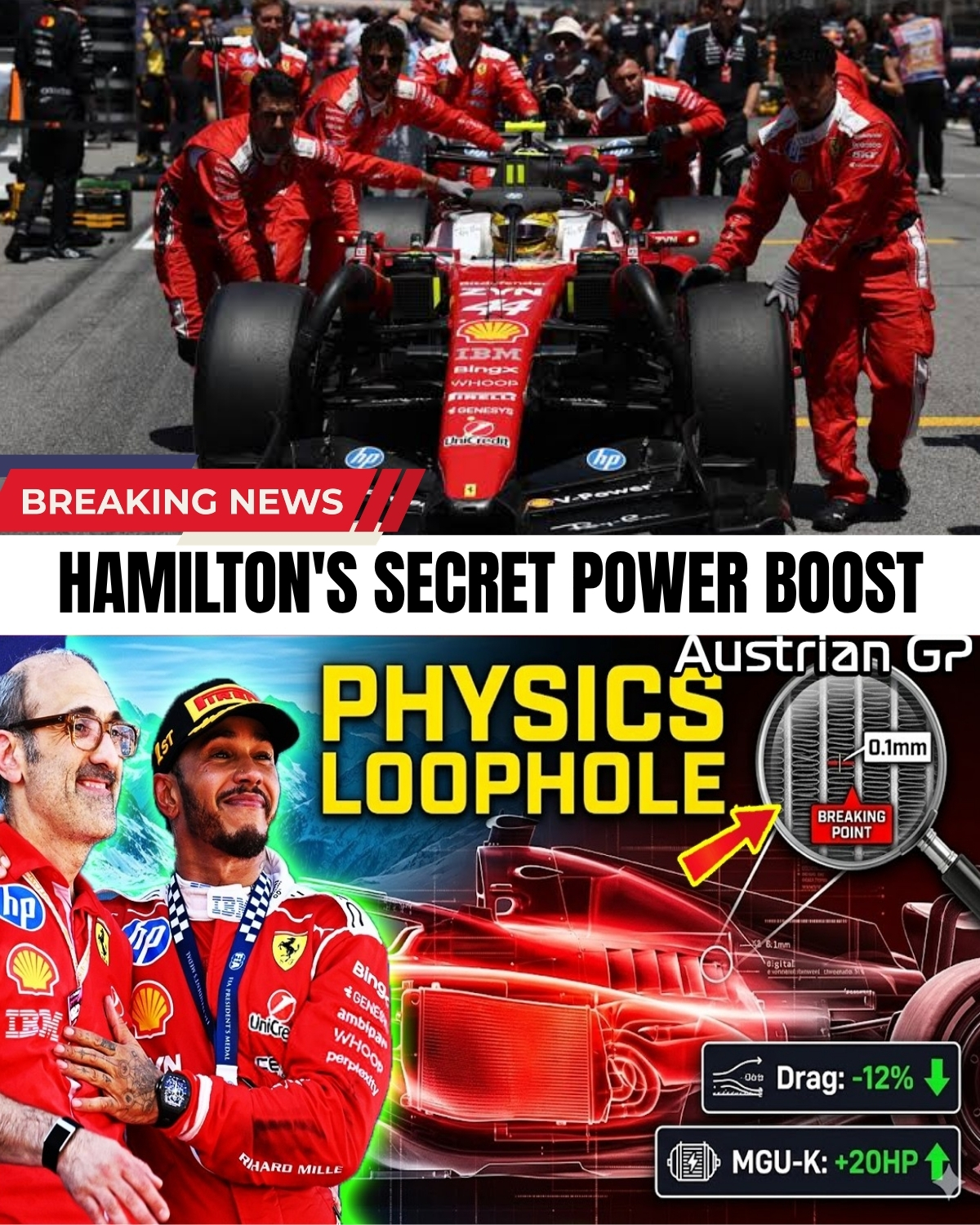
At the Red Bull Ring, a circuit situated nearly 700 meters above sea level, a technical gamble by Lewis Hamilton’s engineering team has emerged as a potential game-changer for the Austrian Grand Prix. The thin mountain air creates a severe cooling crisis for Formula 1 power units, forcing most teams to adopt conservative cooling solutions that increase aerodynamic drag. Hamilton’s engineer, however, has reportedly taken an aggressive approach by thinning radiator fins and refining internal airflow to reduce drag while maintaining thermal control.

The core of this engineering strategy involves pushing the car’s thermal map to its absolute limit, using software and real-time sensors to keep the power unit operating near the edge of its safe window. Instead of sacrificing speed to protect engine temperatures, the team has chosen to attack the environmental conditions of the circuit. This method aims to reclaim energy and efficiency that rivals lose through overcooling, which typically adds drag and slows lap times.
Traditional wisdom at high altitude dictates opening up the car’s cooling arrangements to protect the engine, accepting a loss in performance in exchange for reliability. Hamilton’s side of the garage has reportedly rejected that cautious philosophy, believing that such an approach is no longer sufficient to dominate. The modification centers on thinner radiator fins, a subtle design change that reduces surface friction and mass within the cooling package, streamlining airflow through the side pods.
The real breakthrough, according to the technical assessments, may lie not just in the hardware but in the recalibrated software intelligence. Mercedes is believed to have adjusted its thermal management logic to allow the power unit to run at temperatures previously considered too dangerous. This allows the car to avoid power clipping, an invisible performance killer that trims hybrid output when temperatures rise, leaving rivals with weaker acceleration and reduced energy deployment from the MGU-K.
If the theory holds, Hamilton could gain significant straight-line speed without the usual cooling penalty, creating a tactical dilemma for opponents on the short, fast, and merciless Red Bull Ring. The risk of pushing the engine to the point of mechanical collapse is obvious, but the reward is a car that is lighter on drag and stronger on deployment. This weekend, the Austrian Grand Prix will serve as a test of whether the boldest engineering gamble can turn a quiet technical move into one of the season’s loudest statements.