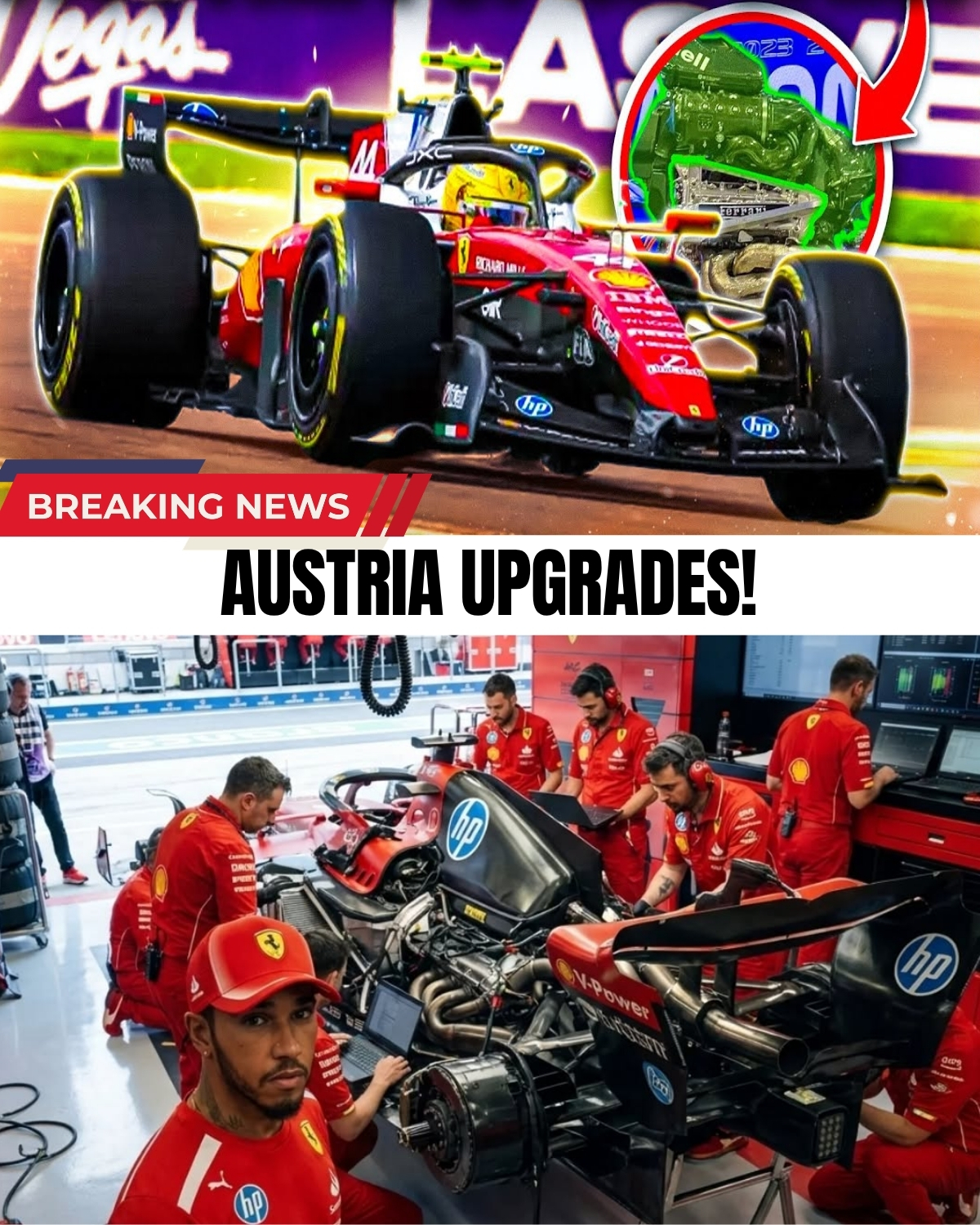
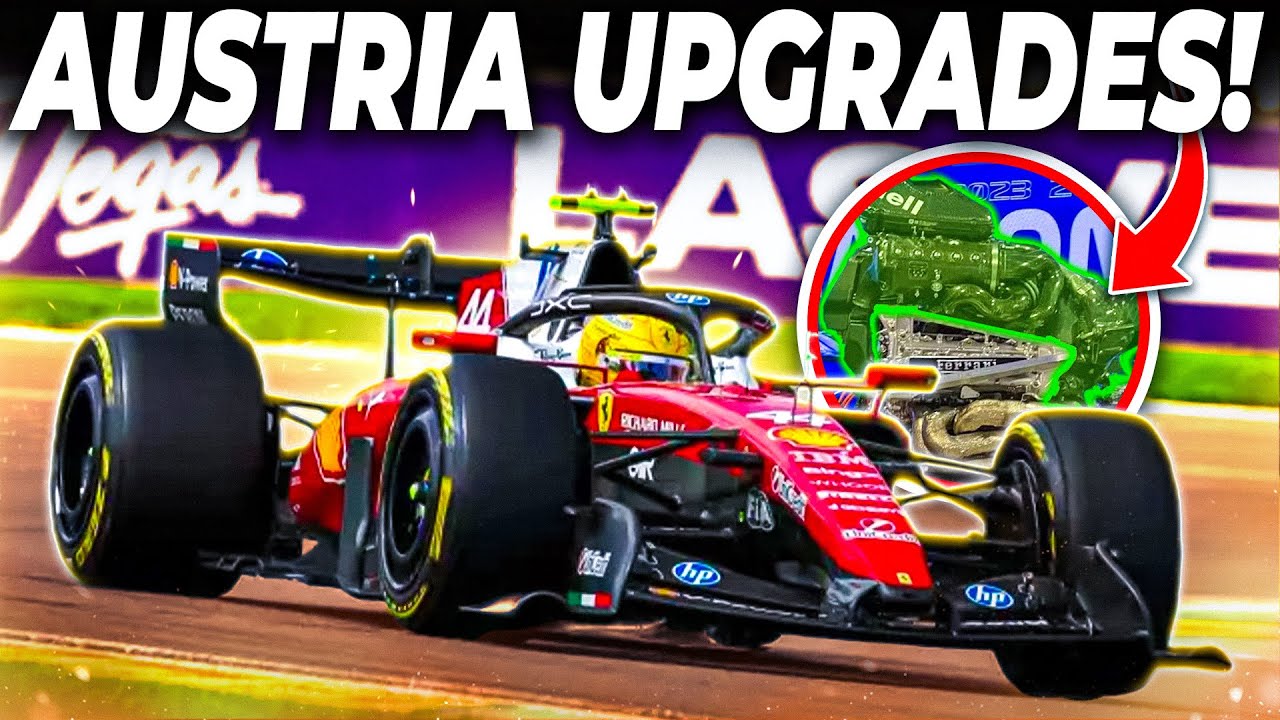
Ferrari has signed off and sealed a new engine upgrade, loaded for delivery to the Red Bull Ring in Austria, in a development that could reshape the competitive order of the 2026 Formula 1 season. While the motorsport world focused on Lewis Hamilton’s first win in Ferrari Red at the Barcelona Catalunia circuit, the team’s factory in Maranello was finalizing a power unit update aimed at closing a significant horsepower deficit that has hampered the car since the start of the year.
The victory in Spain came from the body of the car. A reworked front wing, reshaped side pods, a completely redesigned floor, and new wheels to control tire heat allowed Hamilton to control the race on a three-stop plan. He crossed the line for his first Grand Prix win in Ferrari Red, his 106th career victory and his first in 686 days, going back to Belgium in 2024. At 41 years old, Hamilton became the oldest driver to win a Grand Prix since Jack Brabbam in 1970, and he surpassed Michael Schumacher as the most successful driver at that track. Behind him, George Russell and Lando Norris completed the first all-British podium since 1968. However, the most telling moment came three laps from the end when championship leader Kimmy Antonelli’s Mercedes suffered an engine failure, ending a winning streak that had stretched across the first six races of the year. Not one part of Ferrari’s win came from the engine; Barcelona is a track that rewards aero grip and balance, allowing a clever floor to cover for a power gap. The Red Bull Ring does the opposite.
To understand the engine that is coming, one must understand the rule that allows it to exist. Under the 2026 regulations, engines are frozen, locked in by the rules for the whole cycle. The only legal way back into the fight is a mechanism the FIA calls ADUo, the additional development and upgrade opportunities system. After the opening rounds, the FIA measures every maker’s engine against a set standard. When the first verdict landed during the Monaco weekend, the shock was that Red Bull, a team that had not won a single Grand Prix, was declared the engine to beat. Measured against Red Bull, Ferrari came out between 4 and 6% behind, granting them two upgrades for the year. Mercedes, more than 2% back, was granted one upgrade. The updated engine must be formally signed off and the paperwork filed with the FIA at least two weeks before the car turns a wheel with it. That paperwork is now complete.
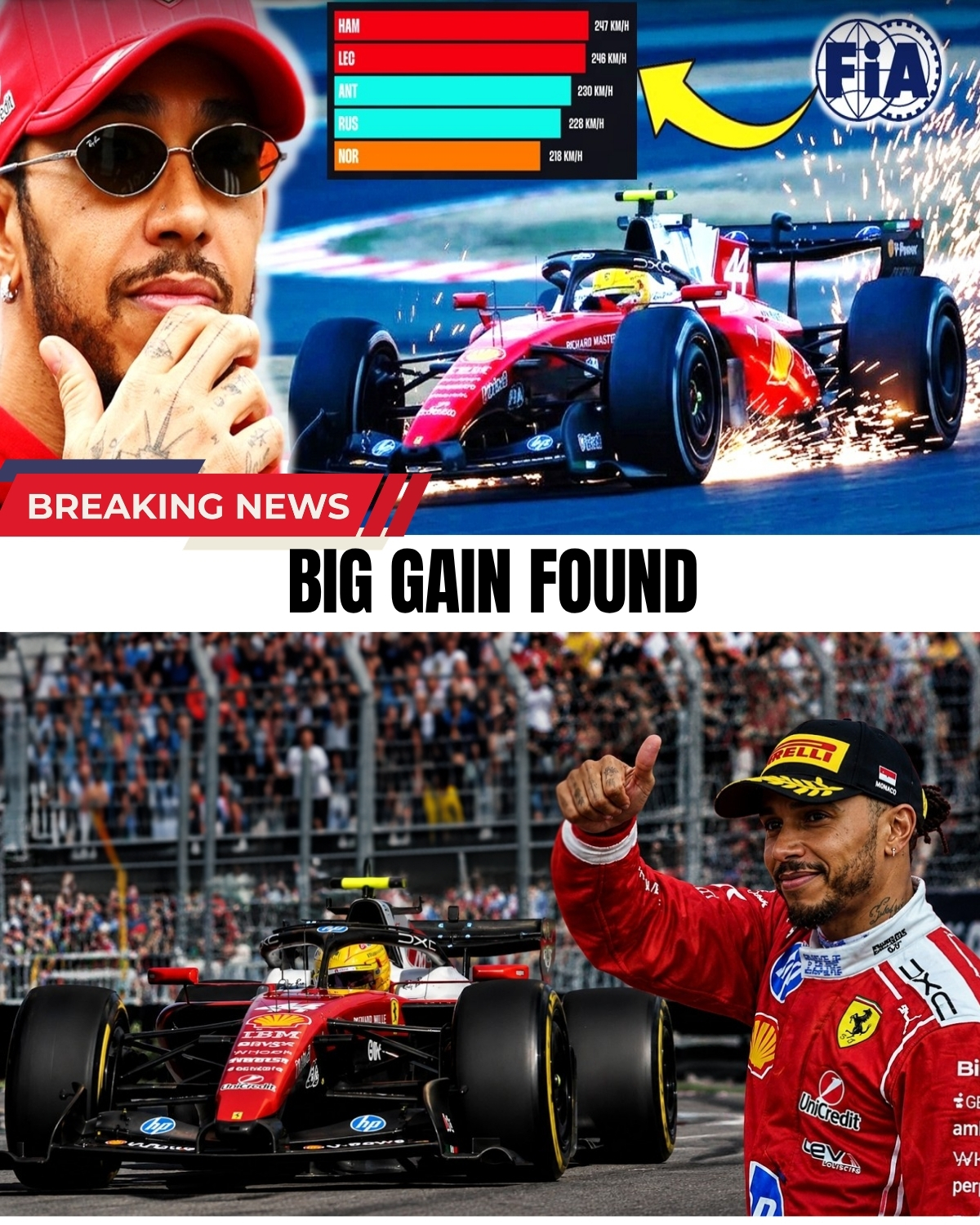
The number that has followed Ferrari since the first race is a power gap of around 30 horsepower down on Mercedes and Red Bull powertrains. On a circuit like Barcelona, the floor hides that gap. On a circuit like the Red Bull Ring, it is the difference between leading a race and sitting in the mirrors as a target down every straight. The power unit at the heart of the 2026 car, known inside the factory as the 0676, is an engine built to run hot on purpose. The thinking was that by accepting higher temperatures, Ferrari could package the engine tighter and free up room for the aero team. It was a gamble betting that a smaller, hotter engine wrapped in a better car would beat a cooler, more powerful engine in a worse one. Mercedes made the opposite call, pouring their effort into raw power and cooling. For seven races, Mercedes has been right. Austria is where Ferrari starts trying to prove the gap between those two bets is smaller than it looks.
This is the third power unit of Ferrari’s season and the first one built specifically to go after the gap rather than just survive it. The redesign targets the exact weakness the hot engine idea created: the heat side, the cooling, and the way the engine handles temperatures pushed dangerously high toward 110 degrees. Alongside it come slightly bigger batteries to pull more out of the hybrid side. Across the full plan, the gain is around 30 horsepower, coming in two steps. Step one is Austria. Step two lands at Monza in September, timed with the fourth and final engine change of the year on home ground. Ferrari is spending a limited supply of engines at the moments that buy the most: the third engine for the power tracks of mid-season, and the fourth saved for Monza.
Austria on its own is not expected to erase the whole gap in a single weekend. The first step may pull the gap down toward 10 horsepower rather than close it completely. The Red Bull Ring is one of the shortest laps of the whole year, with three long straights connected by just 10 corners. For more than 70% of every lap, the driver is flat on the throttle. There is almost nowhere to hide and almost nothing to do but go faster. Spielberg sits high up in the Austrian mountains, one of the highest races on the calendar. Thinner air means less oxygen, which leans on the engine and the cooling system harder than almost anywhere else. For a hot engine that has been fighting its own temperatures all year, this is close to the harshest place imaginable. Ferrari is throwing the new engine straight into the deep end.
The timing could not matter more because of where the season stands. Kimmy Antonelli leads the drivers championship on 156 points. Hamilton after Barcelona sits second on 115, 41 points behind. Russell is third on 106, and the other Ferrari driver is fourth on 75. When the new engine lands, it goes into both red cars, not just Hamilton’s. In the constructor’s fight, Mercedes lead on 262 points, with Ferrari second on 190, 72 points back. The calendar after Austria is loaded with tracks where power matters most: Austria, then Britain at Silverstone, then Belgium at Spa. Two red cars suddenly closer on power, arriving at three straight-line tracks in a row, turns a 72-point gap from a lost cause into a chase.
Close the engine gap, keep the chassis that won in Spain, and the team that looked finished in the spring becomes the team nobody wants to race in the autumn. Even 10 horsepower changes in race terms. It is the couple of car lengths needed to finish an overtake before the braking zone, a tenth of a second in qualifying that moves a driver a full row up the grid, or the defense that can be held on the straight instead of waving a faster car past. A 30-point swing across a single summer is the difference between a live title fight and a side note. On June 28th, the headlines will pull in both directions. Watch the speed traps and the top speeds down those three straights, line them up against Mercedes and Red Bull. Watch qualifying where engines run at their hardest, and watch whether the red cars can finally defend a position on a straight instead of giving it up.
The full picture does not arrive until Monza, where the second upgrade and the home crowd are both waiting. Ferrari has the chassis. After Barcelona, they have the belief. In 9 days, for the first time all season, they bring the one thing they have been missing to the one track that will not let them fake it. The gap that has defined their year does not vanish on June 28th, but it starts shrinking. The team sitting 41 points back in the drivers championship is about to become a very different problem for Kimmy Antonelli and for Mercedes. The same kind of engines that just ended Antonelli’s perfect afternoon in Barcelona are about to hand Ferrari the tool they have been begging for since race one.