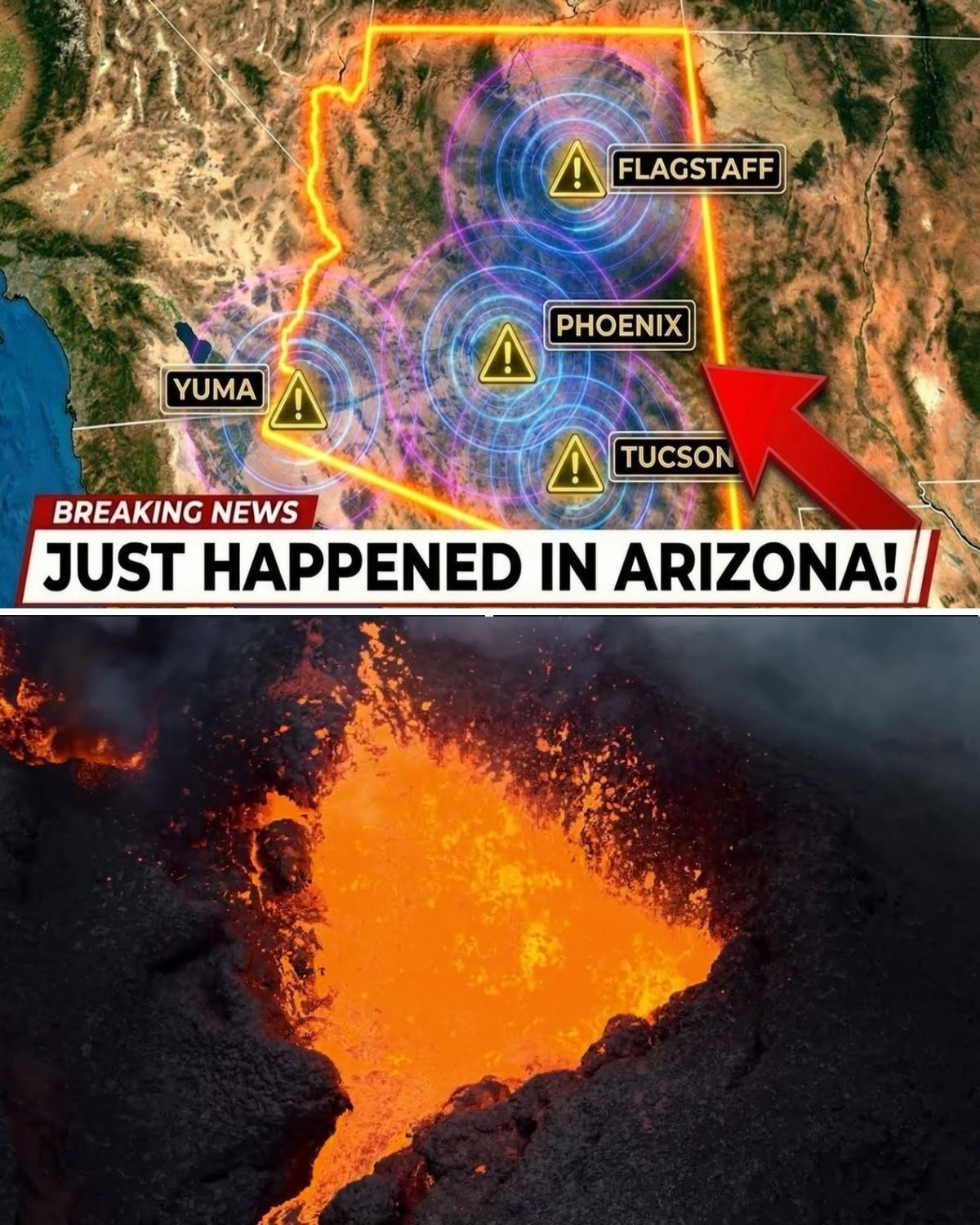
Arizona may seem like a vast, empty desert at first glance, but beneath its arid surface lies a treasure trove of geological wonders and environmental challenges that could reshape our understanding of survival in extreme conditions. As border officials caution migrants about the dangers of this seemingly quiet landscape, the truth is far more intricate and compelling.
 The deserts of Arizona are not just barren expanses; they are a living testament to the Earth’s dynamic history. Once marked by ancient volcanoes and meteor impacts, this region is home to one of North America’s most significant geological records. The land tells stories of ecosystems that existed long before humanity, preserved in stone and fossilized remains. Yet, as modern pressures mount, these ancient archives face unprecedented challenges.
Arizona’s geological narrative is shaped by forces that have been at work for millions of years. The state is part of the Basin and Range province, where the Earth’s crust has been stretched and fractured, creating a striking landscape of mountains and valleys. With over 600 volcanic features, including the renowned San Francisco volcanic field, Arizona’s geological past is rich and varied. While most of these volcanoes are dormant, the potential for geological activity remains a topic of interest for scientists.
But the story doesn’t end underground. Arizona is also one of the most lightning-prone areas in the Southwest, particularly during the summer monsoon season. This period brings intense storms that can ignite wildfires, posing a significant threat to the ecosystem. Recent advancements in atmospheric science have revealed astonishing lightning phenomena, including megaflashes that stretch across vast distances, challenging our understanding of these natural events.

Above the desert, Arizona’s clear skies have made it a hub for astronomical research. The state hosts some of the most important observatories in North America, where scientists study everything from cosmic events to solar activity. However, the relationship between the Earth and the sky is not without its risks. Solar storms can disrupt technology and communications, reminding us of our vulnerability in an increasingly interconnected world.
Arizona’s landscape also bears witness to cosmic violence, with sites like Meteor Crater showcasing the impact of celestial bodies on our planet. Formed around 50,000 years ago, this crater serves as a striking reminder of the power of the universe. Furthermore, NASA’s recent OSIRIS-REx mission, which returned samples from the asteroid Bennu, highlights Arizona’s role in unraveling the mysteries of our solar system and the origins of life.

Yet, for all its geological and cosmic significance, the most pressing issue facing Arizona today is water scarcity. As one of the fastest-growing states, Arizona’s population relies heavily on dwindling water resources. With much of the state receiving minimal rainfall, the challenge of sustaining urban life is becoming increasingly complex. The Colorado River, a vital water source for millions, is under immense stress, raising concerns about the future of water availability in the region.
As temperatures rise and droughts become more frequent, the ecological consequences are dire. Biodiversity is at risk, and communities are grappling with the intersection of water access and sustainability. Innovative solutions are being explored, from water recycling to improved infrastructure, but the long-term outlook remains uncertain.

Arizona’s narrative is not just about survival in a harsh environment; it serves as a microcosm of broader global challenges. The intersection of geology, climate, and human activity creates a unique lens through which we can examine our planet’s future. As we confront the realities of climate change and resource depletion, Arizona stands as a living archive of both the past and the potential future.
In this striking desert landscape, silence does not equate to stillness. The forces shaping Arizona are as dynamic as they are complex, urging us to reconsider our relationship with the environment. What lessons can we learn from this arid region as we navigate our own challenges?