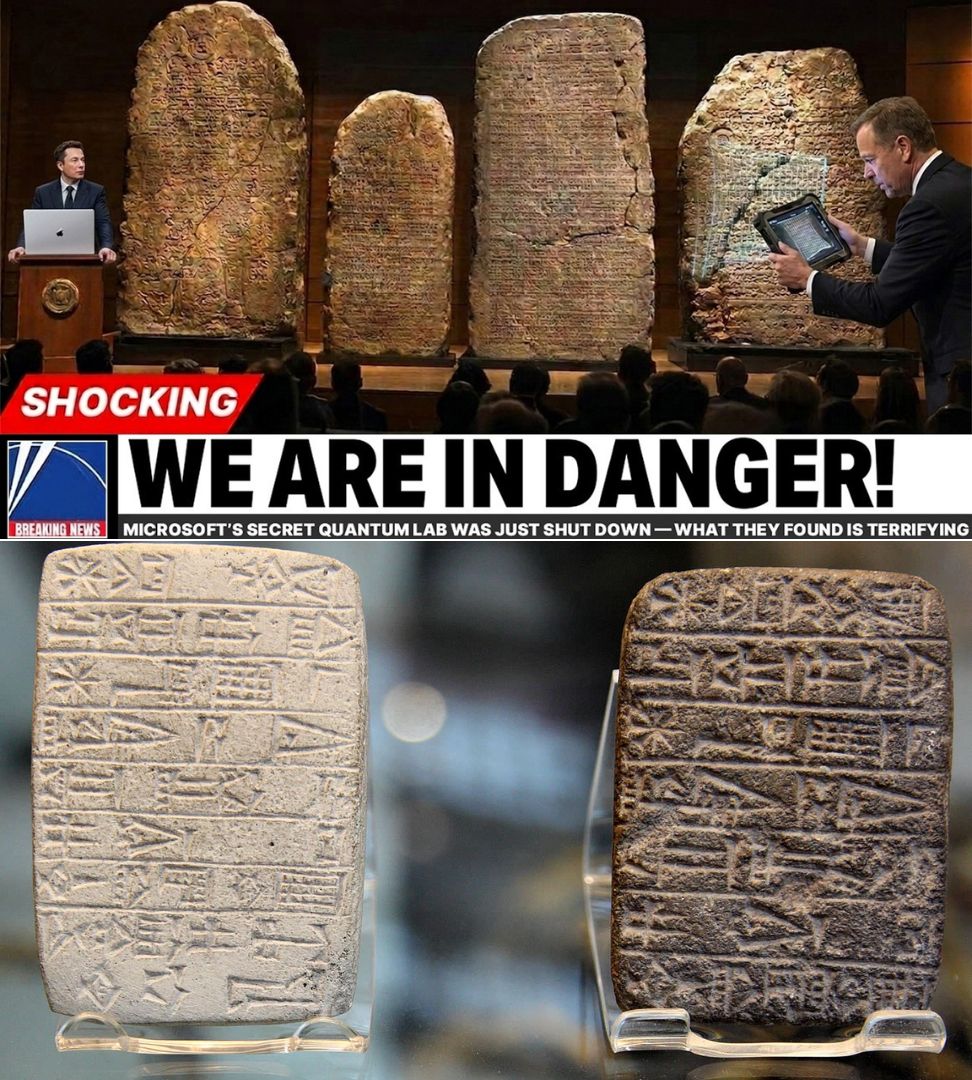
Deep within the depths of a Berlin museum, a groundbreaking discovery is unfolding that could reshape our understanding of human history. Researchers have harnessed the power of artificial intelligence to decode ancient Sumerian tablets, revealing astonishing insights that challenge everything we thought we knew about the dawn of civilization.
 For nearly 5,000 years, the Sumerians thrived in the sun-baked lands between the Tigris and Euphrates rivers, laying the groundwork for modern society. They built cities, established laws, and created complex religious systems, all while pioneering agriculture and writing. Yet, despite their monumental achievements, many of their clay tablets have remained largely untranslated, their secrets locked away in museum drawers around the world.
Scholars have long recognized the Sumerians as the architects of civilization, credited with inventions like the wheel and the plow, as well as the world’s oldest love poem. However, the tablets hidden in Berlin may hold a more nuanced narrative than previously understood. For over a century, historians have pieced together the Sumerian story, but the sheer volume of untranslatable tablets has left many questions unanswered.
 The challenge lies in the complexity of cuneiform, the Sumerian writing system, which combines symbols that represent entire ideas with those that denote sounds. This multifaceted nature makes translation a daunting task, and only a small number of experts worldwide possess the necessary skills to tackle this ancient language. With hundreds of thousands of tablets awaiting translation, the gap between discovery and understanding has continued to widen.
But a technological revolution is changing the game. In 2023, a team of researchers partnered with AI specialists to develop a system specifically designed for translating cuneiform texts. Unlike traditional methods that rely on the painstaking efforts of individual scholars, this AI can analyze vast amounts of data, recognizing patterns across thousands of tablets in mere moments.

The results have been nothing short of extraordinary. As the AI began translating previously unsolvable texts, it unveiled medical knowledge hidden within the tablets—knowledge that could rewrite our understanding of ancient Sumerian medicine. Reports suggest that traditional translations had only scratched the surface, with the AI revealing a staggering 70% of medical content that had remained obscured for decades.
 These findings challenge long-held beliefs about the sophistication of ancient Mesopotamian healing practices, suggesting that the Sumerians had a far more advanced understanding of medicine than previously thought. The implications of this discovery are profound, prompting historians to reconsider timelines and narratives surrounding the development of human civilization.
As researchers continue to delve into the newly translated material, they are uncovering layers of history that could alter our perception of the past. What other secrets lie within these ancient tablets, waiting to be revealed? The journey of discovery is just beginning, and the possibilities are endless.