Mel Gibson is set to unveil a groundbreaking portrayal of Jesus Christ that promises to challenge long-held perceptions. Drawing from centuries-old texts preserved in Ethiopia, Gibson’s ambitious new film aims to reveal a side of Jesus that has remained hidden from the Western world for over a millennium.
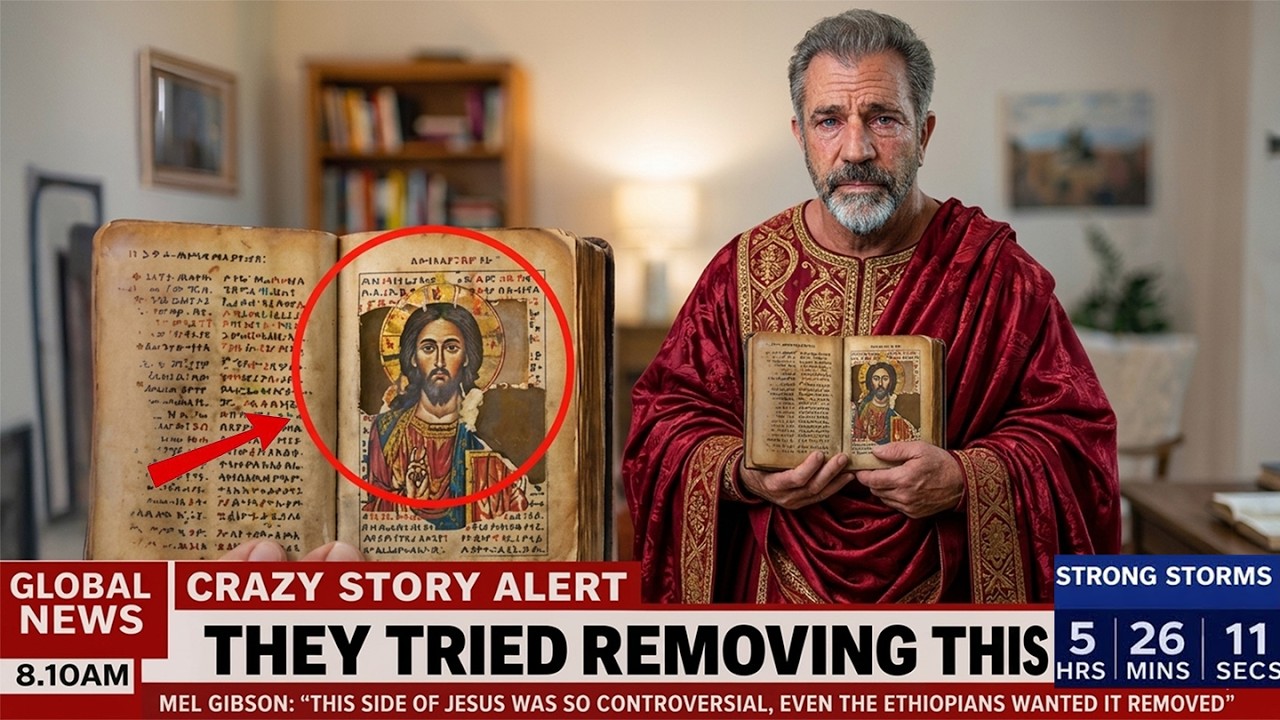 In a recent interview, Gibson expressed a profound sense of purpose, suggesting that he feels divinely inspired to share a story that has been suppressed for too long. He highlighted the stark contrast between the traditional narratives of Jesus and the more complex, raw accounts that have been safeguarded by Ethiopian monks for generations. For 1,500 years, these monks have meticulously preserved ancient manuscripts, believing them to be sacred rather than dangerous.
Gibson’s cinematic journey began in 2004 with “The Passion of the Christ,” a film that defied Hollywood norms by depicting the final hours of Jesus’ life in a brutally honest manner. The film, which grossed over $612 million worldwide, proved that audiences were ready for unfiltered religious storytelling. Yet, Gibson has always maintained that this was just the beginning, hinting at a larger narrative that extends beyond the resurrection.
 Fast forward two decades, and Gibson is now in production at Cinecittà Studios in Rome, reportedly investing over $250 million into this ambitious project. The film is set to be released in two parts, with the first arriving on Good Friday, March 26, 2027, and the second part following 40 days later on Ascension Day. This time, Gibson is exploring themes that delve into the very fabric of existence, drawing inspiration from ancient writings that many in the Western world have never encountered.
The Ethiopian Orthodox Tewahedo Church has safeguarded a wealth of texts that offer a different perspective on Jesus, including the Book of Enoch and the Ascension of Isaiah. These writings present a vision of Christ that is not only unique but also deeply rooted in early Christian thought, untouched by centuries of theological debate and censorship.

Gibson’s vision reportedly includes a narrative that traverses multiple realms, depicting the cosmic significance of Christ’s life, death, and resurrection. He aims to portray these events as interconnected moments that resonate across time and space, challenging conventional interpretations.
 As the production unfolds, the anticipation builds. Many are eager to see how Gibson will bring this rich tapestry of ancient narratives to life on the big screen. The film promises to offer a fresh perspective that could reshape how audiences view not just Jesus, but the very essence of faith itself.
With a blend of historical depth and cinematic artistry, Gibson’s project could redefine the portrayal of Jesus for a new generation. What other hidden stories might emerge from the shadows of history?
https://www.youtube.com/embed/xXQuCmFFqwQ