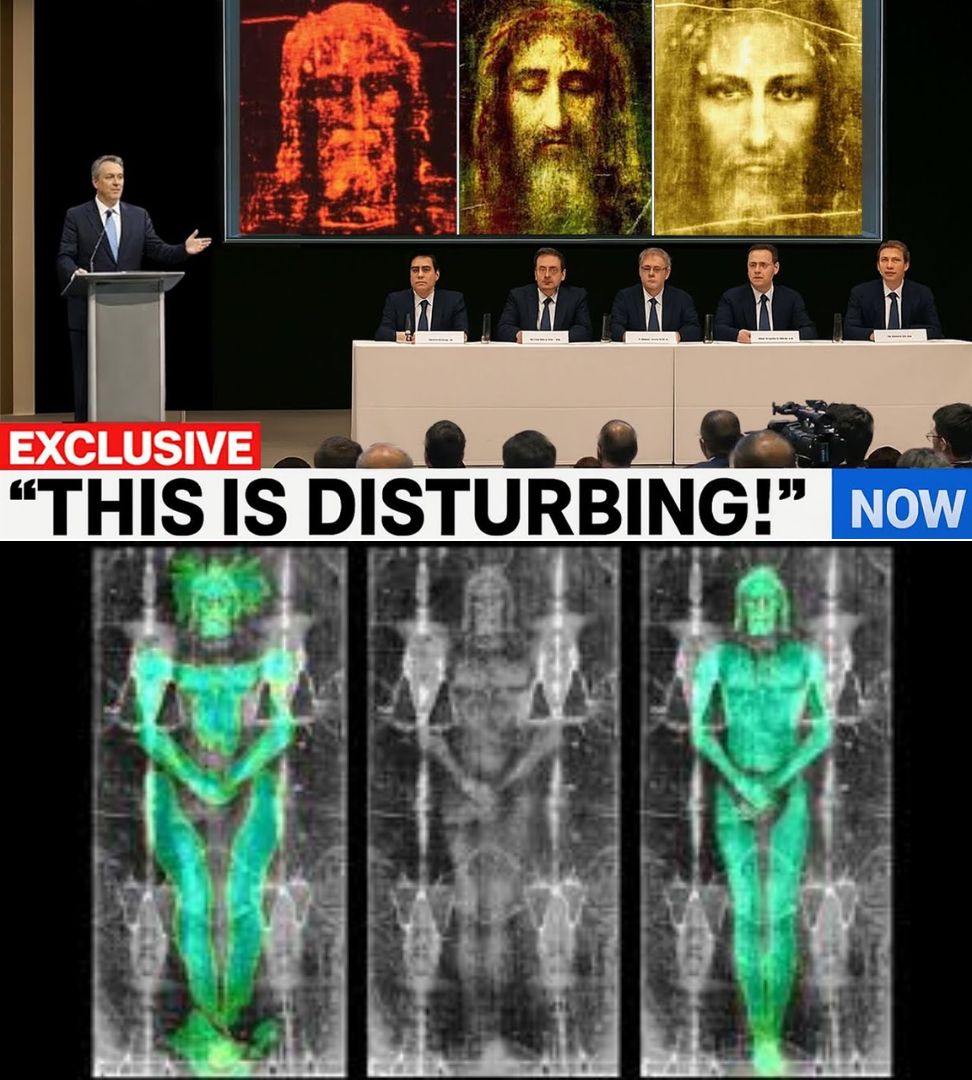
In a groundbreaking revelation, artificial intelligence has uncovered astonishing insights from the Shroud of Turin, a relic long shrouded in mystery and debate. This ancient linen, believed by many to be the burial cloth of Jesus Christ, has captivated believers and perplexed scientists for centuries.
 The Shroud of Turin, measuring approximately 14 feet, bears the faint image of a crucified man, igniting discussions about its authenticity and origin. For over 600 years, this unassuming piece of fabric has been at the center of intense scrutiny, drawing both admiration and skepticism. But now, a new chapter unfolds as AI technology takes a closer look at this enigmatic artifact.
After years of research and countless theories, AI has revealed findings that challenge our understanding of history, faith, and the very nature of the image itself. Forget the claims of medieval forgeries; this technology has decoded the shroud in ways that could reshape our perceptions forever. The results have sparked renewed debates about the science behind the image’s formation and even the possibility of resurrection.
The Shroud first entered recorded history in the 14th century when a knight in France claimed it was the authentic burial cloth of Christ. However, the Church has never officially verified its authenticity, leaving the relic cloaked in mystery. The intrigue intensified in 1898 when amateur photographer Secondo Pia captured the first photograph of the shroud, revealing a strikingly detailed image that seemed to leap off the cloth.

Despite extensive scientific examination, the shroud has continued to defy explanation. No pigments or dyes have been conclusively identified, and the image possesses unique three-dimensional qualities that remain a puzzle. Some researchers have suggested that the image could have been formed by an intense burst of radiation, while others argue it may be a sophisticated medieval trick.
The controversy surrounding carbon dating results from 1988 has only added to the shroud’s mystique. Experts claimed the cloth dated back to the medieval period, but doubts arose about the sample’s authenticity. Critics pointed out that the tested fibers may have come from a repaired section, casting a shadow over the results.

Recently, a team of Brazilian researchers employed AI to analyze high-resolution images of the shroud. Their findings revealed that the image’s intensity, not color or texture, held the most significant information. This has led to speculation about whether the image was created through a process beyond our current understanding, perhaps involving energy or radiation.
As AI continues to unravel the shroud’s secrets, it has identified patterns and structures that human researchers previously overlooked. Some scientists are now suggesting that the image may not have been created by physical contact at all, but rather through an unknown phenomenon that leaves behind an imprint of order.

This revelation has sparked a shift in the scientific community, with experts now debating whether the shroud represents a lost technology or an event beyond human comprehension. The Vatican remains tight-lipped on these findings, and researchers are cautiously exploring the implications of AI’s discoveries.
As the mystery deepens, one question lingers: what does the Shroud of Turin truly represent, and what secrets might it still hold?
https://www.youtube.com/embed/vN-UsaKq8nY