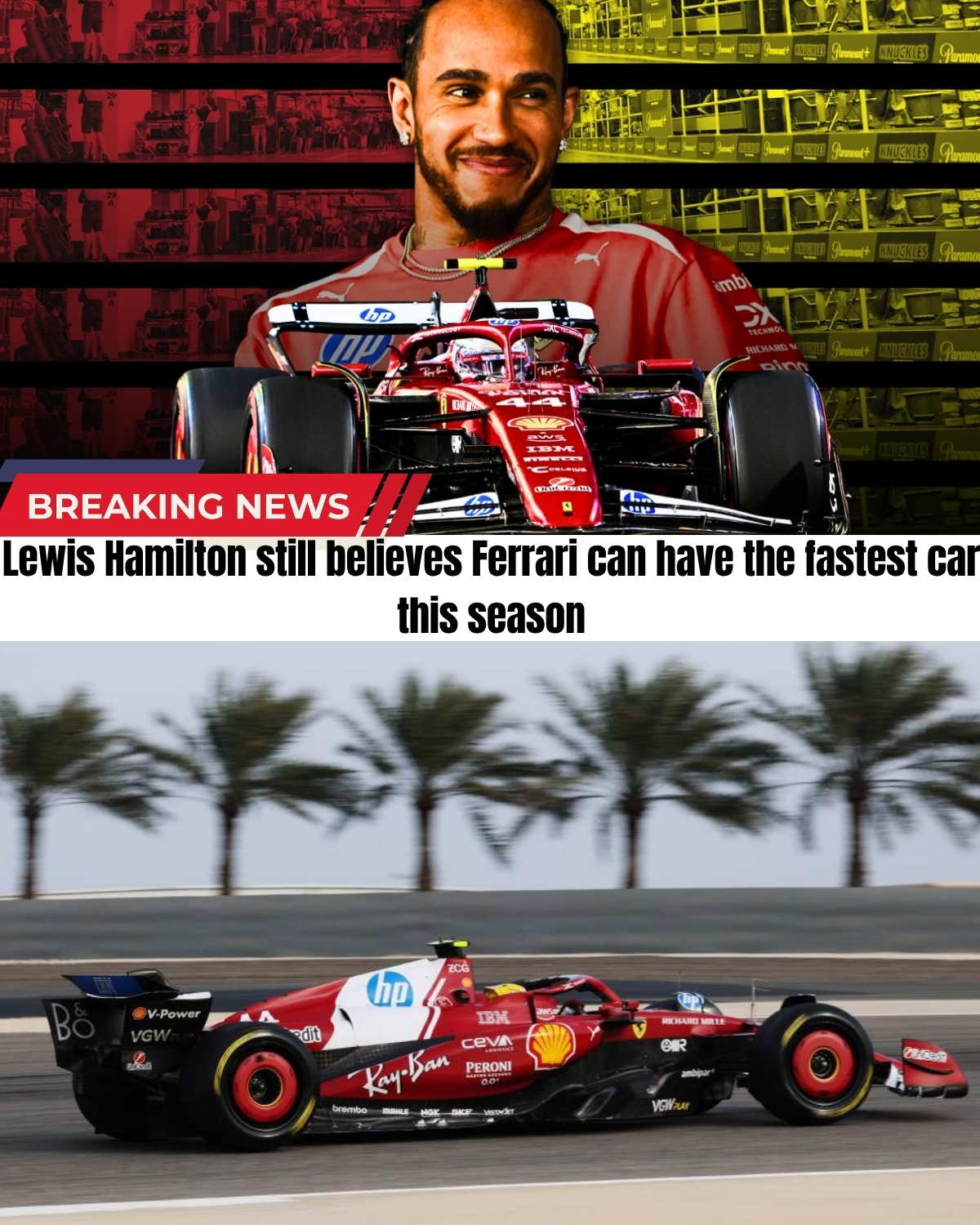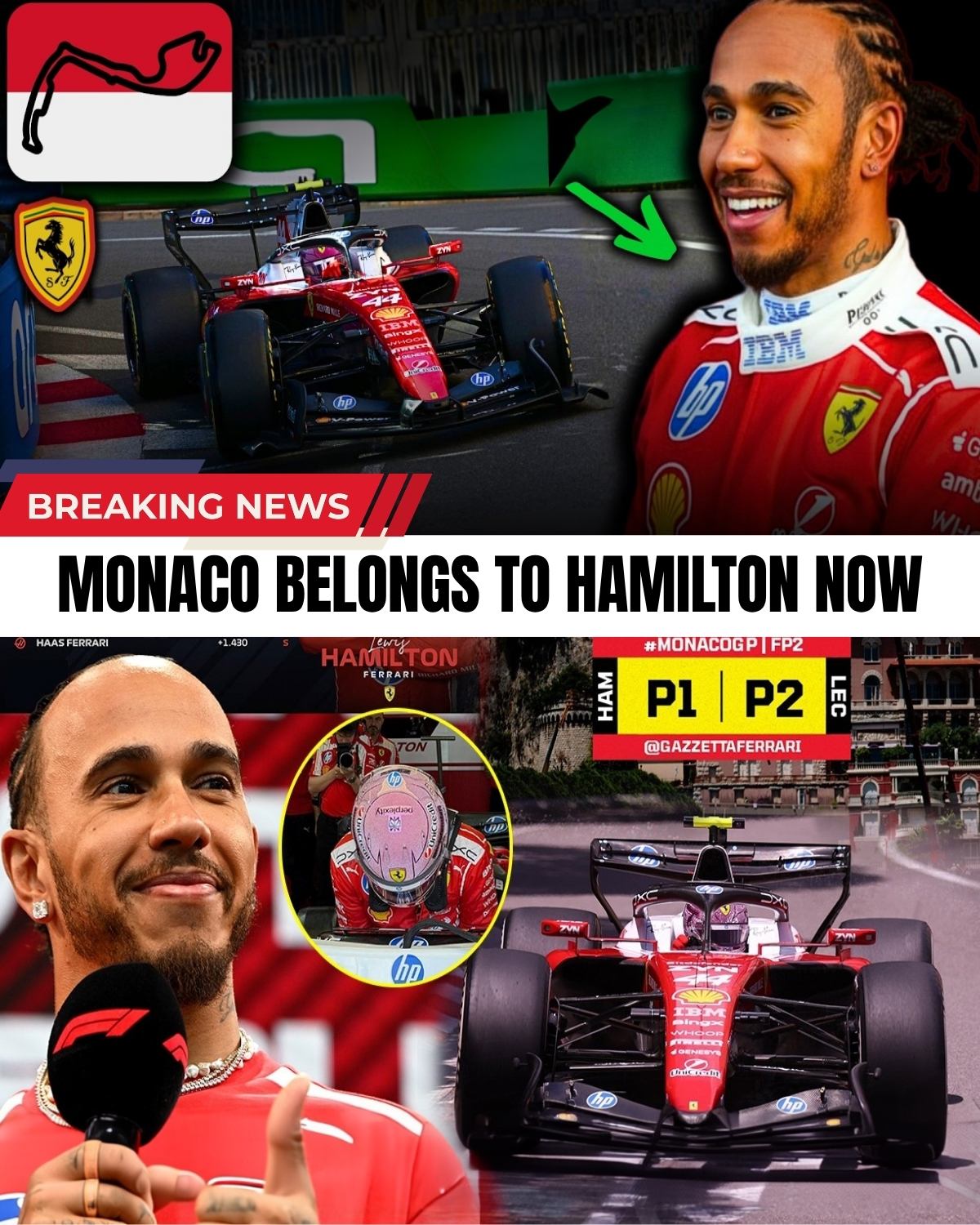
The asphalt of Monte Carlo is still warm, the echoes of roaring engines still bouncing off the legendary casino walls, and the Formula 1 paddock is already buzzing with a single, electrifying name: Lewis Hamilton. On a Friday afternoon that delivered pure theater at the Monaco Grand Prix, the seven-time world champion did not just participate in FP2; he commandeered it. In a session soaked in tension, mechanical fragility, and the ever-present danger of the barriers, Hamilton stamped his authority on the most unforgiving street track in the world, reminding everyone why his name still bends an entire weekend around it.

His Ferrari surged to the top of the timing screens, edging out his own teammate, Charles Leclerc, and the relentless Max Verstappen in a display that felt less like a practice run and more like a chilling warning shot. The session had already hinted at a Ferrari fightback, with Leclerc setting the pace in FP1 and Hamilton lurking close behind. But FP2 is where Monaco reveals its truths, and as the field shifted onto qualifying simulations, Hamilton did not just improve on his rivals; he overpowered the narrative, extracting nearly 3/10 of a second from the pack.
In Monaco, that gap is not a margin; it is a statement. It is the kind of lap that tells the entire paddock that this driver has found the edge and knows exactly how to live on it. Hamilton was not merely fast in a straight line; he was superior across the full, demanding rhythm of the lap, attacking the circuit with the confidence of a man who felt his Ferrari responding exactly as it should. It was a superb, commanding drive that made the rest of the field sit up straight.
Leclerc, the Monegasque driver, was sharp as well, opening the day by topping FP1 and reminding everyone of his deeply personal relationship with his home race. In FP2, he looked threatening, briefly moving ahead of Verstappen and later reclaiming the top spot with a soft tire effort. But Hamilton’s reply stole the spotlight, creating an intimate and revealing exchange between the two Ferrari teammates. Leclerc showed speed, but Hamilton showed command, resulting in a Ferrari 1-2 that felt ominous for the rest of the field.
Verstappen remained in striking distance, finishing close enough to keep the pressure on, but even he could not match the rhythm Hamilton found in the decisive phase. Behind the frontrunners, the session unfolded as a brutal reminder that Monaco cares only about survival. George Russell had a massive slide through the swimming pool section, somehow gathering his Mercedes before kissing the barriers, while Franco Colapinto was not so lucky, clipping the wall at Sainte Devote in his Alpine, though he managed to limp back to the pit lane.
Then came the mechanical drama that turned the afternoon even stranger. Lando Norris, the reigning world champion, was forced out of the session after suffering a power failure exiting the tunnel. He had already looked uncomfortable, finishing only sixth in FP1, and his sudden halt in the escape road at the Nouvelle chicane delivered the most dramatic image of the day. For terrifying moments, the car seemed dead in the middle of the circuit’s most exposed territory, and marshals recovering the car were seen wearing rubber gloves, hinting at a live electrical fault.
Zak Brown later suggested the problem could be linked to the battery system, and the visuals deepened the sense that McLaren had stumbled into a dangerous technical weekend. The session was briefly under virtual safety car conditions, fracturing the rhythm of the field as teams scrambled to reset for qualifying runs. Monaco, as ever, had become a test not just of speed, but of nerve.
Still, the strongest impression left by FP2 belongs to Hamilton. He looked calm in the cockpit and ruthless when it counted, building his lap with the patience of a veteran and the hunger of a man who still believes the best chapters are waiting to be written. His car placement became surgical, his confidence on the limit almost unsettling, and the lap itself took on the shape of inevitability. FP2 suggested that this version of Hamilton is alive again—not merely competitive, but dangerous.
It also said something important about Ferrari. The team’s package appears capable of being a weapon here, and if Friday is any indication, Hamilton and Leclerc may have given the Scuderia a real fighting chance at the sharp end of the weekend. The low-speed nature of Monaco seems to suit the Ferrari better than tracks that reward raw power, and Hamilton’s long search for the right setup may have finally produced a car he can trust.
But Monaco never allows confidence to harden into certainty. The walls are waiting, the qualifying session still lies ahead, and the difference between Friday speed and Saturday glory can vanish in the time it takes a wheel to brush a barrier. That is why Hamilton’s FP2 performance felt so important. It was not a victory, but it was a message. It told the paddock that Ferrari has the pace, that Hamilton has the precision, and that if the rest of the field wants to control this weekend, it will have to wrest it away from a man who looked deeply, almost chillingly, at ease with the challenge.