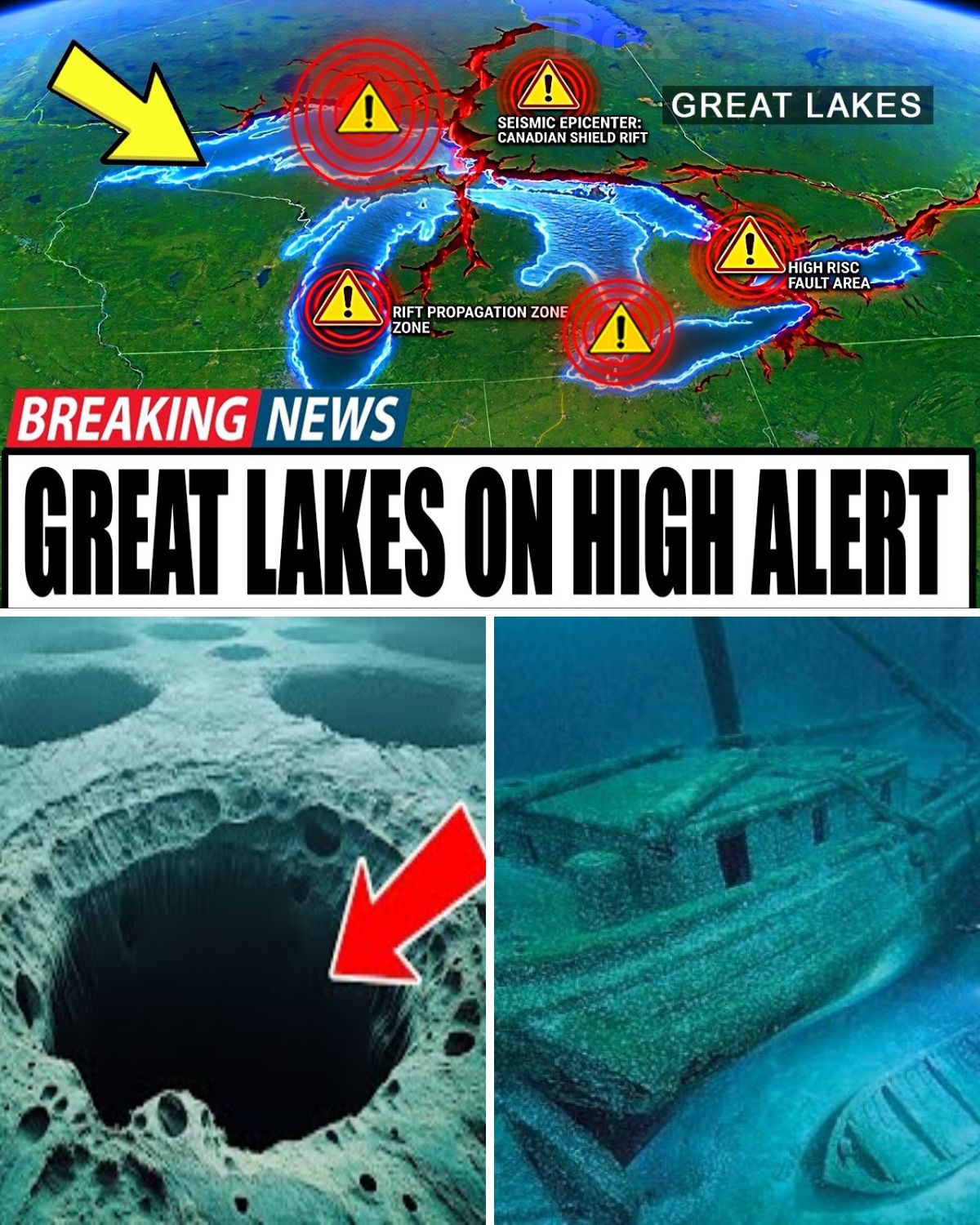
What if I told you that beneath the serene surface of the Great Lakes lies a world of mystery and danger? These vast bodies of freshwater, often mistaken for oceans, harbor secrets that could reshape our understanding of history and nature.
 The Great Lakes, a breathtaking natural wonder, are home to shipwrecks, prehistoric hunting grounds, and even bizarre geological phenomena. Covering an area so expansive that they create their own weather systems, these lakes contain about 21% of the world’s surface freshwater. That’s right—more than one in five gallons of freshwater on Earth is found in this remarkable region.
Imagine standing on the shores of Lake Michigan or Lake Superior, where the horizon stretches endlessly, making it feel more like an ocean than a lake. With widths that can reach up to 118 miles, the lakes are so vast that the curvature of the Earth can obscure the opposite shore. The waves crash with a force that rivals ocean surf, creating an atmosphere that surprises many first-time visitors.
Michigan, often referred to as the “third coast,” boasts over 3,200 miles of Great Lakes shoreline—more than any state except Alaska. This unique geography shapes the culture, economy, and identity of the region, with entire towns thriving on the shores of these majestic lakes. The sandy beaches and towering dunes, like those at Sleeping Bear Dunes, rival the beauty of any oceanic coastline.
 But there’s more beneath the surface. The Great Lakes are interconnected, draining through a single outlet, the Saint Lawrence River. This means that all five lakes—Superior, Michigan, Huron, Erie, and Ontario—form one massive freshwater system. Lake Superior alone holds enough water to cover both North and South America in one foot of water, making it a colossal reservoir of natural resources.
The lakes were sculpted by ancient glaciers, and even today, parts of the region are slowly rising as the Earth’s crust rebounds from the weight of those ice sheets. The bedrock surrounding Lake Superior is over 2.5 billion years old, a testament to the geological history that has shaped this area.
In winter, the lakes exhibit extraordinary phenomena, such as “sea smoke,” where warm water creates thick fog that appears to boil in the cold air. Even more astonishing are the ice volcanoes that form along the shores, where pressure builds beneath the ice, creating cone-shaped eruptions that shoot slush and water into the air.

The Great Lakes can also generate meteotsunamis—waves caused by rapid atmospheric pressure changes—and storms that rival those found on the ocean. With waves reaching heights of 25 feet, these lakes are not to be underestimated by sailors and swimmers alike.
Beneath the surface, the lakes conceal over 6,000 shipwrecks, a chilling reminder of the dangers posed by their unpredictable nature. Lake Superior, in particular, has claimed hundreds of vessels, including the infamous SS Edmund Fitzgerald, which sank during a storm in 1975, taking all 29 crew members with it.
 Adding to the intrigue, researchers have discovered an underwater stone circle in Lake Michigan, possibly dating back to a time when humans coexisted with mastodons. Meanwhile, a 9,000-year-old hunting ground lies submerged beneath Lake Huron, complete with ancient structures that tell the story of early human activity long lost to time.
The Great Lakes are not just a natural wonder; they are vital to the economy, supporting agriculture, industry, and global trade. Their strategic importance is likely to grow as freshwater becomes increasingly valuable in a world facing water scarcity.
As we continue to explore and understand these magnificent lakes, one question remains: what other secrets lie hidden beneath their depths, waiting to be discovered?
https://www.youtube.com/embed/huhe_opFY7A